





 Portuguese
  English
  Spanish
  3 min of reading
  0 comments



Major Banks Abandon Climate Commitment Amid Political Pressure. Discover How Climate Change Has Ceased to Be a Priority on Wall Street and the Impact of This Decision on the Global Financial Sector
On the West Coast of the United States, more precisely in Los Angeles, the 82nd Golden Globe Awards took place on January 5, combining a night full of surprises and implicit messages about social and environmental responsibility, reflected in the clothing and other choices of the event. Meanwhile, on the other side of the country, on Wall Street, yet another bank decided to withdraw from the Net-Zero Banking Alliance (NZBA), a commitment to align financial activities with environmental goals and address the challenges posed by climate change.
Climate Change Ceases to Be a Priority: Banks Retreat Amid Political and Economic Pressures in the U.S.
What Happened? In the last weeks of 2024, several U.S. banks abandoned the Net-Zero Banking Alliance, including Goldman Sachs, Wells Fargo, Citi, Bank of America, and Morgan Stanley. Recently, on Monday, January 7, JPMorgan joined them, being the latest lender to leave the largest climate coalition in the sector.
None of them gave a clear reason for the withdrawal. In fact, JPMorgan stated in a release: “We will continue to work independently to promote the interests of our company […] we will remain focused on pragmatic solutions to help develop low-carbon technologies while advancing energy security”. However, several media outlets pointed out that this occurs after months of pressure from some Republican politicians. In fact, the principal financial regulator of the Federal Reserve, Michael Barr, announced in a statement that he will resign next month, avoiding a potential confrontation with the Trump administration and Republicans in the Senate.
-
Pharmacy inside the supermarket: what changes now in your purchase, why medicines won’t go on the shelves, which rules remain strict, mandatory pharmacist, separate space, controlled storage, more convenience and competition in the country.

-
Ports like Santos and Paranaguá are operating at their limits and may block containers as early as 2030, warns a study by Macroinfra; bottlenecks increase costs and delays and push cargo to Rio, Salvador, Pecém, and Suape across Brazil.

-
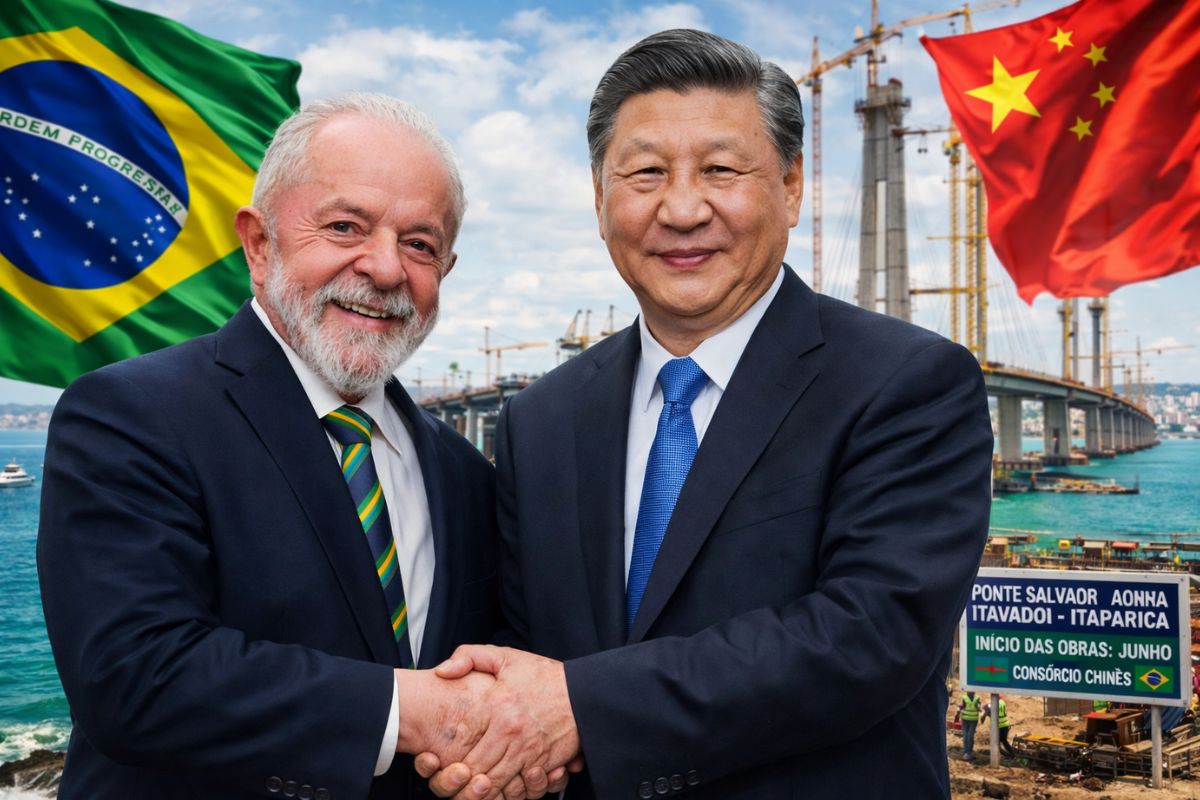
Lula reveals in an interview that he asked President Xi Jinping three times to invest in a major project in Brazil, the Salvador-Itaparica bridge, which is set to begin in June with the participation of a Chinese consortium and is expected to be extraordinary, according to the president.
-
Neighboring city of Belo Horizonte has properties starting at R$ 139,000 with 90 m² and a price per square meter much lower than the capital, even concentrating automotive, petrochemical, and logistics hubs.


Republican Scrutiny. With Trump’s imminent return to power, the Financial Times reported that banks have complained about pressure from Republican groups, which accused them of boycotting fossil fuel companies. Additionally, Republicans have intensified their criticism of environmental, social, and governance (ESG) policies, arguing that these practices violate antitrust laws and deliberately limit access to fossil fuel supplies.
Financial institutions find themselves in a complex situation, where they will need to seek a balance between conservative criticisms in the U.S. and the demands of progressive investors and clients who seek green financing for the energy transition and effective measures against climate change.
Will They Continue to Finance? Despite abandoning the NZBA, some financial institutions will continue to promote green financial products. One example is Bank of America, which structured a $1 billion deal to refinance Ecuador’s debt, and Citi, which advised on blue bond issuances for marine conservation. Meanwhile, asset managers like BlackRock and Vanguard have offered both pro-ESG and anti-ESG options, allowing investors to direct their preferences.
What Will Happen to Your Investments in the EU? Regulations in the European Union are becoming increasingly stringent regarding climate risks in companies’ annual reports. For this reason, some banks argued that leaving the NZBA will allow them to focus on complying with European standards, as is the case with Goldman Sachs.
Nuclear Energy as a Solution? The Role of Alternative Sources in the Global Energy Transition
Building Bridges with Nuclear Energy. The abandonment of the NZBA by major U.S. banks illustrates the tensions between political and economic demands. However, in this context, nuclear energy may become a viable path for the energy transition, given the need for sources that meet the growing demand for electricity, such as that required by data centers. Indeed, major global banks are eyeing this energy source to ensure long-term energy security.
The decision of major banks to abandon the Net-Zero Banking Alliance comes at a complex moment, where political and economic tensions blend with a profound cultural shift. Just as at the Golden Globes, where more ethical and sustainable clothing set the trend, the financial sector also understands that sustainability and combating climate change are not a passing fad, but a movement that is transforming how industries operate. With Trump’s arrival in the presidency in the coming weeks, the direction of this situation remains uncertain.









Seja o primeiro a reagir!