





 English
  Francês
  Alemão
  Italiano
  Japonês
  Norueguês
  Portuguese
  Spanish
  4 min of reading


DVA Agro Brings to Brazil Robust Portfolio and High Technology Focused on the Market Niche That Grew More Than 160% During the Pandemic for Organic Products
One of the Brazilian market niches that grew the most during the pandemic was that of organic foods, those grown without the use of chemical inputs. According to data from Synapcom, a company specializing in full commerce solutions that analyzed online sales in the segment, there was a 160% increase in the first half of 2020. This scenario follows the European and American trends, which are also growing each year. According to Andres de la Cruz Perez, global leader of plant nutrition at DVA Agro, this growth is exponential in all countries around the world, especially in those with agricultural production aimed at export.
With an eye on this market, DVA Agro brings to Brazilian producers a line of over 35 products aimed at the organic market, named Incentia. “We cannot be oblivious to this trend and to the need to respond to farmers who are producing this way,” emphasizes the company’s leader.
-
Unemployment rises again to 5.8% at the beginning of 2026, raising alarms about the end of temporary positions and its impact on the Brazilian job market.

-
Document organization can cut invisible costs in small businesses, a simple step that prevents waste, rework, and losses in daily operations.

-
While Russia dominates the global wheat market, Brazil emerges as an unexpected competitor in the Cerrado, offering grain available in July and August when stocks in the Northern Hemisphere are at their lowest point of the year.

-
China returned almost 20 Brazilian ships with soybeans, but now everything could change: the country that buys 80% of the grain is considering relaxing regulations after impurities held up shipments of thousands of tons and caused million-dollar losses.


In Brazil, this is still a niche market, especially in large centers, and generally, it is a small part of the population that consumes it. “If we talk about years ago, this niche was tiny. But it is growing strongly and following other global consumers, as more information about these habits is becoming available. The internet is a great source of information, and it greatly contributes to this dissemination,” says Andres.
Focus of the New Line
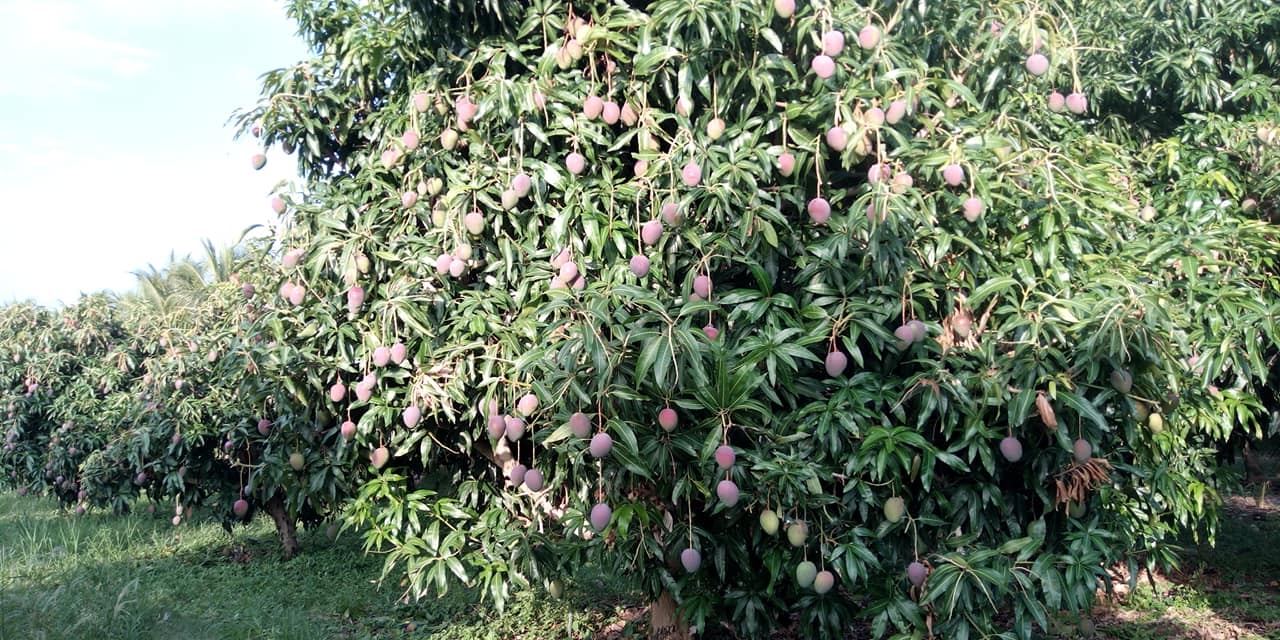
One of DVA Agro’s main focuses with the new line today is the producing region of Petrolina/PE and Mossoró/RN, as well as the exporting zones of papaya in Espírito Santo, Minas Gerais, and São Paulo, which today, according to Andres, are already strongly involved with organic foods. Mainly for export to external markets, which are extremely demanding.
“For this producer to close a container of mango, grape, papaya, or another crop, they have to comply with the destination’s rules, not Brazil’s rules. This completely changes the narrative because there are protocols that have to be followed. In addition, the product must be developed with an ecological seal accepted in the specific country receiving the load, using inputs that are also registered and carry an ecological seal,” explains the professional.
Unique Characteristics
The Incentia line was designed and developed for use in high-yield organic plantations and also in conventional crops. Another very important feature of this portfolio is the water solubility of the products. “The vast majority of products currently on the market with organic certification lack embedded technology, meaning they are mainly for application in the soil. We do not have any insoluble products, and 100% of our catalog is designed for foliar application and fertigation,” differentiates Andres.
Another highlight is the concentration of nutrients. Typically, the main sources of products are manures and vegetables. However, as the specialist explains, in this way, the levels of nitrogen, phosphorus, and potassium, calcium, magnesium, and micronutrients are very low in these traditional sources of organic fertilizers. “In the line we created, both macronutrients and micronutrients and biostimulants have concentrations higher than the market average, so organic crops can achieve good yields and productivity,” he points out.
The physiology of plants is another key point, as the products in the line also provide “tools” for plants to be healthier and thus more resistant to pest and disease attacks. “This is a holistic concept within agricultural production management,” where we design products that fulfill multiple functions at the same time, not just to nourish crops, but also to biostimulate, destress, induce internal resistance, protect, etc.,” states the multinational leader.
Guarantee Seal
To ensure that the entire Incentia line can be used for organic production in Brazil, DVA Agro submitted the products to analysis and certification by EcoCert, the largest certifier in the field worldwide. “In our case, we requested the intervention of an external organism to audit us and perform inspections on our production, including auditing our raw material suppliers, to ensure everything complies with regulations. We have the EcoCert seal, which certifies all the raw materials used, suppliers, production line, and packaging,” reports the company leader.
Investment in the Segment
DVA’s global goal for the coming years is for the plant nutrition sector to represent 40% of total global sales. Of the company’s total nutrition portfolio, nearly half is already organic, currently representing about 20% of the total revenue from plant nutrition. To increase this number, the multinational is awaiting the European Union’s approval to implement two new production plants for biostimulants, biofertilizers, and control agents in Spain at a cost of €1.6 million.
About – DVA Agro is a German multinational company whose mission is to develop high-quality agricultural solutions for farmers in Brazil and worldwide. It produces and sells products for crop protection, plant nutrition, biologicals, and special adjuvants for sustainable agriculture. With over 50 years of experience, it also operates in Europe, Latin America, Asia, and Africa.










Seja o primeiro a reagir!