





 Portuguese
  English
  Spanish
  5 min of reading
  0 comments


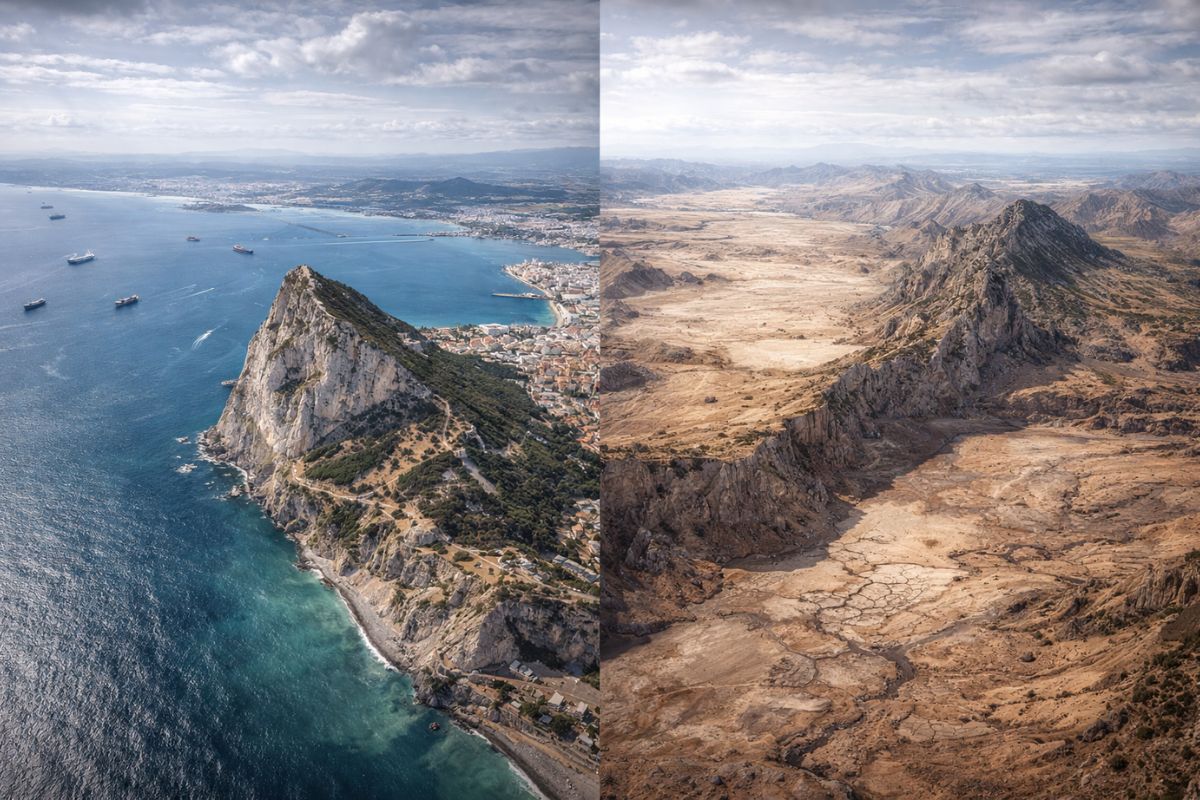
Computational simulations by scientists from Lisbon and Mainz indicate that subduction beneath the Strait of Gibraltar could advance into the Atlantic Ocean in the next 20 million years, starting a process that would eventually remodel the whole eastern margin of the ocean and could give rise to a Fire Ring similar to that of the Pacific
The Strait of Gibraltar, the 58-kilometer passage that separates Spain from Morocco and connects the Mediterranean to the Atlantic, may be at the beginning of a geological process that goes far beyond a simple change in the map. A new study published in the journal Geology used 3D computational simulations to show that the rocks beneath the Strait of Gibraltar are triggering a subduction process that could advance into the Atlantic Ocean in the next 20 million years.
According to Geology, the research was conducted by scientists from the University of Lisbon, the Dom Luiz Institute, and Johannes Gutenberg University of Mainz. The model suggests that a subduction zone formed during the partial closure of the Mediterranean could migrate to the Atlantic, a phenomenon that researchers call subduction invasion. If the process is confirmed over the millennia, the result could be a complete remodeling of the eastern margin of the ocean, including the possible formation of a Fire Ring similar to that of the Pacific.
What is happening to the rocks beneath the Strait of Gibraltar

The Strait of Gibraltar is located near a boundary where the African and Eurasian tectonic plates push and slide against each other. This contact zone generates stresses that can be released in the form of earthquakes.
-
What is it like to live inside a $13 billion aircraft carrier where 5,000 military personnel eat 17,000 meals a day and spend months sleeping in cramped bunks?

-
Without a button, sensor, or any electronic system, Harvard scientists create a solar device that decides on its own whether to generate energy or heat and could transform energy use in homes and buildings.

-
Neither Brazil nor the USA: China produces over 60% of the world’s farmed fish and accounts for about 40% of all global seafood, using industrial-scale aquaculture megafarms to influence the international market and supply billions of people.

-
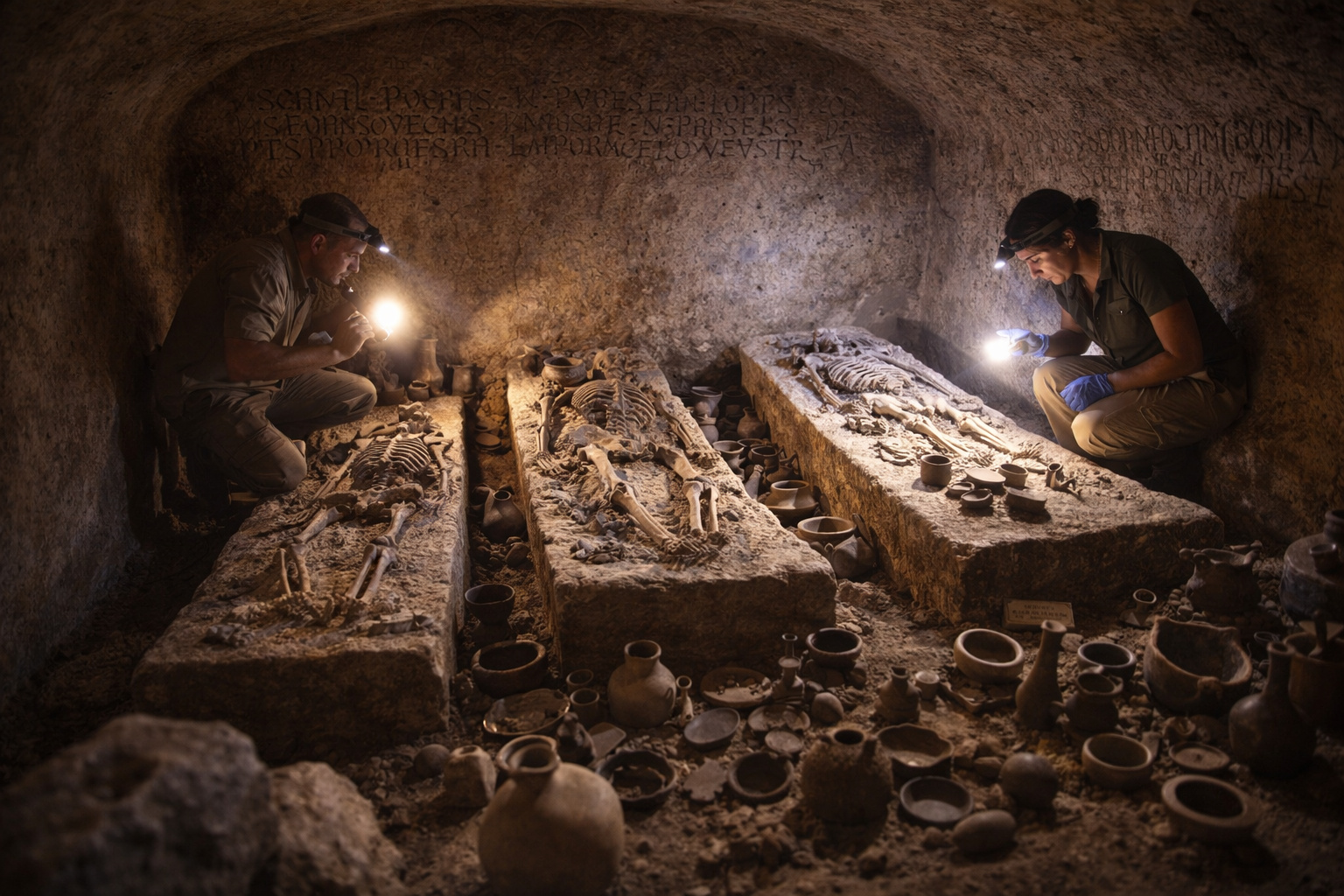
Archaeologists opened the only Etruscan chamber never looted in 2,600 years and found four individuals lying on stone beds with 110 intact objects around them, and the inscriptions found in the tomb have not yet been deciphered because the Etruscan language is a mystery that science has not yet solved.

But the study goes beyond seismic tremors: it points out that a dense plate beneath the Strait of Gibraltar may be slowly sinking towards the Earth’s interior, in a process called subduction.
Subduction occurs when a tectonic plate bends and sinks beneath another, sliding into the deeper layers of the planet. This sinking can trigger earthquakes, fuel volcanoes, and recycle the ancient ocean floor.
Gravity-driven simulations show that dense plates can sink and exert force on the rest of the plate, like a heavy curtain sliding off a table. In the case of the Strait of Gibraltar, this mechanism may be reactivating a process that had gone into pause.
Why Gibraltar subduction may invade the Atlantic Ocean
The Atlantic Ocean, unlike the Pacific, is an expanding ocean. New crust is created along the Mid-Atlantic Ridge, and its margins are relatively calm.
The Atlantic has far fewer subduction zones than the Pacific, and that is precisely why any sign of a new zone forming attracts so much attention from the scientific community.
The study relates this process to the so-called Wilson cycle, the theory that oceans can open, expand, and then begin to close. The onset of subduction marks the turning point at which an ocean stops growing and begins to be recycled back into the Earth’s mantle.
If the subduction of the Strait of Gibraltar advances into the Atlantic, it could be the first step for this ocean to enter a new geological phase. Researchers estimate that this advance would take about 20 million years.
The Atlantic could have a Fire Ring like that of the Pacific
The Pacific Ring of Fire is a 40,000-kilometer belt marked by frequent earthquakes and active volcanoes, a direct result of the subduction zones that surround this ocean. The study raises the possibility that something similar could develop in the Atlantic over the long term.
If new segments of subduction activate and connect along the eastern margin of the ocean, a chain of seismic and volcanic activity could form.
The key word here is eventually. The models describe this scenario developing over tens of millions of years, far beyond any human planning horizon.
A future Atlantic version of the Ring of Fire, if it were to form, would grow gradually as new subduction zones emerged from the Strait of Gibraltar. Researchers treat the hypothesis as something worth testing, not as a prediction for the coming centuries.
What does this mean for people living near the Strait of Gibraltar
Although the disappearance of the Strait of Gibraltar is millions of years away, there is a more immediate question: if the subduction zone is still active, it affects the risk of earthquakes in southern Spain, Morocco, and Portugal.
The geological history of the region serves as a warning: the Lisbon earthquake and tsunami of 1755 killed tens of thousands of people, with waves reaching about 6 meters in Lisbon and 20 meters in Cádiz.
Modern seismic monitoring cannot prevent earthquakes, but it can improve alerts and preparedness.
Stricter building codes, enhanced emergency planning, and clear public communication are practical measures that science can support from studies like this one on the Strait of Gibraltar. Understanding that the underground of the region is geologically active is the first step to assessing real risks.
How computational simulations arrived at these conclusions
The researchers built three-dimensional simulations that recreate how rocks move at great depths over extensive geological periods.
The models test whether the slow subduction beneath the Strait of Gibraltar could be resumed after a long pause, and the results indicate that yes, as long as gravity continues to pull the dense plate down.
The authors emphasize that creating new subduction zones is difficult because oceanic plates are strong and resist breaking. The lead author described the Atlantic crust in the region as “super strong and rigid.” This resistance explains why the Gibraltar system may get stuck in a slow phase instead of simply stopping.
The next steps include confronting the models with real data from seismic studies and GPS measurements that monitor how the ground moves in the Strait of Gibraltar region.
The soil beneath the world’s most famous strait has never been still
The Strait of Gibraltar will not disappear tomorrow, nor in the next century, nor in the next millennium.
But the rocks beneath it are in motion, and the subduction process that could reshape the entire Atlantic Ocean may already be underway on a geological timescale.
For those living in the region, the practical alert is not about the distant future, but about the seismic activity that is already a measurable reality today.
Did you know that the Strait of Gibraltar is over an active subduction zone? Do you think the Atlantic could really have a Fire Ring in the future, or is 20 million years too long for any prediction? Leave your thoughts in the comments and share with those interested in geology and science.






Seja o primeiro a reagir!