





 Portuguese
  English
  Spanish
  8 min of reading
  0 comments


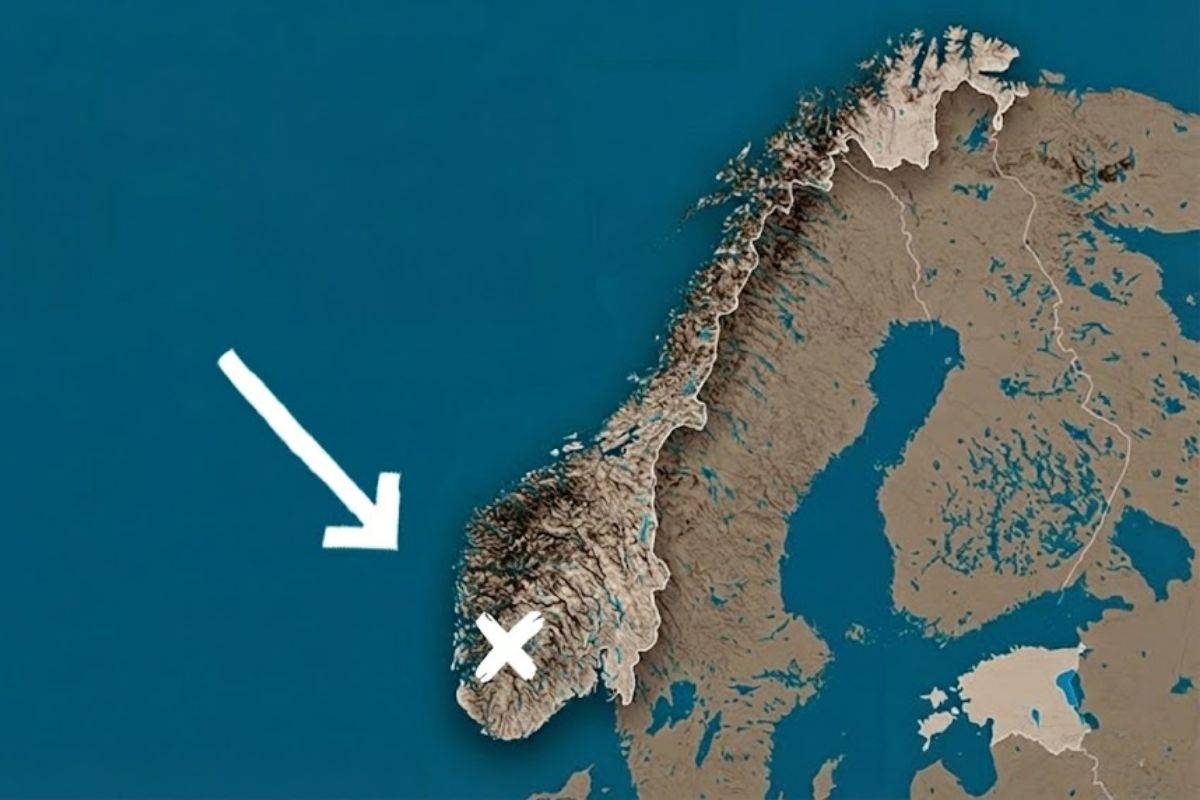
The Discovery Of Phosphate In Southwest Norway Repositions The Resource That Could Surpass Oil And Reignites The EU Dependence On Imports, While LFP Batteries And Fertilizers Elevate Demand; The Challenge Now Is To Extract, Process And Handle Toxic And Radioactive Waste On Industrial National Scale.
The revelation of phosphate reserves valued at US$ 24 trillion has put Norway in front of a resource that could surpass oil, with the potential to reorganize supply chains that sustain food, energy, and technology. The announcement connects agriculture, LFP batteries, and critical raw materials on the same board, with a direct impact on the European Union.
The sensitive point is that phosphate does not only function as an industrial input. It enters the fertilizer that feeds global agriculture and simultaneously appears as a strategic component in LFP batteries, semiconductors, solar panels, and advanced electronics. Norway gains maneuvering room, but also inherits the environmental cost and regulatory burden of a material treated as critical.
From The North Sea To Phosphate: Norway In Two Wealth Cycles

In 1969, near the coast of Norway, in the North Sea, the discovery of the oil field Echapisk was described as a turning point.
-
Expedition 501: Scientists drill into the ocean floor and discover a giant reserve of fresh water hidden beneath the sea, extracting nearly 50,000 liters and revealing an invisible system that could reshape the map of water scarcity.
-
Archaeologists find an intact tomb over 2,500 years old, with more than 100 preserved objects, weapons, jewelry, and human remains never touched.
-
Volcanic lava transforms into threads as fine as human hair that travel over 30 kilometers by wind and fall like cutting rain on roofs and backyards in Hawaii and Iceland.
-
NASA issues a warning for the feared Godzilla El Niño that could change the planet’s climate in 2026 with extreme warming of the Pacific capable of causing devastating droughts in some regions and historic floods in others simultaneously.
The transition was economic and structural: oil transformed the country’s revenue base and repositioned Norway among the wealthiest nations.
After the large-scale invasion of Russia against Ukraine, Norway’s oil revenue increased significantly, reaching US$ 125 billion by the end of 2022, five times higher than the previous year.
The flow was channeled into the government pension fund, which by 2025 became the largest sovereign fund in the world, with US$ 1.7 trillion in assets.
This history gives weight to the phrase that dominates the current discussion.
When speaking of a resource that could surpass oil, the reference is to a country that has already experienced a turning point with fossil energy and is now facing the possibility of a mineral turning point, with consequences for agriculture, energy transition, and European geopolitics.
Why Phosphate Became Central To Food And Energy Security

Phosphate is presented as one of the most important resources in the modern world, despite little visibility outside technical discussions.
The reason is straightforward: approximately 90% of phosphate is used to produce essential fertilizers for global agriculture.
The relevance increases when the agenda shifts from agriculture to industry.
Phosphate is described as a key component of a lithium-ion battery known as LFP, which simultaneously boosts demand for LFP batteries and phosphate. This places the mineral at the heart of the energy transition.
Phosphate is also cited in applications such as solar panels, semiconductors, and advanced electronics.
The same material that supports agricultural productivity begins to integrate into technological infrastructure, expanding the competition for access, price, and processing capacity.
Concentrated Supply And Poor Soils In Phosphorus: The Background Of Global Risk

The distribution of phosphate is described as uneven across the planet.
While Western Europe is said to be naturally richer in phosphorus, approximately 30% of the world’s arable land, including Australia, New Zealand, much of Africa, and significant portions of Asia, suffers from phosphorus-poor soils.
In these regions, fertilizers are not a marginal gain: they are a condition for productivity.
And the pressure increases because a small number of countries control the vast majority of reserves.
The described landscape lists Morocco as the leader with 50 billion tons, followed by China (3.8 billion), Egypt (2.8 billion), Tunisia (2.5 billion), and Russia (2.4 billion).
This framework creates a direct geopolitical consequence.
Whoever controls phosphate controls a piece of global food security, and this explains why the discovery in Norway gains strategic reading inside and outside Europe.
EU And The Vulnerability Of Phosphate Imports
For the European Union, dependence on phosphate is described as a strategic concern.
The region practically has no domestic reserves and would rely almost entirely on imports to sustain agriculture and industry.
Therefore, phosphate has been officially classified as a critical raw material.
The risk lies not only in mining. It’s in the chain: who exports, who processes, who sets quotas, and who decides to prioritize the domestic market.
The critical raw material becomes a point of vulnerability when global supply chains become shorter and more political.
China, Processing And Export Tightening Between 2021 And 2025
The report states that by 2025, China would control approximately 30% of the global phosphate market, acting not only as a producer but as the largest processor of raw phosphate rock into finished fertilizers.
This matters because power does not just stay in the mine: it extends to the final product.
The described turnaround began in 2021, when China started to restrict phosphate exports to safeguard the food security of its population of 1.4 billion.
From 2021 to 2025, quotas have been tightened year by year, and by 2025, Chinese phosphate exports would have fallen by nearly 60% compared to pre-restriction levels.
For the European Union, this movement means that access to phosphate may shrink even without geological shocks.
The restriction becomes an economic policy decision, and dependence turns into a risk of cost and supply.
Russia, Sanctions And The Reduction Of Alternatives For Europe
Russia, also cited as a major supplier, would have reduced exports to Europe due to sanctions and trade restrictions related to aggression against Ukraine.
The described result is a shortening of alternatives for importing countries and an increase in exposure to a few decision-making centers.
In this scenario, phosphate ceases to be merely a fertilizer component.
It becomes a security variable, reflecting on prices, agricultural planning, and industrial predictability.
June 2023 In Rogaland: Norway At The Center Of Phosphate
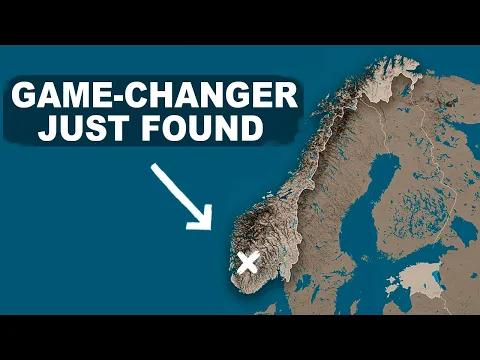
This is where Norway appears as an alternative. In June 2023, an agricultural region in Rogaland, southwest Norway, gained global attention after geological surveys by the Anglo-Norwegian company Norg Mining.
The deposit was described as the largest ever discovered.
Initial estimates cite reserves of at least 70 billion tons, nearly matching the previously known global total of 71 billion tons.
If this number holds, Norway would have the potential to meet global phosphate demand for 50 years on its own.
This explains the size of the impact attributed to the discovery: Norway could transition from a fossil energy exporter to a central supplier of critical raw materials, with a direct effect on the European Union and on supply chains linked to fertilizers and LFP batteries.
The Shock In Morocco And The Price Effect In The Phosphate Market
The report points out that Morocco would feel the impact immediately because phosphates represent almost a quarter of its exports.
If Norway were to double global reserves, the anticipated result would be a drop in prices and pressure on the Moroccan economy.
Here, phosphate operates as a tool of power.
It’s not just about who has the reserve, it’s about who redefines the reference price, which reorganizes gains and losses between exporters and importers.
It’s Not Just Phosphate: Titanium And Vanadium Enter The Critical Package
The discovery in Rogaland does not appear isolated. In the same region, Norg Mining is reported to have identified reserves of titanium and vanadium, described as essential for aerospace, electronics, and defense.
The text indicates that BRICS countries, such as China, Russia, South Africa, and Brazil, would control almost all global production of titanium and vanadium.
At this point, Norway gains a political argument: offering a more reliable alternative to the United States and European Union, reducing dependence on suppliers viewed as politically unstable.
The Environmental Cost Of Phosphate: Toxic Waste, Radioactivity, And GIP Piles
Phosphate is described as indispensable, but with a high environmental cost.
For every ton of phosphoric acid, 5 tons of toxic waste would be produced, and this radioactive waste is cited as GIP piles, forming massive structures and heaps of residue.
The cited example is Florida, with 25 piles, some with elevated levels of radon and uranium. The EPA would consider these radioactive piles too hazardous to be buried, leaving the liability exposed.
The case from 2016 in Polk County, Florida, is cited as a warning: a sinkhole would have opened beneath a GIP pile, sending hundreds of millions of gallons of wastewater into the aquifer and contaminating the region’s drinking water.
The episode serves as a reference for what goes wrong when control fails.
Mineral Quality And The Escalation Of Heavy Metals In The Environment
Another point described is the deterioration of global phosphate quality.
As quality decreases, more energy would be needed for extraction, releasing more cadmium, uranium, and other heavy metals into the environment.
This detail is crucial for Europe.
Norway can reduce the European Union’s dependence on imports, but extraction and processing need to face environmental and carbon requirements.
Otherwise, the critical raw material could become a politically desirable asset that is operationally difficult.
Green Norway And The Challenge Of Processing Phosphate With Low Carbon
Norway is described as an active participant in the green transition, committed to carbon neutrality. By 2030, the country aims to reduce greenhouse gas emissions by 50 to 55% compared to 1990.
The described model combines oil and gas export with systematic reductions in domestic emissions.
In 1990, Norway would have been one of the first to establish a carbon tax. It would also have been the first country to electrify part of its offshore oil platforms.
In consumption, the cited statistic is emblematic: by April 2025, 97% of new car purchases in Norway will be electric.
This scenario reinforces the reading of a country with the energy and regulation to try to process phosphate with a smaller footprint, but without eliminating the dilemmas of waste and radioactivity.
Hydropower, The Base Of The System And The Link With LFP Batteries
Hydropower is described as a pillar. Norway generates over 23,500 kWh per person per year, while the US generates about 12,700 kWh. Hydropower accounts for 90% of Norwegian electricity, providing a stable base.
This context connects with LFP batteries in two ways: phosphate enters the industrial component of batteries and hydropower can reduce emissions from processing.
The competitive advantage is not just mineral, it is energetic, and this aligns with the regulatory standard that the European Union requires in supply chains.
Carbon Capture And Storage: Norway As An Exporter Of Underground Space
Under the North Sea, Norway is described as a builder of an unusual export: space to store carbon, burying its own and imported CO2.
The report claims that, over the last 30 years, the country has safely injected 25 million tons of CO2, supporting the idea that capture and storage can become revenue.
In this scenario, the promise of Nor Mining to integrate carbon capture technologies into phosphate processing gains strategic function: to align the new mineral chain with climate goals and the requirements of the European Union, without abandoning industrial scale.
Norway has already experienced the oil cycle and consolidated a sovereign fund of historical scale.
Now, with phosphate valued at US$ 24 trillion, the country presents a resource that could surpass oil by connecting agriculture, energy transition, and European geopolitics on the same axis of dependence.
The real challenge begins with execution: transforming reserves into supply, meeting the European Union’s needs, sustaining demand for LFP batteries, and preventing phosphate from repeating difficult-to-reverse environmental liabilities.
If you work in agriculture, energy, industry, or public policy, the most useful move now is to follow how Norway intends to reconcile mining, processing, and waste management with climate goals and European regulatory pressure.
In your view, can Norway transform this resource that could surpass oil into a real advantage for the European Union without repeating the environmental risks of phosphate?






-

-

-

-

19 pessoas reagiram a isso.