





 Portuguese
  English
  Spanish
  5 min of reading
  8 comments


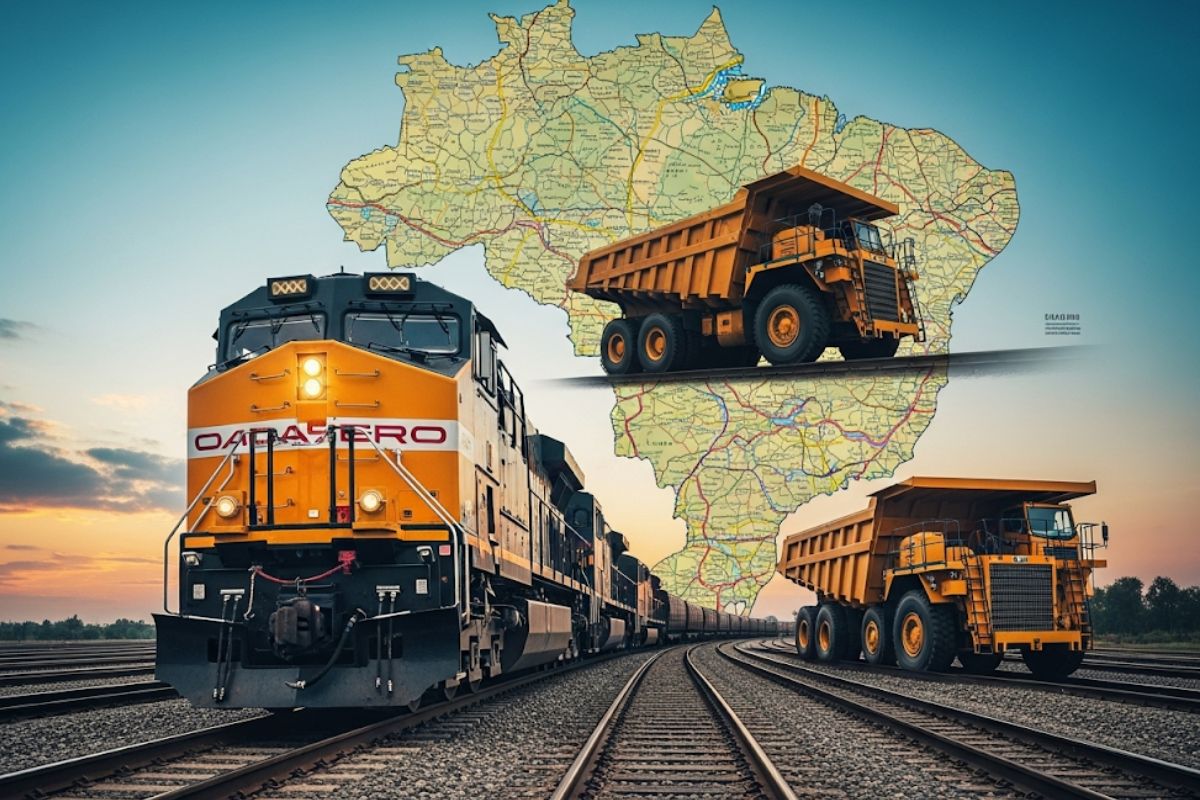

With Billion-Dollar Investment and Construction Led by Vale S.A., the Midwest Integration Railway (FICO) Section 1 Advances in Goiás and Mato Grosso. Learn About the Details of This New Railway and Its Strategic Impact on the Flow of Brazilian Production.
A new railway of great strategic importance is taking shape in the heart of Brazil: the Midwest Integration Railway (FICO) Section 1. This fundamental section will connect Mara Rosa, in Goiás, to Água Boa, in Mato Grosso, opening a new logistical corridor for the country.
The project aims to optimize the flow of the vast agricultural and mineral production from the Midwest. This article details the investment involved, the innovative model of construction by Vale, the current progress of the works, and the significant expected impacts of this new railway on the national economy.
FICO Section 1: Connecting Agriculture and Mining to Brazilian Ports
The central strategic objective of the Midwest Integration Railway (FICO) Section 1 is to integrate the rich producing regions of Brazil’s Midwest with the North-South Railway (FNS) in the municipality of Mara Rosa (GO). This connection will enable the flow of production, primarily agricultural and mineral commodities, to the main export ports of the Northern Arc, such as Itaqui in Maranhão, and also to the port of Santos in São Paulo.
-
New CCR concrete paving technology promises roads up to 3x more durable, less maintenance, and cost reduction in Brazil.

-
Made from recycled plastic, plastic wood is gaining space in the construction industry because it does not rot, resists moisture, and reduces maintenance costs over the years.

-
Florianópolis will receive a million-dollar BRT that will begin construction in 2026 with nearly 400 million in funding from the federal government and the Inter-American Development Bank, and the map already shows the routes for the exclusive bus corridors.

-
Without a blueprint, without an engineer, and using scrap from the dump, a father spends 15 years building an 18-room castle for his daughter, featuring tram tracks, 13 fireplaces, and over 700 m², which may now be demolished.

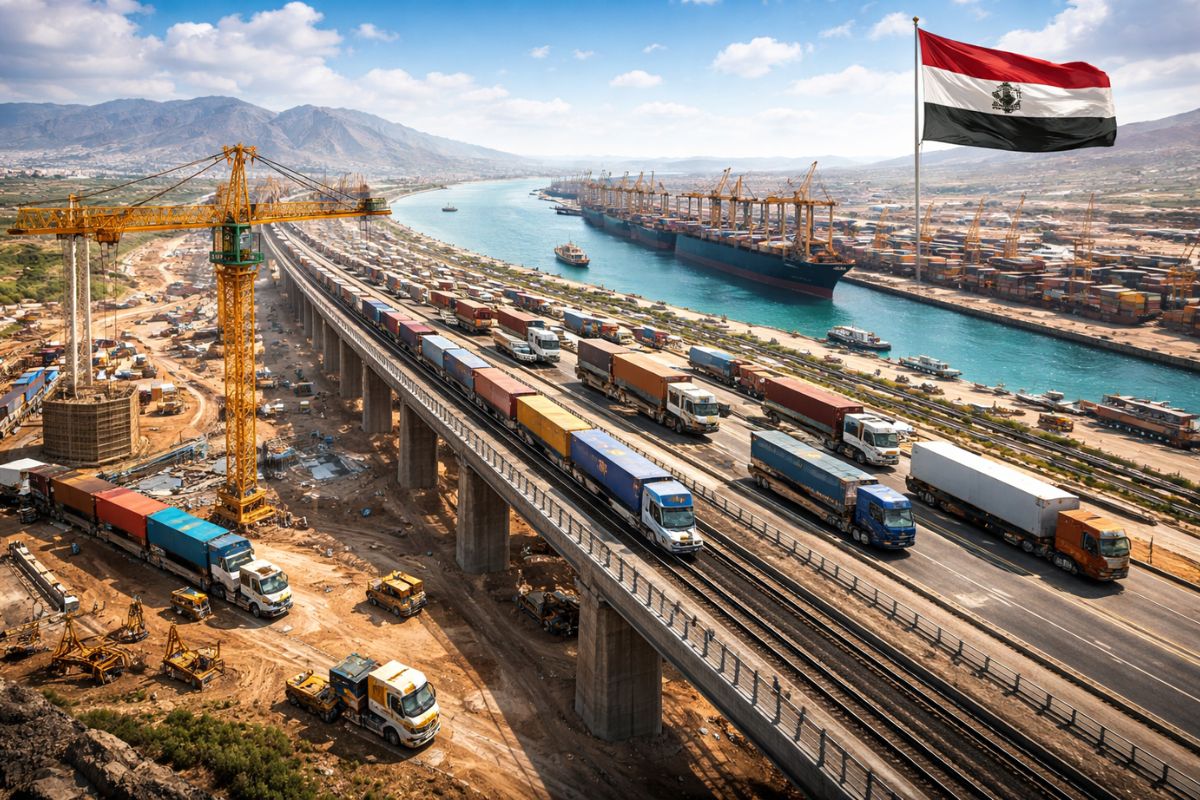
The expected impact on national logistics is the creation of more economical alternatives for long-distance cargo transport. Additionally, the aim is to promote multimodality and encourage new productive investments in the vast area of influence of the railway, in line with the guidelines of the National Logistics Plan. FICO is also part of a long-term vision of the Transcontinental Railway (EF-354), which aims to connect the Fluminense coast to the border with Peru, with Section 1 being a crucial first step.
Cross Investment: Vale’s Role in Building the New Railway
FICO Section 1 stands out as the first Brazilian railway to be implemented entirely through the innovative “cross investment” model. In this arrangement, mining giant Vale S.A. took on the responsibility for constructing the section. This obligation arose as a direct counterbalance for the early extension of its concession contract for the Vitória-Minas Railroad (EFVM), an agreement formalized in December 2020.
The officially associated Capital Expenditure (CAPEX) for this section of the new railway is R$ 2.73 billion. However, some analyses and market information indicate that the final cost of the project may be considerably higher. Recent agreements between Vale and the Federal Government, involving the renegotiation of the concession contracts of EFC and EFVM, mention “changes in the FICO Project” and foresee billion-dollar investments in infrastructure, suggesting that the financial scope of FICO may be part of broader and more strategic negotiations.
Project Overview: Route, Specifications, and Updated Timeline of FICO
Section 1 of FICO will have an approximate length of 383 kilometers, connecting the municipality of Mara Rosa, in Goiás, to the municipality of Água Boa, in Mato Grosso, passing through other localities in Goiás such as Nova Crixás and Santa Terezinha de Goiás.
The technical specifications of the railway are robust, designed for heavy cargo transport: the gauge will be broad, at 1.60 meters (compatible with FNS), the rails will be TR-UIC 60 type welded in long bars, with monoblock concrete sleepers, and the track’s load capacity is projected to be 32.5 tons gross per axle. After initial delays, mainly related to licensing and expropriations, the works had a physical progress of 13.28% as of April 2024, with full project completion expected by April 2028.
Ongoing Works: Progress, Challenges, and Project Governance
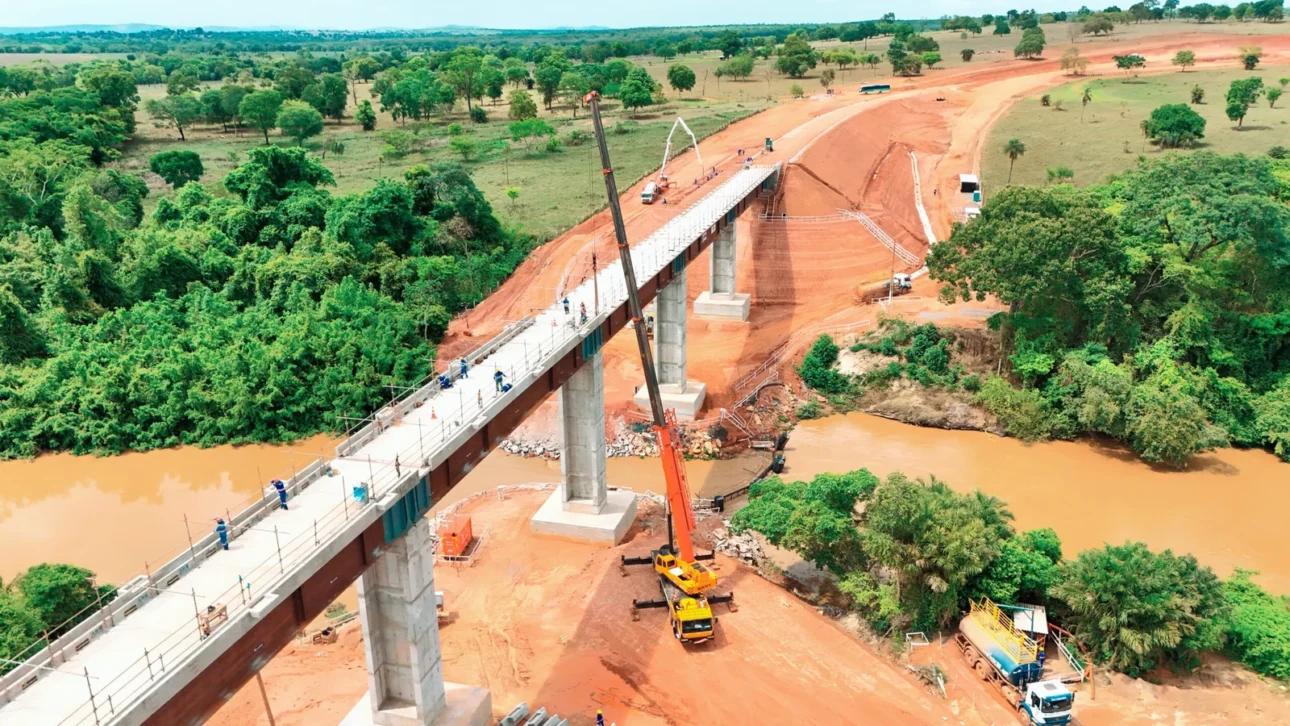
The infrastructure works of FICO Section 1, such as earthworks, are underway at various fronts. The superstructure, which includes the installation of rails, has already begun at the interconnections with the North-South Railway in Mara Rosa and part of the trunk line. One of the highlights of the construction is a future railway bridge spanning 1,600 meters over the Araguaia River.
The governance of the project involves a complex multilateral arrangement: Vale S.A. is the builder; the National Agency for Land Transport (ANTT) acts as the regulatory and supervisory body, leading the “FICO Mission” to monitor the project; the public company Infra S.A. is responsible for land management (expropriations) and the future sub-concession of the asset; and IBAMA is the agency in charge of environmental licensing.
The main current challenges include the continuation of the environmental licensing process (the current Installation License is valid until September 2026), the complex land acquisition and expropriations, especially in the section in Mato Grosso near indigenous lands (requiring dialogue with FUNAI), and the inherent risks in executing a project of this magnitude. Initiatives such as the “FICO Mission” and the hiring of an independent verifier by Vale aim to mitigate these risks and expedite approvals.
Impacts of the New Railway: Regional Development, Jobs, and the Environment
The construction of the new railway FICO Section 1 is already generating a positive socioeconomic impact. As of April 2024, the project accounted for 2,469 direct jobs and 1,430 indirect jobs dedicated to infrastructure activities. Initial estimates pointed to a total of 4,600 jobs, also considering income effects. It is expected that after completion, the railway will significantly boost agro-industrial production in the Midwest region and stimulate the exploration of mineral reserves that currently face logistical bottlenecks.
To manage environmental and social aspects, Vale S.A. is implementing 21 specific programs in the area influenced by FICO, including archaeological prospecting and salvage activities. Infra S.A., in turn, uses the “Itinerant Ombudsman” as a direct channel for dialogue with communities affected by the expropriation processes, seeking solutions and clarifications.




Olá bom dia, sou mecânico de veículos leves a vaga? e como entrar em contato?
Quem investe hj no Brasil?
No investimento da obra consta a construção de pontes para os carros passarem enquanto o numeroso vagão passa levando minério e/ou grãos?Pois os carros tem que esperar o cargueiro passar👎