





 Portuguese
  English
  Spanish
  3 min of reading
  6 comments


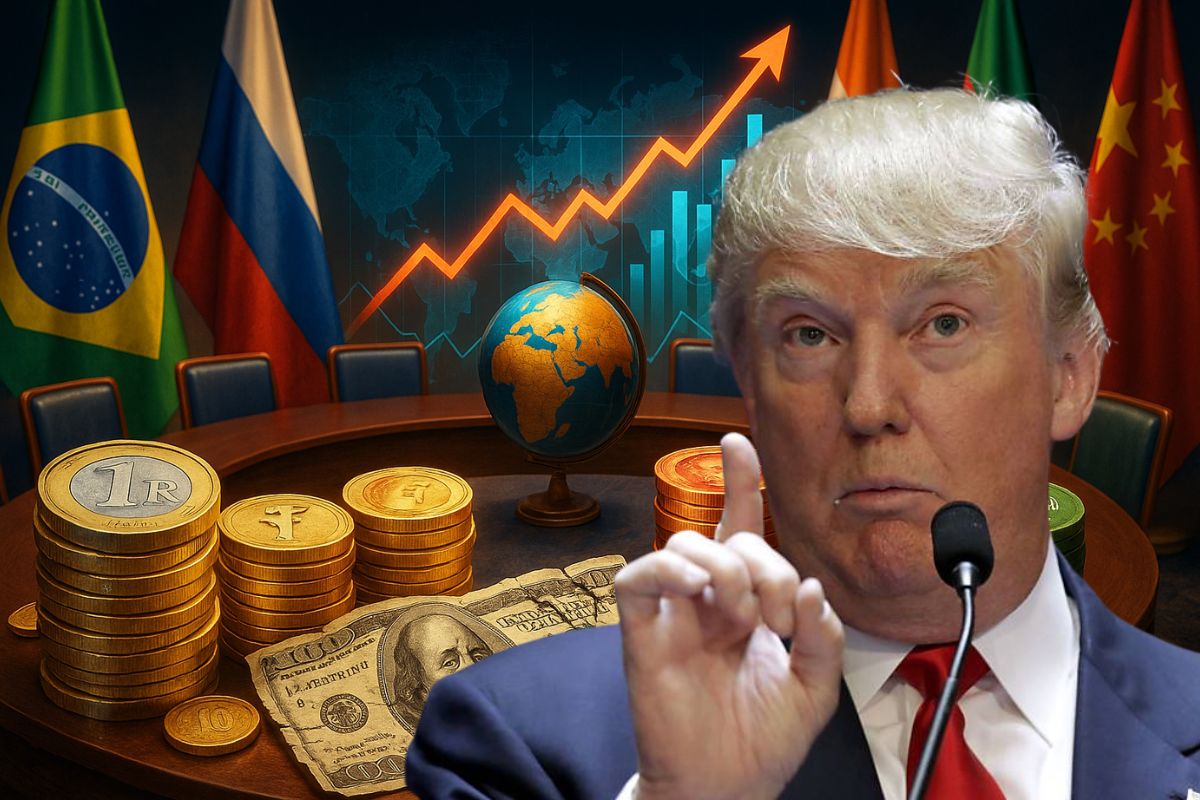


BRICS Meeting Called by Lula Prepares Response to Trump’s Tariff Blitz with Use of Local Currencies and Plan to Reduce Dollar Dependency
The new BRICS meeting, called by President Luiz Inácio Lula da Silva, takes place amid escalating trade war measures imposed by the United States. The virtual meeting, scheduled for next week, officially focuses on strengthening multilateralism, but carries a strategic goal: to create trade mechanisms in local currencies to reduce the influence of the dollar.
Since August, Donald Trump’s government has imposed tariffs of up to 50% on Brazilian meats, coffee, footwear, fruits, and capital goods, increasing tensions between Washington and Brasília. For Lula, the response must be articulated within the bloc, which will expand in 2024 and currently includes 11 countries with growing weight in the global economy.
Trump’s Tariff Blitz and the Brazilian Response
The tariffs imposed by the U.S. target strategic sectors of the Brazilian economy and were viewed by the government as political retaliation. According to Folha PE, the White House linked the measure not only to trade disputes but also to the trial of former President Jair Bolsonaro in the Supreme Federal Court (STF).
-
Brazilian city bets on the business environment to generate jobs and attract investments in the energy sector — secretary reveals strategy at Macaé Energy 2026.

-
50 viaducts, 4 tunnels, 28 bridges, and 40 kilometers of bike paths: BR-262 in Espírito Santo will receive 8.6 billion reais for the largest engineering project in the state’s history, inspired by the Immigrant Highway in São Paulo.

-
Brazil produces too much clean energy and doesn’t know what to do with it: over 20% of solar and wind capacity was wasted in 2025 while investors flee and 509 renewable generation projects were abandoned in the last year.

-
Piauí will produce a new fuel that replaces diesel without needing to change anything in the truck’s engine and reduces pollutant gas emissions by half: truck drivers from all over the Northeast are already celebrating the news that will arrive later this decade.


In response, Brazil activated the World Trade Organization (WTO) and is considering using the Reciprocity Act (2025), which authorizes retaliatory measures against countries that hinder Brazilian exports. Among the possibilities are surcharges on cultural products, patent revocation, and increased tariffs on strategic imports.
Trade in Local Currencies as a Geopolitical Weapon
The central point of the new BRICS meeting will be the discussion on the use of national currencies in commercial exchanges. This measure would reduce dependency on the dollar, making it more difficult for the U.S. to use tariffs and sanctions as instruments of economic pressure.
The proposal, supported by China, Russia, and India, worries Trump, who has already threatened to impose new barriers on countries that adopt the system. For the members of the bloc, however, the strategy strengthens economic integration and increases autonomy in international negotiations.
Who Is Participating and What Is at Stake
Leaders from South Africa, Saudi Arabia, Brazil, China, Egypt, United Arab Emirates, Ethiopia, India, Indonesia, Iran, and Russia are confirmed to participate. In addition to the trade agenda, the meeting will address the war in Ukraine, the humanitarian crisis in Gaza, and preparations for the COP30, which will be held in Belém in November.
According to analysts, the movement shows that BRICS seeks to consolidate as an alternative to the U.S.-dominated financial system, turning tariffs and sanctions into catalysts for greater integration of the bloc.
A Bloc in Search of Global Autonomy
For Lula, the opportunity is to reinforce Brazil’s prominence in the international debate. The country is trying to balance relations with Washington while coming closer to China and Russia, expanding cooperation in trade, energy, and technology.
The challenge will be to translate political decisions into practical mechanisms, such as the creation of compensation systems in local currencies and regional credit lines. If it advances, this measure could inaugurate a new phase in the global economic dispute, with direct impacts on Brazilian exporters and importers.
Do you believe that the use of local currencies can really reduce dependency on the dollar, or will the risk of new U.S. tariffs weigh more heavily? Share your opinion in the comments — your perspective is essential in this debate.







A estabilidade econômico que conquistamos até aqui, é um comércio de âmbito importante para o crescimento comercial no país, confrontos desnecessário causará caus na geopolítica externa e trará uma receção tão grande que não conseguiríamos recuperar jamais. Lula está fazendo um retroceder o organizado durante décadas de negociação. Com isso perderemos a liderança em negociação nos módulos de calçados, carnes, manufaturados, enlatados e etc…
Retrocesso na economia brasileira e quem perde é o brasileiro. Isso é retroceder e destruir as empresas brasileiras e seus insumos…. Burrice, burrice, a esquerda sempre dando um pontapé na **** errada… A saber, sempre da **** do brasileiro. Péssima decisão…
Tarifação e responsabilidade de algo que já tem um definição pela OMC e a solução a se aplicada e a de reprocidade e pronto
Não da para acreditar em fortalecimento e independência em um país que exerce tarifaço sobre a população. O brasileiro está sendo espremido pelos impostos e estamos preocupados com os EUA. Teríamos que primeiro fazer o dever de casa e baixar nossa carga tributária.