





 Portuguese
  English
  Spanish
  5 min of reading
  2 comments


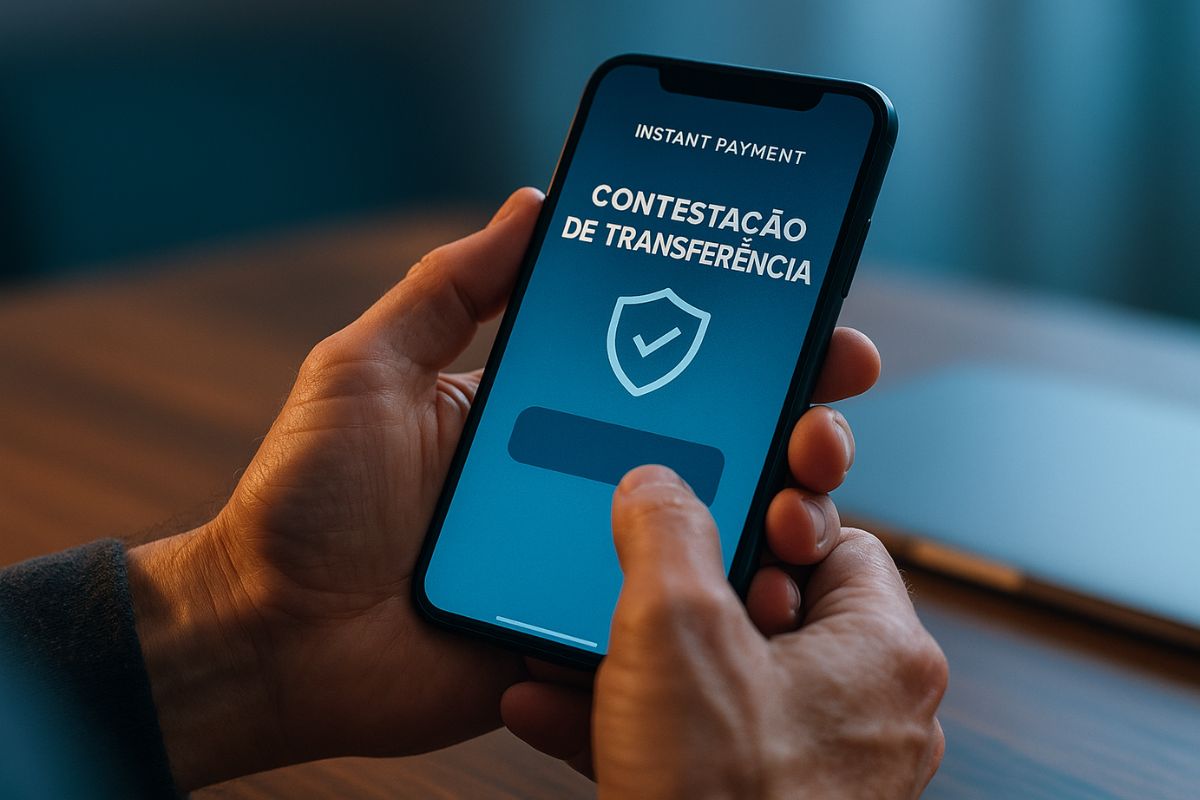


With a Simple Tap on the Contestation Button within the App, Victims of Fraud via Pix Open Investigations Among Banks, See Suspicious Balances Being Blocked, and Can Get Their Money Back in a Few Days
Pix has become part of the daily routine for Brazilians. We pay bills, make purchases, send money to family, and even close deals with just a few taps on the screen. However, along with all this convenience came a huge problem: the explosion of scams and fraud, which have already caused billions in losses in the country.
To try to turn the tide, the Central Bank has launched MED 2.0, the new version of the Special Mechanism for Refund. The idea is simple to understand: create a kind of “official money tracker” to increase the chances of those who fell for a scam recovering at least part of the lost amount.
In this article, we will explain in clear English how MED 2.0 works, when it can be used, and what actually changes for the pocket of those who use Pix every day.
-
The institute that trained the greatest aerospace engineers in Brazil has just opened its first campus outside São Paulo after 75 years: ITA Ceará will have R$ 445 million, new courses in energy and systems, and classes are expected to start in 2027.

-
Luciano Hang, owner of Havan, goes to Juiz de Fora after the tragedy in February, brings R$ 1 million, hands out R$ 2,000 cards, and donates up to R$ 15,000 to victims in the region.

-
The Brazilian passport allows legal residence in dozens of countries without the need for a prior visa, and most Brazilians are unaware that they can apply for residency directly upon arriving in nations in South America, Africa, and even Europe.

-
Petrobras sends a message to Brazilian truck drivers after fuel collapse and reveals plan to have 100% domestic diesel.


What Is MED 2.0
MED has existed since 2021 as a set of rules to allow the return of funds in cases of fraud, scams, or operational errors in Pix. The first version, however, had an important limitation: the system only looked at the first account that received the money from the victim. If the scammer quickly transferred everything to other accounts, there often was no balance left to refund.
The MED 2.0 comes precisely to address this weakness. Now, banks can track the “money trail” and block amounts in intermediary accounts, those used to spread the money and make tracing difficult. In simple terms, if the money left account A, went to B, and then to C, the fraud alert follows this path and allows blocking along the way.
Furthermore, the Central Bank has determined that access to the mechanism must be done simply, directly through the bank’s app, without relying on a call to the call center or a physical branch.
When the New System Became Effective
The new rules started to be released in November 2025. Since the 23rd, banks can already use MED 2.0 voluntarily. Starting on February 2, 2026, usage becomes mandatory for all institutions participating in Pix.
In practice, this means that over the next few months, more and more users will find the option to contest a Pix directly on the transaction screen within the app. By 2026, this option should be available to everyone.
How MED 2.0 Works in Practice
Imagine the following situation: you realize that you fell for a scam, made a Pix to someone posing as a bank employee, relative, or company, and the money has already left your account.
The first step is to open the app and look for the transaction in the Pix statement. Inside, there should be a button with something like “Contest Pix,” “Report Fraud,” or “Request Refund”. By tapping this button, you inform that you were a victim of a scam, choose the reason, and, if possible, attach screenshots of conversations, ads, or receipts.
From there, the following happens:
- your bank analyzes if the case fits the MED rules;
- if so, it opens a formal complaint and alerts the bank that received the money;
- the involved banks can block the balance not only in the account that received the Pix but also in accounts to which the amount has already been transferred.
The timelines have also changed. Under the new rules, the victim can file a refund request within 80 days after the transaction, but experts emphasize that it is essential to act within the first hours, when there is still more money circulating in the scammers’ accounts.
Once the request is registered, banks have a few days to analyze the case. If signs of fraud are found and there is still a balance in the blocked accounts, the money can be refunded within 11 days after the contestation.
It is important to remember that there is no guarantee of total reimbursement. If part of the amount has already been withdrawn or used, the refund may be only partial.
In Which Situations MED 2.0 Can Be Used
MED 2.0 was designed for specific cases. It applies when there is:
- fraud or scam, such as cloned profiles on WhatsApp, fake bank employees, fake links sent via email or SMS, or online shopping sites that never deliver the product;
- coercion, which is when a person makes a Pix under threat, such as in a quick kidnapping or robbery;
- operational failure, when there is an error in the system itself, such as a duplicated Pix or an internal bank error.
On the other hand, the mechanism does not apply to purchase disagreements (“I didn’t like the product,” “the service was delayed”), disputes between acquaintances about who should pay what, or simple regret after making a transfer. It is also not the appropriate tool for the classic error of typing the wrong key and sending the Pix to the wrong person without any fraud involved.
In these cases, the usual solution is to negotiate directly with the person who received the money or seek help from consumer protection agencies and the judiciary.
Why the Central Bank Decided to Strengthen the System
Scams involving Pix exploded alongside the popularization of the system. Just in 2024, the estimated loss due to fraud reached around R$ 5 billion, a value about 70% higher than that recorded the previous year.
At the same time, Pix handles gigantic amounts in the economy: over R$ 26 trillion in a single year, nearly double Brazil’s GDP.
With so many people using the system, the old refund model, which only looked at the first account, was not able to keep up with the criminals’ creativity. Gangs began to automate transfers, spreading the balance to dozens of accounts in seconds. The result was a very low recovery rate.
MED 2.0 is the Central Bank’s attempt to close this gap, making life more difficult for fraudsters without taking away Pix’s speed for the everyday user.
What Changes for the Pix User
For those who use Pix in their daily lives, the good news is that there’s no need to activate anything in the app. The protection is automatic. If you are a victim of a scam, just activate the mechanism through the app itself, in the Pix area, and follow the bank’s analysis.
The main change is in mindset: faced with a scam, the reaction should not be just to panic, but to act quickly, register the contestation, keep evidence, and, whenever possible, file a police report. The sooner the request reaches the system, the greater the chance of blocking the money before it completely disappears.
It is also worth reinforcing the basic precautions that continue to apply, even with MED 2.0 in operation: distrust urgent messages asking for money, verify the data of who receives before confirming the Pix, avoid clicking on suspicious links, and maintain lower limits for transfers during higher-risk times.










O difícil é conseguir ler a matéria pois ela está coberta por anúncios mil!
O problema é quando os **** são do próprio governo e rastreamento não para evitar golpes mas para saber em quem dar…