





 Portuguese
  English
  Spanish
  3 min of reading
  0 comments


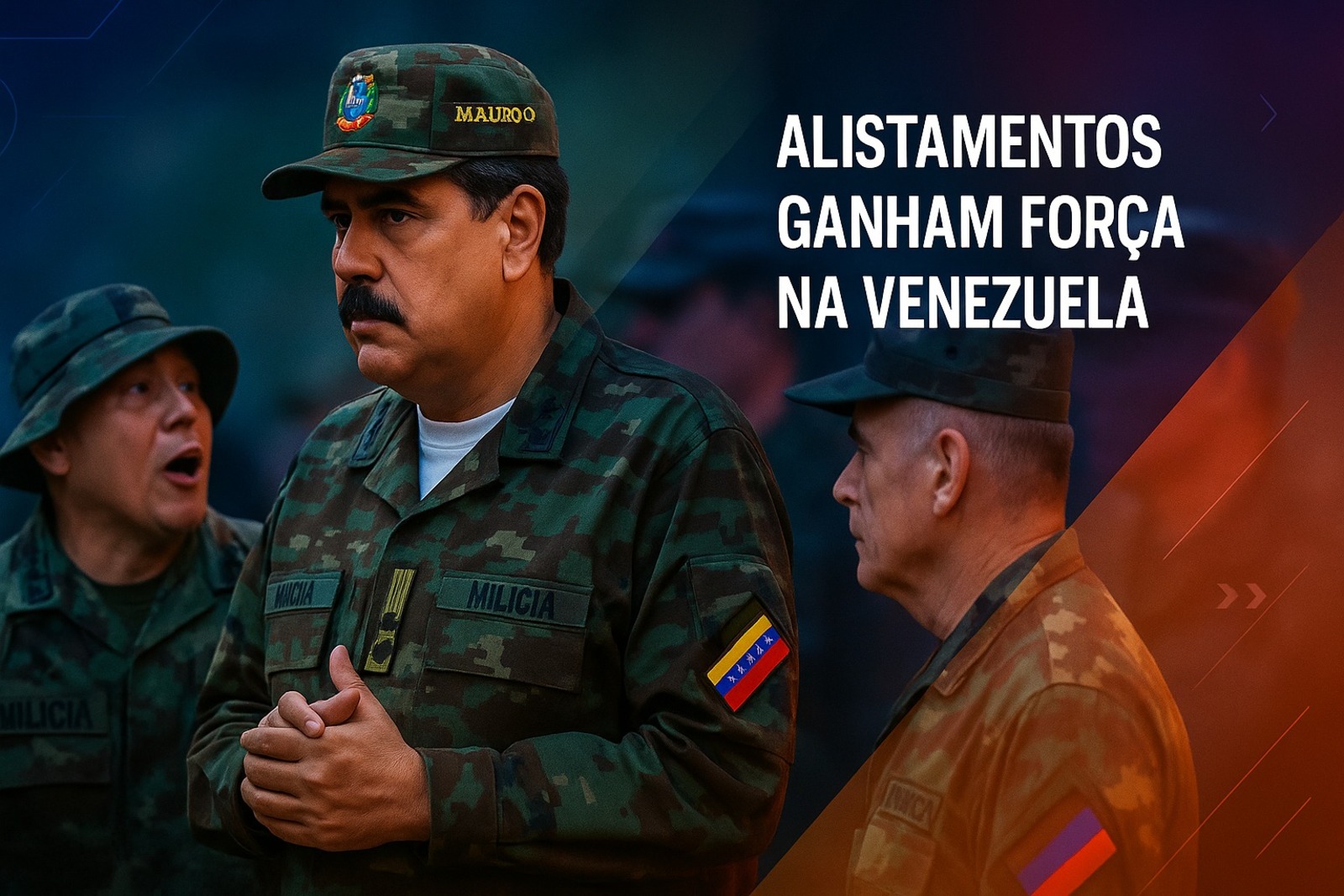
Public Employees, Retirees, and Housewives Enlist in the Bolivarian Militia Amid Tensions with the United States
Public employees, housewives, and retirees gathered this Saturday at various locations in Venezuela to enlist in the Bolivarian Militia. The movement responded to a call from President Nicolás Maduro, who announced the opening of new registrations in light of the possibility of a U.S. invasion.
The Militia, made up of civilians and integrated into the Armed Forces, is considered by critics to be an ideological arm of the government.
Furthermore, the mobilization also aims to demonstrate strength at a time when Maduro insists that the country is under threat.
-
USA and China compete for Brazil over resources that could be worth trillions — rare earths put the country at the center of a global dispute

-
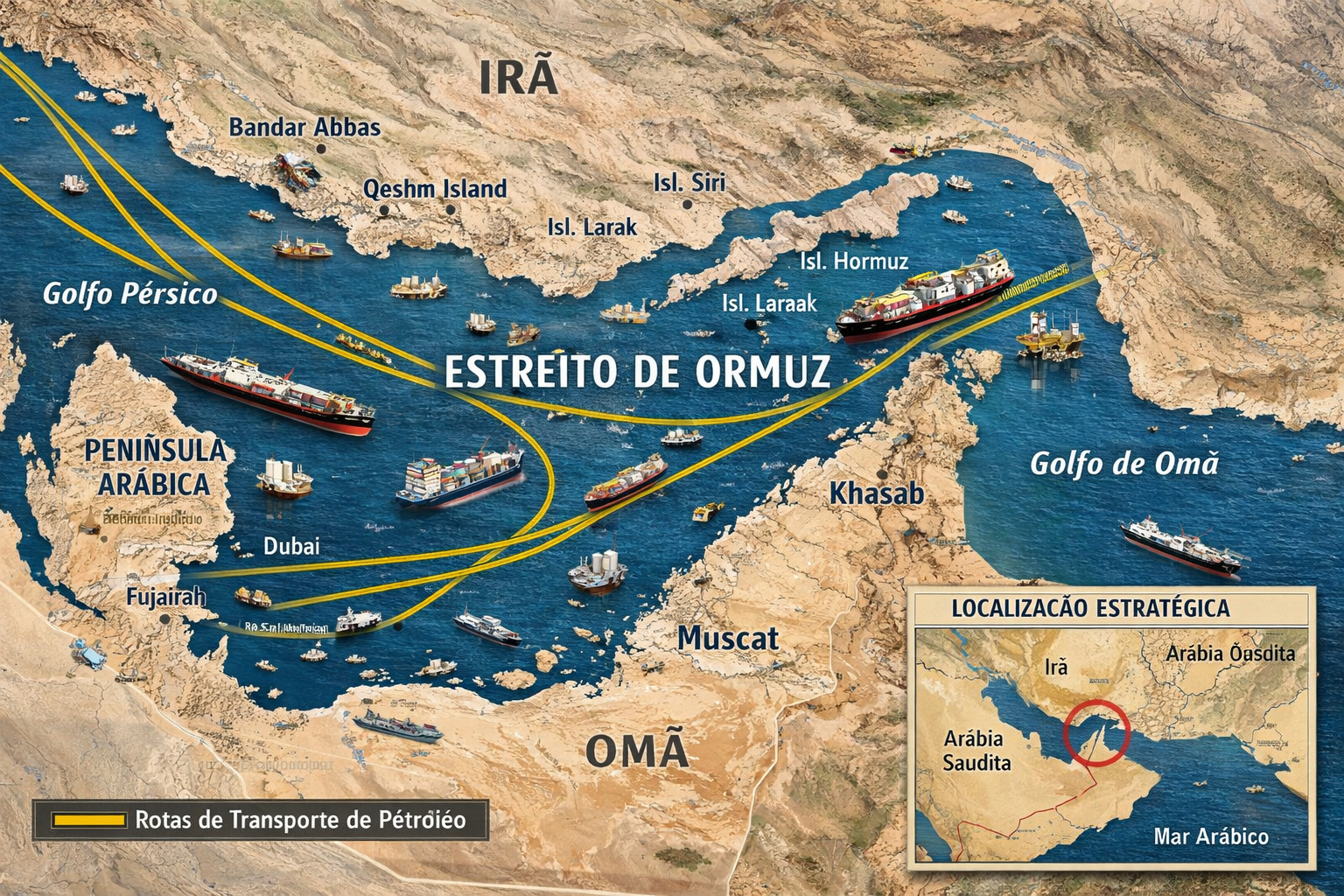
Global summit with over 40 countries pressures Iran for a blockade in the Strait of Hormuz and warns of direct impact on oil, food, and the global economy.
-
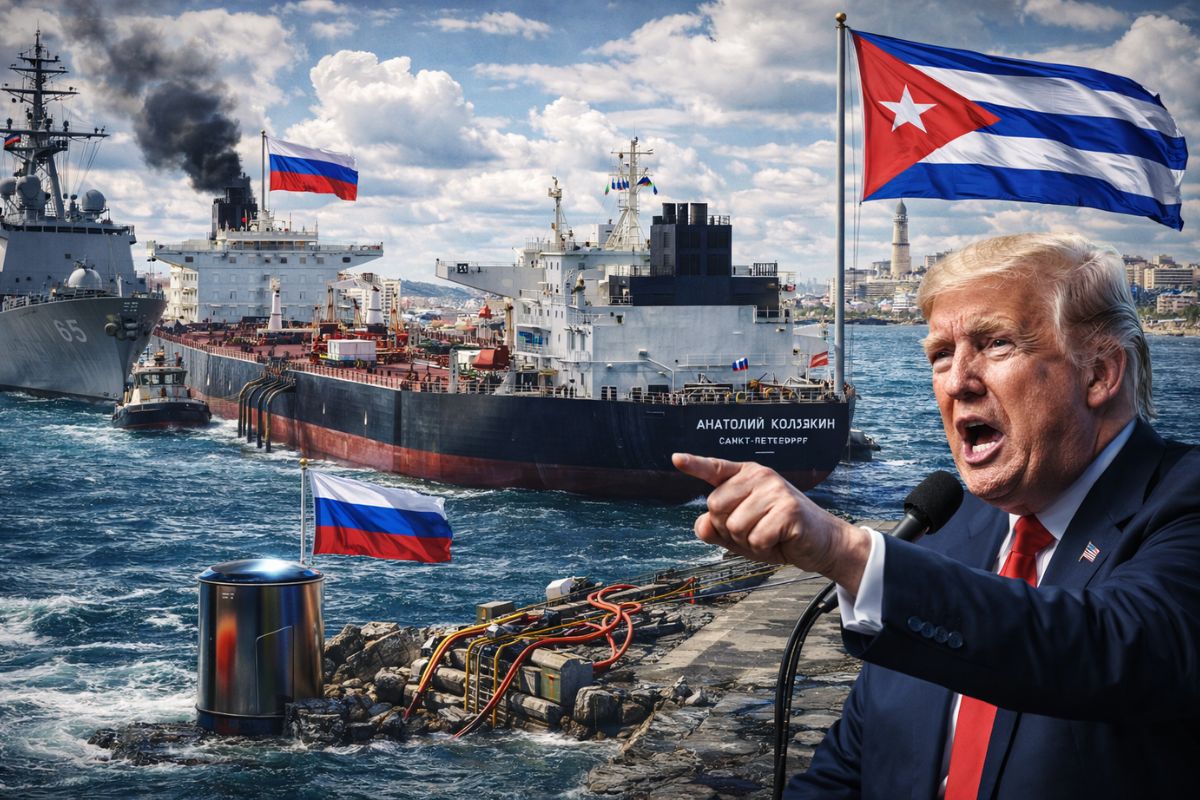
Russia has broken the U.S. maritime blockade to send oil to Cuba and is now loading a second ship while Trump says that “Cuba is next” in a possible military action against the island.
-
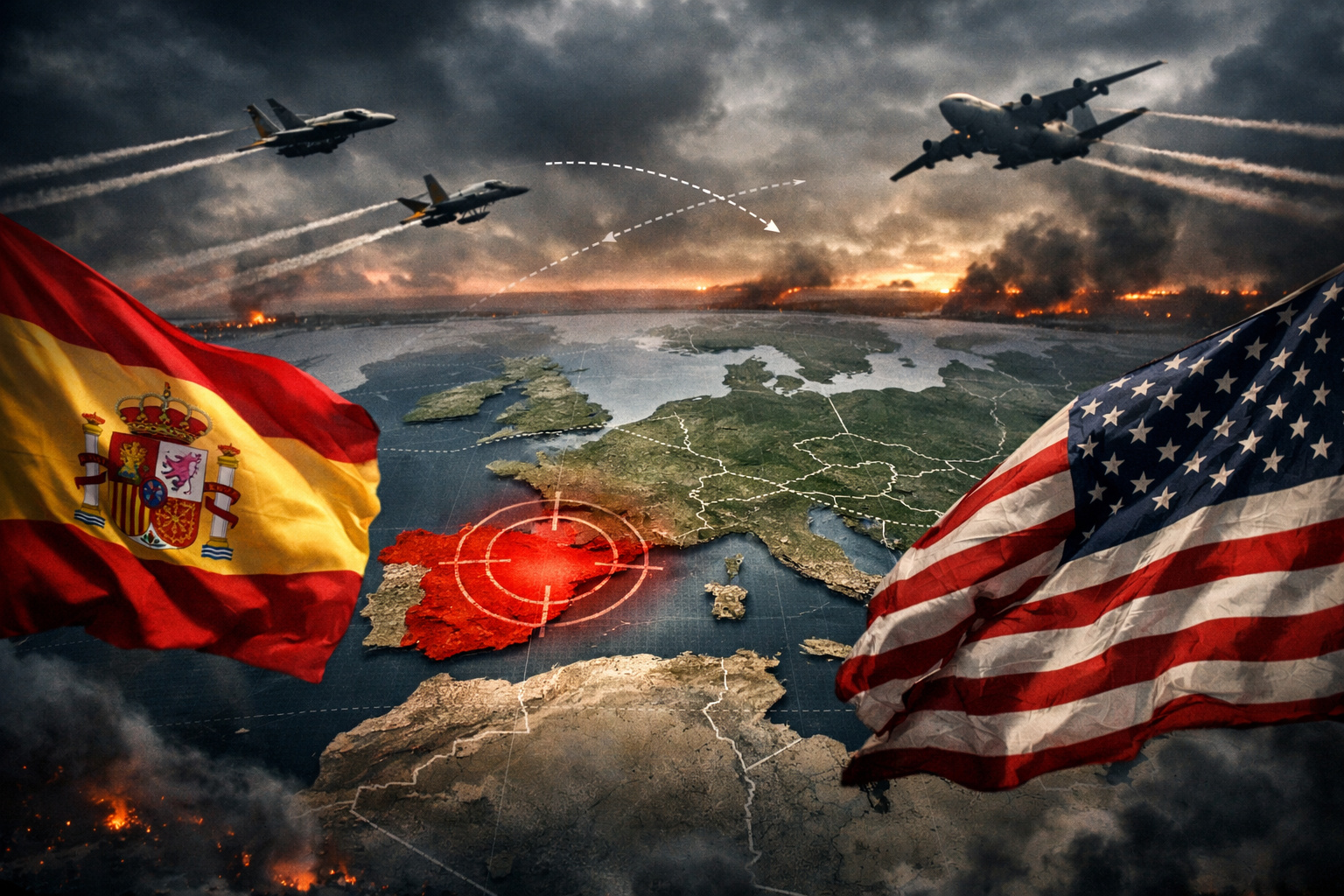
Spain challenges the USA and closes its airspace for operations against Iran, raising global tension and provoking the threat of a trade rupture.

Foreign Military Presence
Meanwhile, three U.S. military ships are expected to position themselves in international waters off the coast of Venezuela.
Washington claims that the operation aims to combat drug trafficking, but the Venezuelan government sees it as a direct threat.
According to the portal O Globo, registration centers for the Militia were set up in squares, public buildings, and even in the Presidential Palace in Caracas. “Have you served before?” asked a militia member to Óscar Matheus, a 66-year-old auditor waiting in line. “I’m here to serve our country,” he replied.
Rosy Paravabith, 51, shared the same willingness. “We don’t know what might happen, but we have to resist. The homeland calls us, the country needs us,” she stated.
Tradition and Ideology
The Venezuelan Armed Forces bear the mark of politicization since Hugo Chávez. The current official greeting is “Chávez Lives!”. In 2020, the International Institute for Strategic Studies (IISS) estimated 343,000 members, a number close to Mexico and surpassed only by Brazil and Colombia in the region.
The most important aspect, however, was Maduro’s statement last week: according to him, the Militia alone would already count more than 4.5 million soldiers.
After registering, the volunteers shouted, “I am enlisting for Venezuela, long live the homeland!”. Police and reserve militia members also participated in the event.
Historical Symbolism
The enlistment process includes a stop at the Mountain Barracks in Caracas. The site, which offers a panoramic view of the capital, was Chávez’s operations center during his coup attempt in 1992.
In the first room, the volunteers watch a documentary about the European blockade from 1902 to 1903, when powers surrounded the Venezuelan coast after the country refused to pay debts.
Then, they encounter an exhibition of weaponry. An Army lieutenant explains, in technical language, the range and use of each piece of equipment.
U.S. Accusations and Venezuela’s Responses
Tensions escalated after the United States raised the reward for Maduro’s capture. Washington accuses the president of leading the so-called Cartel of Suns, identified as a drug trafficking organization and even classified as a terrorist group.
Maduro responded harshly. According to him, the American military mobilization is “immoral, criminal, and illegal” and aims to provoke a regime change. The president claims that the country will resist any attempt at intervention.
Internal Divergence
On the streets, the topic mixes jokes and concerns. Although experts point out that a direct military action by the United States is unlikely, the rhetoric mobilizes the population.
<p"We will defend this homeland until our last breath," declared Defense Minister Vladimir López to the state channel VTV.
The opposition, on the other hand, urges citizens not to enlist. Nevertheless, lines of volunteers formed in various cities. Among them were both young and elderly individuals.
“I want to train to defend the homeland,” said 19-year-old Jesús Bórquez. Omaira Hernández, 78, highlighted her willingness: “I know that because of my age, I won’t take up a rifle, but I am willing to help.”
With information from O Globo.







-

Uma pessoa reagiu a isso.