





 Portuguese
  English
  Spanish
  5 min of reading
  0 comments


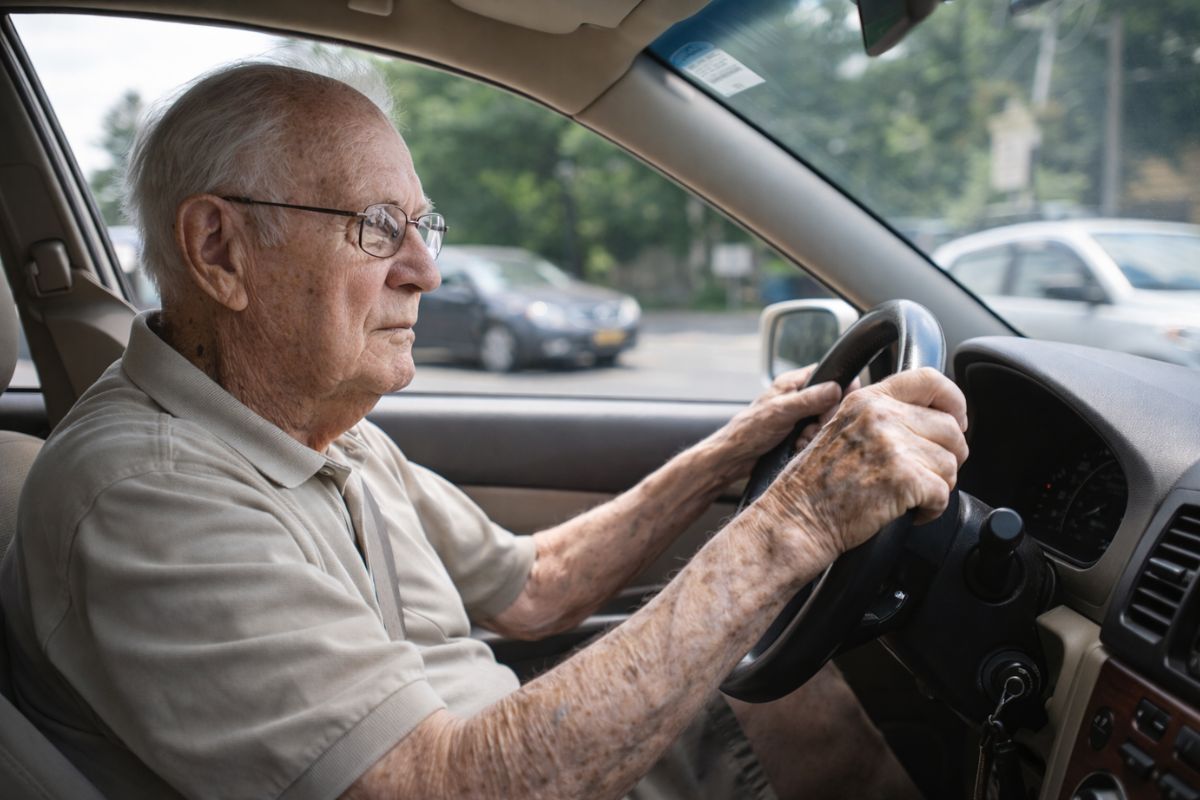
A public petition in Portugal proposes automatically canceling the driver’s license of elderly people from 75 years old, but experts warn that, without transportation alternatives, the measure could condemn millions of people to social exclusion in a rapidly aging country.
The discussion about the right of elderly people to drive has gained new momentum in Portugal with a public petition proposing to prohibit driving from the age of 75. The topic intersects road safety, active aging, and individual rights, raising a question that no one wants to answer: how to balance traffic protection with the autonomy of people who depend on cars to access medical appointments, buy food, and maintain a community life? In a country where the population is aging rapidly, the answer to this question affects millions of elderly people.
The proposal foresees the automatic cancellation of the driver’s license at 75 years old, citing an increased risk of cognitive, visual, and motor decline. But experts in geriatrics and road safety warn that not all elderly people age in the same way and that the ability to drive varies greatly among people of the same age. Episodes such as dangerous maneuvers and driving against traffic are often cited, but the central question remains: should age alone be a sufficient criterion to take away someone’s right to move with autonomy?
What the petition proposes and why it divides opinions about elderly drivers
The public petition advocates for the automatic cancellation of the driver’s license when the driver turns 75. Supporters of the measure argue that the risk of serious accidents increases with aging and that, even with periodic examinations, it is difficult to anticipate all the risks that arise between evaluations.
-
All truck drivers and bus drivers must take the tests to obtain a commercial driver’s license in English.

-
Buying a car may suspend Bolsa Família in 2026 and trigger automatic government oversight.
-
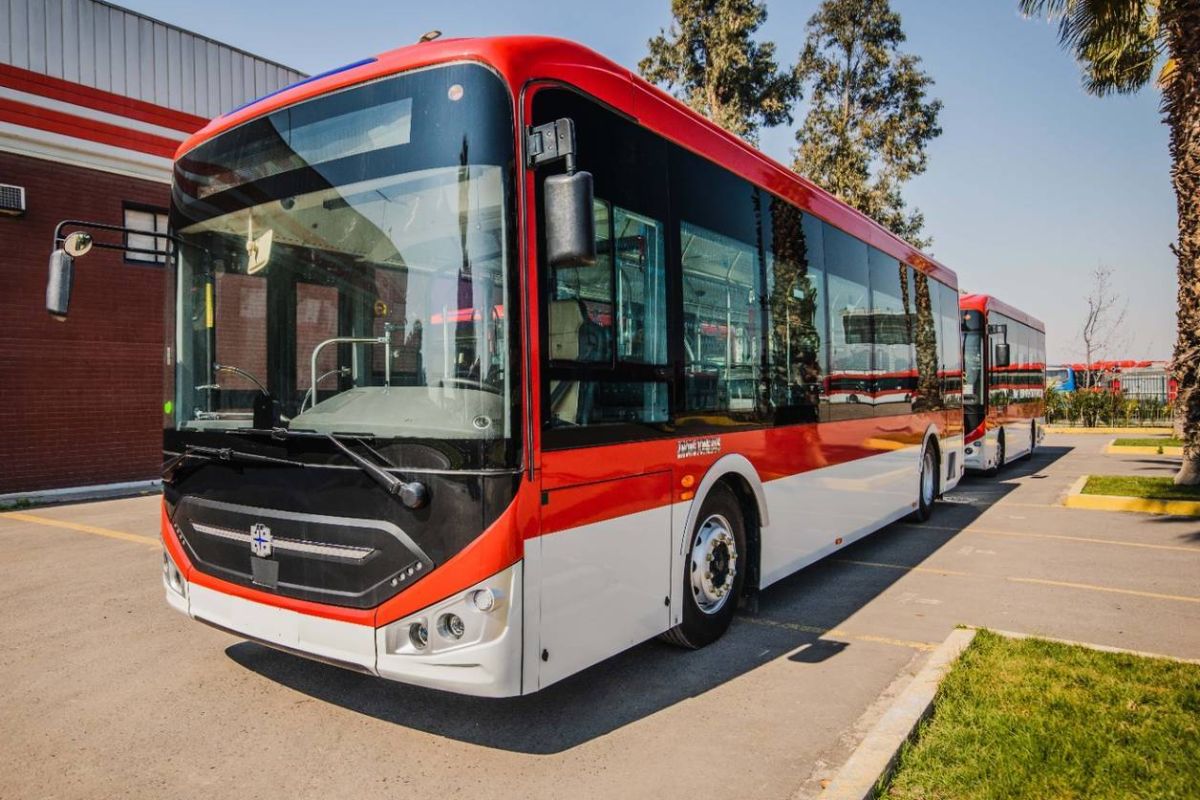
Chile reaches 4,088 electric buses and puts 62% of the fleet in zero emissions; Santiago already has the largest fleet of e-buses outside of China, with a decrease in PM2.5, less noise, and 60 million liters of diesel saved.
-
Coca-Cola with less water: groundbreaking technology comes to life with the help of BNDES with an investment of R$ 102 million in a factory that promises to reduce water usage by 10%, energy consumption by 15%, and costs by 35.5%.

Episodes involving elderly people driving against traffic or having difficulty reacting to unforeseen events are used as arguments to justify a strict limit.
On the other hand, those opposing the automatic prohibition advocate for individual assessments instead of a fixed age limit. Current Portuguese legislation already relies on renewing the license with mandatory medical exams from certain ages, without imposing a strict age limit.
The difference between a healthy 75-year-old and another with cognitive impairment can be vast. Treating all elderly people as incapable of driving solely based on their birth date ignores this reality and can be considered age discrimination.
The trap that no one discusses: what happens to elderly people who lose their license
This is the most sensitive and least discussed point of the debate. In many regions of Portugal, especially outside major urban centers, the car is the only viable means of transportation for elderly people who need to go to medical appointments, pharmacies, supermarkets, and community activities.
Public transportation in these areas is scarce, with limited schedules and routes that do not meet the real needs of the older population.
Taking away an elderly person’s license without offering a mobility alternative can mean complete social exclusion. The person loses access to healthcare, stops participating in community activities, reduces contact with friends and family, and sees their quality of life plummet within weeks.
Without adapted public transport, on-demand services, or community support networks, the prohibition of driving becomes a punishment disguised as protection. And those most affected are precisely the elderly living in areas where the car is most needed.
Alternatives that could work instead of a total ban for elderly drivers
Experts point out that any public policy regarding elderly driving needs to intersect road safety with mobility, health, and social participation.
Instead of an automatic ban at 75 years old, an integrated set of measures could protect traffic without condemning the elderly to exclusion. More detailed medical evaluations starting at certain ages, including neurological, vision, and reaction time tests, are the first step.
Gradual restrictions represent another viable alternative. Instead of completely suspending the license, it would be possible to limit driving hours, types of allowed roads, or maximum distances. Periodic refresher sessions on new traffic rules and technologies in vehicles also help elderly people maintain competence behind the wheel.
And whenever a driver is involved in certain types of accidents, a re-evaluation of fitness can be triggered automatically. These are measures that protect without excluding.
What other countries do with elderly driving and what Portugal can learn
The debate about elderly people in traffic is not exclusive to Portugal. Several European countries adopt models based on periodic assessments instead of age prohibitions, requiring medical exams with increasing frequency as a person ages.
The logic is simple: those who demonstrate fitness to drive continue driving, regardless of age. Those who do not demonstrate it lose their license for medical reasons, not for having reached another birthday.
What differentiates the countries that handle this issue better is the existence of real mobility alternatives for those who stop driving. Adapted public transport with schedules that meet the routines of elderly people, on-demand transport services in rural areas, and community support networks are investments that make the transition from driving to other forms of transportation less traumatic.
Without these investments, any restriction on elderly driving runs the risk of being seen as institutional abandonment disguised as a safety policy.
Why this debate about elderly people and driving matters to everyone
The discussion about prohibiting elderly people from driving in Portugal transcends traffic safety.
It exposes how rapidly aging societies treat their older members and whether they are willing to invest in infrastructure that ensures dignity and autonomy for those who have contributed decades to the economy and collective life. The petition may not advance as law, but the debate it has generated is necessary and urgent.
In a country where the population over 75 years old grows every year, delaying decisions about elderly mobility means accepting more accidents, more inequalities, and less quality of life for millions of people. The issue is not simply whether elderly people should drive or not.
The question is whether society is prepared to offer real alternatives before taking away their only means of staying connected to the world.
What do you think: should elderly people be prohibited from driving from 75 years old or should the decision be based on individual assessments? Do you know someone who depends on the car as their only means of transportation in old age? Leave a comment. This debate affects entire families and will become increasingly urgent in the coming years.










Seja o primeiro a reagir!