Portuguese
  Spanish


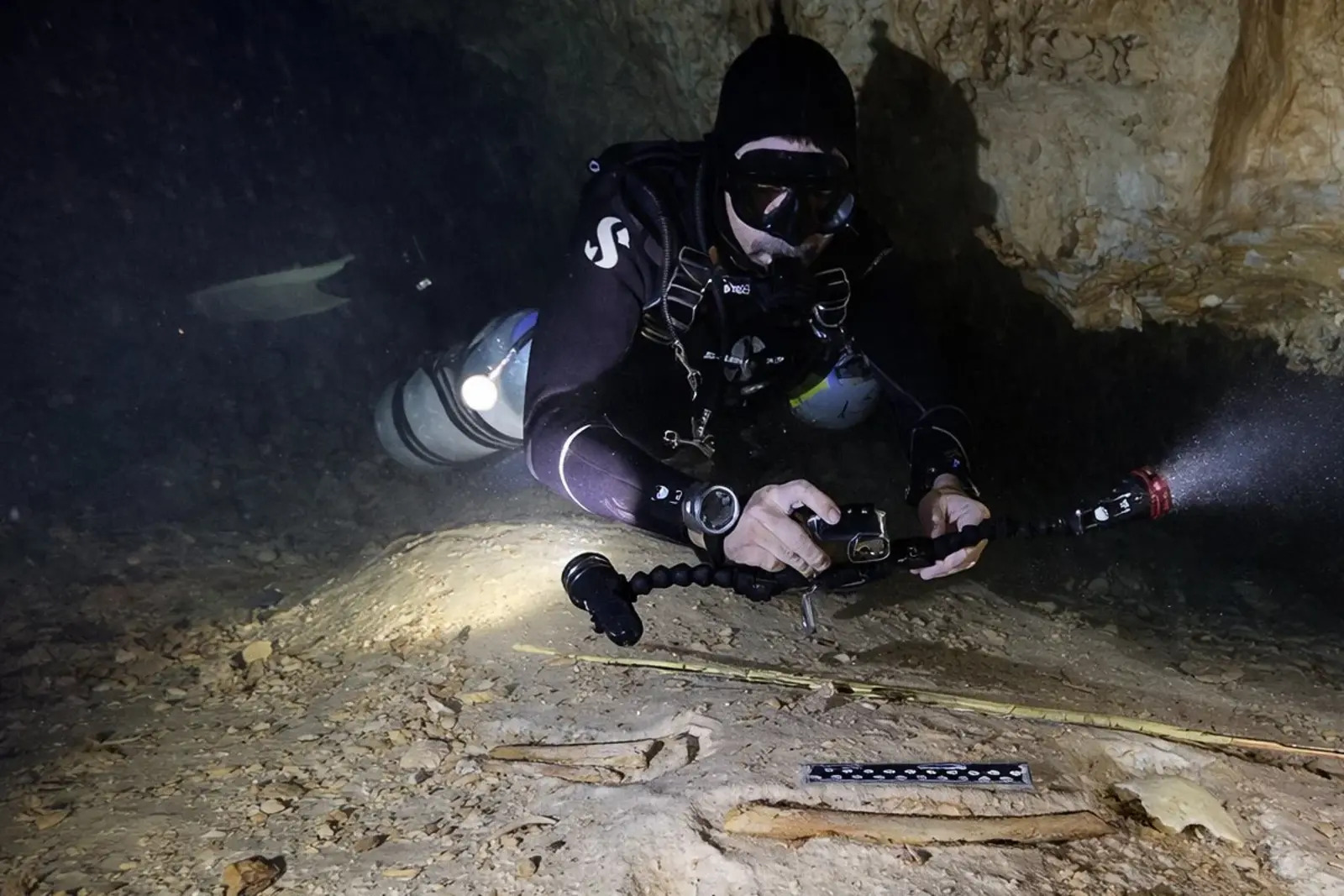

Human remains found 200 meters deep in Yucatán cenote are sent for analysis after recovery of about 40% of the skeleton
Human remains found in a cenote chamber in the Yucatán Peninsula were taken to Mexico City for forensic and anthropological study, in a step considered important for expanding the understanding of the country’s first inhabitants.
Transfer
The remains were transferred to the Bioarchaeology Group of the Archaeological Salvage Directorate of INAH.
In Mexico City, specialists will conduct a forensic and anthropological study on the recovered material.
-
The large jar blender has a rival: Oster Ultra Power bets on 1,000 W, six stainless steel blades, and two portable cups with leak-proof lids.

-
Tesla injected an additional $250 million into the German factory, doubled the battery cell target, and opened its own production line for startups.

-
No more TV stuck on the wall: Samsung The Freestyle+, the new projector with over 400 lumens projects on walls, floors, and ceilings, bringing cinema to any corner of the house.
-
A Japanese governor single-handedly stalled the construction of the world’s fastest train for nine years, and only now has he agreed to allow a tunnel excavated at a depth of 1,400 meters.



Claudia Curiel de Icaza, Secretary of Culture of the Mexican Government, stated that the transfer and study represent an important step in understanding the country’s first inhabitants.
Parts Found
Arturo Talavera González estimates that about 40% of the skeleton was recovered, including parts of the skull, ribs, and vertebrae, the clavicles, the right scapula, fragments of the pelvis, and long bones of the limbs.
Profile
The preliminary observations are based on the angle of the mastoid process and the thickening of the frontal bone above the eye sockets.
With this, the anthropologist determined that the individual was male.
Based on the long bones, he estimated a height between 1.45 and 1.50 meters. The death would have occurred between the ages of 20 and 25.
Cenote
The skeleton was found at the bottom of a cenote chamber, about 200 meters deep in the cave system. Deposits of charcoal around indicate human activity at the site.
Ancient Context
The remains suggest that the area may have served as shelter or ritual space between 8,000 and 10,000 years ago, when the environment was a dry cave and the sea level was very low.
During this period, the Yucatán Peninsula was a prairie with shrubs, grasses, few trees, and megafauna.
According to González, there were fire pits and, probably, the chamber was used as a burial crypt, demonstrating beliefs and funeral rites.
With information from Heritagedaily.