





 Portuguese
  English
  Spanish
  6 min of reading
  0 comments


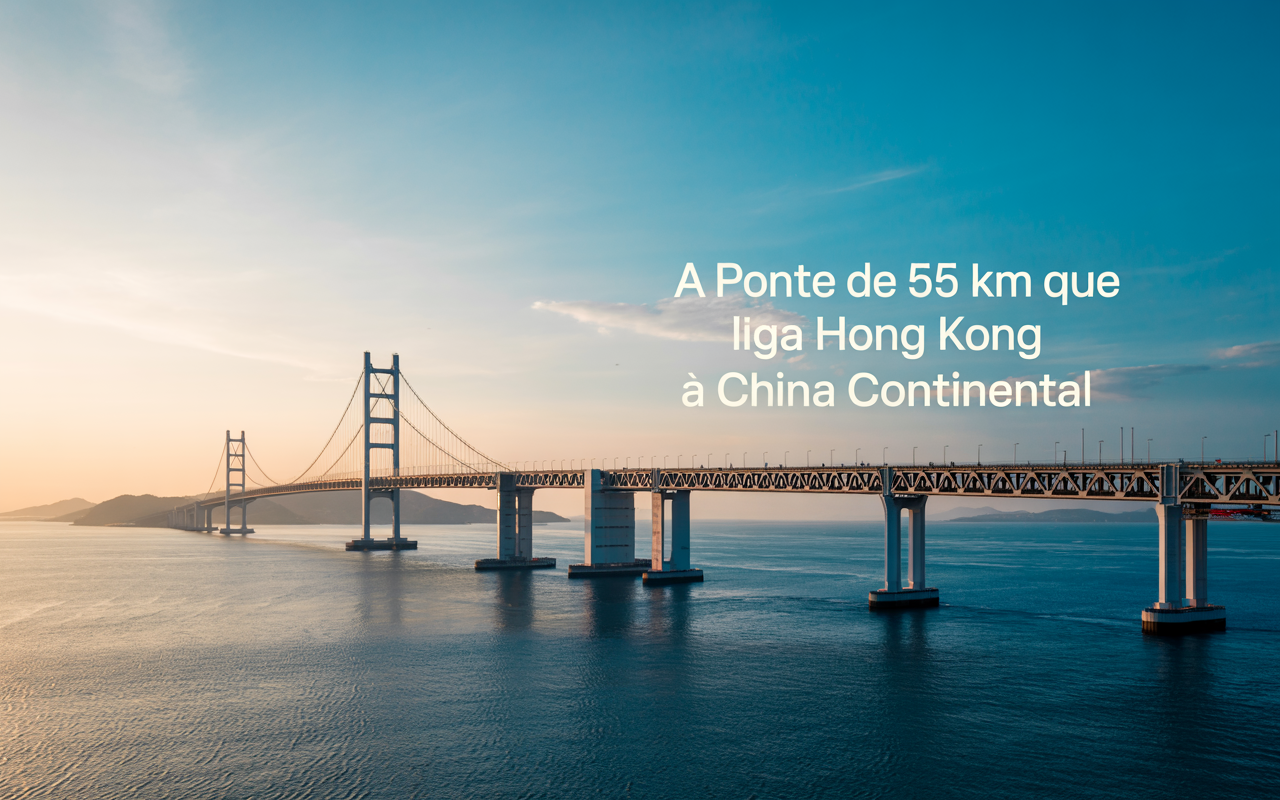
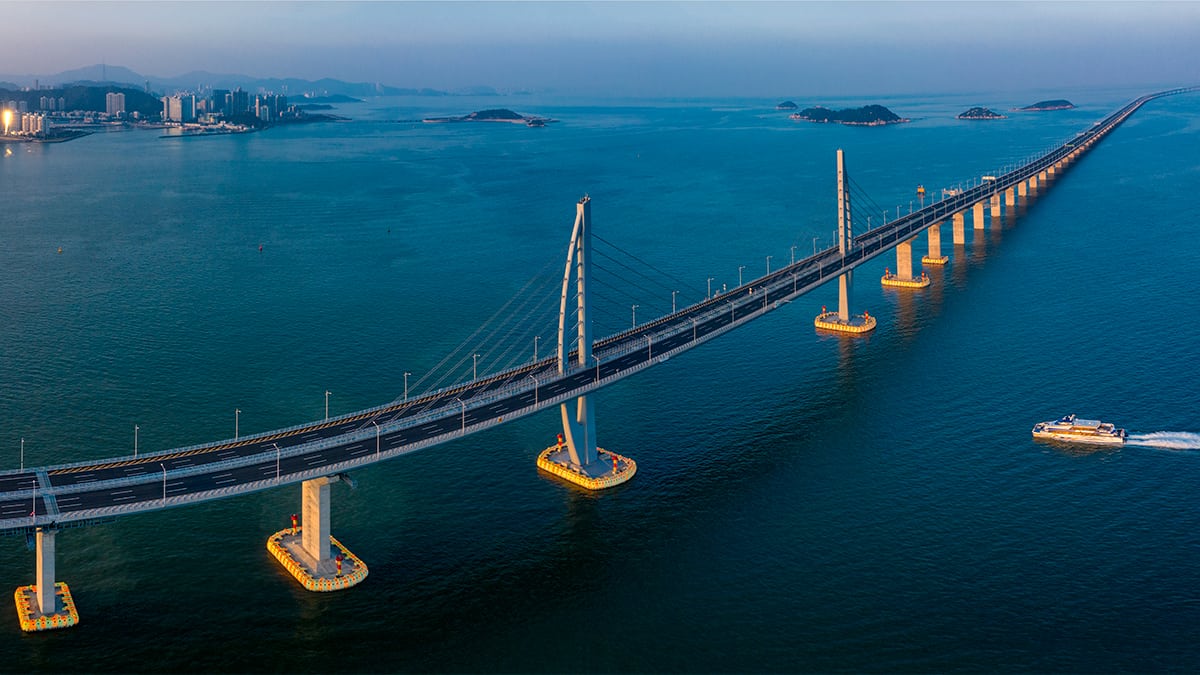
Inaugurated in 2018, the world’s largest bridge connects Hong Kong, Zhuhai, and Macau with 55 kilometers of extension over the sea, highlighting modern engineering and Chinese infrastructure in a billion-dollar project.
The vast blue of the Pearl River Delta in southern China holds one of the most ambitious constructions in the history of modern engineering: the Hong Kong-Zhuhai-Macau Bridge, a colossal structure of concrete and steel with 55 kilometers of extension that connects, for the first time, three of the most strategic and distinct regions of Chinese infrastructure via direct land access. Opened in October 2018 after nine years of construction, the work is officially considered the largest bridge in the world over the sea. More than just a transportation project, it is a symbol of geopolitical power, technological ambition, and regional integration. However, more than five years after its completion, the venture still generates debates about its real effectiveness, cost-benefit, and the social and environmental impacts.
A Landmark of Modern Engineering Over the Sea
The bridge is not a continuous linear structure. It consists of various sections elevated on marine pillars, two artificial islands, and a submarine tunnel of 6.7 kilometers. The project totals 55 kilometers, comprising 35 kilometers of elevated and underground sections and 20 kilometers of connections to roads and customs borders in each of the three regions.
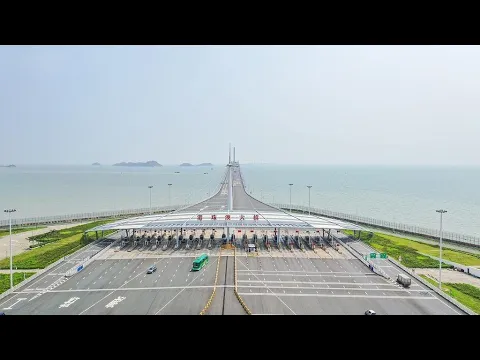

A massive logistical effort was required: over 400,000 tons of steel were used — enough to build 60 Eiffel Towers. The structure was designed to withstand Category 16 typhoons, earthquakes of up to 8 on the Richter scale, and to endure collisions with large vessels.
-
With over 14 million baskets of earth moved, an ancient North American metropolis built a monumental pyramid of 30 meters and established a city with 20,000 inhabitants nearly a thousand years ago.
-
A 1,900-year-old treasure emerges from a Roman house destroyed by fire and sealed since antiquity in Romania, with coins and metals fused among the ashes.
-
The Brazilian colonial city that stopped in time and shares territory with a rocket launch base.
-
79-year-old woman challenges limits, visits 193 countries in the world after 56 years of planning and reveals the behind-the-scenes of a global journey that few have managed to accomplish.


Strategic Integration Between Hong Kong, Zhuhai, and Macau
The central purpose of the bridge is to accelerate the integration of the so-called Greater Bay Area Guangdong-Hong Kong-Macau, one of the most important economic regions in Asia, with over 70 million inhabitants and a GDP exceeding US$ 1.5 trillion.
Before the construction, the car trip between Hong Kong and Zhuhai required a long detour through Shenzhen or the use of slow ferries. Today, this distance can be covered in just 40 minutes, an achievement that boosts logistics, trade, and tourism among the regions.
This interconnection is not only economic but also political. The bridge facilitates the advancement of a policy for greater integration of Hong Kong and Macau — which function under the “one country, two systems” model — with the rest of mainland China, reinforcing the presence of the Chinese state in areas that have traditionally been more autonomous.
The Submarine Tunnel: A Solution to Protect Navigation
One of the most notable innovations of the project is the submerged tunnel that connects two artificial islands built in the middle of the delta. With a length of 6.7 kilometers, the tunnel allows large vessels, including cargo ships and tankers, to continue navigating freely through the maritime channel, which is a vital route for international trade.
The construction of the tunnel was an unprecedented technical challenge. The modules were manufactured separately, towed by sea, and precisely fitted at the bottom of the ocean, at depths of several meters, using advanced sealing and drainage techniques.
According to data from the China Communications Construction Company (CCCC), the process involved over 100,000 workers and required the creation of new methods for pressure and stability control on the seabed.
Billion-Dollar Investment and Questions About Viability
The estimated cost of the bridge exceeds US$ 20 billion, considering the main structures and customs complexes at the three ends. Although the Chinese government claims that a significant portion of the funding came from grants and public-private partnerships, analysts point out that much of the resources originated from public coffers.
The problem is that, according to the South China Morning Post, the traffic volume to date is well below expectations. On average, only 10,000 to 15,000 vehicles per day use the bridge — a trivial number compared to its traffic capacity of up to 80,000 vehicles per day.
Additionally, the use of the bridge is restricted. Only authorized drivers may cross it. Private vehicles from Hong Kong, for example, require specific permits to enter mainland China, and the process is bureaucratic. This limits the positive impact for the general population.
Environmental Impacts: The Ecological Price of Grandeur
The construction of the bridge generated strong opposition from environmentalists, primarily due to interference in the habitats of the Chinese White Dolphin, an endangered species and a symbol of the marine biodiversity of the delta.
Studies conducted by environmental organizations warn that heavy vessel traffic, seabed dredging, and the construction of artificial islands have significantly altered the local ecosystem. In some areas, there has been a reduction of over 60% in the dolphin population in just five years.
The Hong Kong-Zhuhai-Macau Bridge Authority claims that mitigation measures have been taken, including environmental protection zones and acoustic monitoring systems, but the long-term effects remain uncertain.
Technical Performance: One of the Largest Civil Works of the 21st Century
Despite the controversies, from a technical standpoint, the bridge represents a remarkable feat of modern engineering. It was built to last at least 120 years, even under extreme weather conditions. The foundation of its pillars penetrates dozens of meters into the sea bed, and its tension cables are coated with state-of-the-art anti-corrosive materials.
To ensure safety, seismic and meteorological sensors continuously monitor the structure. In case of an accident, automatic maritime and road traffic control systems can stop the flow and trigger emergency teams based in Zhuhai and Hong Kong.
Experts from BBC News state that, beyond engineering and economics, the bridge holds significant symbolic value. It shows the world that China has the technical and financial capabilities to undertake global-scale projects — something fundamental to its geopolitical agenda of expanding influence in Asia and the world.
The bridge also reinforces the notion that the country can integrate autonomous and international territories into its central logistics network, a political step that coincides with an increasing presence of Beijing in areas like Hong Kong, which has witnessed significant protests against the central government in recent years.
The Future of the Greater Bay Area and the Role of the Bridge
The Greater Bay Area integration project envisions, over the next 10 years, a series of new intermodal connections, including high-speed trains, more bridges, and smart ports. In this context, the Hong Kong-Zhuhai-Macau Bridge is the first link in a network designed to transform the region into the largest technological and financial hub in the world, surpassing even Silicon Valley.
Although the direct financial return is questionable in the short term, the strategic return is incalculable: logistical control, territorial integration, and power projection are, for the Chinese Communist Party, intangible assets that justify any mega-project.
The largest bridge in the world over the sea, with its 55 kilometers of extension, is more than a record in engineering. It represents China’s ambition to redefine geographical and political frontiers through state-of-the-art Chinese infrastructure. Although it faces criticism regarding cost, environmental impact, and underutilization, the bridge remains one of the most impressive demonstrations of construction capacity ever seen.
The Hong Kong-Zhuhai-Macau Bridge continues to stand as a civilizational landmark that links not only cities but different visions of the future, and remains at the center of discussions about modern engineering, sustainability, and geopolitics in the 21st century.






Seja o primeiro a reagir!