





 Portuguese
  English
  Spanish
 4 min of reading
  0 comments


From Postcard to Silent Ruin, and Back to Glory. Discover the Story of the Bridge That Was Closed for Almost 40 Years and Required Unprecedented Restoration to Be Rebuilt.
The Hercílio Luz Bridge is more than a metallic structure that links Santa Catarina Island to the mainland. It is the chronicle of a capital that fought to avoid isolation, a landmark of world engineering, and a symbol of Brazilian resilience. Closed for nearly four decades, the “Old Lady” seemed doomed. However, an unprecedented engineering operation in the world brought it back to life, turning a monument in danger into a vibrant public space for the 21st century.
The Construction of the Bridge and Its Importance
At the beginning of the 20th century, Florianópolis faced a real threat: isolation. The capital, located on an island, depended on ferries to connect to the rest of the state, fueling movements that called for the transfer of the capital to the mainland. For Governor Hercílio Luz, the solution was strategic: build a bridge.
The chosen project was audacious. Designed by American engineers Robinson & Steinman, the structure would be a suspension bridge, but with a rare technology: instead of cables, it would use link bar chains. This feature made it the largest bridge in the world with this system, and today, it is the only one that still exists.
-
Friends have been building a small “town” for 30 years to grow old together, with compact houses, a common area, nature surrounding it, and a collective life project designed for friendship, coexistence, and simplicity.

-
This small town in Germany created its own currency 24 years ago, today it circulates millions per year, is accepted in over 300 stores, and the German government allowed all of this to happen under one condition.

-
Curitiba is shrinking and is expected to lose 97,000 residents by 2050, while inland cities in Paraná such as Sarandi, Araucária, and Toledo are experiencing accelerated growth that is changing the entire state’s map.

-
The lack of welders, electricians, and operators becomes a structural threat in 2025, with the construction industry and manufacturing already suffering from delays, cost pressures, and labor shortages in Brazil.

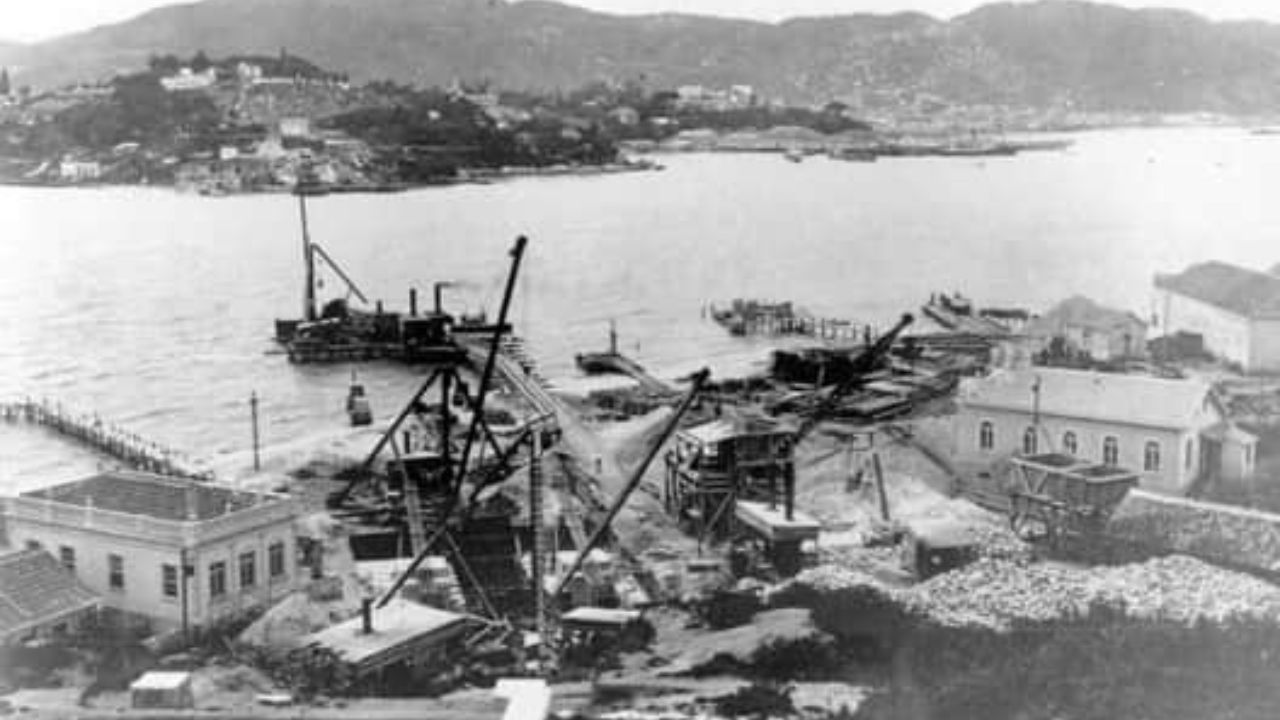
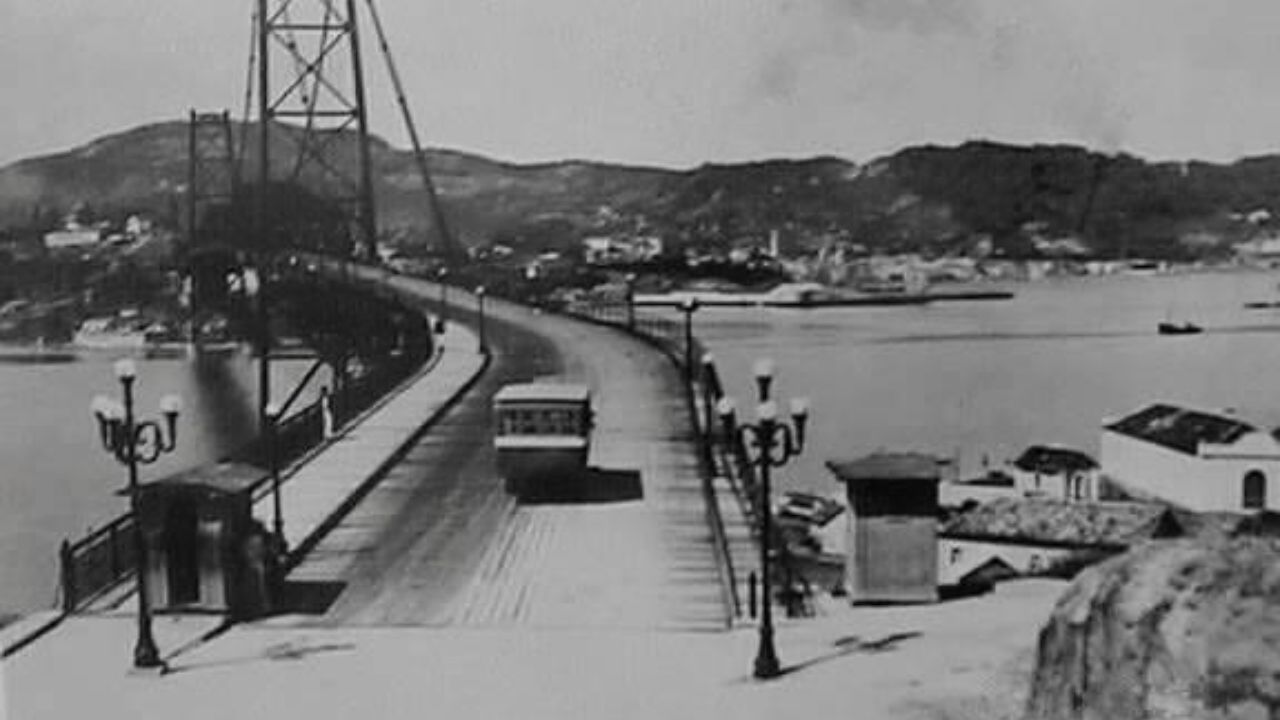
The entire steel structure, weighing approximately 5,000 tons, was manufactured in the United States and transported by ship. Inaugurated on May 13, 1926, the bridge was named after its idealizer, who passed away before seeing the work completed. Immediately, it became the main postcard of Santa Catarina, consolidated Florianópolis as the capital, and became the vital link for the city’s development.
Decades of Silence and the Risk of Collapse
The recommendation for “monitoring for conservation,” made by engineers in 1926, was ignored for decades. The lack of proper maintenance, combined with corrosion from the sea air, pushed the structure to its limits. In 1982, a critical crack was found in one of the link bars, putting the bridge at imminent risk of collapse. The total closure was inevitable.
That year, the bridge was still responsible for nearly 44% of the city’s traffic. After a brief partial reopening, it was permanently closed in 1991. For nearly 30 years, the “Old Lady” remained a rusty skeleton in the heart of the city, a symbol of inertia and unkept promises. To prevent a collapse, 400 tons of asphalt were removed from the central span.
Paradoxically, while it deteriorated, its cultural value grew. Society mobilized and the bridge was listed as a historic heritage at municipal (1992), state (1997), and federal (1998) levels, an act that saved it from demolition, but forced the state to face one of the biggest engineering challenges in the country.
The Resurrection of the Bridge
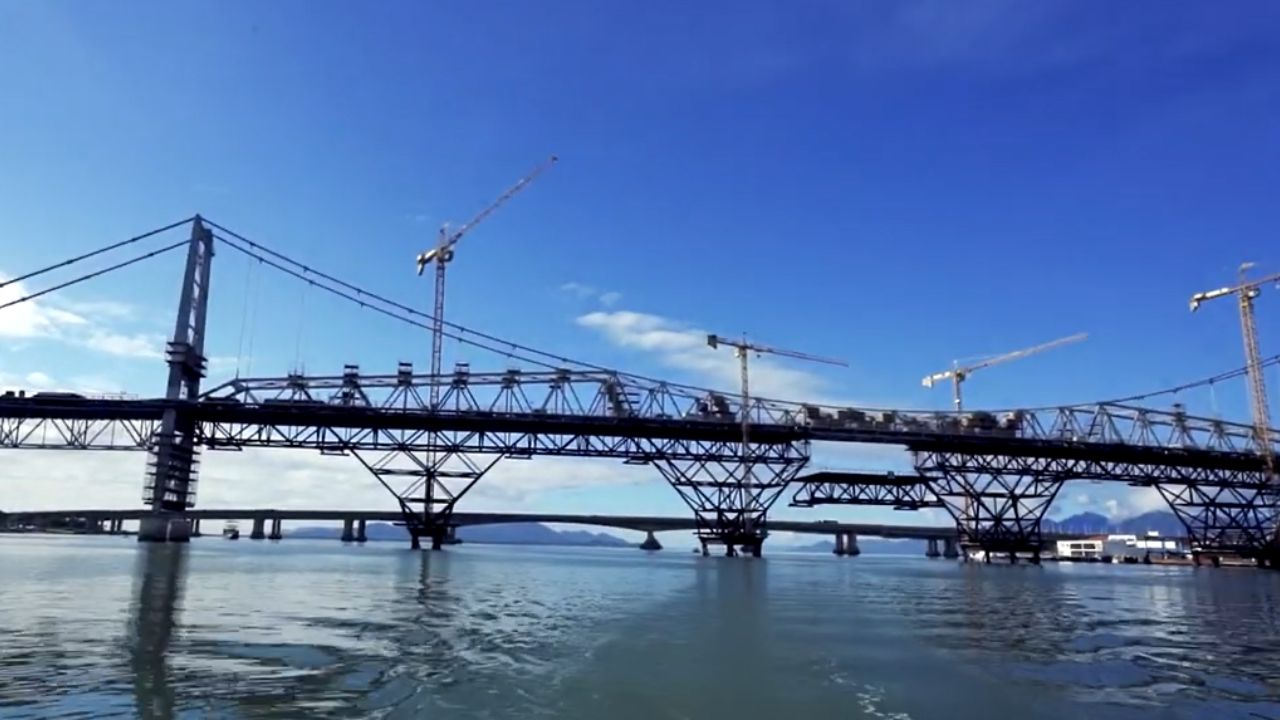
Restoring the Hercílio Luz Bridge was a puzzle. How to replace the link bars, if they were the ones that supported the 4,400 tons of the main span? The solution, executed by the construction company Teixeira Duarte, was a feat classified as “showcase of engineering to the world“.
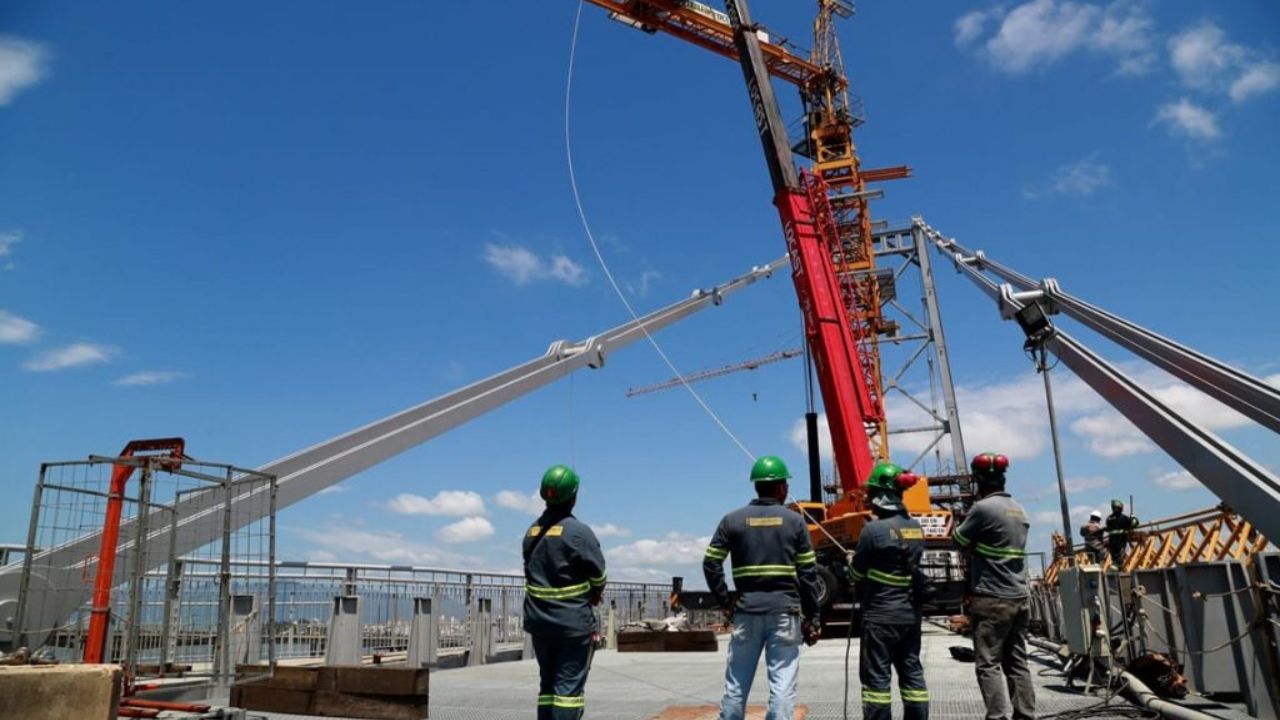
A temporary structure with four metal towers and a system of 54 hydraulic jacks was erected under the bridge. In a tense operation controlled by computer, the jacks carefully lifted the entire central span, transferring the weight and relieving the tension on the suspension chains for the first time since its construction.
With the structure artificially supported, engineers were able to perform the “surgery.” All 360 link bars were replaced with new ones made of high-strength steel. Hangers, parts of the deck, and foundations were replaced or reinforced. In total, about 40% of the weight of the bridge is new steel. Essentially, a new bridge was built within the silhouette of the old one.
Costs and Lessons of a Historic Project
The victory of engineering had a huge financial and political cost. Over nearly four decades, the expenses with the bridge accumulated. Estimates from the Parliamentary Inquiry Commission (CPI) of Alesc indicate a value that may exceed R$ 700 million.
The saga of the bridge is a harsh lesson about public management. The “Sitter’s Rule“, which states that repair costs grow exponentially with negligence, applied perfectly. The administrative discontinuity, with each government changing priorities, only increased costs and delayed solutions. The CPI investigation sought to identify those responsible for the misapplication of resources over decades of contracts and stalled works.
Leisure, Mobility, and the Future
On December 30, 2019, the Hercílio Luz Bridge was reopened in a celebration that gathered around 200,000 people. The “Old Lady” was reborn not only as a path but as a modern public space.
Today, its use is multimodal. During the week, the bridge prioritizes collective transport, alleviating the city’s traffic. On weekends and holidays, it transforms into a large leisure area, closed to cars and open to pedestrians and cyclists.
The revitalization continues, with the installation of LED scenic lighting and the requalification of the heads. Maintenance, once forgotten, is now a priority, with scheduled and transparent interventions. The bridge that once symbolized abandonment is now an example of innovation, coexistence, and, above all, the proof that it is possible to reclaim an icon and return it to the population.
With information from Viva a Ponte, Government of SC.








-

Uma pessoa reagiu a isso.