





 Portuguese
  English
  Spanish
  4 min of reading
  0 comments


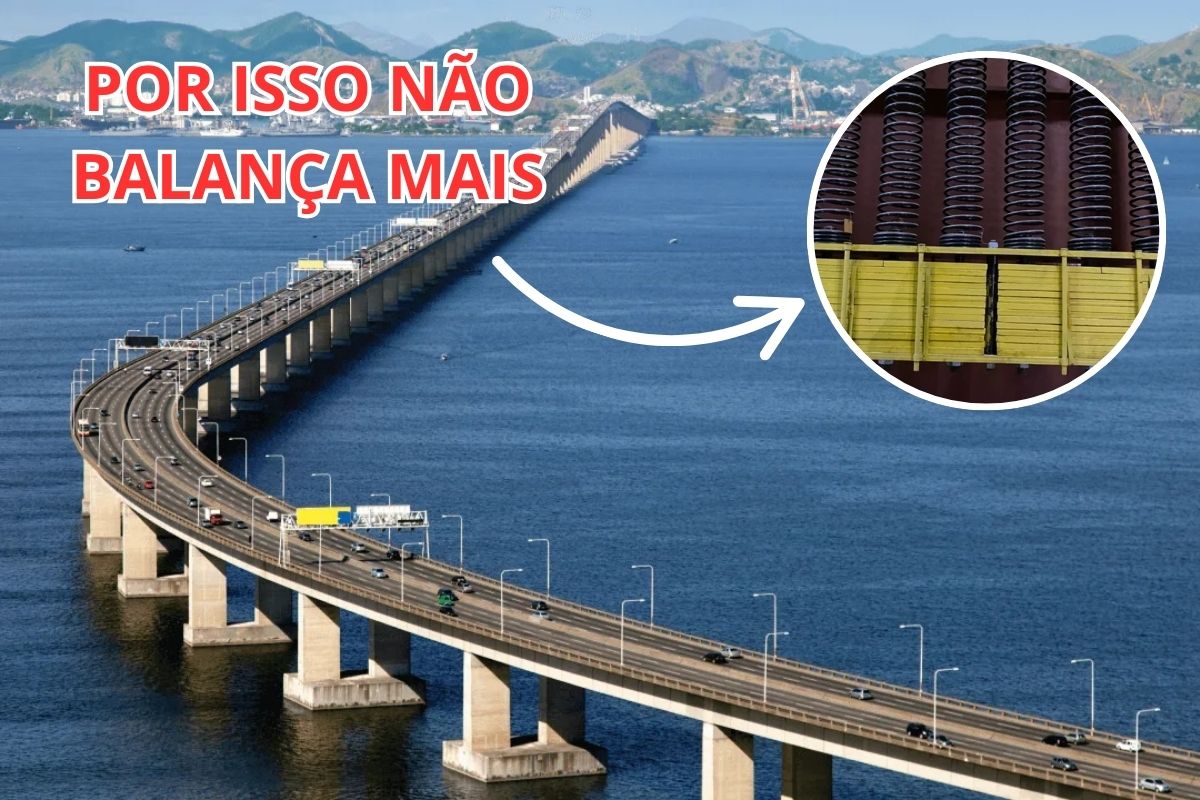
For Decades, the Rio-Niterói Bridge Swayed More Than 1 Meter with Strong Winds. But a 100% Brazilian Technology Changed Everything: Today, Thanks to An Intelligent Damping System, the Structure Stays Completely Stable
Anyone who has crossed the Rio-Niterói Bridge on windy days may not even imagine that, for a long time, the structure swayed more than one meter up and down. That’s right: the concrete giant that connects two of the most important cities in Brazil has swayed as if it were a suspended walkway.
Inaugurated in 1974, the President Costa e Silva Bridge, its official name, quickly became a symbol of national engineering. However, along with the grandeur of its 13.2 km length came enormous technical challenges, especially at its highest and most vulnerable point: the central span of 300 meters, built to allow large ships to pass through Guanabara Bay.
It is there that the wind finds a clear path to blow strongly, especially on days when gusts exceed 60 km/h. For years, the bridge had to be temporarily closed under these conditions to prevent accidents involving vehicles and even people who, in panic, would abandon their cars in the middle of the crossing.
-
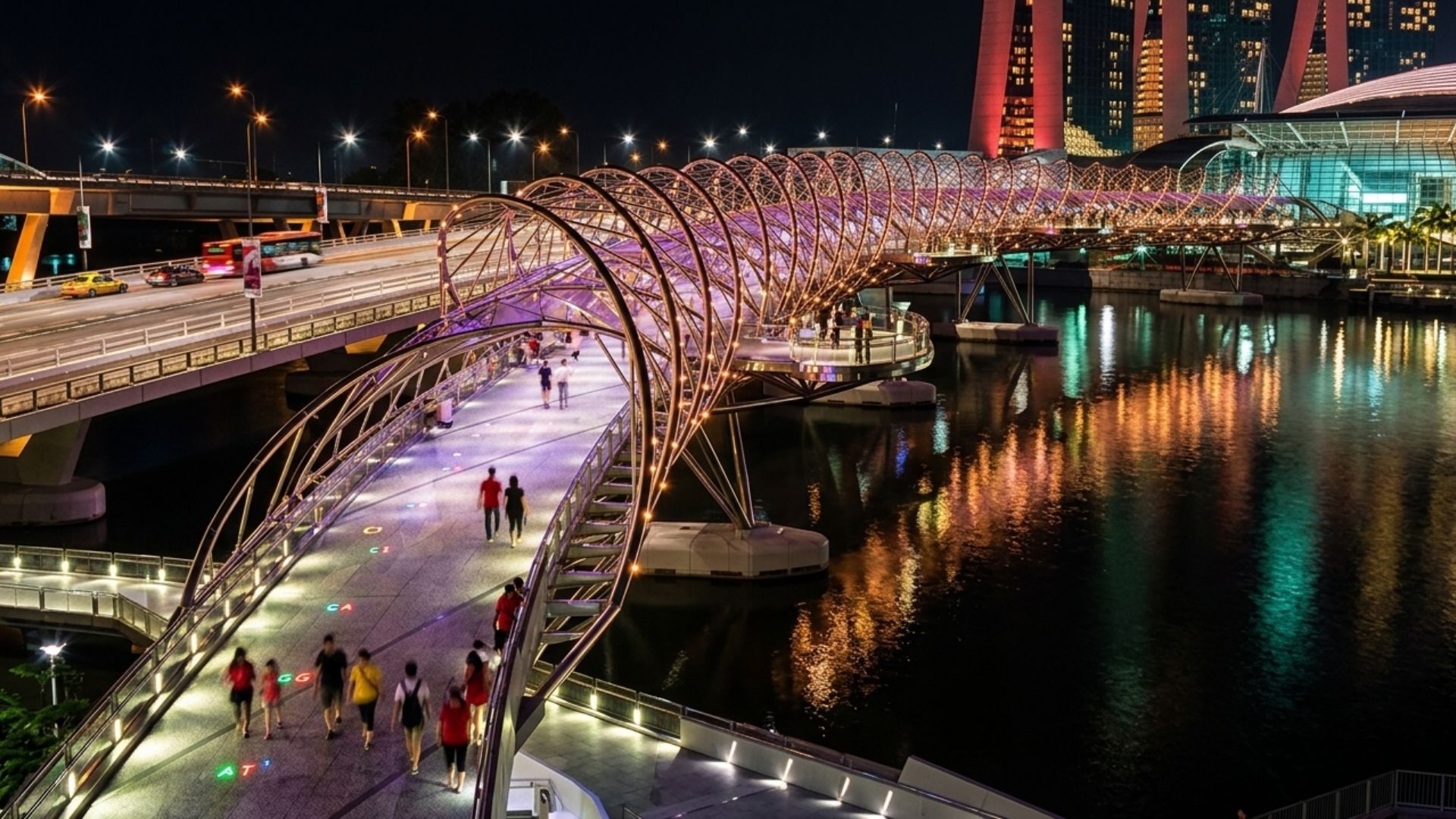
With a DNA shape, this bridge in Singapore draws attention in modern architecture and surprises tourists by transforming a simple crossing into an unforgettable visual experience in the urban heart.
-
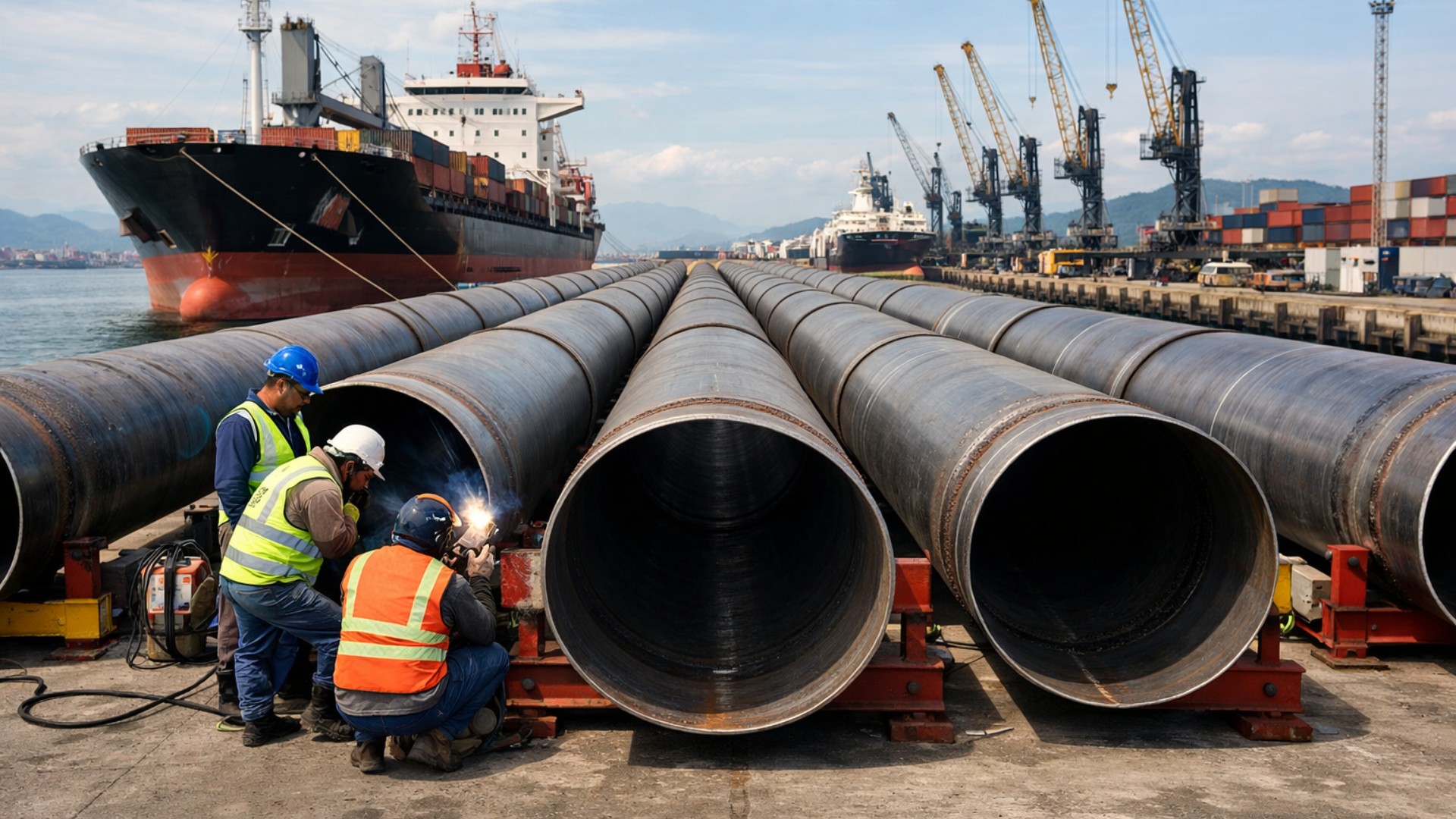
Giant underwater pipeline begins to take shape with a R$ 134.7 million project at the Port of Santos: the 1.7 km structure uses 12-meter and 700 mm pipes to supply water to 450,000 people in Guarujá.
-
A mason reveals a professional plastering technique that uses aligned guides and a 3-meter ruler to plaster an entire wall in up to 3 hours, without visible seams, with uniform thickness, perfect plumb, and a finish ready for painting without rework.

-
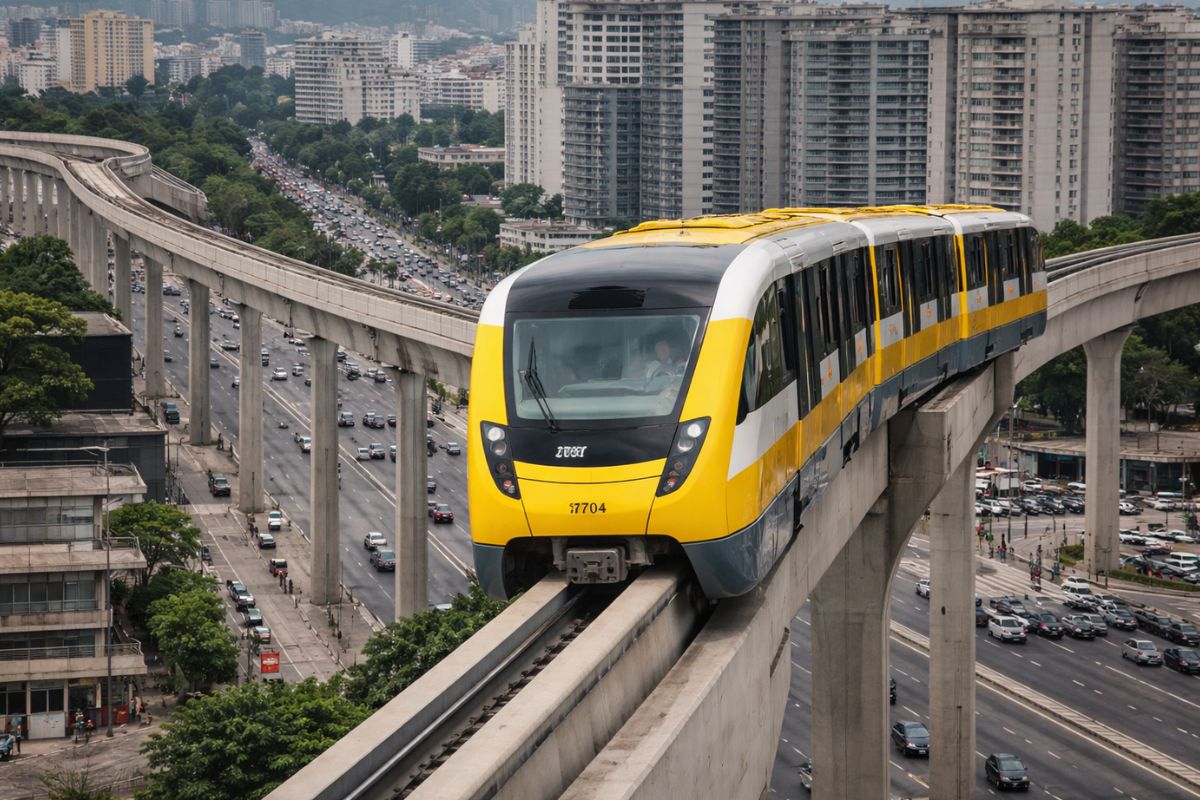
The project that was supposed to be ready for the 2014 World Cup in Brazil debuted with a 12-year delay and nearly R$ 6 billion invested: the Line 17-Gold of the São Paulo monorail opened with reduced hours and is only expected to operate fully in October.


The Problem: The Central Span and the Southern Winds
The central span of the Rio-Niterói Bridge is a true engineering feat: with 72 meters of height and 300 meters of clear span, it is one of the largest structures of its kind in the world. But this dimension, so necessary for navigation, is also what makes the bridge vulnerable.
The structure rests on large metal box girders, which, despite being extremely strong, are naturally flexible when subjected to the force of crosswinds. Over time, this oscillation became a safety issue.
And it was not just about discomfort: the vibrations accelerated wear on materials and, primarily, threatened the stability of the structure and the safety of drivers. It was urgent to find a solution that was efficient, durable, and, above all, viable for a bridge that could not stop functioning.
The Solution Was Born in Brazil: Synchronized Dynamic Dampers
In 2004, a team of researchers from COPPE/UFRJ, led by Professor Ronaldo Battista, developed a revolutionary system: the Synchronized Dynamic Dampers (ADS). The idea was simple in theory but bold in practice: to install a set of devices that, instead of resisting the bridge’s movement, worked with it to nullify it.
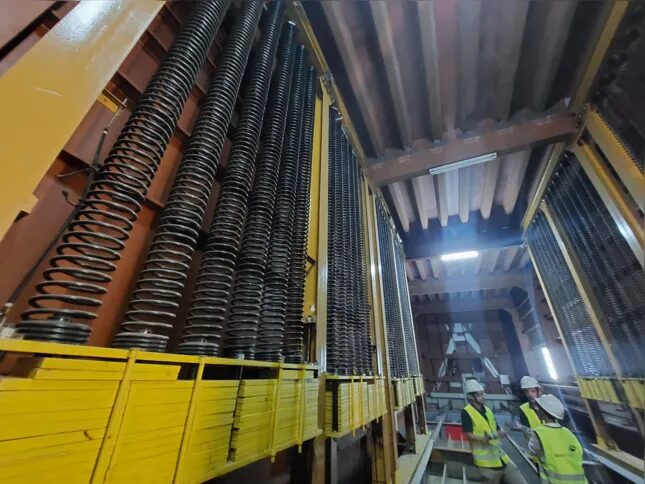
In practice, the system consists of 32 large steel boxes, each weighing around two tons, suspended by springs inside the bridge’s metal girders. When the wind makes the structure sway, these boxes begin to move with it, like a carefully balanced counterweight.
This synchronized movement absorbs the energy from the oscillation and reduces its impact. The result is impressive: where oscillations of up to 1.2 meters were once common, today only variations of 10 centimeters are barely noticeable, a gain of more than 80% in stability.
How It Works in Practice
Imagine the bridge as a giant seesaw, where the wind is the “finger” pushing it from side to side. The ADS work as a set of internal weights, calibrated to move in the opposite direction of the push, creating a force that balances the system.
This principle was already used in other areas of engineering, such as skyscrapers in Japan and the USA. But its application in a bridge, and especially in Brazil, was unprecedented. Moreover, the system was completely developed and tested by Brazilian engineers, using national technology and adapted to our context.
More Than Comfort: Safety and Economy
In addition to reducing the bridge’s sway and increasing driver comfort, the ADS system also brought greater structural safety. Constant oscillations wear down the structure over time, accelerating cracks, material fatigue, and maintenance needs.
With the ADS, the bridge became more stable and predictable, which also allowed for millions in savings on emergency repairs. Not to mention that interruptions due to strong winds, which affected the traffic of over 150,000 vehicles per day, have practically ceased to occur.
An Example for the World
The application of the ADS on the Rio-Niterói Bridge has become an international success story. Researchers from other countries have begun to study the system, and universities have incorporated the project into their structural engineering curricula.
Even almost 50 years after its inauguration, the bridge continues to evolve, now with monitoring through cameras, vibration sensors, wind radars, and a continuous maintenance system that ensures its longevity. And all this is thanks to the combination of innovation, science, and the desire to solve a problem that seemed impossible.

A Bridge That Also Reinvents Itself
Few works in Brazil are as symbolic as the Rio-Niterói Bridge. It represents the effort of a generation of engineers, workers, and technicians who faced the sea, the wind, and even the military regime to build something monumental.
But what perhaps makes it even more impressive is the fact that it has never stopped evolving. And the wind damping system is proof of this: an intelligent, efficient solution that is, above all, human, designed to protect lives and keep the bridge firm, even when the winds blow against it.






Seja o primeiro a reagir!