





 Portuguese
  English
  Spanish
  3 min of reading
  12 comments


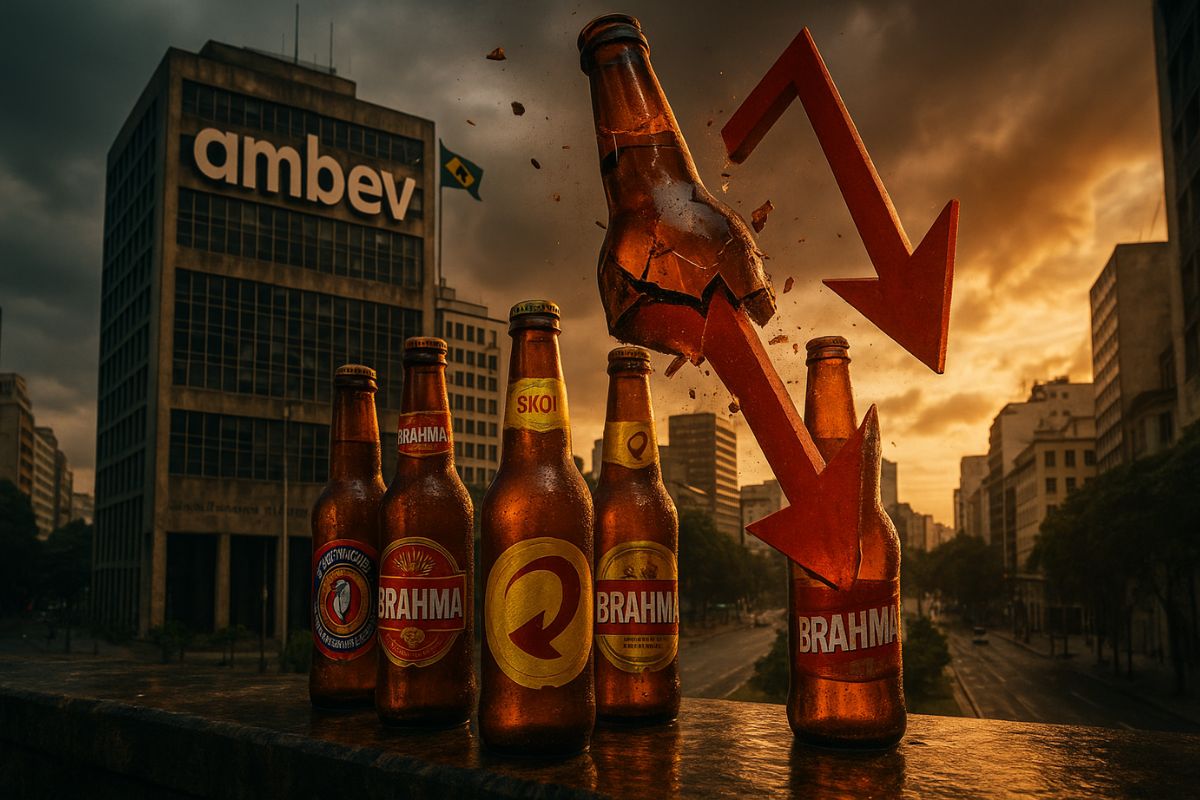


Company That Once Dominated 70% of the Market Now Faces Criticism, Loss of Relevance Among Youth, and Pressure for Reinvention
The silent decline of Ambev is not about visible collapses, but rather about a gradual loss of prominence in a market that has shifted. The giant created from the merger between Brahma and Antarctica was once synonymous with beer in Brazil, but today faces criticism of its management model, fierce competition, and a radical shift in consumer behavior.
Even maintaining a substantial market share and a portfolio that includes brands such as Skol, Brahma, Antarctica, Budweiser, Stella Artois, and Corona, Ambev needs to demonstrate that it can do more than just cut costs and stack cans. The aggressive efficiency model that was once applauded has come under scrutiny. And those who adapted first to the new demands of the public, such as Heineken and craft breweries, began to advance.
From Historic Merger to Global Leadership
Ambev was founded in 1999, the result of a merger between two century-old rivals: Brahma (1888) and Antarctica (1885). Within a few years, it came to dominate over 60% of the beer market in Brazil. Led by figures such as Jorge Paulo Lemann, Marcel Telles, and Carlos Alberto Sicupira, the company adopted a management style focused on meritocracy, waste reduction, and aggressive targets, the so-called 3G philosophy.
-
Brazil Ignores Trump’s threats to BRICS, Buys 42 tons of gold and reduces the Dollar’s share by 6.45% in international reserves.

-
Havan buys historic football land in Blumenau for a million-dollar amount protected by a confidentiality clause and is already planning to change even the layout of streets to build a megastore in half-timbered style costing 80 million reais.
-
Mercado Livre “opens the vault” and announces a record investment of R$ 57 billion in Brazil in 2026, a value 50% higher than the previous year, with an expansion plan that includes 14 new logistics centers, totaling 42 units in the country and hiring an additional 10,000 employees.
-
How investment in technology can revolutionize the national economy and enhance industrial gains, according to a study that highlights the direct impact on productivity, innovation, and wealth retention within Brazil.

This model fueled international expansion. In 2004, Ambev merged with Belgian Interbrew and, in 2008, executed one of the largest acquisitions in the sector by purchasing American Anheuser-Busch for US$ 52 billion, forming AB InBev, the largest brewing group in the world.
Despite globalization, Ambev continued independent operations in Latin America, with absolute dominance in Brazil. But starting in the mid-2010s, signs of wear began to appear.
An Empire Pressured from All Sides
The first blow came with the growth of Heineken, which not only heavily invested in marketing but also managed to win over the youth with campaigns centered on purpose, authenticity, and lifestyle. Additionally, the rise of craft breweries set a new standard of demand: less volume, more quality, and local identity.
Meanwhile, the consumer changed. They began to demand sustainable, inclusive brands aligned with social causes. Ambev reacted: it created new products (such as kombuchas, ready-to-drink beverages, non-alcoholic beers), invested in reverse logistics, renewable energies, and repositioned brands with more modern campaigns.
In the digital space, it bet on Zé Delivery, which grew during the pandemic, and on BEES, a B2B platform to serve bars and markets. However, the erosion of corporate image remains a critical point, with reports of internal pressure, low innovation, and a loss of connection with new generations.
Is the 3G Model Exhausted?
For years, the market revered Ambev’s culture of efficiency. However, today, the philosophy of “cutting costs at any cost” has come under question. The constant pressure for targets and low tolerance for failures may be incompatible with an environment that demands creativity, agility, and empathy with the end customer.
Furthermore, Ambev’s leadership has been slowly eroded. Data from Euromonitor shows that the company once had over 70% market share in beers in Brazil, but currently that number is below 60%, while Heineken continues to advance year after year.
The biggest challenge is not financial: the company has capital, infrastructure, and scale. The problem is cultural and strategic: how to maintain leadership without losing relevance in a market that demands authenticity, purpose, and constant innovation?
Is the Fall the End or a New Beginning?
Ambev is still a powerhouse in the beverage sector, with recognized brands, widespread distribution, and a presence in dozens of countries. But it is facing a pivotal moment. Either it reinvents itself profoundly, or it may be surpassed by lighter, more connected and adaptable companies.
Do you think Ambev’s model still has space in today’s market? Is Heineken and the craft breweries winning through innovation or marketing? Leave your opinion in the comments—we want to hear from those who really follow this game closely.






O problema maior é setorial. Consumo se cerveja está caindo rapidamente o mundo todo. Heineken tbm sente.
A Ambev pra mim ainda é a melhor
Quem poderia salvar a Ambev, seria a Stella Artois, concorrente direto da Heineken , porém a cerveja que era Lager a mais de 700 anos teve sua fórmula alterada para puro malte. Aí foi ladeira abaixo.