





 Portuguese
  English
  Spanish
  3 min of reading
  0 comments


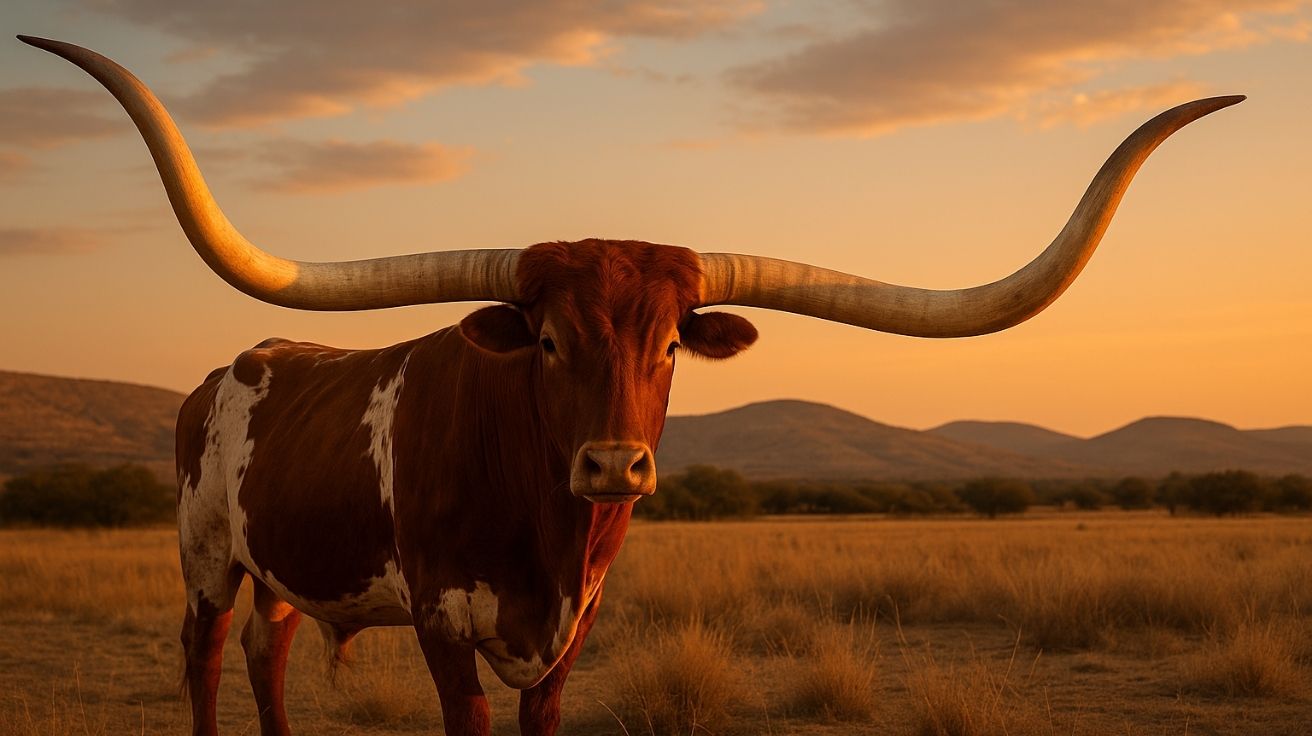
Animal Symbol of the State of Texas, the Texas Longhorn Cattle Survived Centuries in a Semi-Wild State, Becoming a Historical Piece of American Agriculture and Today is Worth Up to R$ 2 Million at Auctions
Originally bred from cattle brought from the Iberian Peninsula during Spanish expeditions in the 15th century, the Texas Longhorn has become one of the most emblematic breeds of the American Agribusiness.
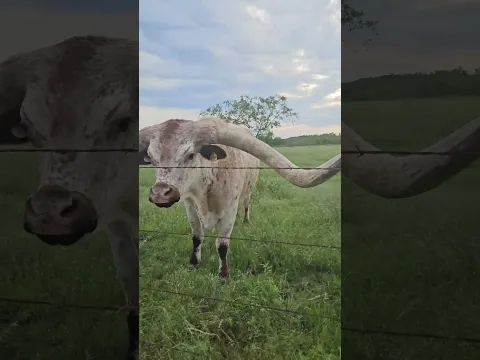

With horns that can exceed 3 meters in span and high resistance to heat and drought, these animals were saved from extinction and are now a cultural and economic symbol of the state of Texas.
The Texas Longhorn originated from the interbreeding of animals brought by Spanish conquistadors between 1493 and 1512. The first cattle arrived on the island of Hispaniola during Christopher Columbus’ second voyage and were gradually taken to what is now Mexico and later to Texas territory.
-
The water that almost everyone throws away after cooking potatoes carries nutrients released during the preparation and can be reused to help in the development of plants when used correctly at the base of gardens and pots, at no additional cost and without changing the routine.

-
The sea water temperature rose from 28 to 34 degrees in Santa Catarina and killed up to 90% of the oysters: producers who planted over 1 million seeds lost practically everything and say that if it happens again, production is doomed to end.

-
An Indian tree that grows in the Brazilian Northeast produces an oil capable of acting against more than 200 species of pests and interrupting the insect cycle, gaining ground as a natural alternative in soybean, cotton, and vegetable crops.

-
The rise in oil prices in the Middle East is already affecting Brazilian sugar: mills in the Central-South are seeing their margins shrink just as ethanol gains strength.


Many of these animals roamed freely for centuries on arid plains, developing characteristics of extreme adaptation to hostile climates, becoming a symbol of survival ranching in the Old West.
Over generations, the descendants of these cattle created a robust genetic line: high tolerance to food scarcity, resistance to diseases, and unusual longevity.
During the 20th century, with the advancement of industrial ranching, the breed was nearly extinct, preserved thanks to coordinated efforts by the U.S. government and enthusiasts connected to the state’s history and culture.

In 1927, the U.S. Forest Service began the recovery of the breed, gathering specimens at the Wichita Mountains Wildlife Refuge in Oklahoma.
In 1964, Charles Schreiner III founded the Texas Longhorn Breeders Association of America, which formalized records and revitalized the herd.
The creation of events like the symbolic cattle drive from San Antonio to Dodge City reinforced the historical identity of the Texas Longhorn with the imagery of the American Old West.
Another cultural milestone occurred in 1917, with the adoption of the Longhorn “Bevo” as the mascot of the University of Texas at Austin.
The image of the animal began to appear on uniforms and flags of university teams, strengthening the connection of the Longhorn cattle with Texan pride. Today, the breed is officially the large mammal symbol of the state of Texas, as recognized by state legislation in 1995.
Distinctive Characteristics of the Texas Longhorn Cattle
The most visible and impressive trait of the Texas Longhorn is its horns, which can exceed 3 meters from tip to tip.
The record, according to the Guinness Book, is 323.7 cm, belonging to a bull named Poncho Via. Besides long horns, the breed stands out for its diversity of coat colors: about 40% present shades of red, with patterns including spots, speckles, and even bluish or brindle coats, making each specimen visually unique.
Despite its past linked to extensive grazing and survival in arid regions, the Texas Longhorn is now also valued as beef cattle.
Its lean meat, natural resistance to diseases, and ability to thrive on poor pastures make it appealing to small and medium-scale farmers.
Additionally, some breeders invest in specimens for horn contests or cultural exhibitions, with prices reaching R$ 2 million at auctions, as was the case of the cow 3S Danica, sold with a calf for US$ 380,000 in 2017.
With three official registries, Texas Longhorn Breeders Association of America, International Texas Longhorn Association, and Cattlemen’s Texas Longhorn Registry, the market for Texas Longhorn cattle is organized around genetic preservation, appreciation of history, and expansion into rural tourism and agricultural education.
Some farms in the United States keep herds open for visitation, where the public can get to know the animals up close and learn about their importance in the formation of Texas and American agrarian culture.









-

-

-

-

-

-

70 pessoas reagiram a isso.