





 Portuguese
  English
  Spanish
  5 min of reading
  0 comments


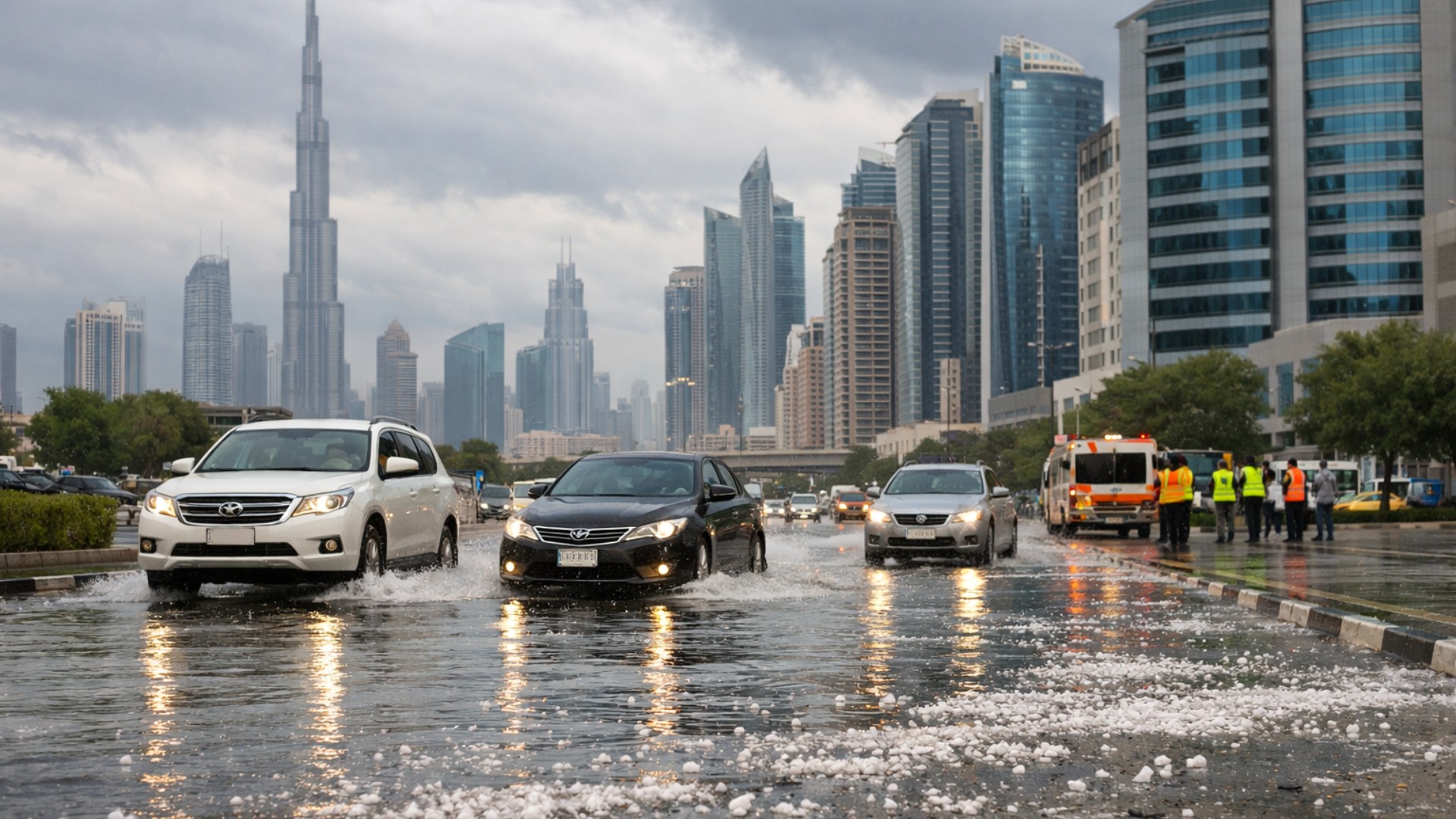
Sequence of intense storms exposes unusual strength of the climate in the Gulf, with hail, record rain, and risk of tornadoes in desert regions; volumes exceeded annual averages in just a few days and caused flooding, alerts, and mobilization of authorities in the United Arab Emirates and Oman.
A sequence of intense storms transformed areas of the United Arab Emirates and Oman into a scene rarely associated with the desert.
Large hail, exceptional rainfall amounts, strong wind gusts, and alerts for flash floods were recorded.
The episode drew attention for the combination of severe phenomena in a region marked by arid climate.
-
Brazil catches the world’s attention with ships powered by ethanol and biodiesel that have lower emissions, an unprecedented certification with advantages in chartering, and a revolution in cabotage.

-
A couple who only has Sundays free has built a hand-dug pool, a hamburger joint, a dance hall, and a playground in their own home without hiring a mason, and even with breaks due to accidents and the pandemic, the work has never truly stopped.

-
Furniture made with aluminum and glass does not warp and has become an alternative to replace MDF in Brazil.

-
Finland, the happiest country in the world, wants to hire 140,000 technology professionals and is eyeing Brazilians: visas are issued in just two weeks and salaries with a 37-hour workweek are surprising.


Convective events do exist, but they rarely gain such duration, organization, and territorial reach.
Weather alert and mobilization in the Emirates
In the Emirates, the National Center of Meteorology reported that the most intense phase of instability would advance with heavy rain, winds, thunderstorms, and the possibility of localized flooding.
Defense and traffic authorities reinforced guidelines for the population to avoid areas prone to flash floods, wadis, and dams.
The coverage by The National showed that the system moved across the country over several days.
Local agencies maintained a state of alert in light of the risk of worsening weather.
Rain exceeds annual average in just a few days
The unusual nature of the episode became even more evident in the rainfall totals.
Data cited by The National shows that weather stations recorded 93.3 millimeters in Al Manama, in the emirate of Ajman.
There were also 91 millimeters in Ghayathi, in western Abu Dhabi. Additionally, 88.2 millimeters in Al Wathba, near the emirate’s capital, were recorded.
In a northern region of the country, the Jebel Yanas station reached 244 millimeters in just a few days.
This figure was highlighted by the Guardian as being well above the local annual average, estimated between 60 and 100 millimeters.
Rare hail and intense storms in Oman
In Oman, the advance of heavy clouds also produced unusual effects.
The Guardian reported the occurrence of hail the size of tennis balls during the storms on Wednesday.
The phenomenon was accompanied by torrential rain. This situation illustrates the vertical strength of the air currents within the system.
When hail of this size appears in a desert area, the contrast enhances the perception of rarity. This helps explain why the topic exceeded regional interest.
Atmospheric system favored extreme events
The atmospheric structure behind the event helps to understand why the bad weather was so pronounced.
According to an analysis published by the Guardian based on the meteorological consultancy MetDesk, an abnormally strong upper-level jet favored the development of a deep low-pressure area.
The system formed north of Saudi Arabia. It began to pull tropical moisture from the Indian Ocean.
This created an environment conducive to organized storms. The result was intense rain, lightning strikes, hail, and severe winds in various parts of the Arabian Peninsula.
Risk of tornadoes comes into focus
In the Emirates, the possibility of even more unusual phenomena came into the meteorologists’ radar.
The National reported that the atmospheric pattern raised the risk of damaging gusts, hail, flash floods, and isolated tornadoes in the region.
Subsequent coverage by the newspaper noted that the system lost strength. The country went through the critical phase without the confirmation of a tornado on Emirati territory.
Still, the mere fact that the threat was considered concretely already places the episode outside the more frequent pattern of the region.
Urban impacts and emergency response
The effects on the ground appeared quickly. The passage of the storm caused flooding, urban cleanup operations, and water pumping on major roads.
There were also difficulties in densely populated areas such as Dubai, Abu Dhabi, Ajman, and Sharjah.
The National reported that Sharjah was one of the most affected areas. The center of Abu Dhabi and regions near Dubai Airport also faced disruptions.
In Ras Al Khaimah, the state agency WAM reported that the public services department reinforced its readiness.
Field teams, pumps, water trucks, and heavy machinery were mobilized to reduce the impact of the rain.
Extreme event challenges the image of the desert
Part of the global appeal of this story lies in the clash between expectation and reality. The international imagination associates the Arabian Peninsula with persistent heat, open skies, and scarcity of rain.
However, the sequence this week displayed a much less known atmospheric face.
There were storm corridors, deep convective clouds, urban flooding, and significant hail.
The Guardian itself noted that, although storms are not unknown in the area, the multi-day nature of the episode resembles systems from spring and summer in the United States and Central Europe.
Regional context and increase in extreme events
The repercussions can also be explained by the moment experienced by the region. In March, Reuters had already highlighted forecasts of instability over the Emirates, Qatar, Bahrain, and eastern Saudi Arabia.
The conditions included intense showers, suspended sand, and the possibility of hail.
At the end of the event, Emirati authorities reported a gradual stabilization of conditions.
The institutional response showed that severe rain began to be treated as a relevant operational risk.
There is potential impact on mobility, services, and public safety. The episode occurs in a context of growing concern about extreme events in the Gulf Cooperation Council.
A report presented by the Mohammed Bin Rashid School of Government and released by WAM highlighted the increasing impact of floods and other meteorological extremes.
Infrastructure, communities, and economic stability are among the affected points.
Without turning this storm into an isolated symbol of a broad trend, the document helps explain why any severe event in the Gulf today is observed with heightened attention.
Authorities, researchers, and the population are increasingly closely monitoring this type of occurrence.
Amid rain that exceeded the annual average in just a few days, unusually sized hail, risk of tornadoes, and flooding in urban and desert areas, the storm has brought back a relevant discussion about climate behavior in the region to the news.







Seja o primeiro a reagir!