





 Portuguese
  English
  Spanish
  3 min of reading
  0 comments


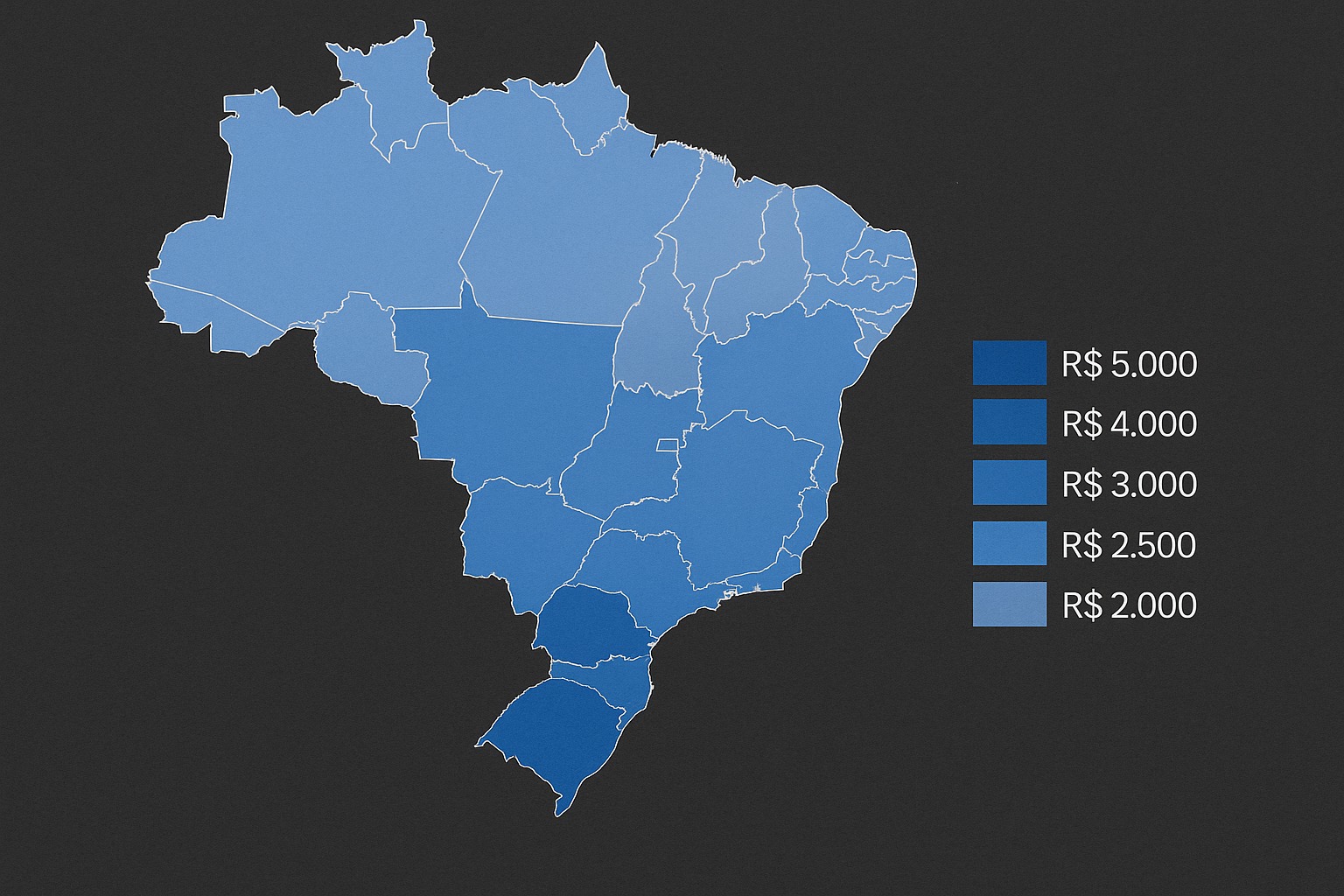
IBGE Data Shows Growth in Earnings of Occupied Workers in 2024, but Reveals Significant Differences Between Regions, Race, Gender, and Main Occupations in the Country
The average income of workers rose to R$ 3,208 in 2024. The figure was R$ 3,094 in 2023. The survey is from IBGE. The comparison shows a relevant advance as it considers all types of occupation.
The Federal District presented the highest average income in the country during the period, reaching R$ 5,037. São Paulo followed with R$ 3,884. These values reinforce the concentration of income in more developed centers.
Maranhão and Ceará recorded the lowest values. In Maranhão, the average was R$ 2,051. In Ceará, it reached R$ 2,053. These states remain below the national standard.
-
The institute that trained the greatest aerospace engineers in Brazil has just opened its first campus outside São Paulo after 75 years: ITA Ceará will have R$ 445 million, new courses in energy and systems, and classes are expected to start in 2027.

-
Luciano Hang, owner of Havan, goes to Juiz de Fora after the tragedy in February, brings R$ 1 million, hands out R$ 2,000 cards, and donates up to R$ 15,000 to victims in the region.

-
The Brazilian passport allows legal residence in dozens of countries without the need for a prior visa, and most Brazilians are unaware that they can apply for residency directly upon arriving in nations in South America, Africa, and even Europe.

-
Petrobras sends a message to Brazilian truck drivers after fuel collapse and reveals plan to have 100% domestic diesel.


Regional Differences Persist Regarding Average Income
The North and Northeast regions continue to lag behind the Brazilian average. In the North, the income was R$ 2,450. In the Northeast, it was R$ 2,229.
These numbers represent 76.4% and 69.5% of the national average. The gap remains wide, indicating a historical regional inequality.
Some of these contrasts consistently appear in various surveys. Nevertheless, the new data helps to visualize the current scenario.
Race and Gender Still Influence Income
The survey also revealed significant disparities among racial groups. The occupied white population earned about 65.9% more than black or brown individuals. This difference encompasses all types of work and remains stable over the years.
The hourly income shows the same trend. Whites earned R$ 24.60. Blacks and browns earned R$ 15. The gap is striking.
Furthermore, men earned 27.2% more than women in 2024. This difference repeats in a large part of occupations and reinforces an unequal pattern.
Main Job Earnings Increase
The average income of the main job rose from R$ 3,002 in 2023 to R$ 3,108 in 2024. The growth was 3.5%. In the accumulated period of 2023-2024, the real increase reached 10.8%.
This movement indicates a slight improvement in purchasing power, albeit gradually.
Occupations with Highest Earnings
Directors and managers had the highest average income in 2024. The average was R$ 8,721. Following them were military personnel, police officers, and firefighters, with R$ 6,749. After that came professionals in sciences and intellectuals, with R$ 6,558.
These groups typically report the highest values in the survey.
Extreme Poverty Shows Decline
The population living in extreme poverty fell from 4.4% in 2023 to 3.5% in 2024. This represents 1.9 million fewer people in this condition.
The decline also occurred in overall poverty, which decreased from 27.3% to 23.1%. That’s 8.6 million fewer people.
There is still significant racial inequality. Among black individuals, 25.8% were in poverty. Among browns, the rate was 29.8%. Among the white population, the percentage was 15.1%.
The survey reinforces that inequalities persist despite advancements in average income.
Average Income of All Occupied Workers by Federal Units – 2024
Federal District – R$ 5,037
São Paulo – R$ 3,884
Rio de Janeiro – R$ 3,739
Paraná – R$ 3,701
Santa Catarina – R$ 3,580
Rio Grande do Sul – R$ 3,564
Mato Grosso – R$ 3,308
Mato Grosso do Sul – R$ 3,303
Brazil – R$ 3,208
Espírito Santo – R$ 3,178
Goiás – R$ 3,111
Rondônia – R$ 3,093
Minas Gerais – R$ 3,037
Amapá – R$ 2,870
Roraima – R$ 2,822
Tocantins – R$ 2,783
Rio Grande do Norte – R$ 2,783
Acre – R$ 2,758
Pernambuco – R$ 2,587
Alagoas – R$ 2,482
Sergipe – R$ 2,478
Paraíba – R$ 2,457
Amazonas – R$ 2,425
Pará – R$ 2,418
Piauí – R$ 2,402
Bahia – R$ 2,340
Ceará – R$ 2,053
Maranhão – R$ 2,051
With information from CNN.








-

-

-

5 pessoas reagiram a isso.