





 Portuguese
  English
  Spanish
  5 min of reading
  0 comments


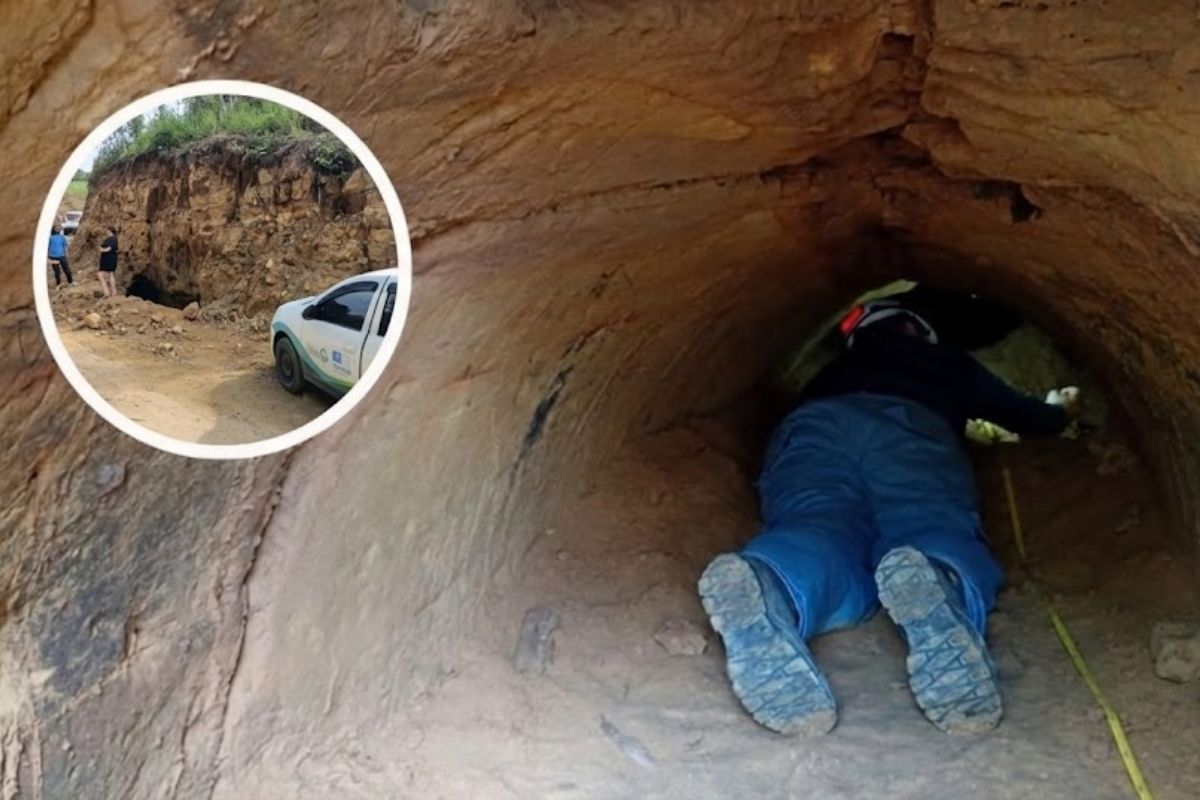
The tunnel found in Lauro Müller, in southern Santa Catarina, is a paleotoca, a subterranean gallery dug by Brazilian prehistoric megafauna over 10 thousand years ago. Scientists confirmed that animals like giant armadillos weighing 500 kilograms and giant sloths weighing 6 tons are responsible for the tunnel, whose walls still preserve intact claw marks.
A subterranean tunnel over 10 thousand years old has just been discovered on the property of a resident of Lauro Müller, in southern Santa Catarina. Simone Cattaneo Betti came across the entrance of the tunnel while widening a road on her property and, before any intervention, called in specialists. Researchers confirmed that the structure is a paleotoca, a gallery dug by giant animals of the Brazilian megafauna that lived during the Pleistocene Epoch and became extinct about 10 to 12 thousand years ago. The video that Simone posted on social media surpassed 3 million views.
What makes this tunnel extraordinary is that it is not just a hole in the ground the internal walls preserve characteristic claw marks that serve as a direct signature of the digging animals. Even without the presence of fossils, each mark is a physical record of the behavior of species that disappeared millennia before the emergence of the first civilizations. The area of the tunnel is already isolated and protected by federal law, and new studies include 3D mapping and the search for ancient hairs preserved in the walls.
Who dug this tunnel: animals weighing 500 kilograms to 6 tons that lived beneath the earth

According to PhD student in geography Arthur Filipe Bechtel, the animals responsible for this type of tunnel were of proportions that challenge the imagination.
-
The coldest region of Brazil will experience very hot weather in the first days of April, with maximum temperatures reaching up to 35 degrees in Rio Grande do Sul, and only in the last week of the month an intense cold front is expected to finally lower the temperatures in the South and Southeast.

-
Goodbye common refrigerator: essential appliance starts to gain competition with technology that preserves food for longer and reduces waste.

-
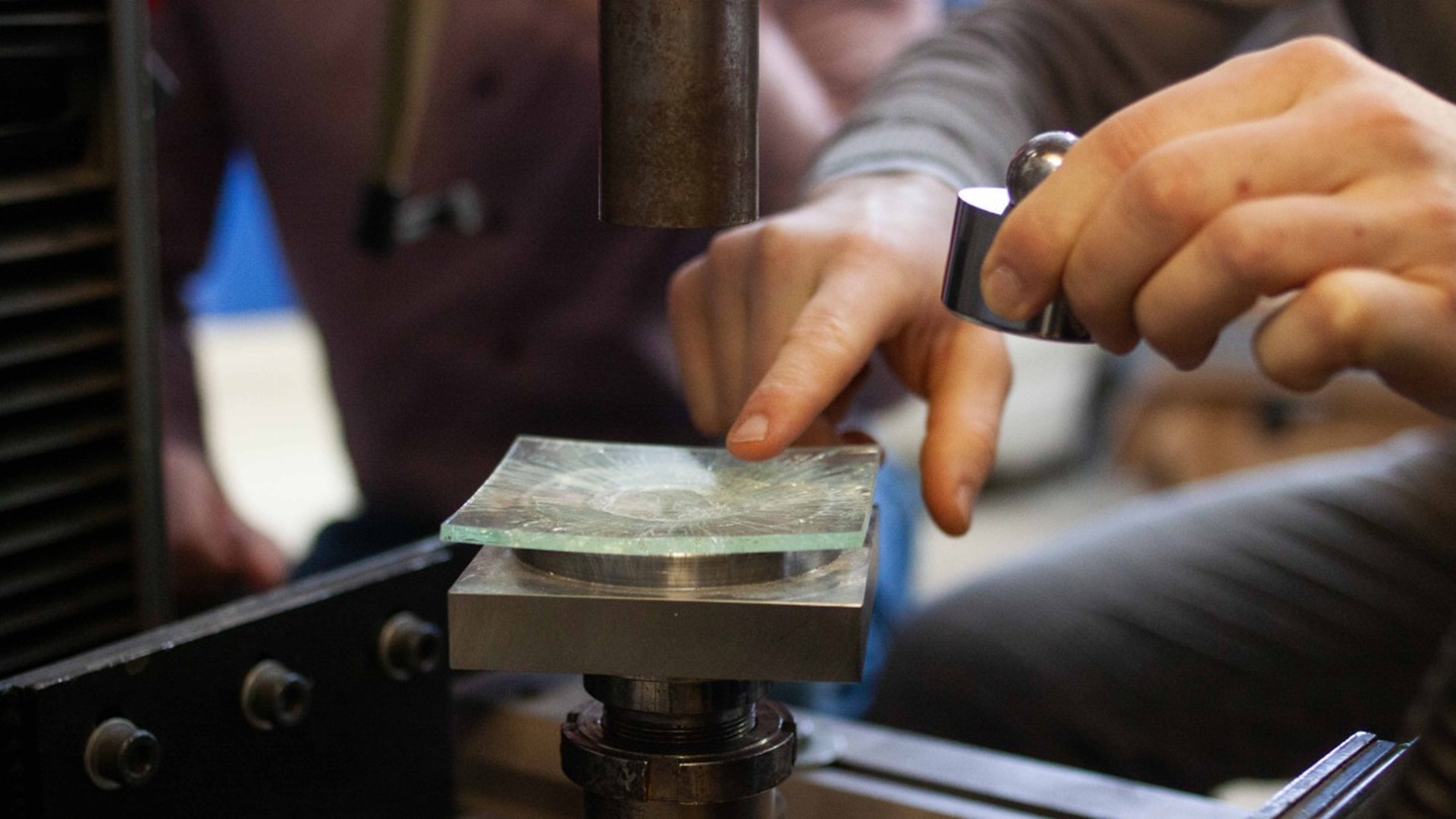
Germany discovers how to reuse old window glass without melting anything and can transform 220,000 tons per year into new high-performance panels, using material from nearly 150 million old windows that would be discarded.
-
China creates hypersonic engine that can make planes and missiles fly more than 6 times the speed of sound with less weight, more range, and without system change.


Two main groups dug these galleries: giant armadillos, such as Glyptodon and Pampatherium, which could weigh up to 500 kilograms and created tunnels proportional to their size; and giant sloths, such as Eremotherium and Megatherium, which reached 6 tons and produced the largest galleries over 2 meters high and wide enough for an adult person to walk bent inside.
These animals used the tunnels as shelter, protection from predators, and thermal regulation the subterranean temperature remains relatively stable, which provided comfort in extreme climates.
Each tunnel is, in practice, a primary source for paleontology: even without bones or teeth, the claw marks on the walls are so characteristic that scientists can identify the group of animals that dug the structure. It is as if each gallery were a signature left by creatures that disappeared millennia ago.
What the geologist confirmed about the tunnel in Lauro Müller
The scientific confirmation of the tunnel was made by geologist Gustavo Simão, who identified three determining factors: the type of relief in the region, the sandy soil (formed by compacted sand), and the characteristic shape of the gallery.
For the researcher, the discovery expands the geographical distribution map of these extinct animals, showing that they also inhabited and dug in materials different from those already known.
“The emergence of this structure shows that these animals geographically occupied other spaces beyond those already cataloged,” said Simão.
Each new confirmed tunnel contributes to reconstructing the way of life of the Brazilian megafauna with more precision. The Balanço Geral Criciúma channel went to the site and recorded details of the structure with statements from specialists who confirmed the tunnel as a scientific heritage of Santa Catarina.
More than 1,500 prehistoric tunnels cataloged: why southern Brazil is the epicenter of this discovery
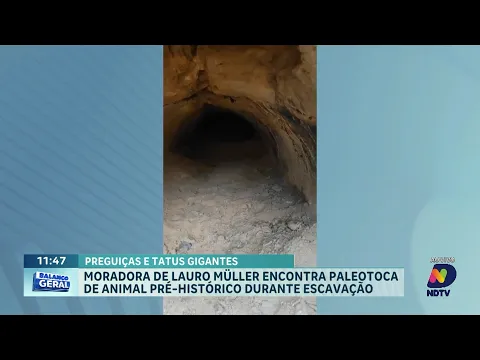

The tunnel in Lauro Müller is not an isolated case. In the last 15 years, more than 1,500 paleotocas have been cataloged in southern Brazil, making the region internationally recognized for this geological heritage.
A proposal for systematic classification published in 2024 in the Brazilian Journal of Geomorphology (UFPE) mapped structures in an area of 1,900 square kilometers, covering seven municipalities in Santa Catarina and Rio Grande do Sul.
Gislael Floriano, executive director of the Geopark Caminhos dos Cânions do Sul, highlighted a fascinating historical detail: in some cases, these tunnels were used by indigenous peoples as shelter after the extinction of the megafauna.
“These are structures that, at a certain period in history, also had human occupation,” he stated. The discovery in Lauro Müller adds to the collection of the Geopark, which already includes about 30 registered paleotocas in the municipalities of Morro Grande, Jacinto Machado, and Timbé do Sul.
What happens now with the tunnel: 3D mapping, search for ancient hairs, and possible tourist visitation
The area where the tunnel was found is already isolated and protected by federal law. New studies are planned, including the three-dimensional mapping of the gallery and the search for ancient hairs preserved in the walls, material that, if found, would allow for precise identification of the species responsible for digging the tunnel.
The possibility of finding preserved hairs in sandy soil is real because this type of substrate can conserve organic material for thousands of years under specific temperature and humidity conditions.
There is also the possibility of opening for tourist visitation in the future, after the completion of scientific studies.
The tunnel in Lauro Müller is already considered a scientific heritage of Santa Catarina and may become another point of interest on the itinerary of the Geopark Caminhos dos Cânions do Sul — a region that combines impressive natural landscapes with paleontological records that attract researchers from around the world.
A 10 thousand-year-old tunnel beneath the feet of a resident of Santa Catarina
What began as a road widening project turned into an open window to the Brazilian Pleistocene.
The tunnel in Lauro Müller is a physical fragment of a world that existed millennia ago, dug by creatures that weighed tons and disappeared before the emergence of the first human civilizations.
The fact that this tunnel has survived intact in sandy soil for over 10 thousand years says a lot about the unique geological conditions of southern Brazil.
And the most impressive: with more than 1,500 cataloged structures and new discoveries emerging with each construction, excavation, or landslide, Brazil’s deepest past is literally beneath our feet waiting to be found.
Did you know that there are prehistoric tunnels dug by giant animals in southern Brazil? Have you seen any strange structures in the soil of your region? Tell us in the comments; you might be living on top of a paleotoca without knowing it.








Seja o primeiro a reagir!