





 Portuguese
  English
  Spanish
  3 min of reading
  7 comments


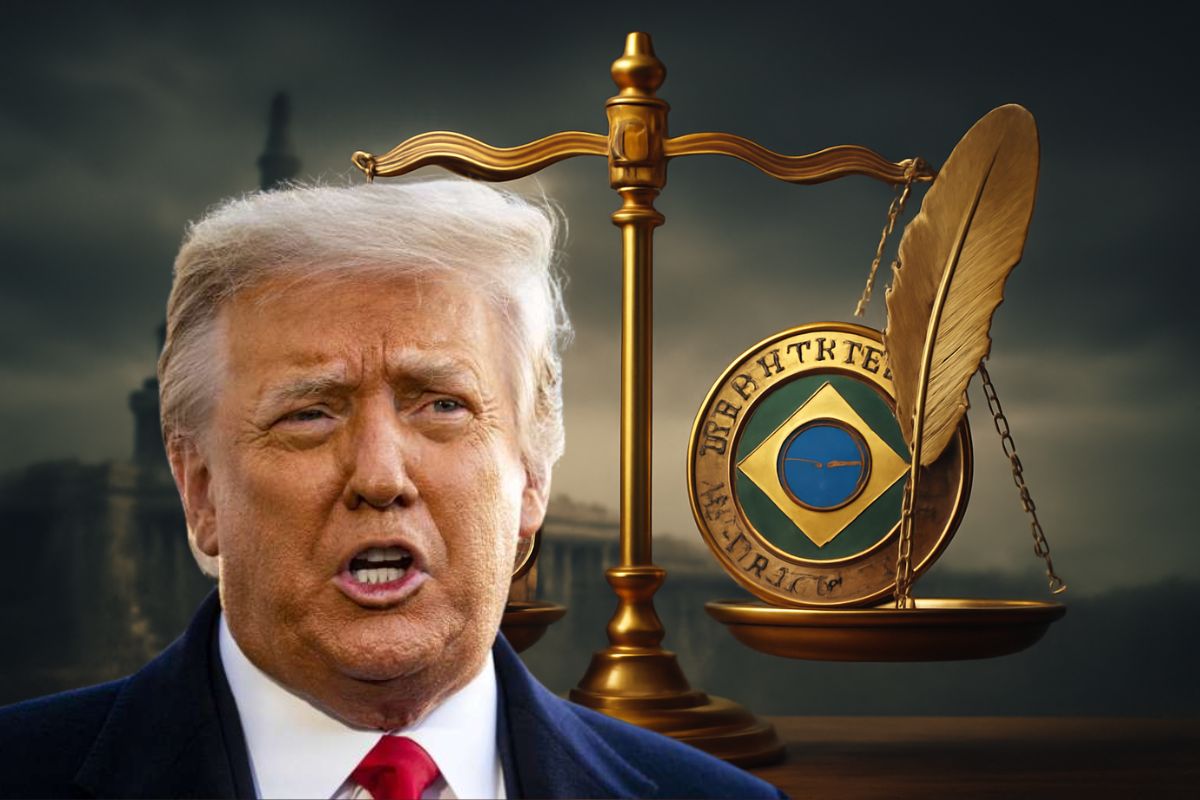


Trump’s Tariffs Illegal, But Valid Until 10/14; Brazil Activates Reciprocity Law and Considers Non-Tariff Measures and Taxing Luxury, Citing History of US$ 829 Million
Brazil is facing a new round of trade tension with the United States. While Donald Trump’s government has its trade tariffs deemed illegal, according to the economic value portal, the country will continue with these fees until October 14, awaiting a possible appeal to the Supreme Court. In light of this scenario, Brazil is preparing to respond, with the possibility of using the Reciprocity Law and taxing American luxury products. The internal crisis in Brazil, with Jair Bolsonaro’s trial at the Federal Supreme Court (STF), only worsens the situation.
The Brazilian government, cautious, is considering using non-tariff measures (NTM) to avoid further aggravating the conflict. These measures may involve everything from sanitary barriers to digital regulations, directly affecting trade, but without resorting to high tariffs. This strategy is seen as more symbolic, but with a strong economic and political impact, creating a new field of contention.
The Tension Scenario Between the Countries
What began as a trade dispute between the two countries over high tariffs on certain products is now intensifying with internal political disputes. If the STF convicts Bolsonaro for attempted coup d’état, this could worsen relations with the U.S., especially since the former president has been one of Trump’s main demands. This opens the possibility of rejection by the U.S. or new retaliations against Brazil.
-
A new Brazilian shopping center worth R$ 400 million will be built in an area equivalent to more than 4 football fields, featuring 90 stores, 5 cinemas, a supermarket, a college, and parking for 1,700 cars, potentially generating 3,000 jobs.

-
Larger than entire cities in Brazil: BYD is building a 4.6 km² complex in Bahia with a capacity for 600,000 vehicles per year, but the discovery of 163 workers in conditions analogous to slavery has shaken the entire project.

-
With an investment of R$ 612 million, a capacity to process 1.2 million liters of milk per day, Piracanjuba inaugurates a mega cheese factory that increases national production, reduces dependence on imports, and repositions Brazil on the global dairy map.

-
Brazilian city gains industrial hub for 85 companies that is equivalent to 55 football fields.


With the political situation tense, the Brazilian government is assessing the cost-benefit of alternative retaliation measures, with Camex (Foreign Trade Chamber) endorsing the actions, which could result in non-tariff responses. Although the private sector is calling for a softer approach, the option to tax luxury products aims for a more symbolic response without so directly affecting the internal economy.
The Reciprocity Law and Non-Tariff Measures (NTM)
Instead of imposing high tariffs that would further jeopardize the economy, the government will focus on non-tariff measures, such as sanitary, technical, and digital restrictions. These trade barriers may change the flow of products between the two countries but without directly impacting prices, like traditional tariffs.
The complaints from U.S. companies about the new rules in Brazil, such as network usage fees and taxes on data, make this strategy even more relevant. Instead of directly affecting consumers with high tariffs, the government is trying to balance the situation without making the Brazilian market hostile, but with long-term effects.
The History of Disputes and the Future of Brazil-U.S. Relations
This type of trade clash is not new. In 2009, for instance, the WTO allowed Brazil to retaliate against the U.S. by up to US$ 829 million due to a cotton dispute. At that time, the U.S. ended up paying compensations to Brazil. However, now, the political environment with Trump makes any negotiation more complicated.
This more subtle strategy from Brazil aims to preserve trade relations without facing the heavy tariffs of the past, but the real question will be how the government will handle U.S. reactions in the near future.
Brazil faces a political and trade crisis that will require a careful response, without harming the market and the internal economy. While Trump’s tariffs remain a burden, the government seeks strategic alternatives, such as taxing luxury products and implementing non-tariff measures. The expectation is that, over time, this can rebalance relations with the U.S. without causing excessive harm to Brazil.
Do you think this strategy will work for Brazil? Or will the non-tariff retaliations be insufficient? Leave your opinion in the comments and share your thoughts on the future of this trade relationship with the United States.








Espero que aja entendimentos entre os dois países, tudo tem seu tempo certo , por meios de um bom diálogo,
Agir com respeito e sinceridade as metas citadas conforme o momento para chegar entendimentos bons!
Abrir totalmente o mercado brasileiro para produtos americanos, isentar americanos de vistos, taxar o mínimo possível os produtos americanos para melhorar a vida dos brasileiros.
Seria ótimo se o governo brasileiro fosse minimamente inteligente e tomasse tais atitudes.
Bando de babão dos americanos
Não podemos bater de frente.
Dependemos muito mais deles que eles de nós.
Até nossas forças armadas dependem de tecnologias e sistemas deles.