





 Portuguese
  English
  Spanish
  5 min of reading
  0 comments


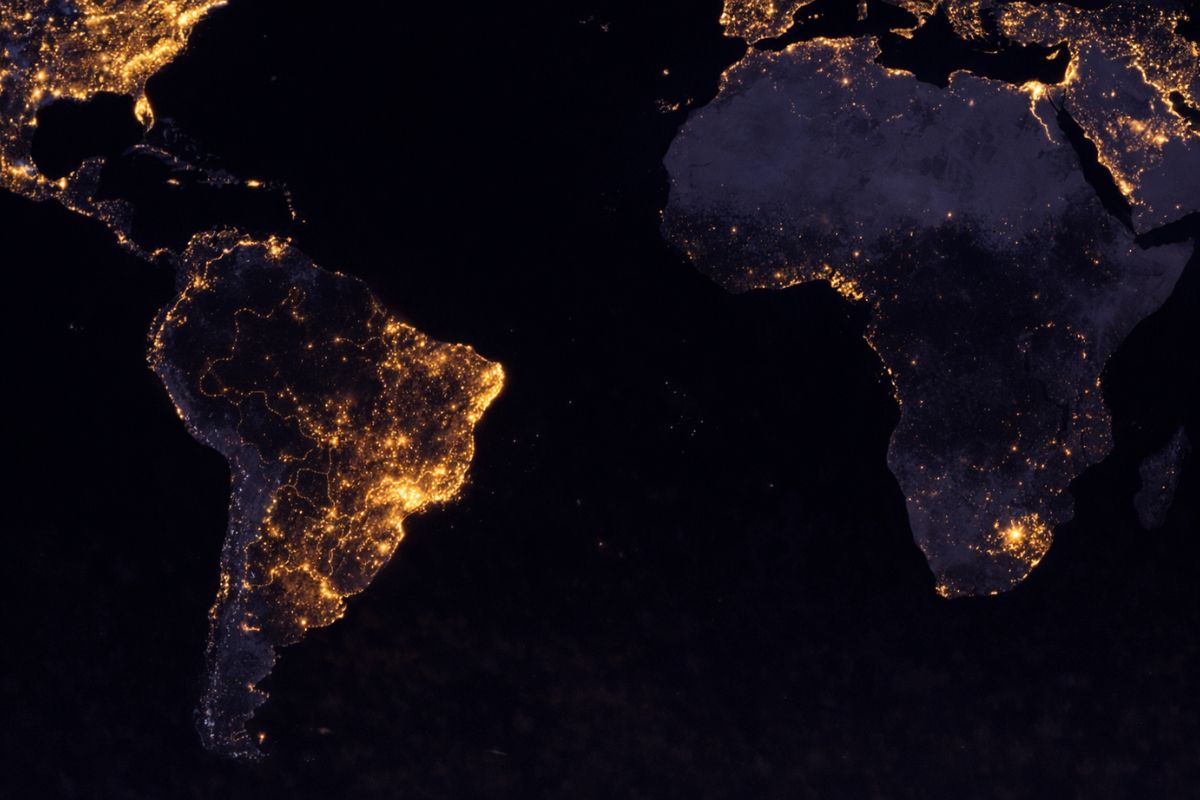
More than a million satellite images processed by NASA revealed that the Earth’s nighttime brightness increased by 16% between 2014 and 2022, with Brazil among the five brightest countries on the planet, while Europe reduced its brightness by 4% with energy efficiency policies.
The Earth is getting brighter at night, and now there is a study with numbers to prove it. Researchers analyzed more than a million daily satellite images obtained from a U.S. government Earth observation satellite and processed by NASA, documenting a net increase of 16% in global nighttime brightness between 2014 and 2022. The study, published in the journal Nature, showed that the phenomenon is not uniform: it is a mosaic of regional variations where some countries are getting brighter while others are deliberately darkening. In 2022, the United States led in total brightness, followed by China, India, Canada, and Brazil.
What the satellite images revealed goes beyond a simple increase in light. “For decades, we had a simplified view that the Earth at night is simply getting brighter and brighter,” said Zhe Zhu, a remote sensing professor and director of the Global Environmental Remote Sensing Laboratory at the University of Connecticut, senior author of the study. “We found that the nighttime landscape of the Earth is, in fact, highly volatile. The area of light incidence on the planet is in constant expansion, contraction, and change.” The satellite images captured this complexity with a resolution that previous studies, based on annual or monthly compositions, could not achieve.
What satellite images show about the increase in global nighttime brightness

According to CNN, the 16% growth in nighttime brightness between 2014 and 2022 was primarily driven by accelerated urbanization, infrastructure expansion, and electrification of rural areas.
-
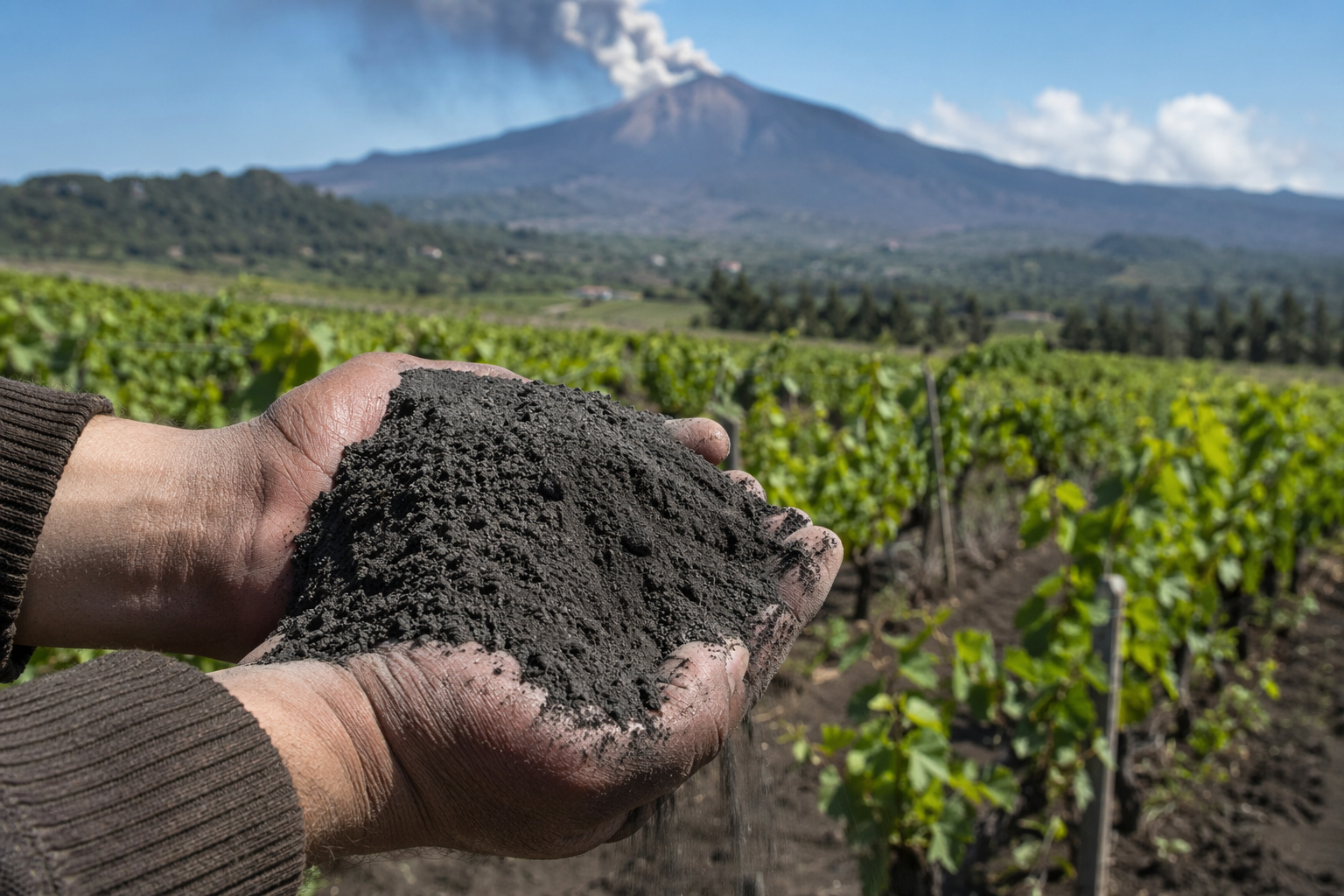
Tons of ash from the highest and most active volcano in Europe, which once covered crops and worried farmers, are now being used as natural fertilizer in Sicily, increasing productivity, improving soil quality, and reducing costs, in a transformation that draws the attention of experts in sustainable agriculture.
-
NASA launched a $1.2 billion probe to travel through space to an asteroid that may be worth more than all the wealth ever produced by humanity and reveal the lost core of a destroyed planet.

-
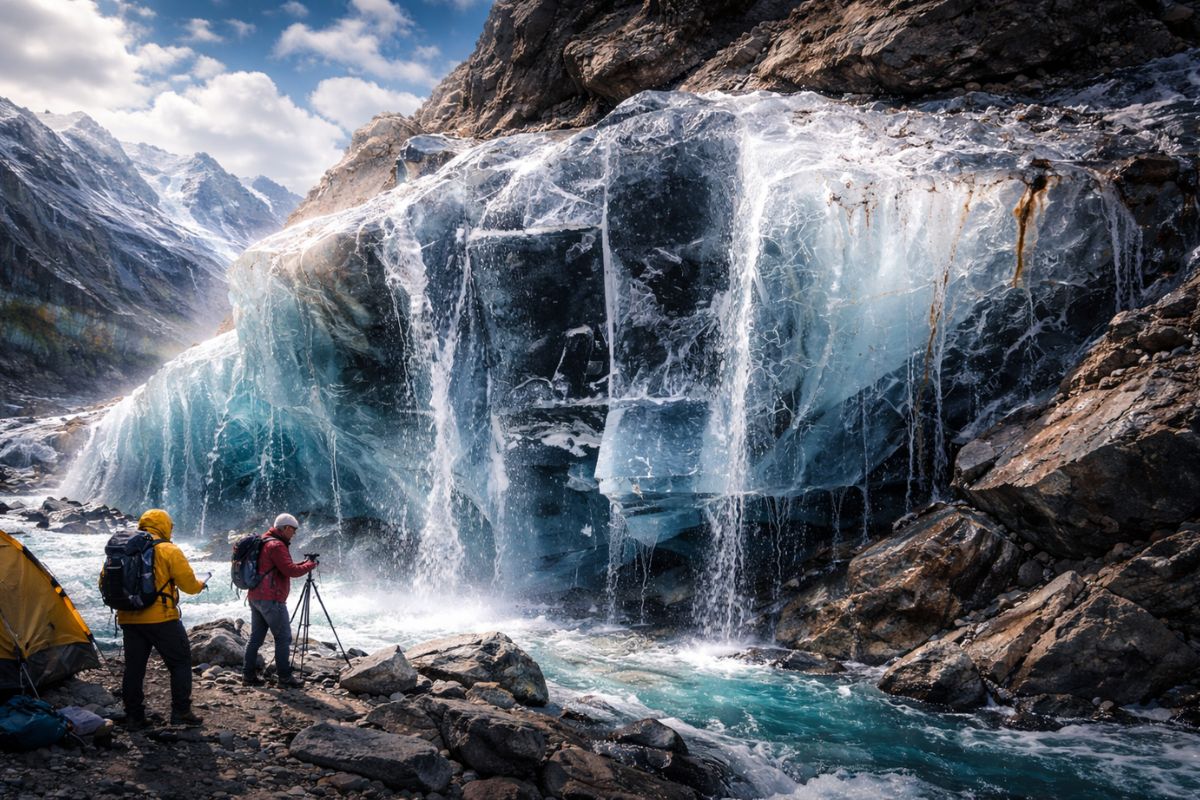
Scientists discover in Alaska a 350,000-year-old ice block that has survived multiple periods of global warming and is now melting so quickly that it may disappear before revealing all its secrets.
-
While Starlink supports SpaceX’s trillion-dollar scale, Elon Musk encounters issues in Namibia due to local control regulations, digital sovereignty, and denied licenses, and the orbital internet race faces political limits outside the United States.

The satellite images documented that the regions with the highest growth in brightness were Sub-Saharan Africa and Southeast Asia, led by countries like Somalia, Burundi, and Cambodia, followed by Ghana, Guinea, and Rwanda. For these nations, the increase in brightness is not pollution. It is a sign that entire regions are emerging from darkness and connecting to the global electrical grid.
“It’s not just about urbanization. It’s a massive expansion of access to energy,” Zhu explained. “These numbers represent a profound change as entire regions move from near-total darkness to integration into the global electrical grid.”
The satellite images transform abstract numbers into visual evidence: where there was once only darkness in nighttime captures, now points and patches of light appear, indicating electrified villages, illuminated roads, and expanding cities.
Why Europe got darker while the rest of the world got brighter
While most continents got brighter, Europe went in the opposite direction. The satellite images recorded a net decrease of 4% in nighttime luminous radiation on the European continent, resulting from technological advances and deliberate environmental policies.
The widespread replacement of old lighting poles, such as high-pressure sodium lamps, with more modern directional LED systems reduced the amount of light scattered into the sky without diminishing street lighting.
Zhu ranked France as a global leader in nighttime sky conservation policies and energy efficiency. Christopher Kyba, co-author of the study and professor at Ruhr University Bochum in Germany, described the French case as “extraordinary”: France adopted the practice of turning off streetlights late at night when there is no more activity on the streets.
The satellite images capture this policy in action, showing French cities literally darkening after a certain hour, something that researchers intend to monitor to see if other countries will adopt the same approach.
What satellite images reveal about armed conflicts and economic crises
Not all darkness is voluntary. The satellite images documented massive losses of brightness in countries like Ukraine, Lebanon, Yemen, and Afghanistan, where lighting has been affected by armed conflicts and infrastructure collapse.
“In Ukraine, we observed a sharp and sustained decline in brightness that perfectly coincided with the escalation of the conflict in February 2022,” when Russia launched its large-scale invasion, Zhu explained.
Similar declines recorded in satellite images have been observed in Haiti and Venezuela, where darkening has been associated with prolonged economic crises and unstable energy supply.
The difference between deliberate darkening, as in Europe, and darkening due to collapse, as in conflict zones, is visible in the images: the former occurs gradually and in an organized manner, while the latter appears as abrupt drops coinciding with specific destruction events.
Brazil among the five brightest countries in the world according to satellite images
Brazil ranks fifth on the list of countries with the highest total brightness in 2022, behind the United States, China, India, and Canada. This position reflects the country’s territorial extent, the size of urban areas, and the ongoing electrification process that still reaches communities in remote regions of the Amazon and the interior of the Northeast.
For a continental country, the amount of light emitted at night is proportional to the size of the economy and installed infrastructure.
The satellite images show that Brazilian nighttime brightness is concentrated along the coastal strip and in state capitals, with significant patches along the São Paulo, Rio de Janeiro, and Belo Horizonte axis, as well as increasing concentrations in medium-sized cities in the interior.
The increase in brightness in Brazil follows the global pattern of urbanization and infrastructure expansion, but it also raises questions about light pollution that other countries have already begun to address.
The ecological consequences that the increase in brightness captured by satellite images represents
The increasing brightness of the Earth at night is not just a visual curiosity. “Light pollution has profound ecological consequences, disrupting nighttime ecosystems, animal migrations, and human circadian rhythms,” warned Zhu.
Insects, migratory birds, and marine animals are affected by artificial lighting that alters natural cycles of activity and rest. For humans, constant exposure to artificial light at night interferes with melatonin production and sleep quality.
The satellite images that documented the 16% increase in global brightness over eight years put concrete numbers on a problem that science has been discussing for decades. Large-scale lighting began with gas lamps in the early 19th century and has grown relentlessly since the advent of electricity.
Cities and towns shine so brightly that most of the stars visible to the naked eye have disappeared from the urban sky. The study published in Nature shows that this process continues to accelerate in much of the planet, even as Europe tries to reverse the trend.
Did you know that Brazil is among the five brightest countries on the planet? Do you think we should follow France’s example and turn off street lights when there is no one on the streets? Let us know in the comments. The brightness of the Earth at night tells a story about progress, conflict, and choices that affect everything from ecosystems to the quality of your sleep.







Seja o primeiro a reagir!