





 Portuguese
  English
  Spanish
  4 min of reading
  0 comments


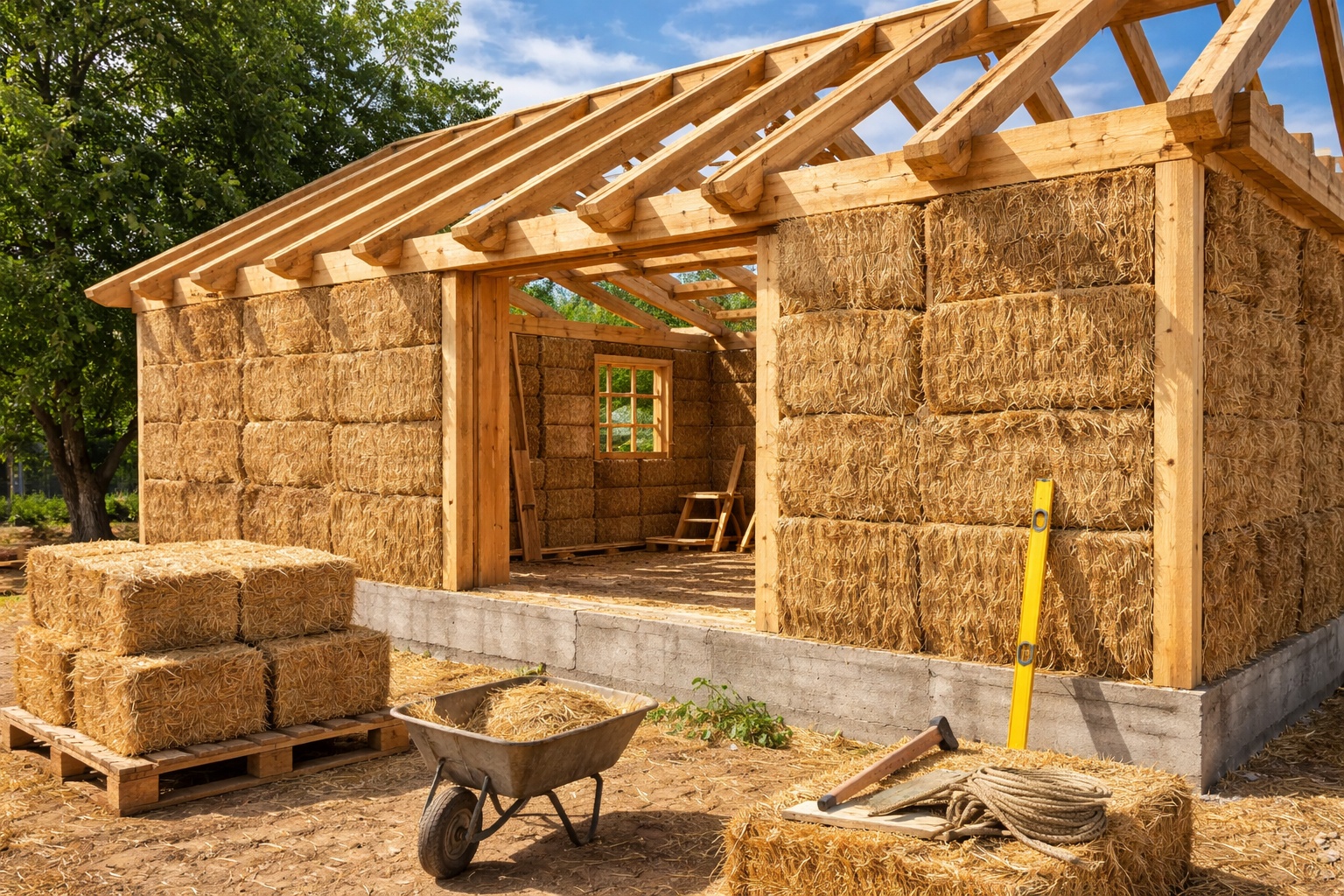
The Straw Bale Construction Technique Uses A Common Agricultural Material To Create Structural Walls With High Thermal Insulation, Good Fire Resistance, And Low Environmental Impact.
The construction with compacted straw bales, internationally known as straw bale construction, is a technique that emerged in the early 20th century when farmers began using compressed straw as a building solution in areas where wood, bricks, and concrete were scarce or expensive. What started as a survival alternative has evolved into a studied, tested, and regulated method in various countries.
Today, this technique is not seen as makeshift, but as a legitimate building solution used in homes, schools, community centers, and experimental buildings in countries such as the United States, France, and Australia.
How Compact Straw Bale Construction Works
The principle of the technique is simple, but it requires precision. Highly compacted straw bales — usually a byproduct of wheat, rice, or barley cultivation — are stacked to form thick walls. These bales can function in two distinct ways: as structural elements or as infill within an independent structure made of wood or light steel.
-
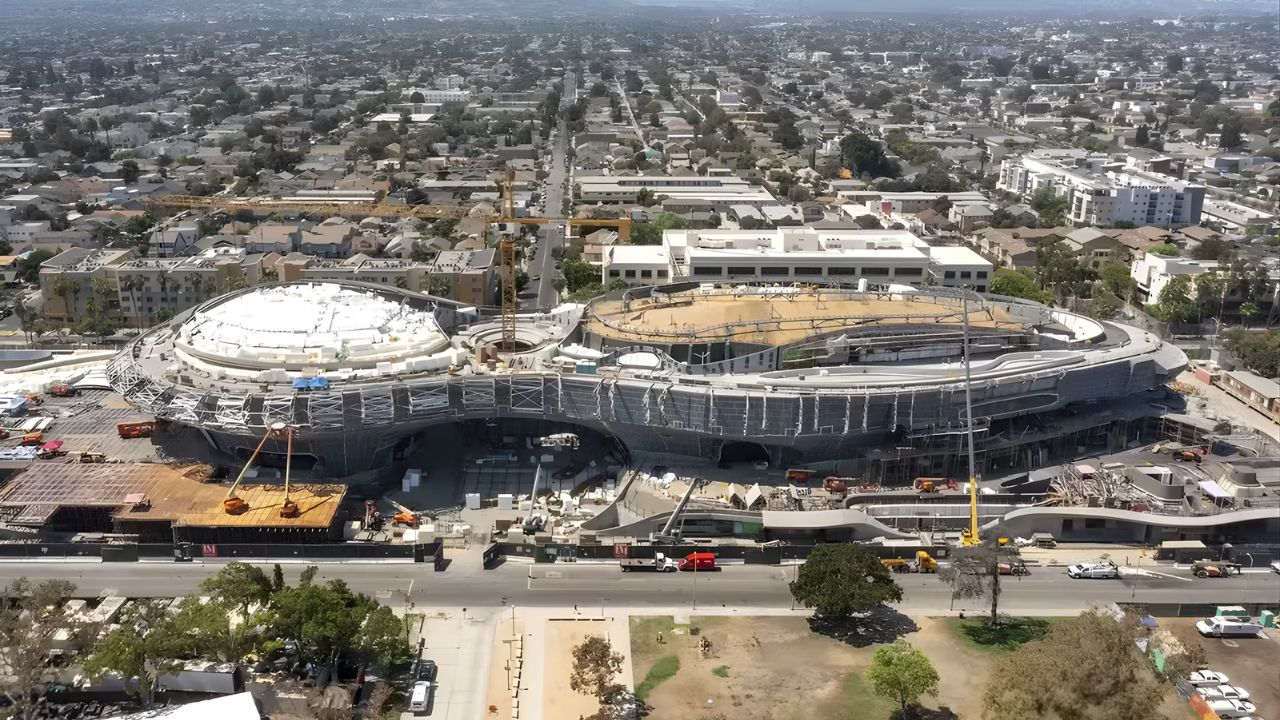
Created by George Lucas with over $1 billion, a futuristic museum in the shape of a spaceship with 1,500 curved panels is about to open in Los Angeles and will house one of the largest private collections of narrative art in the world.
-
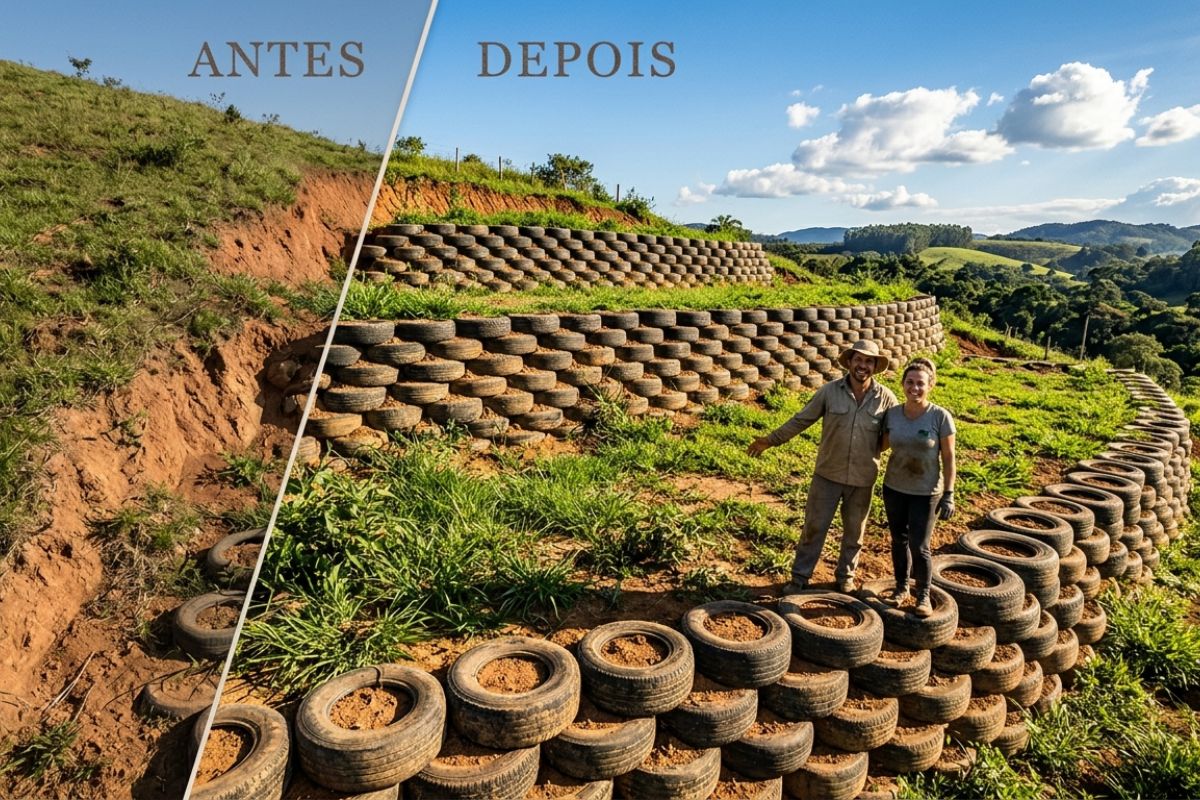
Couple shows how they built a retaining wall on their property using 400 old tires: sloped land turned into plateaus, tires are aligned, filled, and compacted with layers of soil, with grass helping in support and at almost zero cost.
-
Engineer explains drainage during the rainy season: the difference between surface water and deep water, ditches, gutters, and water outlets on the road, as well as drains and drainage mattresses, to prevent erosion, aquaplaning, and flooding at the construction site today.

-
With 55 floors, 177 meters in height, a 15-meter walkway between the twin towers, ventilated facade, and 6,300 m² of leisure space, Ápice Towers already has one tower completed and another nearly at the top.



After stacking, the walls are covered with layers of clay, lime, or, in some cases, cement plaster. This coating is essential, as it protects the straw from moisture, creates structural rigidity, and transforms the assembly into a solid and continuous block.
The final result is a wall with great thickness, high thermal mass, and very different structural behavior from conventional walls.
Thermal Insulation: Trapped Air That Becomes Energy Performance
The main technical advantage of compacted straw is its thermal insulation. The fibrous structure of straw traps large volumes of air inside, drastically reducing heat exchange between the internal and external environments.
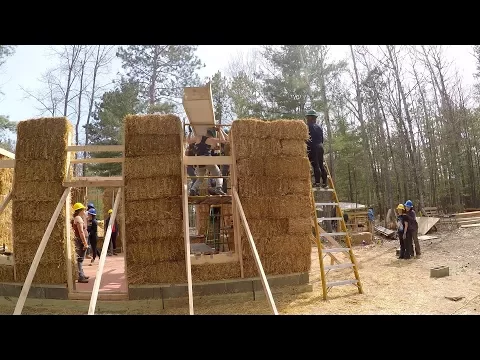
Straw walls can achieve thermal insulation levels significantly higher than those of conventional masonry, which greatly reduces the need for heating in cold climates and cooling in warm climates. In real applications, buildings of this type exhibit much lower energy consumption throughout the year.
In addition to thermal comfort, the thickness and density of the walls also provide good acoustic insulation, making indoor environments quieter.
Fire Resistance: One Of The Biggest Myths Of The Technique
At first glance, the idea of building with straw suggests an extreme risk of fire. In practice, the opposite occurs when the technique is executed correctly.
The straw used is extremely compacted, which drastically reduces the presence of oxygen between the fibers. Without sufficient oxygen, internal combustion cannot be sustained. Moreover, the external plaster coating creates an additional barrier against fire.
Technical tests show that compacted straw walls, when well executed, can withstand fire for periods equivalent to or longer than conventional wooden walls, meeting rigorous fire safety requirements.
Durability And The Challenge Of Moisture
The biggest enemy of straw construction is not fire, but moisture. Straw is an organic material, and if constantly exposed to water, it can degrade over time.
Therefore, successful projects utilize elevated foundations, good drainage systems, wide eaves, and appropriate coatings to prevent water infiltration. When these precautions are followed, straw buildings can last for decades, with stable structural performance and low maintenance needs.
Real Sustainability And Reduced Environmental Impact
From an environmental standpoint, the technique is considered one of the most efficient available. Straw is an abundant agricultural waste, renewable, and of low energy cost. In many countries, it would be burned or discarded after harvest.
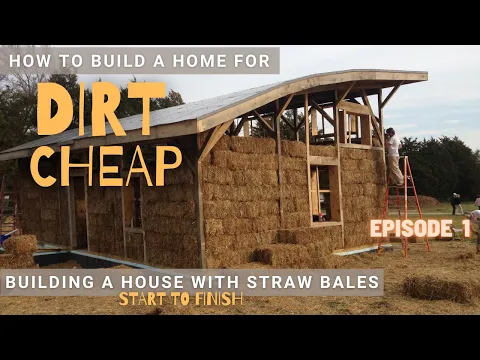
By using it as a building material, the demand for concrete, steel, and bricks is reduced, materials that have a high environmental impact in production. Moreover, part of the carbon captured by plants during growth remains stored in the building throughout its useful life.
Where This Technique Is Already Used Around The World
Compact straw construction has been applied in different climatic and social contexts:
- In the United States, there are buildings over 100 years old still in use, and the technique has been incorporated into building codes in some regions.
- In France and other European countries, it is adopted in sustainable housing and bioclimatic architecture projects.
- In Australia, the method is used for both residences and rural buildings, utilizing bales of large-scale industrial size.
These examples show that the technique is not experimental but fully functional when well designed.
When Agricultural Waste Becomes Architecture
The compact straw bale construction technique represents a complete inversion of the traditional logic of civil construction. A material seen as waste begins to play a structural, thermal, and environmental role of high performance.
In a scenario of seeking sustainable alternatives, energy efficiency, and reduced environmental costs, straw ceases to be a symbol of fragility and becomes an example of applied engineering with intelligence, simplicity, and a solid technical basis.









-

-

-

-

-

-

109 pessoas reagiram a isso.