





 Portuguese
  English
  Spanish
  4 min of reading
  4 comments


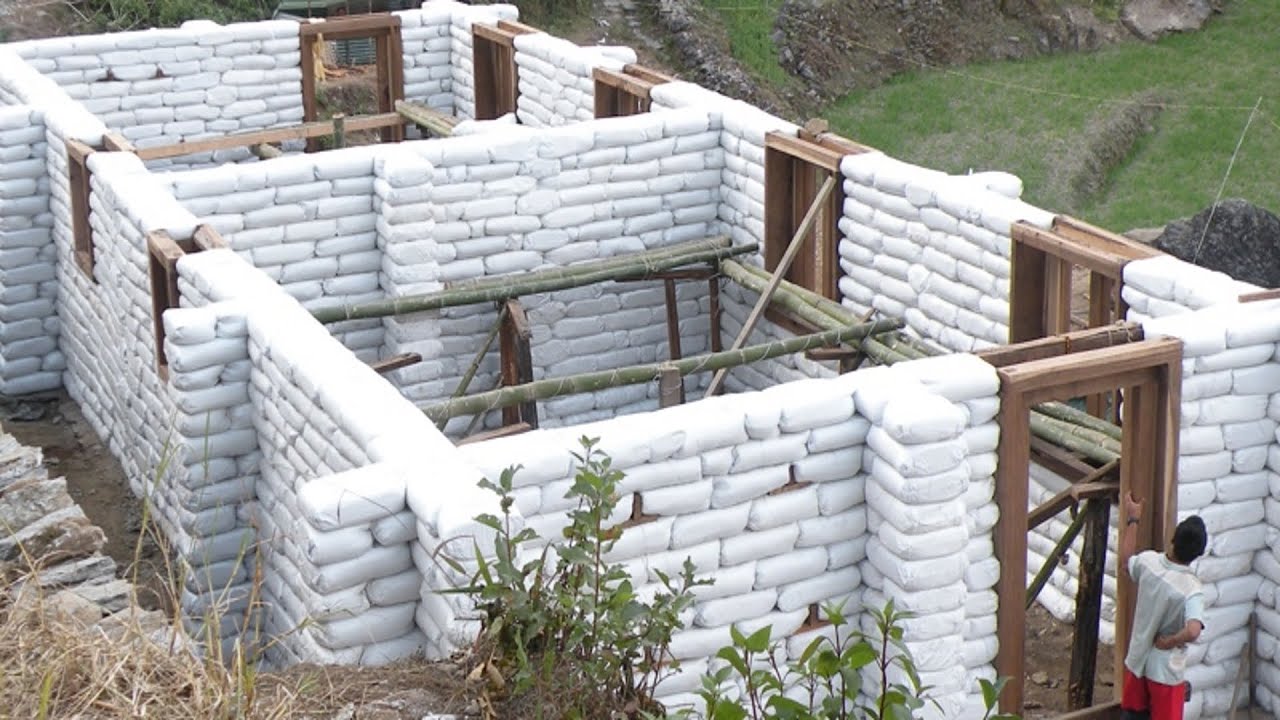


Known as Earthbag Construction, This Technique Eliminates Concrete and Steel, Transforms Ordinary Soil into Structure and Displays High Seismic Performance.
In a world dominated by reinforced concrete, structural steel, and industrialized systems, there exists a construction technique that goes in the opposite direction and still delivers surprising structural performance. Known as earthbag construction, this approach utilizes one of the most abundant materials on the planet — soil — as the primary structural element, completely dispensing with concrete and steel in much of the building.
The logic is simple in appearance but sophisticated in practice: durable bags are filled with local earth, stacked in successive rows, and compacted until they form thick, stable, and self-supporting walls. The weight of the structure combined with compaction and friction between the layers becomes the main factor of stability.
How Earthbags Become Structural Walls
Each bag functions as a “flexible building block”. When filled and compacted, they deform slightly, creating a wide contact surface with adjacent bags. Barbed wire or simple locking elements are typically used between the rows, preventing lateral sliding and increasing the internal friction of the wall.
-
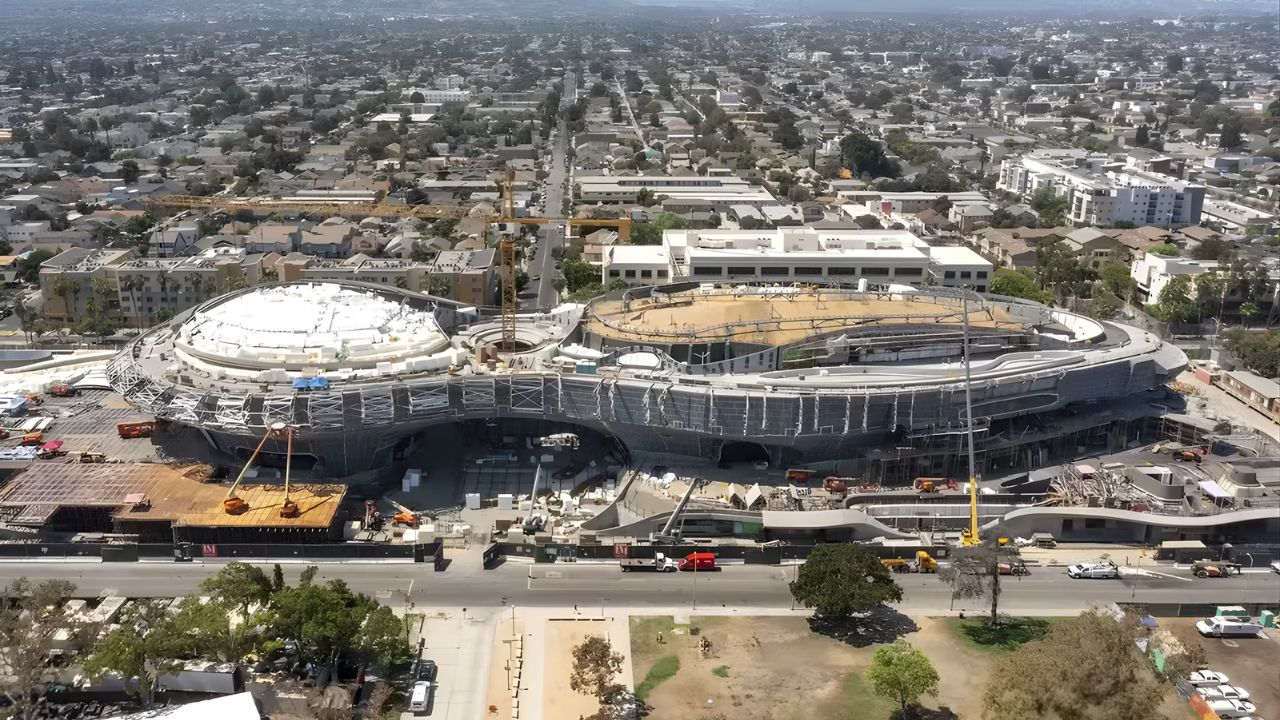
Created by George Lucas with over $1 billion, a futuristic museum in the shape of a spaceship with 1,500 curved panels is about to open in Los Angeles and will house one of the largest private collections of narrative art in the world.
-
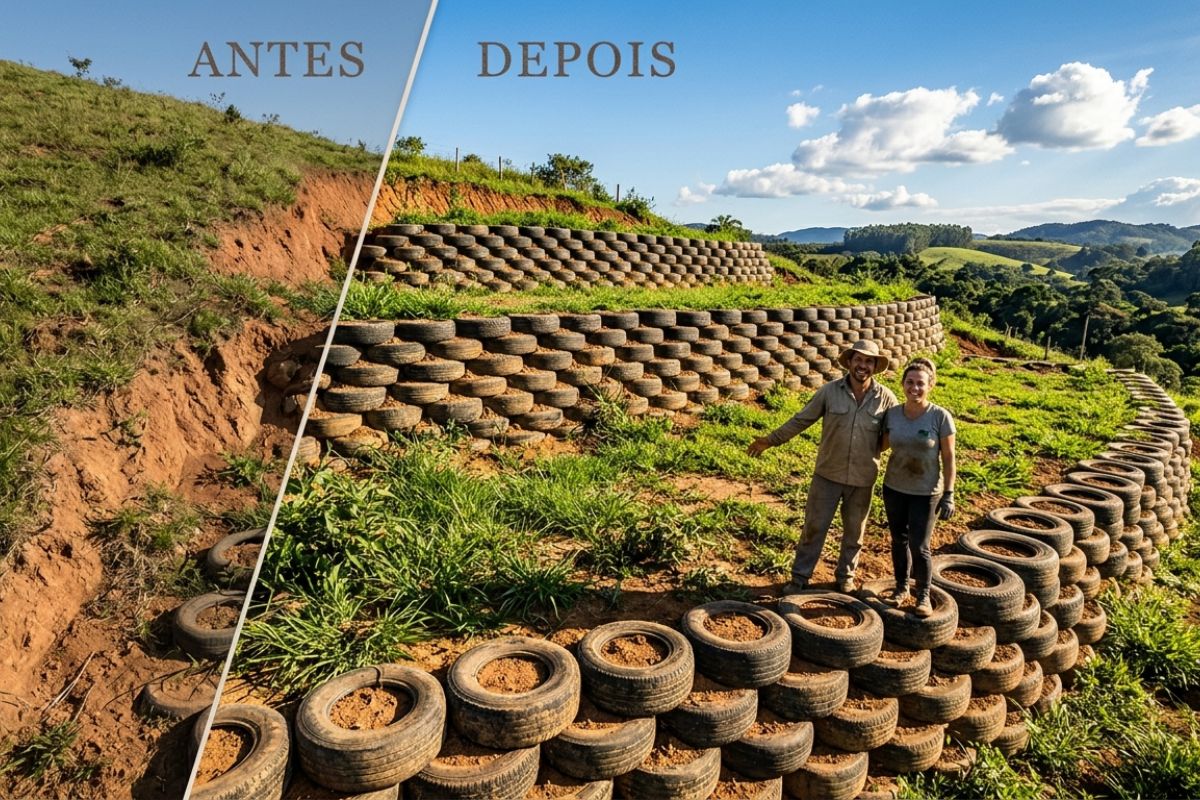
Couple shows how they built a retaining wall on their property using 400 old tires: sloped land turned into plateaus, tires are aligned, filled, and compacted with layers of soil, with grass helping in support and at almost zero cost.
-
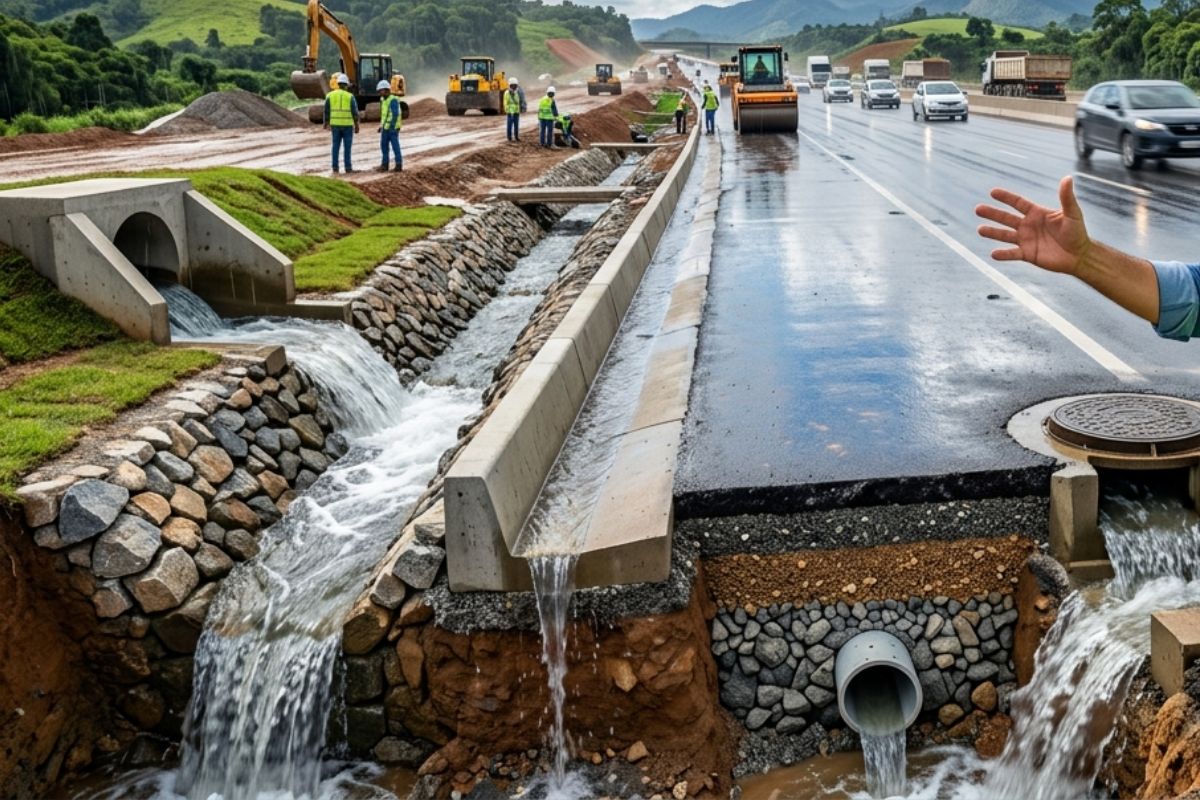
Engineer explains drainage during the rainy season: the difference between surface water and deep water, ditches, gutters, and water outlets on the road, as well as drains and drainage mattresses, to prevent erosion, aquaplaning, and flooding at the construction site today.
-
With 55 floors, 177 meters in height, a 15-meter walkway between the twin towers, ventilated facade, and 6,300 m² of leisure space, Ápice Towers already has one tower completed and another nearly at the top.


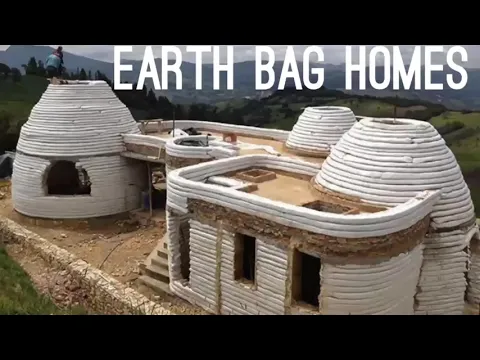

The result is a structure that works almost exclusively in compression, just like solid masonry walls or ancient stone structures.
Since compacted soil handles compressive forces very well, the system becomes surprisingly efficient, even without beams, pillars, or metal reinforcements.
Why This Technique Performs Well in Earthquakes
The seismic behavior of earthbag buildings is one of their most interesting points. Unlike rigid concrete structures, which concentrate stresses and can break in a brittle manner, earthbag walls have high mass and some ability to dissipate energy.
The slight flexibility of the bags, combined with the weight and continuity of the walls, allows the structure to absorb vibrations without collapsing abruptly.
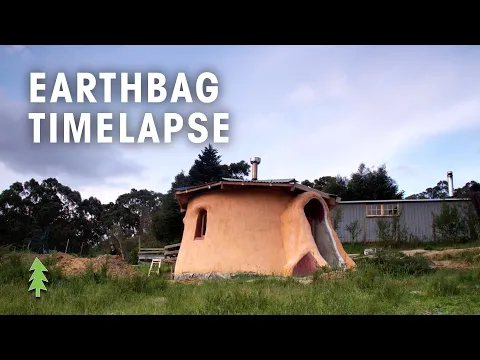
In seismic regions, this type of construction is often associated with curved or circular geometries, such as domes and arch walls, which better distribute loads and reduce points of stress concentration.
Tests and practical experiments in seismic areas of Iran, the southwestern United States, and East Africa have shown that buildings of this type can remain stable after moderate tremors, provided they are well executed.
The Importance of Shape: Curves, Domes, and Thick Walls
Unlike conventional construction, where straight walls and large spans are common, the earthbag technique favors ancient structural forms, such as circles, ellipses, and domes. These geometries naturally work in compression and virtually eliminate bending stresses.
The walls tend to be thick, which increases thermal and structural inertia. In many constructions, the thickness exceeds 40 or 50 centimeters, creating a mass capable of stabilizing the internal temperature and resisting heavy loads without any metal reinforcement.
Common Soil as Structural Material: What Really Matters
Contrary to what many might think, there is no need for a special type of soil. Most constructions use local soil, as long as it contains a reasonable proportion of sand and silt.
Very clayey soils can be adjusted with the addition of sand, while very loose soils can receive small amounts of natural stabilizers, such as lime or ash.

The critical factor is not the exact chemical composition but the correct compaction. The better the soil is compacted within the bags, the greater its final resistance will be.
Thermal Insulation and Environmental Comfort
Another little-discussed benefit is thermal performance. Earthbag walls function as large thermal masses, absorbing heat during the day and releasing it slowly at night. In hot, dry climates, this dramatically reduces the need for artificial climate control systems.
When combined with earthen, lime, or clay plasters, these walls also naturally regulate indoor humidity, creating more stable and comfortable environments.
Where Is This Technique Used Today?
Although not well known by the general public, earthbag construction is used in various contexts around the world.
In Iran, it has been applied in low-cost housing. In the United States, it appears in experimental projects and self-sufficient homes. In parts of Africa, it is adopted as a resilient, cost-effective solution adapted to regions with few industrial resources.
In all these cases, the technique stands out by dramatically reducing material costs, decreasing reliance on industrial chains, and allowing construction with local labor.
An Ancient Technique with Modern Potential
Earthbag construction does not represent a technological setback but a modern reinterpretation of ancestral structural principles. It shows that not every efficient solution needs steel, concrete, or complex industrial processes.
In a scenario seeking more resilient, affordable, and environmentally responsible constructions, this technique re-emerges as a real alternative based on simple physics, mass, gravity, and good construction sense.








The bags of high quality may be a solution. But adherence of motor to unsticky face of plastic bags may be a drawback. Please feedback on these pont. The foundation details is missing.
This appears to offer some interesting applications for agricultural structures that use ambient livestock heat and require only roof electrical elements. Would be interested to review any agricultural use examples.
Where can I get info on the processed used to make the compacted bags ie a machine or press and purchase of the bags their selves