





 Portuguese
  English
  Spanish
  3 min of reading
  0 comments


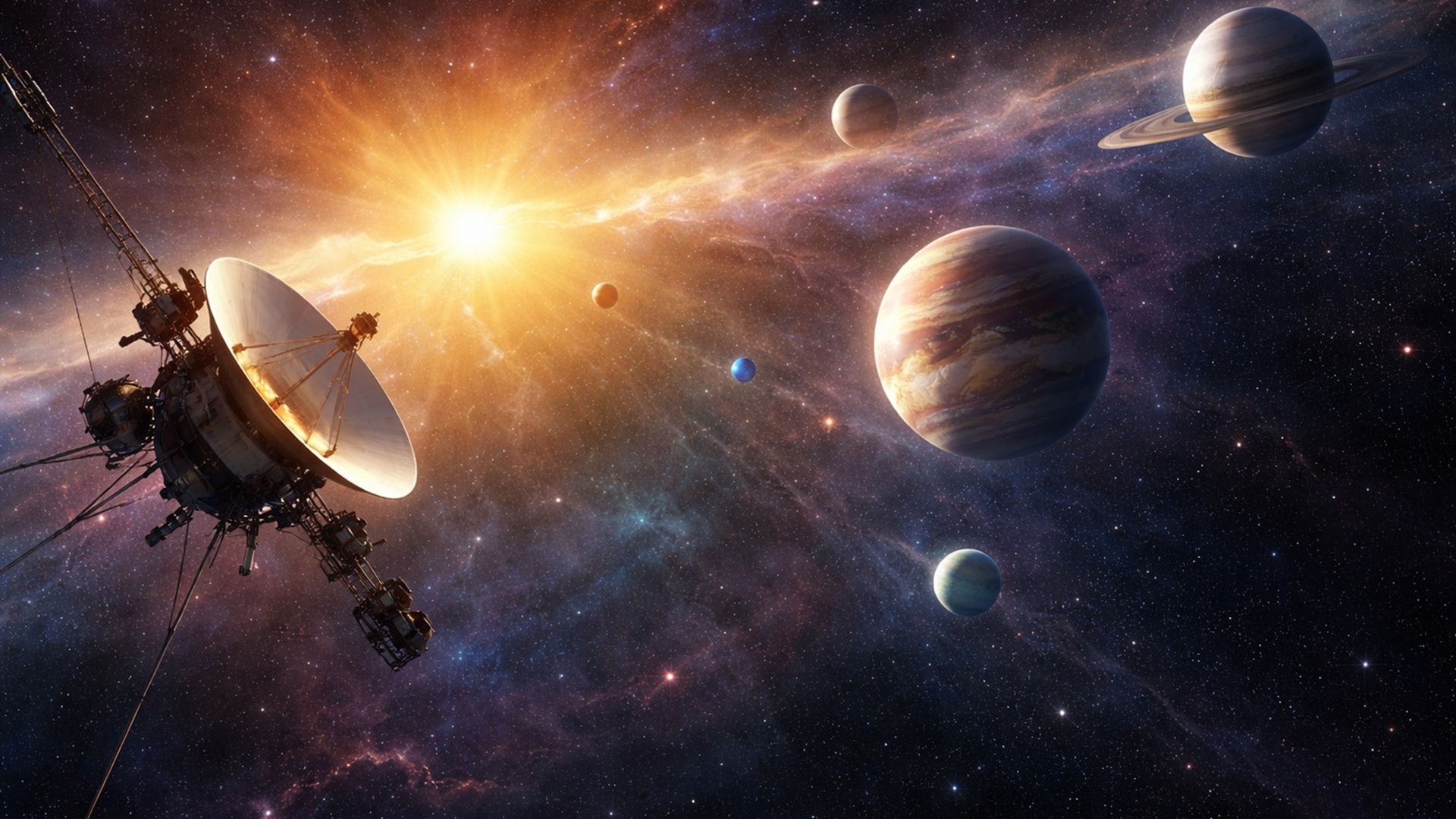
The Final Portrait Captured By Voyager, Billions of Kilometers From the Sun, Gathers Aligned Planets, Marks the End of Cameras in 1990 and Remains the Only Attempt Ever Made to Photograph the Solar System From Its Outer Borders
The last look of the Voyager probes at the Solar System occurred between 1989 and 1990, when the cameras were turned off to conserve energy, resulting in a unique portrait taken 6 billion kilometers from the Sun.
Progressive Shutdown of Scientific Instruments
The Voyager spacecraft, launched decades ago, are undergoing gradual shutdowns of instruments to preserve energy and extend the collection of still-possible scientific data in the outer regions of the Solar System.
In March, the mission deactivated the cosmic ray subsystem experiment of Voyager 1 and the low-energy charged particle instruments of Voyager 2, following the energy prioritization strategy adopted by NASA.
-
Does compulsive lying exist? What does science know about mythomania and why does it go beyond ‘lying too much’?

-
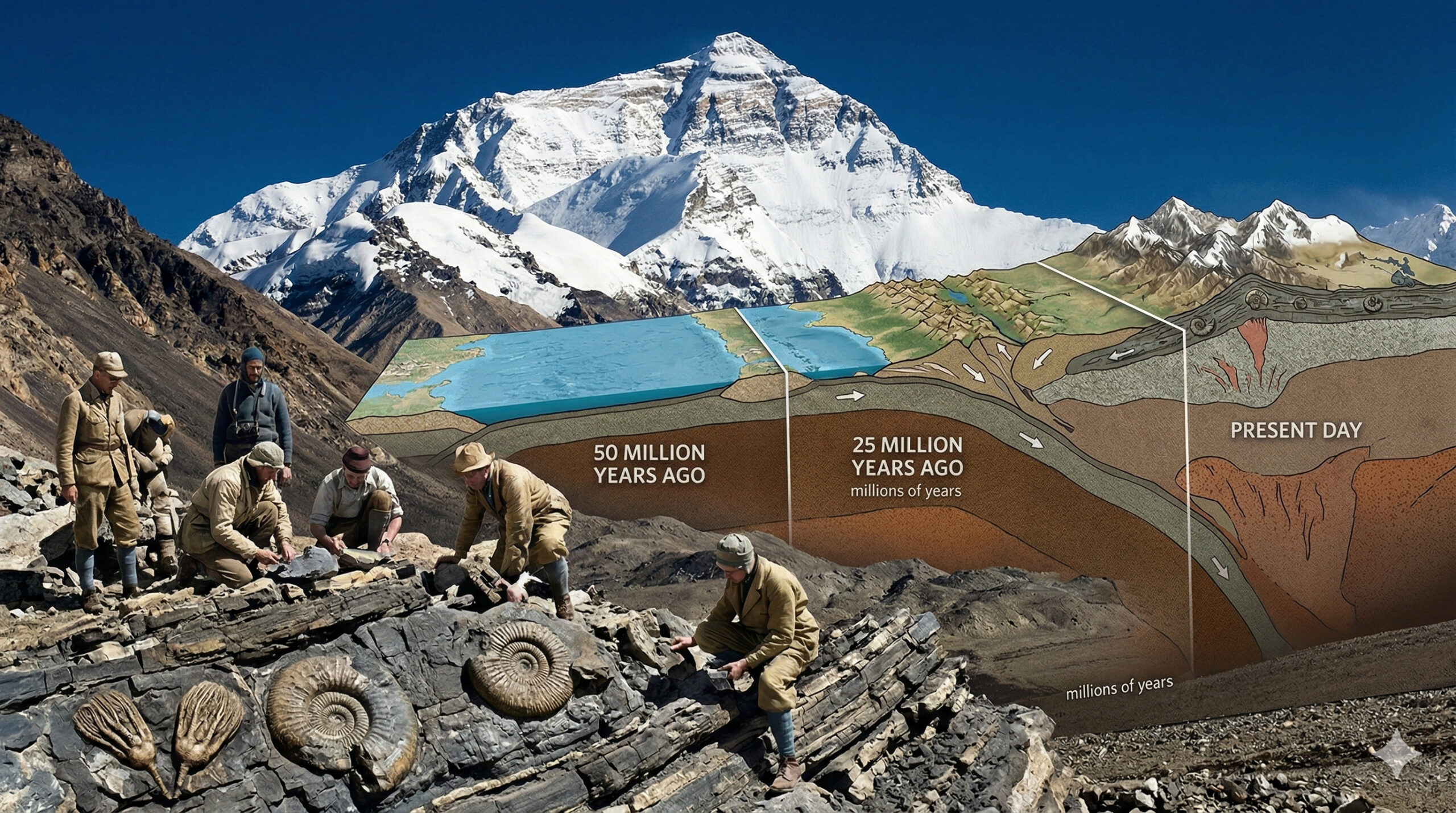
Marine fossils found at over 8,800 meters altitude on Everest and in large mountain ranges have proven that entire continents move, oceans disappear, and tectonic plates collide over millions of years, revolutionizing science in the 20th century.
-
What if the Sun disappeared suddenly? Simulation shows Earth in darkness within minutes, extreme cold, and rapid collapse of life on the planet.

-
A 2,400-year-old iron foundry has been discovered in Senegal with 100 tons of slag, 35 furnace bases, and signs of nearly eight centuries of continuous metallurgical activity.


The cameras, considered high-energy consumption instruments, had been turned off much earlier, as they required significant power and memory computational, resources redirected to measurements of solar wind and interstellar space.
The Shutdown of the Cameras After Neptune
In 1989, shortly after the first close observations and photographs of the ice giant Neptune, Voyager 2 shut down its wide-angle and narrow-angle cameras.
The engineers decided to preserve energy and onboard computer memory capacity, prioritizing instruments capable of collecting continuous data about particles, fields, and conditions beyond the planets.
Voyager 1 kept its cameras operational for a while longer, until on February 14, 1990, the increasing energy needs forced the mission to permanently shut down the imaging system.
The Final Portrait at 6 Billion Kilometers
Before the shutdown, Voyager 1 pointed its cameras back at the Solar System and captured a historic portrait at about 6 billion kilometers, equivalent to 4 billion miles, from the Sun.
The so-called Family Portrait of the Solar System assembled 60 combined images, capturing Venus, Earth, Jupiter, Saturn, Uranus, and Neptune aligned around the Sun in a single composition.
According to NASA, this is the only series of images that shows these planets together in this configuration, and the spacecraft would never get close enough to any astronomical object for new photographs.
Absent Planets and Technical Limitations
Some bodies were left out of the final portrait due to inevitable geometric and optical limitations during the capture of images at great distances from the Sun.
Mercury was too close to the Sun to be safely photographed, while Pluto, then classified as a planet, was too far from the probe’s trajectory at that moment.
Mars ended up obscured by dispersed sunlight reflected internally in the camera, preventing its clear identification in the final assembled set of images.
The Pale Blue Dot and Its Meaning
Among all the images, the photograph of Earth became the most emblematic, known worldwide as the Pale Blue Dot, highlighting the planet as a small dot suspended in a beam of light.
Astronomer Carl Sagan described the image as the record of all human beings who have ever existed, living their lives on a grain of cosmic dust.
In his reflection, Sagan stated that the image demonstrates human fragility and reinforces the collective responsibility to preserve and value the only known home, a message directly associated with the photograph.
An Achievement Not Repeated By Other Missions
NASA states that only three spacecraft have been able to observe the Solar System at such a distance: Voyager 1, Voyager 2, and the New Horizons mission, making the portrait a singular event.
To date, this remains the first and only successful attempt to photograph the Solar System as a whole from its outer edges.
The possibility of reactivating the cameras today is considered unlikely, as the control software has been removed and the ground computers that processed the images no longer exist.
Additionally, the cameras and heaters have been exposed for years to the extreme cold of the deep regions of the Solar System, making any attempt at reactivation uncertain, even with recreation of the original systems.
Despite this, the probes continue to send regular scientific data, including measurements of the barrier of 30,000 to 50,000 kelvin at the edge of the Solar System, keeping their scientific legacy active with still-operational instruments.






-

-

-

-

-

15 pessoas reagiram a isso.