





 Portuguese
  English
  Spanish
  6 min of reading
  27 comments


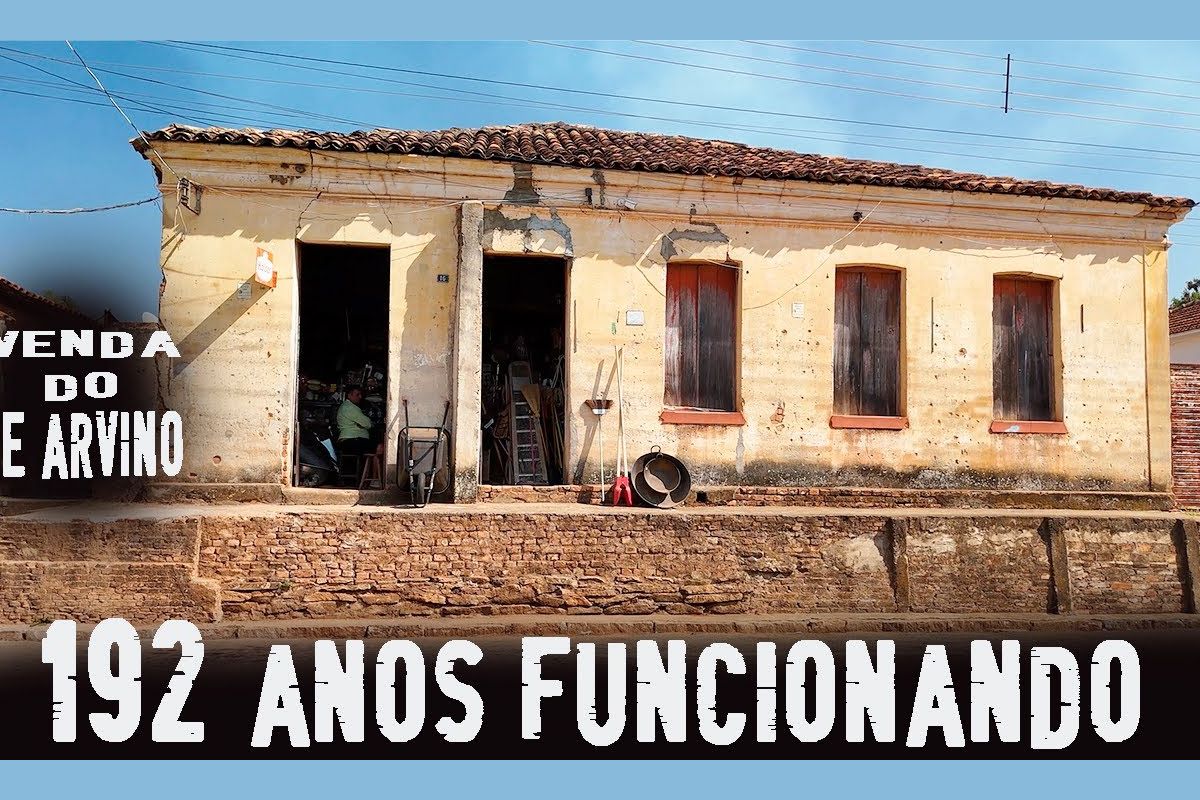


Oldest Store in Brazil Stands Strong for 192 Years in Minas, Without Renovation, With Money on the Ceiling, Rare Bells, 64-Year-Old Liquor, and Clear-Minded Owner
The oldest store in Brazil remains open in Gaspar Lopes, near Alfenas, in Minas Gerais, with a declared 192 years and an intact structure since its inauguration, without renovation over time. Inside, there are relics, dark stock, old objects, bells, and money pinned to the ceiling.
The place is run by Zé Alvino, who claims to be 85 years old and has been in the establishment for 64 years, maintaining operations at the same address. Amidst stories, sales, and complaints about noise in the old train station area, he claims to have liquor stored for 64 years and reports plans to sell due to lack of funds.
A Store in Gaspar Lopes That Stands Still in Time

The oldest store in Brazil appears on a simple street in Gaspar Lopes, close to Alfenas, in Minas Gerais, surrounded by a square, mansions, and rural life.
-
These living root bridges and ladders are over 700 years old and help indigenous people survive in one of the rainiest regions in the world.

-
From sertanejo star to international investor: Ana Castela invests millions in a mansion in the USA, creates a themed accommodation in Orlando, and shows that the “boiadeira” also wants to grow away from the stage.

-
The 10 most stunning motorhomes in the world: a $3 million trailer with a rooftop nightclub and garage for a Ferrari, “palaces on wheels” with Italian marble, private cinema, and five-star hotel luxury for billionaires.

-
Trump wanted to spend $400 million on the White House, but the courts prohibited the million-dollar construction.

The establishment is presented as an old commerce that has become a reference due to the absence of renovation and the preservation of the environment: shelves, stacked objects, stock items in dark rooms, and a feeling of a house that has become a warehouse.
Zé Alvino describes the property as a mansion with 19 rooms, which used to operate as a boarding house, and is now occupied by merchandise.
He emphasizes that the oldest store in Brazil remained as it was made, with wear and tear over time, but without structural changes.
This permanence is a central part of what attracts curious visitors to the oldest store in Brazil.
The Owner Claims to be 85 and Has Lived Inside the Store for 64 Years

Zé Alvino claims that he will turn 85 in November and has been at the location for 64 years, since moving to Gaspar Lopes.
He shares that he came from Campos Gerais when he was about 20, got married, built a life there, and has continued working in the same space.
He also states that four children were born in one of the rooms of the mansion, which was used as a home at the time.
When discussing his routine, the owner insists that he knows every item in stock, even with the organization that appears chaotic to visitors.
The oldest store in Brazil is described as a place where he quickly locates unlikely items, even amidst piles of merchandise and tools.
Money Pinned to the Ceiling Became a Trademark and Also Fundraising

One of the strongest images of the oldest store in Brazil is the money pinned to the ceiling.
Zé Alvino explains that the practice began after seeing something similar in São Paulo, in a wooden bar where the pinned money was intended for social actions.
He adapted the idea and started pinning bills and coins using thumbtacks and nails, launching the folded bill to stick to the top.
He reports that he collected funds and directed them to support a hospital linked to cancer treatment in Alfenas, keeping receipts and mentioning annual fundraising.
The repetition of the gesture became a ritual: visitors see the ceiling marked by bills, nails, and small objects, understanding that in the oldest store in Brazil, the money is not there just for decoration.
It is a symbol, memory, and a method of gathering donations.
At the same time, he says that he has stopped pinning so frequently, mentioning concerns about people trying to take the money.
Nevertheless, the ceiling remains an involuntary showcase of the oldest store in Brazil.
Bells, Credit Phrases, and Items That Almost No Longer Exist
Among the most cited curiosities is the sale of bells.
Zé Alvino claims to have bought several, mentions that bells are church items, but assures that he has sold pieces to distant destinations and says that a small bell was supposedly purchased by Silvio Santos, to be used on a Sunday program.
In the space, the bell appears as an unlikely commodity and reinforces the atmosphere of an old warehouse.
On the counter and walls, phrases and rules of daily life appear, such as the notice that credit is only tomorrow, repeated as a critique to the customer who promises to pay later and never does.
This language is presented as part of the culture that remains alive in the oldest store in Brazil, with dry humor and direct rules.
Additionally, there are old objects in the environment, such as a coal iron, lantern, kitchen items, wrapping papers, a candy jar, utensils, and pieces that the owner claims are no longer easily found today.
The oldest store in Brazil operates as a business but also serves as an involuntary collection of a time when almost everything was reused.
Liquor Stored for 64 Years and Price Quoted by the Owner
Zé Alvino claims to keep liquor stored for 64 years.
He shows an old bottle and mentions product details, noting that it has a cork, associating the drink with someone he says he knows who is over 90 years old.
At one point, he declares a price for a bottle, stating that he would sell it for R$ 100.
The mention of the liquor reinforces the portrayal of the oldest store in Brazil as a place where time has become stock.
It is not just a drink; it is a piece stored for decades, mentioned as a rarity capable of attracting curious people and buyers.
The Old Train Station, Current Noise, and the Registered Complaint
The surroundings of the property are linked to a railway story.
Zé Alvino points out that there used to be a train station there, talks about old photos with trains, carriages at the door, and passenger movement.
He expresses irritation when mentioning that the station was sold and replaced by an activity that “deals with glass”, generating constant noise.
The complaint becomes a sensitive point: he says that no one sleeps, criticizes authorities, and insists that peace has been lost.
This tension coexists with daily commerce. Customers enter asking for items such as mortadella, loose cigarettes, and other products.
The oldest store in Brazil remains active as the owner alternates between memory, complaint, and service.
Store Advertised: No Money to Renovate, He Says He Wants to Leave
Zé Alvino claims that he wants to sell the oldest store in Brazil because he has no money to renovate.
He repeats that the house has never undergone renovation and that, without resources and without support from family to make changes, he intends to negotiate.
He distinguishes what would belong to his children and what would be his, stating that the money from the house would not be his and that the stock would be the part he considers his.
He also mentions that he is retired and says he receives over R$ 5,000 per month, but still claims that the money is not enough for renovations.
When speaking about the future, he mentions returning to Campos Gerais, where he was born, and even mentions that the mayor there would be a friend and would have “sorted out a job”, using humor as he defines himself as a “can collector”.
In the end, there is a condition that changes the course: he says that if someone helps to renovate, he will not sell and would stay in the place.
The oldest store in Brazil, therefore, stands between two destinies: to continue as it is, resisting the wear of time, or to be negotiated due to lack of renovation conditions.
Would you buy, renovate, and keep the oldest store in Brazil open as a real business, just as it is, or do you think it should only become a memory?







Merece ajuda para reforma. Ficando com o estoque antigo (+ o novo). As peças antigas dão charme ao local.
Que tal uma vaquinha?
Porque não procura a secretaria de cultura do município e vê a possibilidade de tombar como patrimônio histórico do município, caso aconteça a reforma é de responsabilidade do município
É uma pena que essa parte da história fe uma região esteja ameaçada. Se o prefeito da cidade fosse ágil, poderia fazer o “tombamento histórico “ do imóvel, que receberia uma verba municipal para conservação e manutenção, e passaria a ser atração turística, podendo atrair visitantes para a cidade, impulsionando assim a economia regional, e talvez alguns moradores transformassem sua casa em pensão, ou hotel, auferindo alguma renda.