





 Portuguese
  English
  Spanish
  4 min of reading
  5 comments


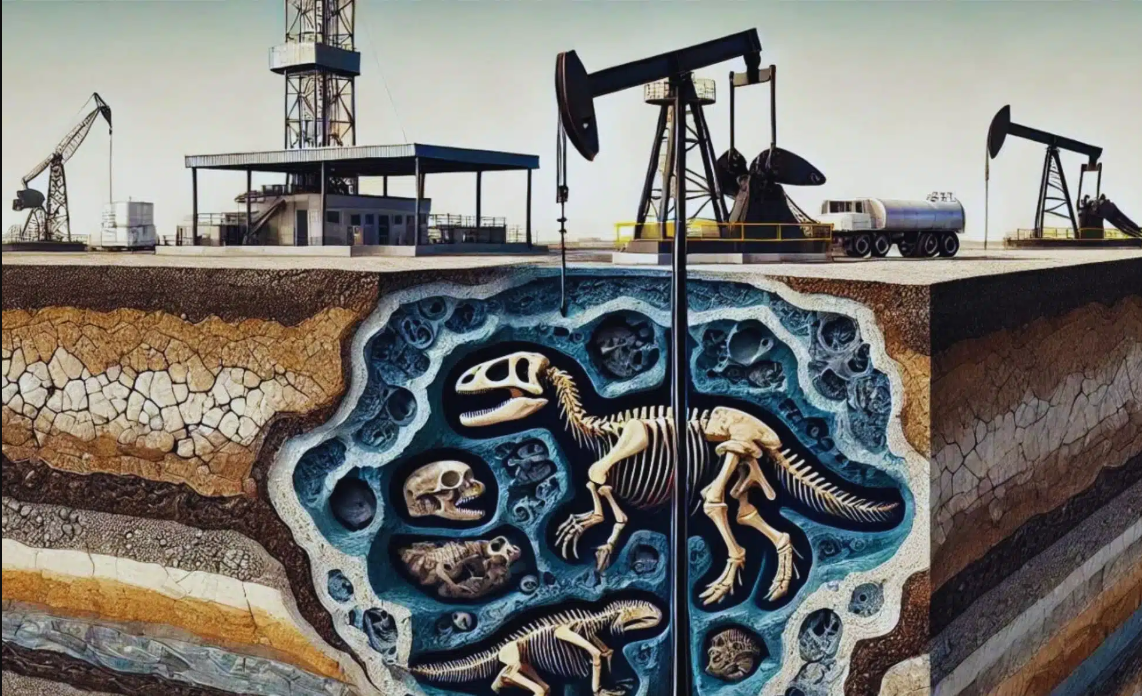

Myth Debunked! Discover Why Fossil Fuels Have No Relation to Dinosaurs and What the True Origin of These Energy Sources Is
The idea that oil comes from dead dinosaurs is a widely spread myth. Although this belief has gained popularity over the years, the true story behind fossil fuels is quite different.
The fossil fuels we use today do not come from large creatures like dinosaurs, but rather from forms of life much smaller, such as phytoplankton and algae. The journey of these tiny creatures to transform into one of the planet’s most valuable resources is fascinating and more complex than we imagine.
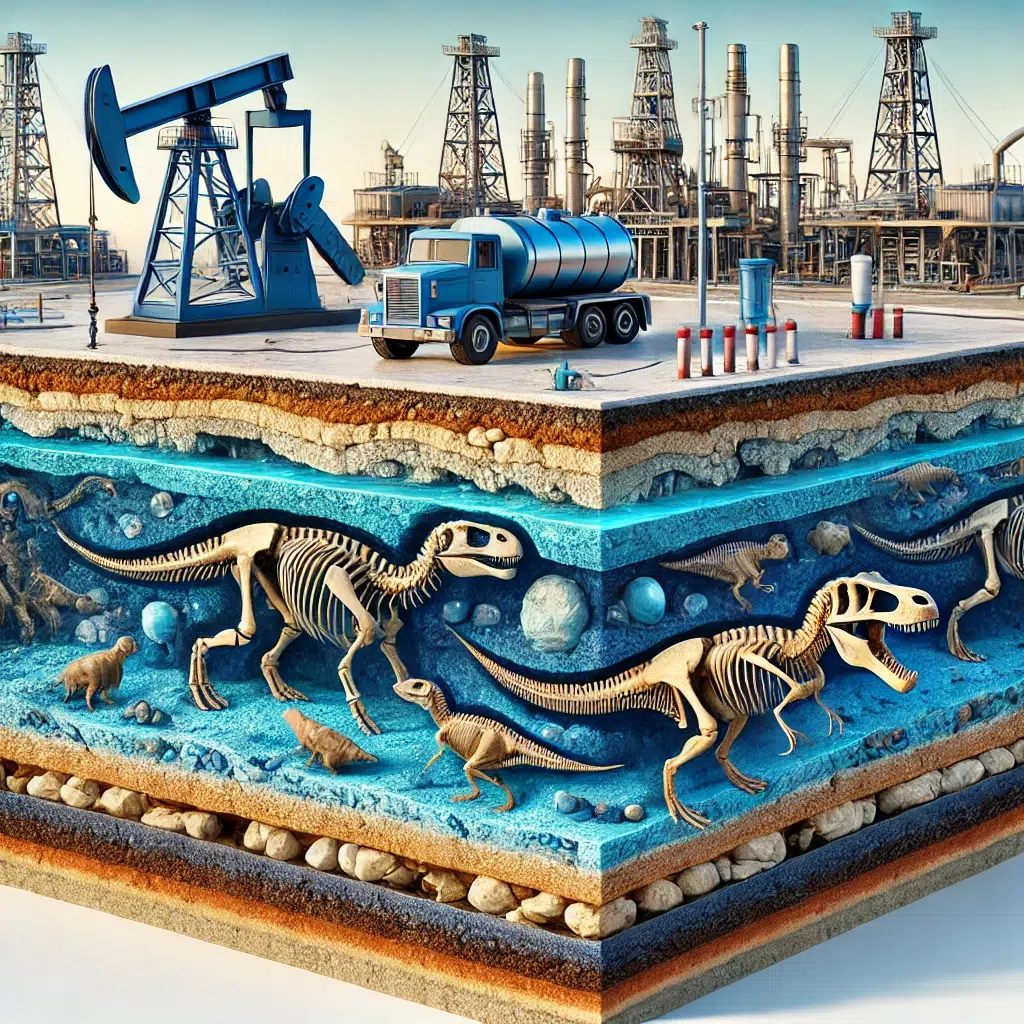
The Process of Formation of Fossil Fuels
The formation of oil is a story of millions of years. When we think of oil, we often envision large dinosaurs decomposing, but science shows us something completely different.
-
In a flooded well, archaeologists found a 1,700-year-old Roman egg that still contains clear and yolk intact inside the very thin shell.
-
Something is happening around the Earth: Inside the huge explosion of fireballs in 2026

-
A hot air bubble coming from Argentina expands over Brazil, causing thermometers to exceed 38 degrees with a thermal sensation of 40 degrees in late March, affecting 6 states at once.

-
The radish leaf that almost everyone throws away has more polyphenols, flavonoids, and fiber than the consumed root, and a 2025 study showed that the leaf contains compounds that protect the intestine, combat inflammation, and may inhibit the growth of cancer cells.


Oil and natural gas actually originate from the transformation of ancient microorganisms. These tiny forms of life, mainly phytoplankton and algae, accumulated on the bottoms of ancient seas and lakes. Over time, layers of sediment buried this organic matter, preventing its suspension by the action of oxygen.
Under immense pressure and heat, these layers of organic matter underwent chemical transformations. The heat and pressure convert the organic matter into kerogen, which, with more pressure and temperature, transforms into hydrocarbons, the chemical compounds of oil.
This process occurs over millions of years, under specific geological conditions, resulting in the formation of oil and natural gas. These hydrocarbons then migrate through porous rocks and accumulate in reservoirs, where they are trapped by non-porous rocks.
The Marine Origin of Fossil Fuels
The myth that oil comes from dinosaurs is even further refuted by biomarker studies. These residual molecules indicate that the vast majority of oil originates from microscopic marine organisms, such as phytoplankton.
Moreover, oil deposits are often found in areas that, in the past, were shallow seas or deltas teeming with microbial life.
These environments were ideal for oil formation since most of the organic matter that transformed into oil comes from microscopic organisms, not from large terrestrial creatures.
The Geological Timeline: A Misalignment with Dinosaurs
The geological history of Earth also helps us understand why oil does not come from dinosaurs. While dinosaurs lived between 230 and 66 million years ago, most of the organic material that formed oil reserves is much older.
Some of these deposits are over 500 million years old and were formed at a time when life was predominantly aquatic and microscopic. The conditions for oil formation involve specific temperatures, between 60°C and 120°C, called the “oil window”.
Even oil deposits formed during the Jurassic and Cretaceous periods, when dinosaurs dominated the Earth, primarily originate from algae and plankton, not from large animals. This reinforces the idea that Earth’s oceans and seas played a fundamental role in oil formation.
Why Not Dinosaurs?
Although the image of large dinosaurs, like the T-Rex, being transformed into oil is appealing, it does not make sense when we analyze the distribution of biomass on Earth. Dinosaurs, although large, represented a small fraction of the total biomass of the Earth.
Today, animals like humans and other mammals account for less than 0.5% of Earth’s organic carbon. Microorganisms and plants dominate most of this biomass. Thus, it is more plausible that small marine organisms were the main contributors to the formation of oil.
Additionally, the conditions for oil formation favor environments rich in small and abundant species, such as plankton and algae, that accumulate and decompose quickly, forming layers that turn into oil.
The carcasses of dinosaurs, although huge, were much less numerous and distributed, which made them a less likely source for large quantities of oil.
Conclusion
Therefore, although the idea that fossil fuels come from dinosaurs has an almost mythical appeal, it does not hold up when confronted with scientific data.
Fossil fuels are a product of the transformation of microscopic microorganisms, whose origins are much more related to the ancient seas and oceans than to the giant creatures that inhabited the Earth millions of years ago.
The true story behind oil is undoubtedly more fascinating and complex than the simple idea of “dinosaur oil”.






E qto ao carvão mineral?
Não só os dinossauros mas também todos os seres vivos que já existiu com gorduras andando pela terra e nadando nos mares e rios
Sempre me perguntava de onde saiu tanto dinossauro para formar tanto petróleo. kkkk
Tem mais uma: E se esse óleo e gás são amortecedores cinéticos planetário, já pensou!?
Verdadeira funções do óleo e gás para o planeta ninguém ainda falou nada. Sergio seu comentário é relevante! Lembrei destas palavras do Livro Sagrado…
“”Eu vi tudo isso, e me **** a refletir em todo o trabalho que se tem feito debaixo do sol enquanto homem domina homem para seu prejuízo.””Eclesiastes 8:9