





 Portuguese
  English
  Spanish
  4 min of reading
  3 comments





The Milky Way and Thousands of Neighboring Galaxies Are Being Drawn at High Speed into a Region Known as the Great Attractor, a Massive and Invisible Point Whose Nature Still Intrigues Scientists and Challenges Understanding of the Cosmos
The Milky Way is not stationary in space. It moves at about 600 kilometers per second, equivalent to 2.16 million kilometers per hour, toward an enigmatic region of the universe called the Great Attractor, located in the direction of the constellation Centaurus. This colossal gravitational force attracts not only our galaxy but also hundreds of thousands of others within a radius of 500 million light-years.
The mystery lies in the fact that the Great Attractor is invisible. It is hidden behind the dense layer of dust and gas of the Milky Way itself, in an area known by astronomers as the “zone of evasion”. Even so, its gravitational effects are undeniable and detectable by the way nearby galaxies alter their speed and trajectory.
What Is the Great Attractor and Where Is It Located
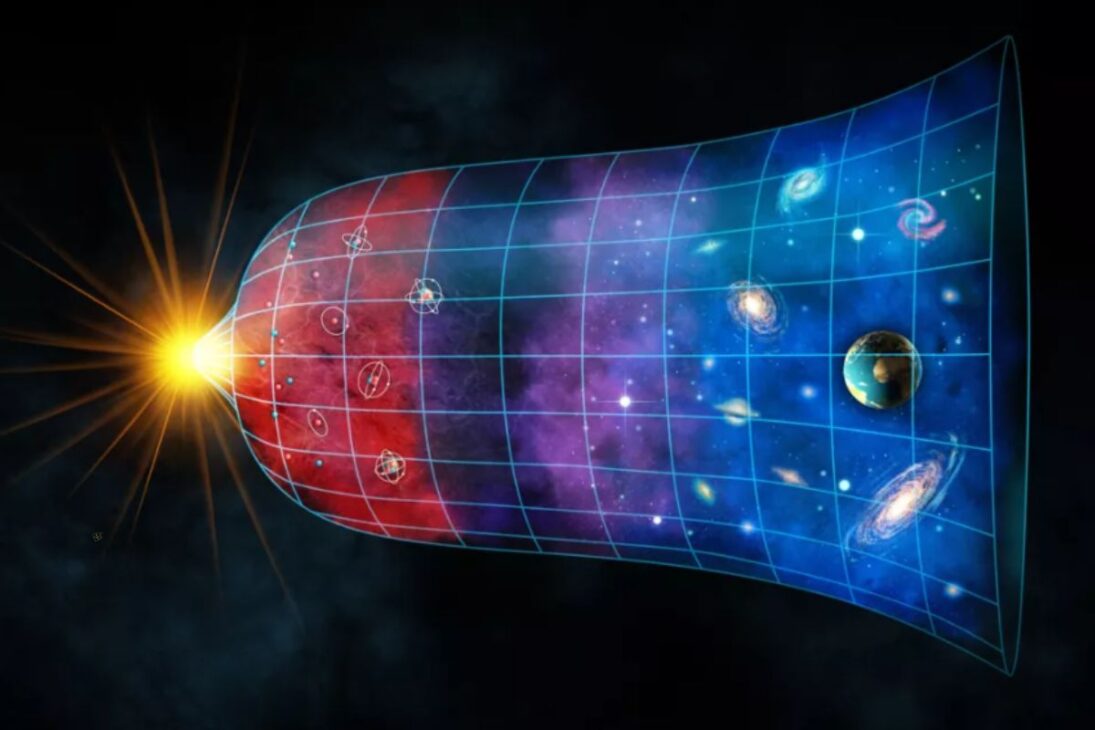
The Great Attractor is a massive gravitational anomaly, discovered in the 1980s, that exerts a powerful attractive force on the Laniakea Supercluster, a cosmic structure that encompasses the Milky Way and about 100 thousand galaxies.
-
The blood of astronauts is undergoing mutations in space, coagulating too much when it shouldn’t and too little when it needs to: three recent discoveries reveal that our bodies were simply not made to live outside of Earth.

-
A startup sends robotic gloves for users to wear at home while washing dishes, folding clothes, and making coffee; every finger movement is recorded and sent back to train a domestic robot that has already learned 10 million real tasks without ever having entered a kitchen.

-
In a flooded well, archaeologists found a 1,700-year-old Roman egg that still contains clear and yolk intact inside the very thin shell.

-
Something is happening around the Earth: Inside the huge explosion of fireballs in 2026


It is estimated to be located between 150 and 250 million light-years from Earth and occupies a vast region that conventional optical telescopes cannot directly observe.
Although invisible, its presence has been identified by the deviation in the movement of galaxies and by analyzing the cosmic background radiation, which revealed small temperature variations associated with the Milky Way’s velocity relative to the rest of the universe.
Why Is the Great Attractor Invisible
The reason the Great Attractor is not visible is not the absence of matter, but rather its location.
It is behind the plane of the Milky Way, in a region densely covered by interstellar gas, cosmic dust, and molecular clouds, which block direct observation by visible light.
To bypass this barrier, astronomers use infrared and radio wave observations that can penetrate these layers.
Even so, the exact composition of the structure is still uncertain.
The most accepted hypothesis is that the Great Attractor is not a single object but a complex superstructure formed by galaxy clusters, dark matter, and intergalactic gas.
The Force That Pulls the Milky Way and Neighboring Galaxies
Studies indicate that the Milky Way and the Local Group, which includes Andromeda and dozens of smaller galaxies, are moving toward the Great Attractor at 600 km/s, countering the uniform expansion of the universe predicted by the Big Bang theory.
This displacement is known as peculiar motion, an additional velocity generated by external gravitational forces.
Astronomers estimate that the mass of the Great Attractor is about 10¹⁵ times that of the Sun, equivalent to one trillion solar masses.
This force is sufficient to alter the natural movement of large galactic clusters, even changing the flow of cosmic expansion around Earth.
An Attraction Even Greater: The Shapley Supercluster
With advances in observations, scientists have discovered that the Great Attractor is also being drawn by an even more colossal structure, known as the Shapley Supercluster.
Located about 650 million light-years away, it contains tens of thousands of massive galaxies and represents one of the largest concentrations of matter in the observable universe.
This chain relationship, where smaller structures are pulled by larger ones, suggests that the universe is governed by successive layers of gravity and motion, making the cosmic map a dynamic web in constant transformation.
The Role of Dark Matter in the Enigma
Part of the enigma of the Great Attractor is linked to dark matter, which represents about 85% of all the matter in the universe but does not emit light or detectable energy.
It is identified only by its gravitational effects.
Scientists believe that a large part of the mass of the Great Attractor is composed of this invisible substance, combined with densely interconnected galaxy clusters, such as the Norma Cluster.
This combination would explain why the gravitational force is so intense, even without a visible concentration of matter.
What the Movement of the Milky Way Reveals About the Cosmos
The discovery of the movement of the Milky Way toward the Great Attractor challenges the idea that the universe expands in a completely uniform manner.
Instead, it reveals regions of attraction and gravitational repulsion, known as cosmic flows.
These flows are essential to understand the distribution of matter in the universe, helping to map gigantic structures that connect galaxies on unimaginable scales, such as cosmic filaments, true bridges of matter that unite superclusters and cosmic voids.









Pelo que entendi o universo poderia ser uma galática gravata borboleta onde um lado foi ou será atraído ao centro desta área massiva gravitacional e o outro lado da gravata seria a ejeção do material cósmico. Seria devaneio meu ou ainda não conseguimos delinear este fenômeno?!
Devaneio.
Vc pode estar febril, hehehe.