





 Portuguese
  English
  Spanish
  4 min of reading
  13 comments


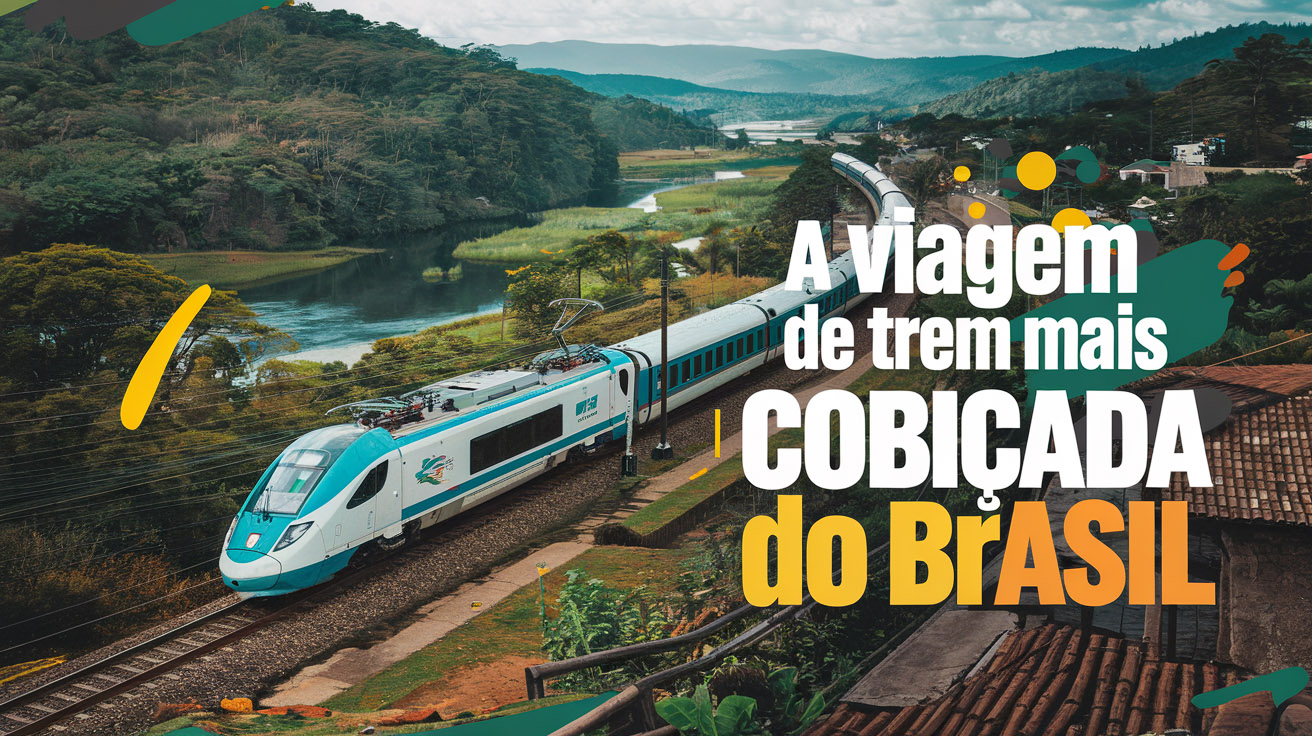


A R$ 17 billion agreement between Vale and the government could mark the railway revolution in Brazil. With historic investments, new railways promise to transform national logistics, connecting regions and boosting the economy. There will be billions in infrastructure, jobs, and development. Is Brazil ready for this change?
Imagine a Brazil where railway transport is the protagonist of economic development, interlinking regions and driving the growth of entire communities.
This dream may be closer to reality after a historic agreement between the miner Vale and the Federal Government, promising to revolutionize the country’s railway infrastructure with billion-dollar investments.
What The Billion-Dollar Agreement Foresees
According to the Ministry of Transport, the agreement closed with Vale this Monday (30) revises the values of the concession contracts for two important Brazilian railways: the Carajás Railway, which connects Maranhão to Pará, and the Vitória to Minas Railway.
-
The largest food company on the planet, JBS, has just opened a 4,000 square meter laboratory in Florianópolis to develop customized proteins that modulate muscle mass gain, immune response, and metabolic performance.

-
After nearly 30 bids and competition among industry giants, a Spanish company purchases one of the largest airports in Brazil for almost R$ 3 billion and takes over the management of Galeão in a concession that will last until 2039.

-
The Federal Revenue Service now automatically cross-references everything you declare with data from banks, credit cards, brokerage firms, and insurance companies, and any discrepancy between your income and your expenses triggers an alert in seconds.

-
Amid global tensions, Brazil blocks the United States’ proposal at the WTO and paves the way for a trade crisis and possible retaliations.


The agreement provides for the transfer of a total of R$ 17 billion, divided among different investment fronts.
The miner commits to transfer immediately R$ 4 billion to the Union, in addition to another R$ 7 billion at a later time.
There is also a provision for an investment of R$ 6 billion for the construction of Railway 118, also known as the Southeast Railway Ring.
This project aims to connect the ports of Rio de Janeiro and Espírito Santo to the national railway network, initially benefiting 13 municipalities — 10 in Espírito Santo and 3 in Rio de Janeiro — and later, a total of 24 cities.
The Minister of Transport, Renan Filho, highlighted the importance of the agreement: “Today, we reached a historic agreement with Vale S.A., which will inject more than R$ 17 billion into Brazil’s infrastructure.
This renegotiation demonstrates the solidity of the partnership between the current federal administration and the private sector, crucial for expanding investments in our logistics,” he stated.
Economic and Social Impacts
According to the Ministry of Transport, Railway 118 will have a significant impact on the economic development of the served regions.
The project promises to improve the flow of production, reduce logistics costs, and stimulate job creation.
It is estimated that hundreds of millions of reais in industrial and agricultural products will begin to be transported by the new tracks.
Moreover, the agreement reinforces the Federal Government’s intention to review contracts deemed disadvantageous for the Union.
In the case of the concessions of the Carajás Railway and the Vitória to Minas Railway, the current administration claimed that the amounts paid by the companies during the previous government were “far below reasonable” given the potential for exploiting these assets for over 30 years.
What The Involved Parties Say
Vale emphasized in a statement that the renegotiation of the contract is being carried out in accordance with the current terms.
“The renegotiation of the concession contracts, once completed, will bring definitiveness to the issue of Vale’s obligations and investments in its two railway concessions,” the company stated.
According to the miner, the total investment is approximately R$ 11 billion, encompassing all investments and obligations outlined in the concession contracts.
The company also stated that the renegotiation will allow for the modernization and updating of railway assets.
From the government’s perspective, there is hope that the agreement with Vale will serve as a model for future renegotiations.
The administration also expects an influx of approximately R$ 4.5 billion in grants in the short term, with a projection of R$ 10 billion in additional revenue next year.
Controversies and Challenges
The context surrounding the renegotiation of the contracts is not free of controversies.
During the previous administration, companies such as Vale, MRS, and Rumo were able to renew their railway contracts early, which raised criticisms about the values involved and the negotiated conditions.
Now, the current government contests the amounts paid, considering them insufficient relative to the scale of the granted assets.
On the other side, the companies claim breach of contract and negative impacts on their financial results.
These points still need to be evaluated by the Federal Court of Accounts (TCU), which will have the final word on the agreement.
The Future Of Brazilian Rails
With the billion-dollar investment provided for in the agreement, the expectation is that the railway sector will gain new momentum, increasing its share in the national transportation matrix.
Currently, Brazil predominantly relies on road transport, which presents higher costs and greater environmental impact.
A modern and efficient railway network could be the starting point for transforming the country into an internationally relevant logistics hub.
As the bureaucratic processes continue, Brazilians await the fruits of this historic agreement.
Will the return of railways really transform Brazil into a logistics powerhouse? Comment below and join the discussion!






Em verdade o que as concessionárias querem é deixarem de pagar o “aluguel”, devolver os trechos “economicamente” inviáveis e conseguirem subsídios do governo federal para fazer os investimentos que por conta delas devem ocorrer…
Deveria ter malha ferroviária de passageiros diminuíam muitos acidentes !!! Pois ferrovia ê mais seguro que ônibus e avião!!! Só se falam em cargas do interesse de outros países!!!
Vergonha, quase Trilhão de acordos e concessões encaminhadas pelo governo anterior que já eram pra estar dando frutos ao país, daí vem os comunas e cancelam tudo, agora vem com história que que 17 bilhões irá impulsionar a matriz de transporte do país. Vergonha este desgoverno do atraso