





 Portuguese
  English
  Spanish
  3 min of reading
  0 comments


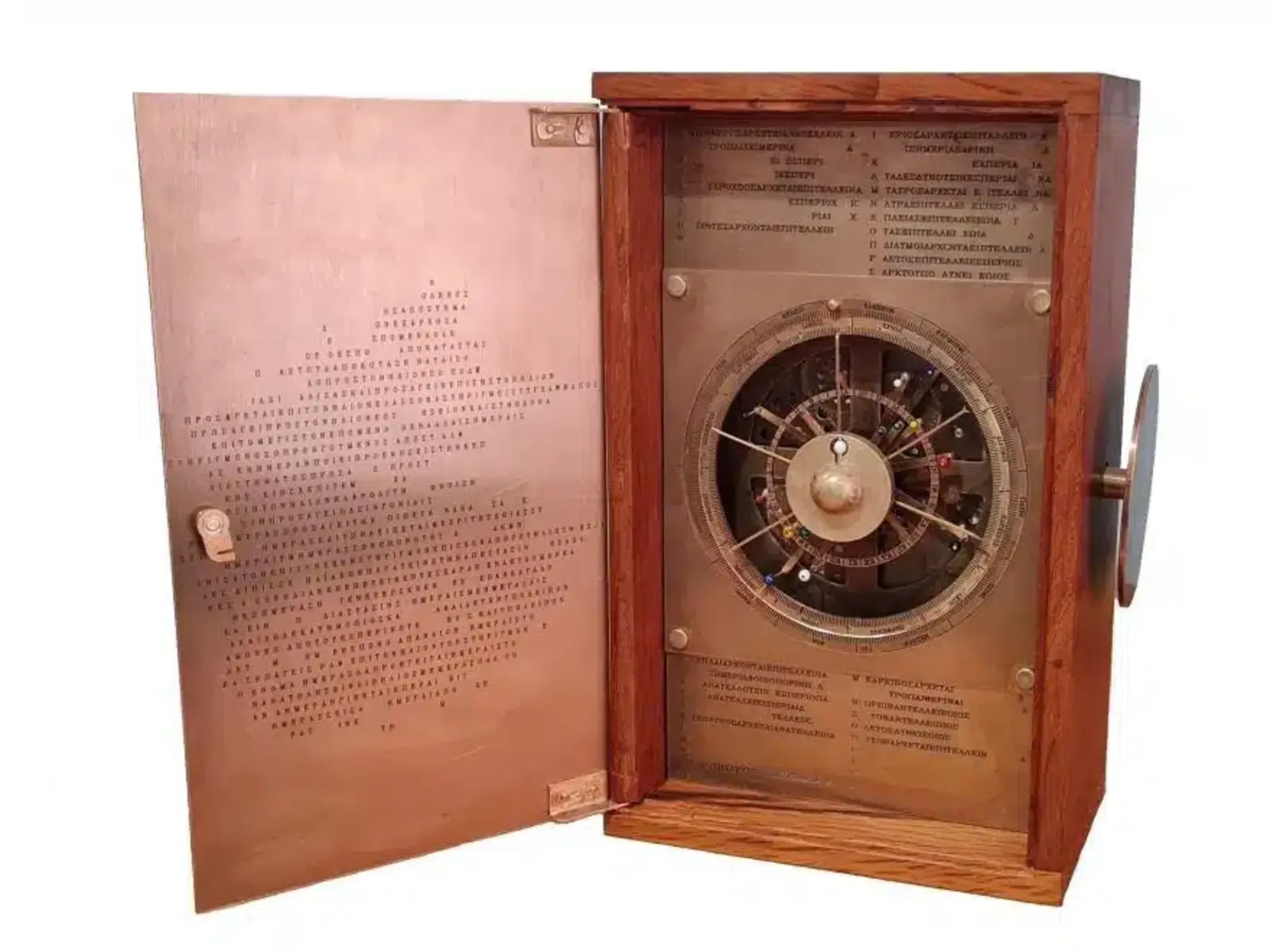
New study indicates that the Antikythera mechanism had between 354 and 355 holes in the calendar ring, strengthening its link to the lunar year
The Antikythera mechanism, discovered in 1901 in a Roman shipwreck near the island of Antikythera, has returned to the center of research after a 2024 study indicated that its calendar ring had between 354 and 355 holes, reinforcing its relationship with the lunar year.
Discovery of the oldest computer in the world
For decades, the Antikythera mechanism remained isolated among archaeological finds. Its system of gears and dials pointed to a function much more complex than previously thought for the ancient world.
Dating from the early 1st century BC, the artifact is widely considered the first known analog computer.
-
NASA observed from orbit a green patch advancing over a reservoir in South Africa, and what seemed harmless revealed a real threat to water, fish, and public health.

-
Retired airplanes are worth billions: behind the “junkyard,” a strict industrial process dismantles each part, recovers metals and electronics, transforms fuselages into clean raw materials, and returns value to the global industry.

-
While NASA is completing its first crewed flight around the Moon in over 50 years with Artemis II, China has set in motion the Tianwen-2 mission to capture up to 1 kg of material from an asteroid possibly linked to the Moon and bring it back to Earth in 2027 on a 10-year journey to deep space.

-
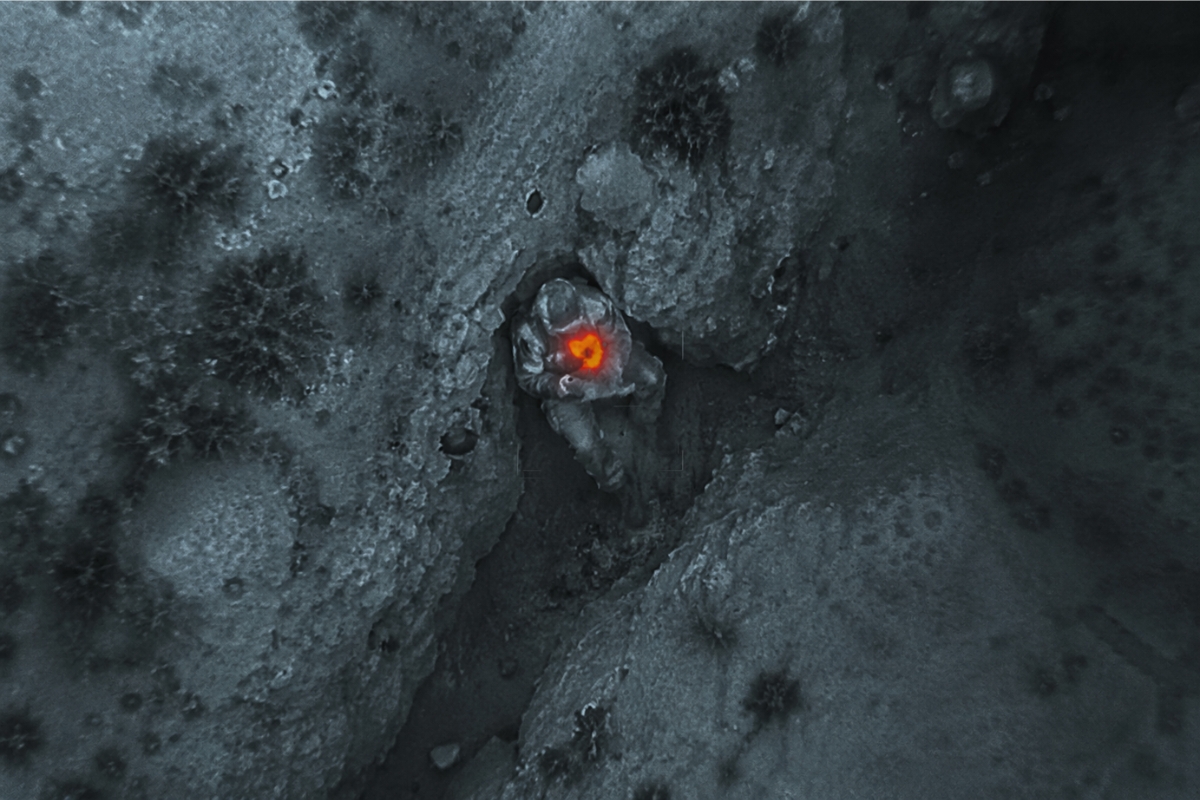
The USA would have located a downed pilot in Iran using technology capable of identifying the electromagnetic signature of the human heart from up to 60 km away.
The discovery challenges modern chronologies of computing and altered historical references related to the emergence of technological innovation.
Early comparisons often likened it to modern milestones, such as the ENIAC. Still, the Antikythera mechanism predates it by almost two millennia, expanding the historical dimension of its engineering.
New study
The recent attention came from a 2024 study led by researchers from the University of Glasgow. The team revisited old assumptions with modern statistical tools applied to existing data.
Graham Woan and Joseph Bayley resorted to Bayesian analysis and methods created for the detection of gravitational waves.
These techniques had not originally been conceived for archaeology but were used to examine the artifact.
The focus was the calendar ring of the Antikythera mechanism. This circular component is understood as the part that encoded time cycles within the structure of the ancestral machine.
Result
By analyzing the available data, the researchers concluded that the ring likely contained between 354 and 355 holes.
This total corresponds to the duration of a lunar year and reinforces an old hypothesis about the device.
Bayley stated that previous studies suggested that the calendar ring likely followed the lunar calendar, but he said that the combined application of the two techniques greatly increased the probability of this conclusion.
He further stated that the work gave him a new appreciation for the Antikythera mechanism and for the care dedicated by Greek artisans to its making. The statement reinforces the degree of elaboration identified in the research.
Computer precision
The structure revealed by the study shows a pattern of remarkable precision. The holes were distributed in a circle with an approximate radius of 77.1 millimeters, with a separation of only 0.028 millimeters between each.
This level of accuracy highlights a craftsmanship rarely associated with that period. The Antikythera mechanism thus appears as a piece of high technical sophistication within the ancient world.
Replica
The study was also driven by a modern attempt at reconstruction. YouTuber Chris Budiselic, from the Clickspring channel, had been documenting efforts to produce a replica of the calendar ring.
Woan reported that a colleague showed him data obtained by Budiselic during this attempt.
The researcher said he found the problem interesting and thought about solving it differently during the Christmas holidays.
This connection between practical reconstruction and academic research showed how new approaches can reveal valuable data in artifacts studied for decades, opening another additional layer of direct understanding about the ancient mechanism.
With information from Daily Galaxy.







Seja o primeiro a reagir!