





 Portuguese
  English
  Spanish
  6 min of reading
  0 comments


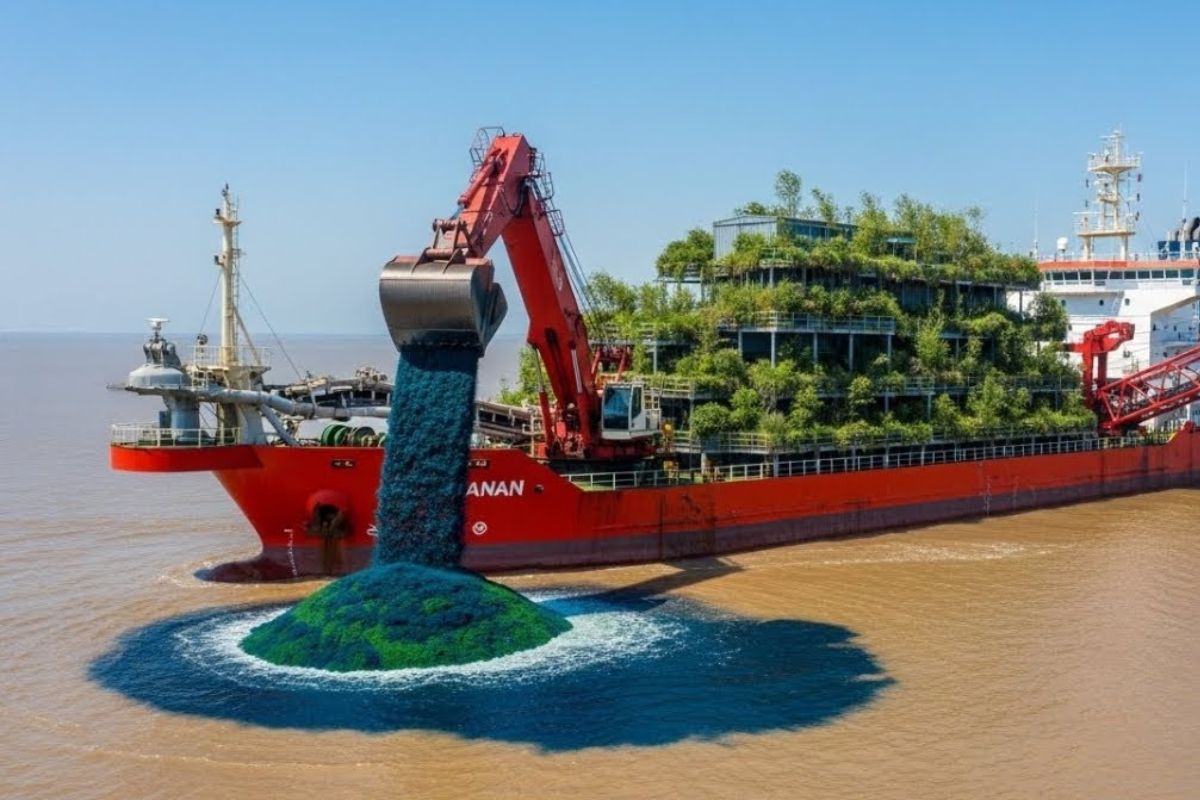
After The Bu Tinah Reef Collapsed In 48 Hours In 2017, Abu Dhabi Launched A Restoration Plan And By The End Of 2023 Began Giant Artificial Reefs With Modules Weighing 150 To 300 Kg, Sensors, ROVs, And Fragments Of Supercorals, Recording Life Back In 2024 And 2025 Fast
The strategy for giant artificial reefs in Abu Dhabi gained scale after an environmental shock recorded at the Bu Tinah Reef, when divers found abnormally warm water and a colorless seafloor, silent and with the Acropora coral completely disappeared. Fixed cameras indicated an abrupt collapse, with 90% of the fish disappearing and entire reefs dying in just 48 hours.
According to the program, the project combines engineering, monitoring, and biology to rebuild ecological functions in the Arabian Gulf, a region with extreme temperature and salinity conditions. The proposal is to transform old empty sandy bottoms into underwater neighborhoods with current circulation, corridors for fish, and a base for natural regeneration, under a program that evolves from trials and failures to large-scale deployment.
2017: The Day The Reef Turned Into White Desert In 48 Hours

On the morning of August 13, 2017, the Abu Dhabi Environmental Agency team returned to the Bu Tinah Reef, which had still been vibrant at the end of July.
-
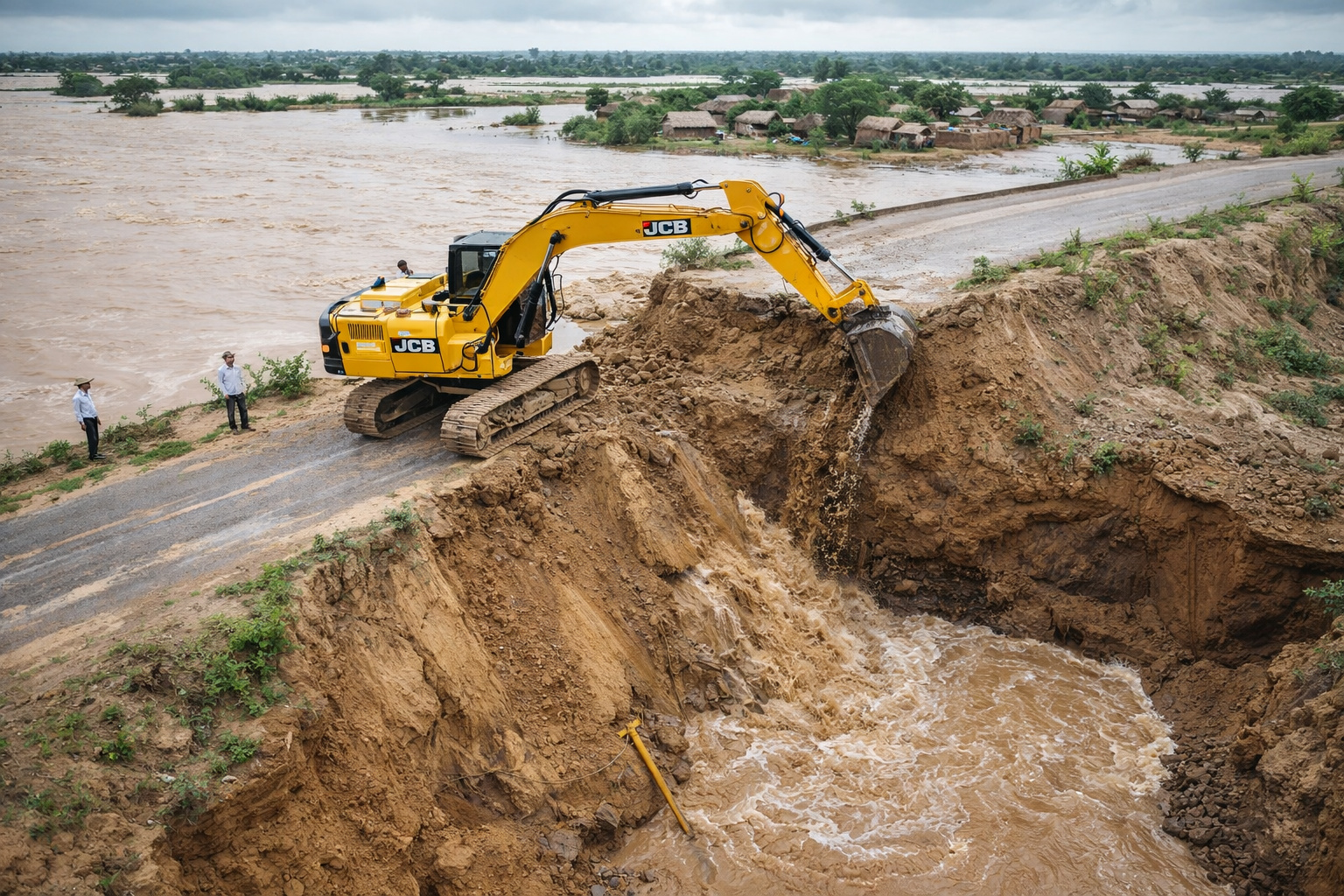
With emergency diversion to abandoned mining craters, engineers save villages from a devastating flood that was advancing through the desert and threatening to destroy entire communities in a matter of hours.
-
It seems simple, but it enriches: from R$ 500 to R$ 6,000 per piece and up to 10 days of handcrafted production, how is the couple from Praia Grande making a high income with hyper-realistic miniatures and turning a hobby into a money-making machine?

-
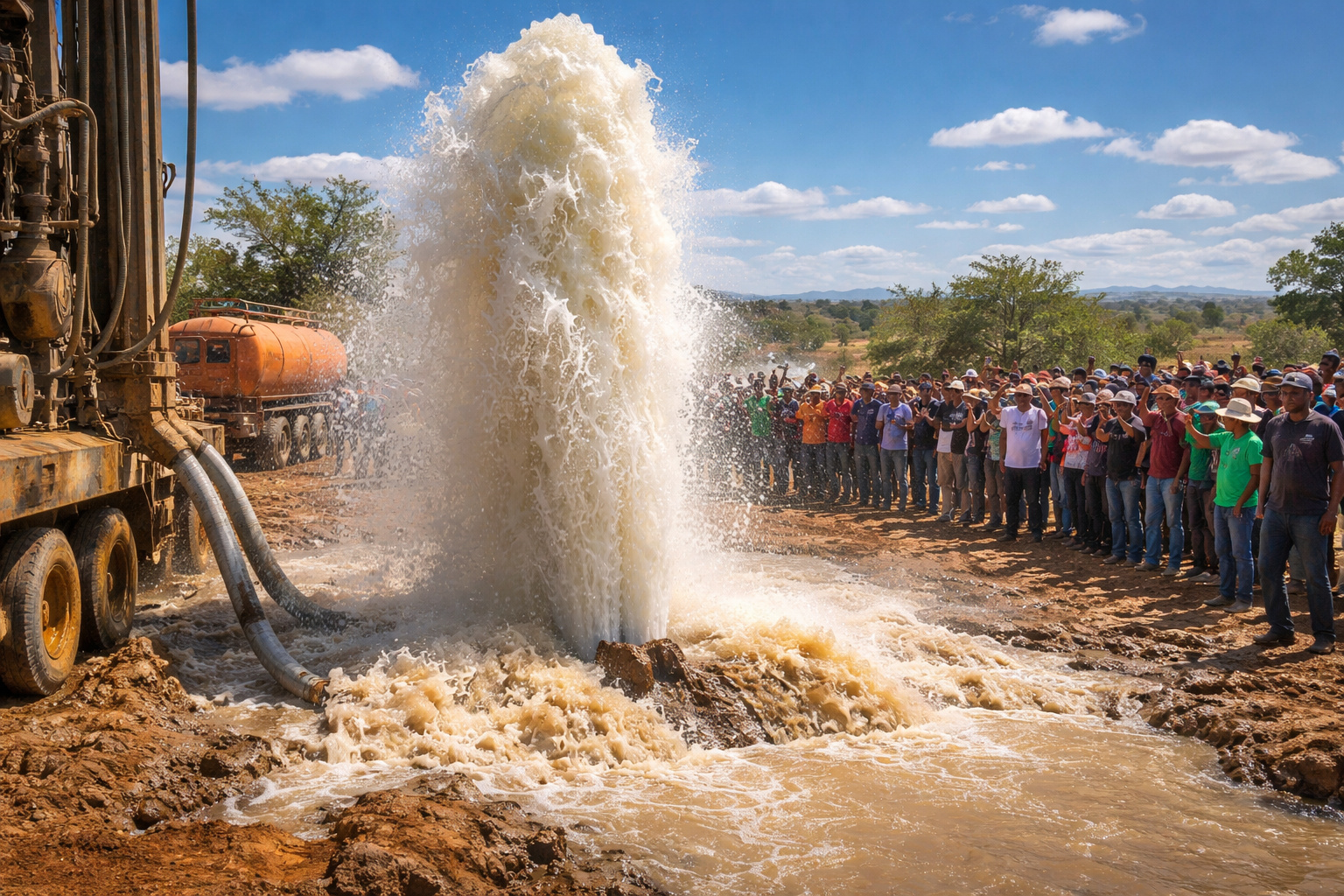
Artisanal well erupts with water in the sertão of Bahia, revealing a surprising flow with six active fissures underground and changing the landscape in the Bahian semi-arid region.
-
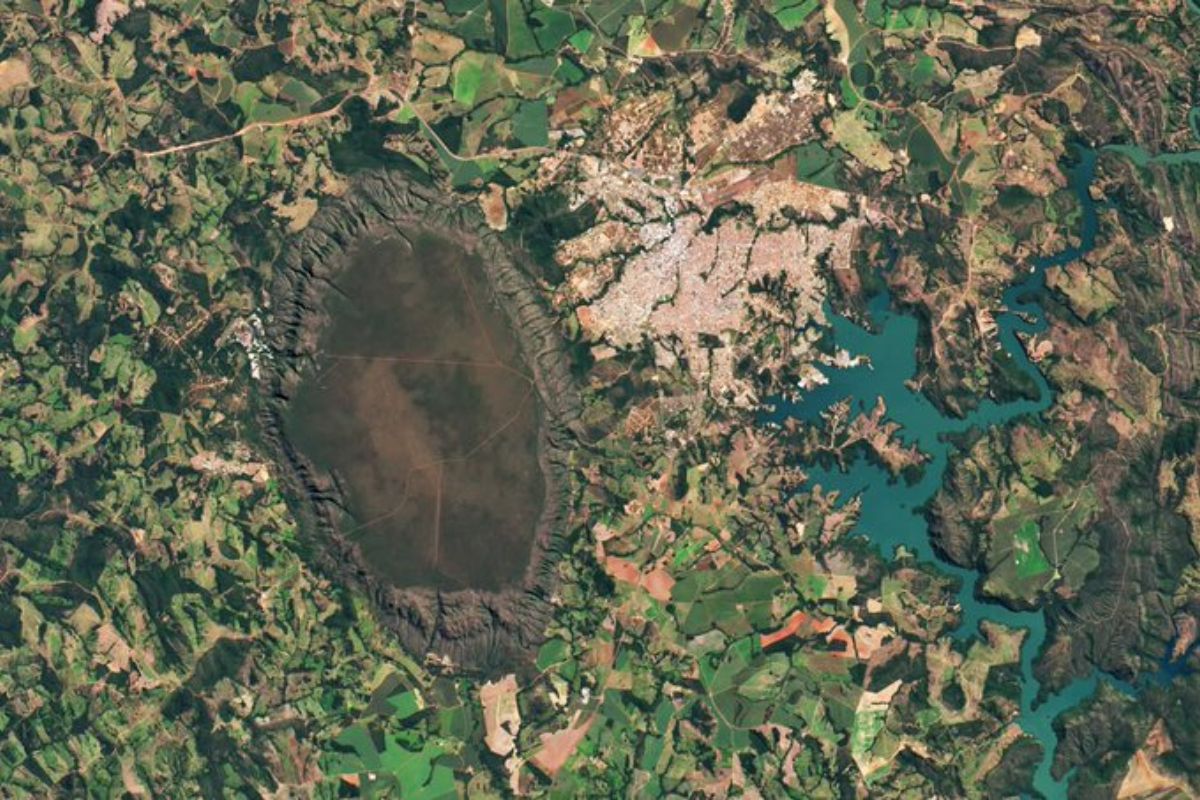
NASA published a photo taken from space of a mountain range in the interior of Goiás, and the whole world wanted to know what it was: beneath it lies the largest hot water spring on the planet, with temperatures reaching 70 degrees in the middle of the Cerrado.

Upon touching the bottom, the conclusion was immediate: abnormally warm water and a collapse scenario.
The Acropora coral was neither bleached nor dying slowly.
It Had Simply Disappeared.
The disappearance was accompanied by emptiness in the fauna: 90% of the fish had disappeared, including butterfly fish and surgeonfish, and even parrotfish abandoned the reef before the total collapse.
Scientific reports classified the episode as one of the fastest bleaching events ever observed, with reefs dying in 48 hours.
The Arabian Gulf As A “Cauldron”: Extreme Heat, Shallow, And Saline

The environmental pressure described for the region is at its limit: the Arabian Gulf has a mean depth of 35 m, which facilitates rapid heating of the surface.
In summer, the water is almost always between 34 and 36, with a recorded peak of 37, a level that would devastate corals from other regions in a few hours.
The stress situation is not only thermal.
Salinity is constantly high, around 42 PSU, and after shamal winds and sandstorms can rise to 44 PSU in a matter of days, exceeding the tolerance of most marine organisms.
In this scenario, the giant artificial reefs emerge as an attempt to buy time and reorganize the habitat in a hot, salty sea, poor in nutrients, and repeatedly burned by heatwaves.
“Last Warriors”: The Discovery That Became The Seed Of The Plan

In October 2017, near Ras Ganada Island, scientists found a grouping of live corals amid a white cemetery.
The survival of species cited as Porites harrisoni and Dipsastraea, capable of enduring extreme temperature levels, changed the course of the plan.
The Emirates collected more than 200 samples and took them to the Al Dhafra nursery, initiating the reproduction of F1 and F2 generations of the so-called supercorals.
The goal was to create a biological stock to support the deployment of giant artificial reefs that would not solely rely on spontaneous recovery.
From 2018 To 2023: The Idea Of An Underwater City With 40,000 Modules
In February 2018, during an internal meeting of the Abu Dhabi Environmental Agency, the vision of a Reef City emerged, a network of artificial reefs spanning 1200 km, planned to cover the entire coastline.
After three years of tests, failures, and reboots, in November 2023, the Abu Dhabi Coral Gardens Initiative was announced.
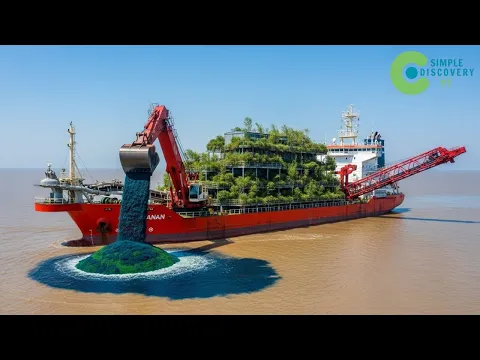
The plan describes 40,000 modules of giant artificial reefs to cover an area presented as equivalent to 200,000 football fields, larger than the entire city of New York.
The technical promise is that it is not about “blocks tossed into the sea,” but rather an underwater architecture with gaps, cavities, and corridors for fish circulation, supported by a network of marine AI, autonomous ROVs, ocean GIS, thermal sensors, and satellite monitoring, with digital ID per module.
2024: 10,000 Modules In 11 Months And 500,000 Fragments Of Supercorals
As 2024 began, implementation accelerated. In 11 months, the first 10,000 modules of giant artificial reefs were installed in three areas: Saadiyat Marine Reserve, Jubail Mangrove Park, and the coast of Al Dhafra.
Each module, weighing between 150 and 300 kg, was lowered into the sea from barges with 50-ton cranes, resembling miniature buildings.
Together with the modules, 500,000 fragments of supercorals were attached using the biological adhesive Reef Bond, with fragments measuring four to six centimeters, described as seeds for a future coral city.
Falls, Anchor, And Biofilm: When The Sea “Fights” With The Work
The underwater construction schedule brought incidents.
In April 2024, a current toppled an entire set of 12 modules. Six divers spent time repositioning blocks with visibility of just over 1 m.
A month later, another module became trapped under the anchor of a tourist boat, leading to the creation of a floating exclusion zone to prevent boats from getting close.
In August 2024, a level 4 marine heatwave was confirmed as the longest in the history of the Gulf, and the issue of biofilm shock hindered the attachment of young corals, forcing the team to reduce the curing time of the modules from 14 to 7 days.
2025: Functional Reefs, 63 Species In 90 Days, And Survival Above 78%
By the end of 2025, the total reported was 10,200 modules of giant artificial reefs installed, equating to 25% of the Reef City Reef Bond, with progress of 7% beyond the schedule.
Three areas were described as fully covered by functional reefs, transforming sandy bottoms into underwater neighborhoods filled with life.
Internal reports indicated coral survival rates between 78% and 92%, highlighting that supercorals from Ras Ganada reached 92% after 14 months. ROVs and cameras recorded 63 species of fish in 90 days, a pace cited as three to five times faster than expected.
Four species of native corals began to attach themselves naturally after 8 to 10 months, a sign of natural regeneration.
The return of the Panulirus vericolor lobster was also reported, along with a recurring presence of green turtles, and in early 2025, a blacktip shark pup measuring about 50 centimeters was observed in Saadiyat.
AI, CFD, Terracotta, And The Attempt To Avoid Repeating Global Disasters
After topplings in 2024, simulations using AI and CFD reduced positioning error to less than 12 cm. In 2025, no modules toppled again, even with shamal winds of up to 38 km/h.
The project emphasizes the use of terracotta and design adjustments, with next-generation plates, gaps, and specific inclinations.
A noted result is a reduction in sediment buildup by 405% compared to 2020, focusing on preventing burial.
The choice of terracotta and current simulations appears as a response to historical failures, including cases of poorly positioned artificial reefs and projects that became environmental liabilities.
2026 To 2030: Fish Highways, Genetic Bank, And A Planned Coral City
Between 2025 and 2027, the plan aims to install 30,000 additional modules, create underwater parks, and expand cultivation capacity to 1.2 million coral fragments per year.
Completion is projected for 2030, forming the largest artificial coral city in the world, with functional layers and specific zones as if it were a real city, but designed for ecological logic.
The structure includes corridors called Fish Highways, designed based on swimming patterns observed among modules, and a genetic bank with 14,000 samples.
In 2026, tests of the Dynamic Reef Lighting System, with underwater LEDs simulating lunar cycles, were associated with an increase in coral reproduction between 18% and 27%.
For 2027, the launch of an Underwater Observatory Dome at 710 m depth was described, for tourist observation without diving.
Coastal Defense, Erosion, And The Uncomfortable Question About Climatic Limit
Besides biodiversity, the giant artificial reefs were described as coastal protection, with modules reducing wave energy between 60% and 90% and functioning as shields for artificial islands, facilities, and strategic routes.
In parallel, beaches like Saadiyat and Jubail were associated with erosion of 0.3 to 1.2 per year, while building concrete dikes was cited as costing 20 to 30 million dollars per kilometer, impacting the landscape.
The project also carries scientific controversy: there are warnings that large-scale restoration is difficult, costly, and vulnerable to new heat waves, with mention that restored reefs may suffer new bleaching events in a few years.
Abu Dhabi’s bet, therefore, rests between engineering that accelerates the return of life and the climatic ceiling that could extinguish quick gains.
Do You Think That Giant Artificial Reefs In Abu Dhabi Are A Realistic Plan To Rebuild Ecosystems Under Extreme Heat, Or Just An Expensive Way To Buy Time Before The Next Collapse?




-

-

-

-

-

14 pessoas reagiram a isso.