





 Portuguese
  English
  Spanish
  3 min of reading
  66 comments


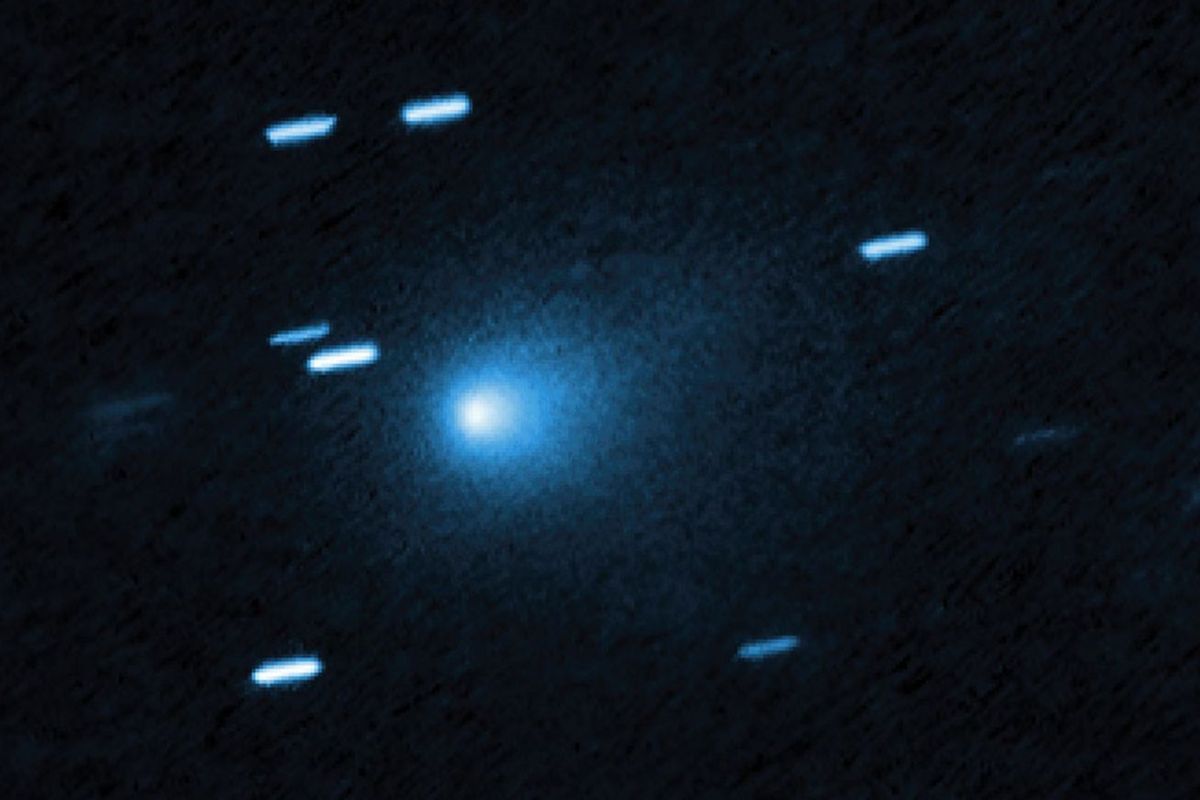


Unprecedented Interstellar Phenomenon Moves Observatories Worldwide and Serves as a Laboratory to Train Astronomers in High-Precision Orbital Measurements
The comet 3I/ATLAS, one of the rare visitors from outside the Solar System, is now reaching its closest point to the Sun, called perihelion, at about 210,000 km/h, within the orbit of Mars. This unprecedented passage turns the object into a global focus of scientific training, as its hyperbolic trajectory provides valuable data for the study of interstellar bodies and the gravitational dynamics of the inner solar system.
The speed and chemical composition of the comet 3I/ATLAS challenge known models. Astronomers are racing against time to record spectra, brightness, and variations in the coma before it returns to deep space. The event marks the third time an extrasolar body has crossed our cosmic neighborhood, reinforcing the importance of international monitoring networks for near-Earth objects.
Unprecedented Trajectory and Physical Characteristics
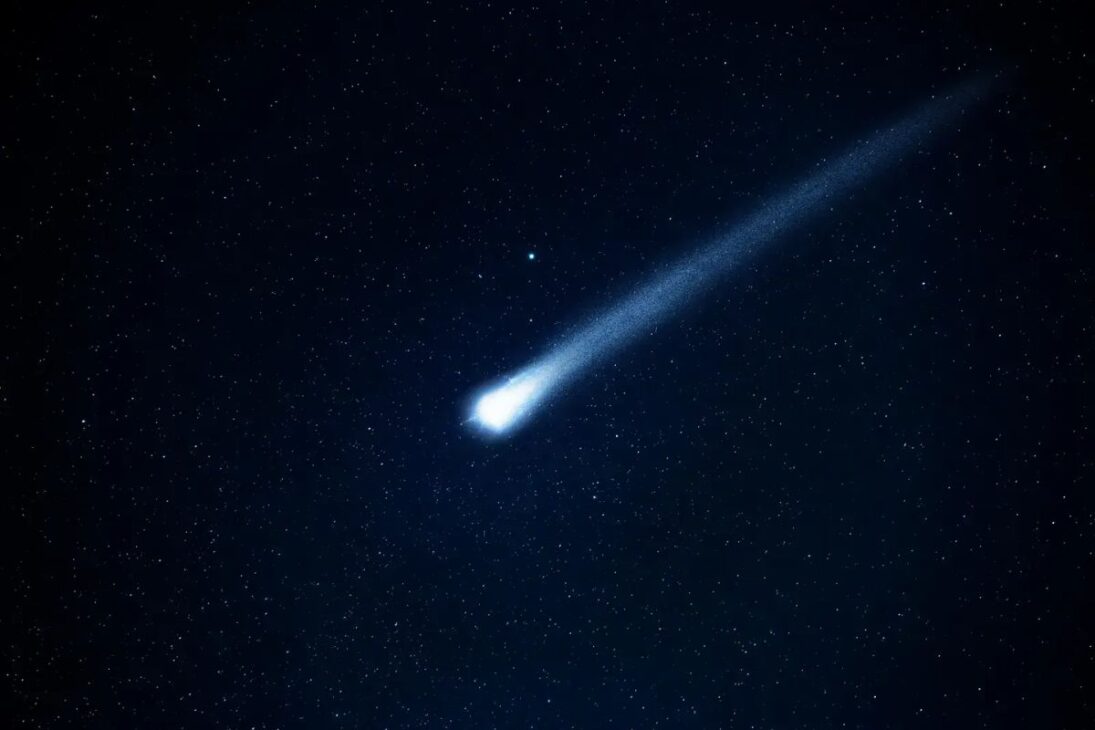
The comet 3I/ATLAS was identified in July by telescopes from the Asteroid Terrestrial-impact Last Alert System (ATLAS) network in Chile.
-
These living root bridges and ladders are over 700 years old and help indigenous people survive in one of the rainiest regions in the world.

-
From sertanejo star to international investor: Ana Castela invests millions in a mansion in the USA, creates a themed accommodation in Orlando, and shows that the “boiadeira” also wants to grow away from the stage.

-
The 10 most stunning motorhomes in the world: a $3 million trailer with a rooftop nightclub and garage for a Ferrari, “palaces on wheels” with Italian marble, private cinema, and five-star hotel luxury for billionaires.

-
Trump wanted to spend $400 million on the White House, but the courts prohibited the million-dollar construction.


Since then, measurements have confirmed a hyperbolic orbit, indicating that the body is not gravitationally bound to the Sun, being a true interstellar visitor.
With about 1.4 astronomical units (AU) at its point of maximum approach, the object crosses the orbital plane of Mars at a distance of 210 million kilometers.
Despite the relative proximity, there is no risk to Earth.
The phenomenon, however, allows for testing tracking techniques used to predict trajectories of potentially hazardous asteroids.
Chemical Composition Outside the Norm
Observations from the James Webb Space Telescope (JWST) revealed a coma dominated by carbon dioxide (CO₂), something never seen in other comets.
The data show that 3I/ATLAS has eight times more CO₂ than water, greatly exceeding the expected chemical limit for this type of body.
This imbalance suggests an origin in an extremely cold environment, possibly in another planetary system where CO₂ remains frozen for long periods.
The discovery ignites discussions about the diversity of materials that form comets in different regions of the galaxy and provides clues about planetary formation processes outside the Solar System.
Global Training and Precision Astrometry
The International Asteroid Warning Network (IAWN) announced a special training to enhance orbital measurement techniques using the comet 3I/ATLAS as a real case.
The exercise will take place between November 27, 2025, and January 27, 2026, with participation from accredited observatories that have an active MPC code.
The goal is to calibrate software and telescopes under dynamic conditions, testing astrometry methods applied to objects with non-periodic trajectories.
Since 2017, the IAWN has been conducting similar events, but this edition gains relevance due to the uniqueness of 3I/ATLAS and the opportunity to cross data from dozens of countries in near real-time.
Scientific Importance and Next Steps
The study of the comet 3I/ATLAS may redefine parameters regarding the thermal behavior of interstellar objects.
The anomalous presence of CO₂, combined with high velocity and the open orbit, indicates that the raw material that forms these bodies may vary widely among stellar systems.
Research teams are now seeking to correlate observations from the James Webb with data from radio telescopes and ground-based optical instruments to determine the density and volatile activity of the nucleus.
Each fragment of information expands the understanding of how matter travels between stars and how the Sun interacts with visitors coming from beyond its gravitational influence.
The passage of the comet 3I/ATLAS is a reminder that the Solar System remains open to cosmic surprises.
More than an astronomical spectacle, the event becomes a living laboratory for measuring, comparing, and understanding the origin of bodies coming from other worlds.
Do you believe that new interstellar visitors could reveal secrets about the formation of planetary systems beyond our own? Share your thoughts in the comments.








Sim,e que cometa impressionante,maravilhoso,ele visita um por um,e veloz,está pesquisando nossa área planetária,esse visitante estelar e o maior fenômeno já visto, tenho certeza que e comandado por extra terrestre. E por falar em extraterrestres, lá em Minas, a cidade de Varginha não foi a 1°cidade a aparecer os ets, eles apareceram em cidade de Natércia e as pessoas onde eles apareceram mudaram pra cidade vizinha de Varginha, e acredito que eles nos seguiram,eram em 3 figuras diferentes de humanos, e chegaram em Varginha que lá foram capiturados
Não acredito que seja apenas um cometa, mas um equipamento muito evoluído interestelar. O receio seria o que fazer se ele viesse em direção à terra. Nas tenho mais receio dos “humanos’ – nem tão humanos” que não reconhecem o valor da vida, do conhecimento e estão destruindo o planeta e as populações com guerras e corrupção.
Talvez eles sejam a nossa salvação. Não acredito que estamos sós aqui. Somos muito insignificantes diante da vastidão do universo e do criador. Precisamos estar abertos a aprender com novos mundos para nós conectarmos com a nossa verdadeira essência. Eles já estão entre nós. Jesus disse: há muitas moradas na casa do Senhor. Eu acredito que há muitos mundos nesse universo.
Sim , eu acredito e são oportunidades de estudo e conhecimento em várias áreas da ciência .