





 Portuguese
  English
  Spanish
  3 min of reading
  50 comments


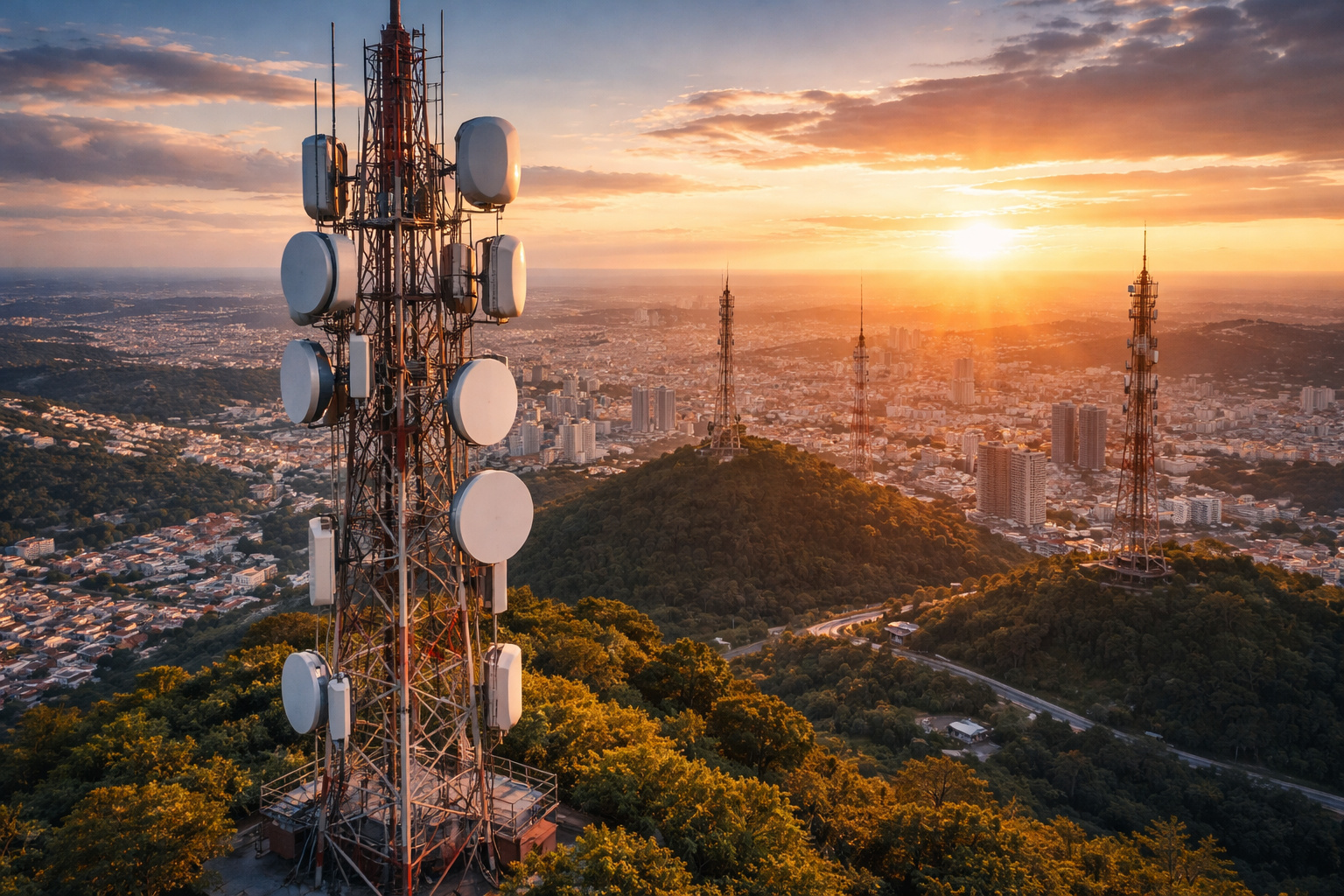


Long-Term Partnership Reshapes Mobile Network, Expands 4G and 5G Coverage, and Prepares for a Quality Leap for Millions of Users Across the Country
A significant movement in the telecommunications sector took shape in Brazil at the beginning of 2026 and placed TIM at the center of a broad transformation of its network infrastructure.
The operator entered into a strategic agreement with American Tower Brazil and began planning the installation of approximately 9,000 mobile communication towers nationwide. This volume corresponds to about 30% of the company’s entire infrastructure in the country, reinforcing the scale of the project.
On January 21, 2026, the Board of Directors approved the contract, which defines a partnership valid until 2034. This ensures financial predictability, improves investment control, and strengthens the operational efficiency of the network.
-
With a cost per shot close to zero, the DragonFire laser could change naval warfare in 2027 and provide British ships with nearly unlimited defense against drones.

-
A British startup creates tires that generate electricity in electric vehicles when passing over potholes, speed bumps, and cracks.

-
Scientists have created robots made with living cells that have their own nervous system, swim on their own, explore the environment, and self-organize without any genetic engineering, and now they want to do the same with human cells.

-
Students create a solar-powered ambulance that operates without a plug, without fuel, and still keeps medical equipment running in remote areas.



Expansion Project Redefines Mobile Infrastructure in the Country
Besides expanding the physical base of the network, the agreement also includes the modernization of over 6,500 4G and 5G network sites, distributed across 15 capitals and metropolitan regions in Brazil.
According to the official timeline released by the operator, construction and technical updates will begin in April 2026, integrating a structured plan for expanding and enhancing mobile coverage.
TIM will lead this phase in partnership with Nokia and Huawei, which will provide technological solutions focused on efficiency, stability, and increased network capacity.
Operational Efficiency and Cost Predictability Until 2034
According to institutional information, the centralization of infrastructure management with American Tower simplifies contracts and unifies timelines, which strengthens the financial sustainability of the project.
With contracts aligned until 2034, the operator gains greater cost predictability, an essential factor to support network expansion amid the continuous growth of mobile data consumption.
As a direct result of this planning, the company estimates a positive impact for over 12 million customers in the next two years, with improvements in signal quality, traffic capacity, and service stability.
Focus Goes Beyond Coverage and Prioritizes Network Performance
According to Marco Di Costanzo, Vice President of Technology Development, the project is not limited to geographical coverage expansion.
According to the executive, the strategy prioritizes the increase of network performance, ensuring that the infrastructure keeps pace with the evolution of data usage, digital applications, and high-demand services.
This approach delivers direct benefits to users, with noticeable improvements in browsing experience, calls, and use of digital services.
5G Advancement Consolidates National Presence
The agreement comes at a time of strong growth for fifth-generation mobile technology. By the end of 2025, the operator concluded the year with 5G coverage in 1,089 municipalities, a number well above the 607 municipalities recorded in 2024, according to official company data.
With this expansion, over 120 million Brazilians gained access to 5G technology, consolidating the operator’s presence among the leaders in the sector in the country.
Long-Term Planning Redefines the Future of Connectivity
By combining physical expansion, technological modernization, and contractual efficiency, the partnership establishes a new standard for telecommunications infrastructure in Brazil.
Now, the main challenge involves converting this technical planning into continuous quality gains, balancing investments, innovation, and operational sustainability.
In light of this scenario, what should weigh more in the coming years: to accelerate the expansion of 5G even further or focus efforts on the quality and performance of the already installed network?










1
1
1