






 Portuguese
  Spanish


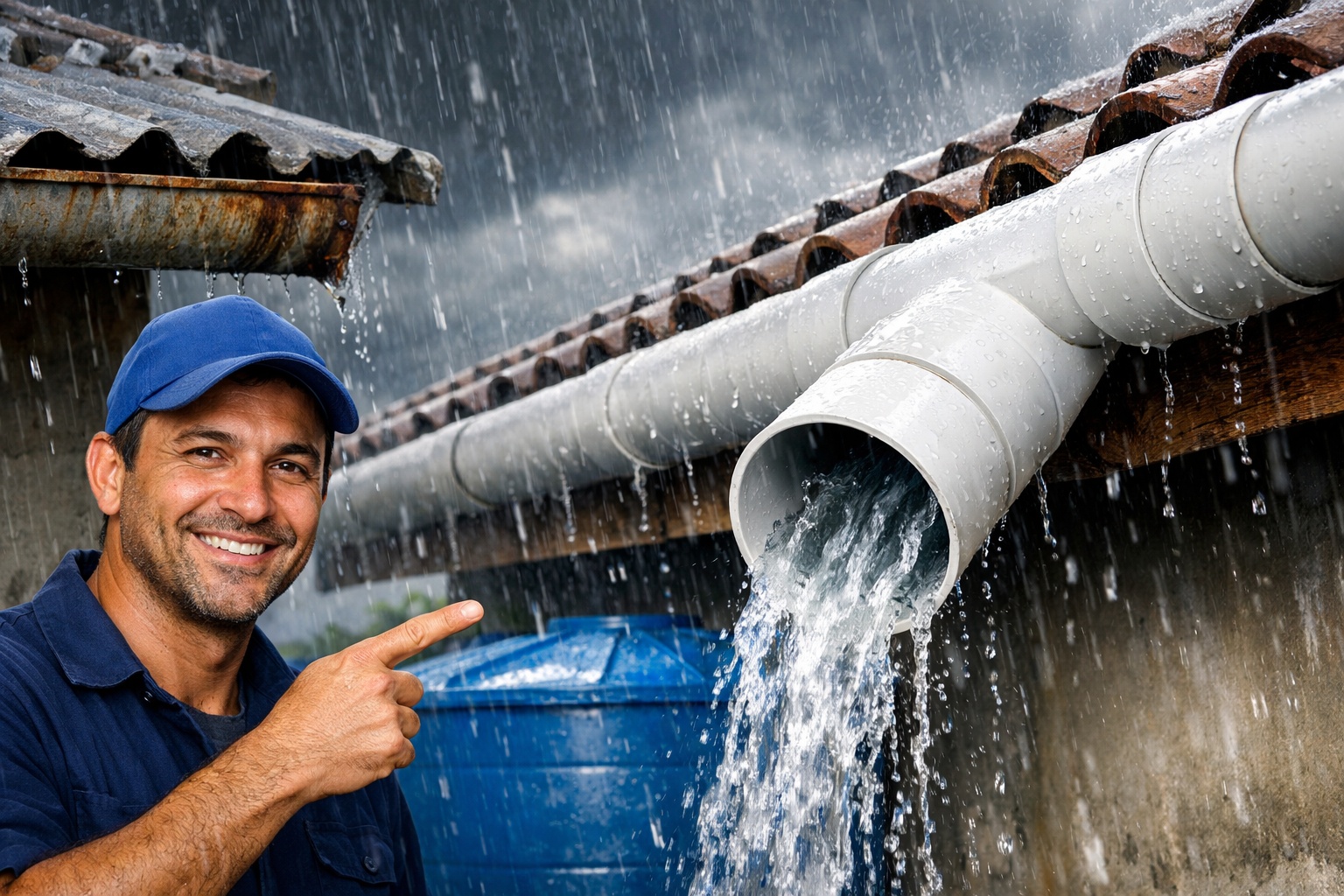


Rainwater Harvesting System with 100 mm PVC Pipe Can Collect Up to 5,000 Liters Per Year. Simple Structure Costs Between R$ 500 and R$ 800 and Reduces Expenses with Treated Water.
Rainwater harvesting is an internationally established technique known as rainwater harvesting, used to reduce potable water consumption in non-potable activities such as irrigation, floor washing, yards, and toilet flushing. Simple systems can be assembled with accessible components, including 100 mm PVC pipe, basic fittings, and a common water tank, forming a functional structure with an investment lower than that of complete professional installations.
According to widely adopted technical principles, the volume of water that can be collected depends on the roof area, the rainfall index of the region, and the runoff efficiency of the roof covering. Even in medium-sized urban homes, annual collection can reach thousands of liters.
How The Captation System Works
The basic system consists of four main elements:
-
China Constructs Four 20 km Tunnels in World’s Deepest Canyon for Mega Power Plant to Outperform Three Gorges and Power All of Britain

-
China’s Engineered Bamboo: The “Material of the Future” Stronger Than Steel and a Sustainable Wood Alternative

-
Egypt’s “New Nile”: 170 km Artificial River Aims to Turn Desert into Farmland, but Water Supply Concerns Loom
-
Unable to secure a mortgage as a self-employed single mother, she designed her own floating home from a 20-meter boat and now lives “off-grid” with her two children and solar panels on an English canal.



- Collection Surface (Roof)
- Water Conduction (Gutter and PVC Pipe)
- Leaf and Debris Filter
- Reservoir (Water Tank or Cistern)
The rainwater that hits the roof is directed by the gutters to a downspout. In the model described, it uses 100 mm sewage PVC pipe, which allows adequate flow even during heavier rains. The larger diameter reduces the risk of clogging and improves the water flow to the reservoir.
Sizing and Collection Potential
The basic technical calculation to estimate the collection is: Annual Volume ≈ Roof Area (m²) × Annual Rainfall Index (mm) × Utilization Coefficient

The coefficient typically ranges from 0.75 to 0.85, considering losses.
Practical Example:
- Roof of 50 m²
- Region with 1,200 mm of annual rainfall
50 × 1,200 × 0.8 = 48,000 liters per year (theoretical maximum)
Even considering losses and partial use of the system, volumes in the range of 5,000 liters annually are fully feasible for small and medium structures. The collection potential directly depends on the collection area and the frequency of rains in the region.
Materials and Estimated Cost
The main components include:
- 100 mm PVC Pipe (R$ 15 to R$ 20 per meter)
- Fittings, Elbows, and Bends
- Leaf Filter (R$ 80 to R$ 120 depending on the model)
- 500-Liter Water Tank (R$ 300 to R$ 450)
The total cost of the system can vary between R$ 500 and R$ 800, depending on size and finishing.
Complete commercial installations, including specialized labor and larger reservoirs, often exceed R$ 2,000.
Function of the 100 mm PVC Pipe
The use of 100 mm pipe, traditionally applied in sewage systems, is common in rainwater collection because:
- It has high flow capacity
- It is resistant to external exposure
- It is cost-effective
- It is easy to install
The choice of the appropriate diameter prevents bottlenecks during heavy rains. The correct sizing of the piping is essential for system efficiency.
Importance of the Leaf Filter
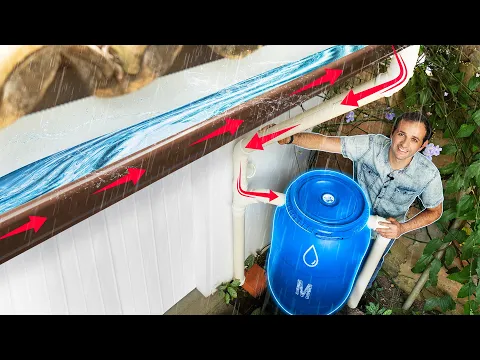

Before the water reaches the reservoir, it is advisable to install a filter to retain leaves, branches, and debris. Simple filters prevent organic residues from contaminating the stored water.
This component increases the durability of collected water and reduces the need for frequent maintenance.
Plastic reservoirs of 500 liters are widely used due to:
- Relatively low cost
- Simple installation
- Ease of sealing
Storage should be protected from direct sunlight to reduce algae growth. The lid should remain well sealed to prevent insects from entering.
Uses of Collected Water
The collected rainwater can be used for:
- Irrigation of gardens and vegetable patches
- Washing vehicles
- Cleaning outdoor floors
- Toilet flushing
It is not suitable for human consumption without proper treatment. The partial replacement of treated water with rainwater can significantly reduce monthly consumption.
Simplified Installation
The assembly process involves:
- Connecting the gutter downspout to the PVC pipe
- Installing an intermediate filter
- Directing the piping to the reservoir
- Planning an overflow outlet for excess water
In many cases, installation can be done over a weekend, depending on complexity. The structural simplicity is one of the factors that make the system affordable.
System Maintenance and Essential Care
Maintenance includes: Periodic filter cleaning; Checking for obstructions; Internal cleaning of the reservoir.

The frequency depends on the amount of leaves and dirt on the roof. Some care is necessary:
- Ensure a slight slope of the piping for proper flow
- Avoid loose connections
- Install proper support for the reservoir
In regions with very heavy rains, it may be necessary to plan an efficient overflow system.
The rainwater harvesting system with 100 mm PVC pipe shows that simple structural solutions can reduce implementation costs compared to complete commercial systems.
With an estimated investment between R$ 500 and R$ 800, the structure allows for annual collection of thousands of liters, depending on climatic conditions and roof area.
The combination of large diameter pipe, leaf filter, and suitable reservoir forms a functional and economically viable system, as long as installed according to basic technical principles.
Rainwater harvesting is a globally established practice and can be adapted to different residential realities, increasing the use of a natural resource often wasted.





Eu gosto de banhar na chuva e esta calha seria um complemento 100% uma beleza.Mas, com os adventos das estações secas, muita sujeira pode acumular na calha, excelente para criatório de mosquitos da dengue e de outras pragas desenvolvidas em laboratórios do Norte. Vai vendo…
Esses tubos de 150 mm custam em média de 250 cada barra, dependem onde compram + as conexões… nao fica barato não…. porém, bem mais em conta do tradicional.
Meu tio usou lá na roça na casa do pessoal da nossa família lá tubo de PVC pois metal e caro comprou plástico e pôs na borda da casa de todos lá kkkkkkkkkkk 🤣😂🤣😂