





 Portuguese
  English
  Spanish
  4 min of reading
  0 comments


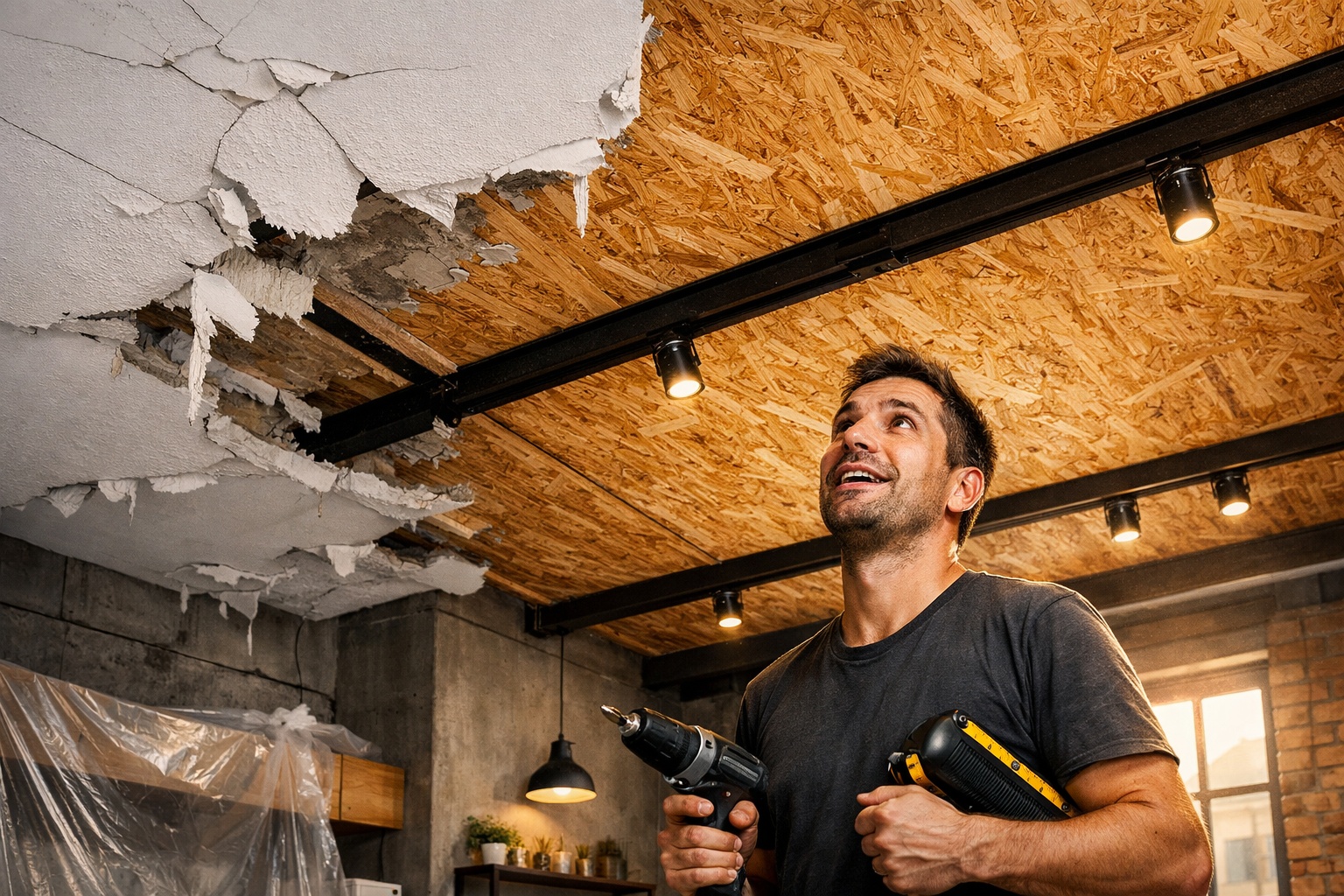
OSB Panels Cost About R$ 45 per m² in Material and Appear as an Alternative to Gypsum Ceilings, Reducing Costs and Eliminating Painting and Finishing.
The drywall ceiling has established itself as one of the most used solutions in residential construction in recent years. However, in addition to the material cost, it requires metal profiles, specialized labor, joint treatment with finishing compound, and, in most cases, final painting. In several regions of the country, the installed cost can exceed R$ 120 per square meter, depending on the complexity of the environment. As an alternative, exposed OSB panels (Oriented Strand Board) have started to be used as ceilings with a rustic-industrial aesthetic, reducing finishing stages and decreasing the total project cost.
How Much Does OSB Ceiling Really Cost per Square Meter
A standard OSB sheet measures approximately 2.44 m x 1.22 m, covering about 2.98 m². Prices vary according to thickness and manufacturer, but in the national retail market, sheets can be found between R$ 90 and R$ 150. Considering an average of R$ 120 per sheet:
- Cost per m² just for the sheet: about R$ 40
- Screws and fasteners: R$ 3 to R$ 5 per m²
- Simple wooden beams or structure: R$ 8 to R$ 15 per m² (depending on the wood)

The total material cost can vary between R$ 45 and R$ 65 per m², depending on the region and the structure used.
-
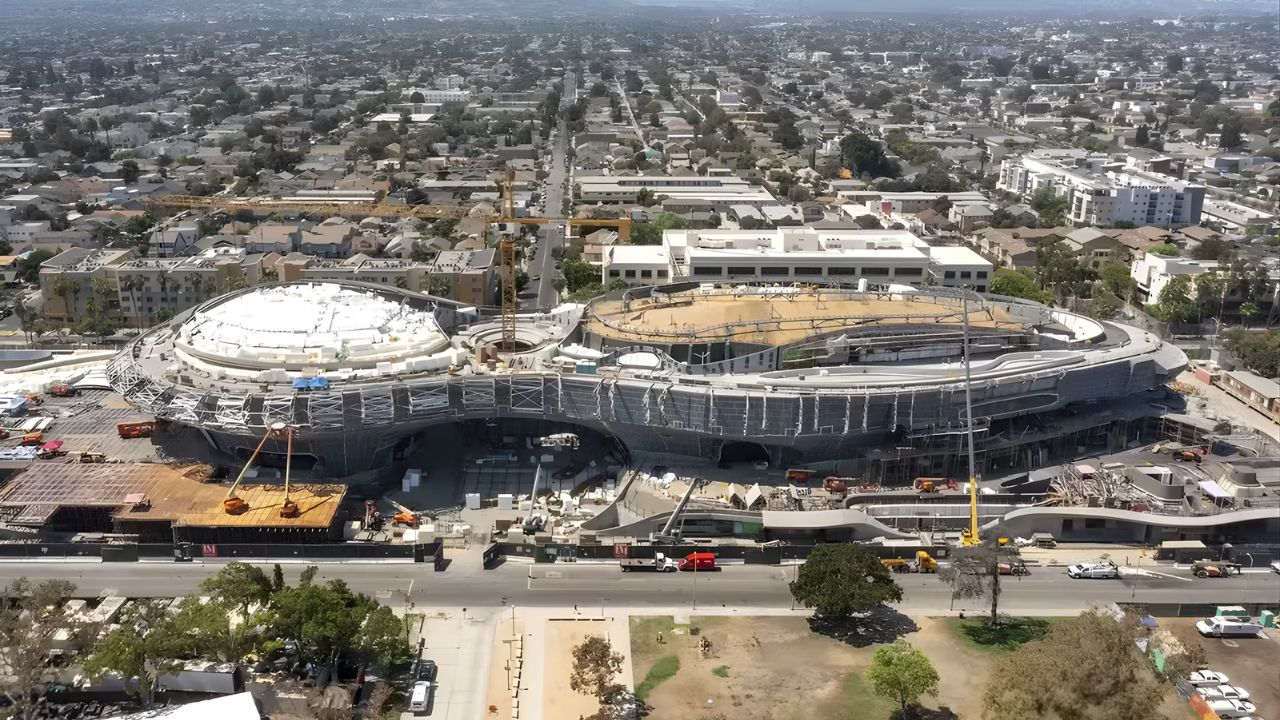
Created by George Lucas with over $1 billion, a futuristic museum in the shape of a spaceship with 1,500 curved panels is about to open in Los Angeles and will house one of the largest private collections of narrative art in the world.
-
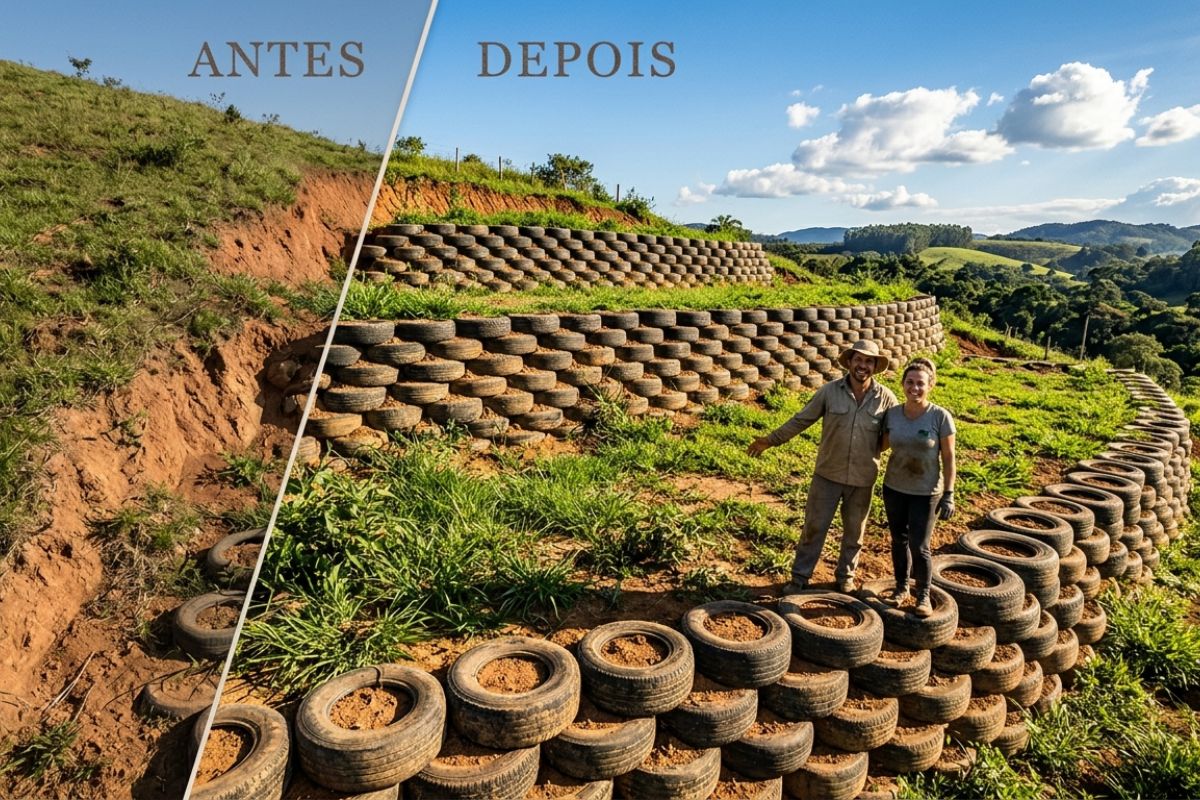
Couple shows how they built a retaining wall on their property using 400 old tires: sloped land turned into plateaus, tires are aligned, filled, and compacted with layers of soil, with grass helping in support and at almost zero cost.
-
Engineer explains drainage during the rainy season: the difference between surface water and deep water, ditches, gutters, and water outlets on the road, as well as drains and drainage mattresses, to prevent erosion, aquaplaning, and flooding at the construction site today.

-
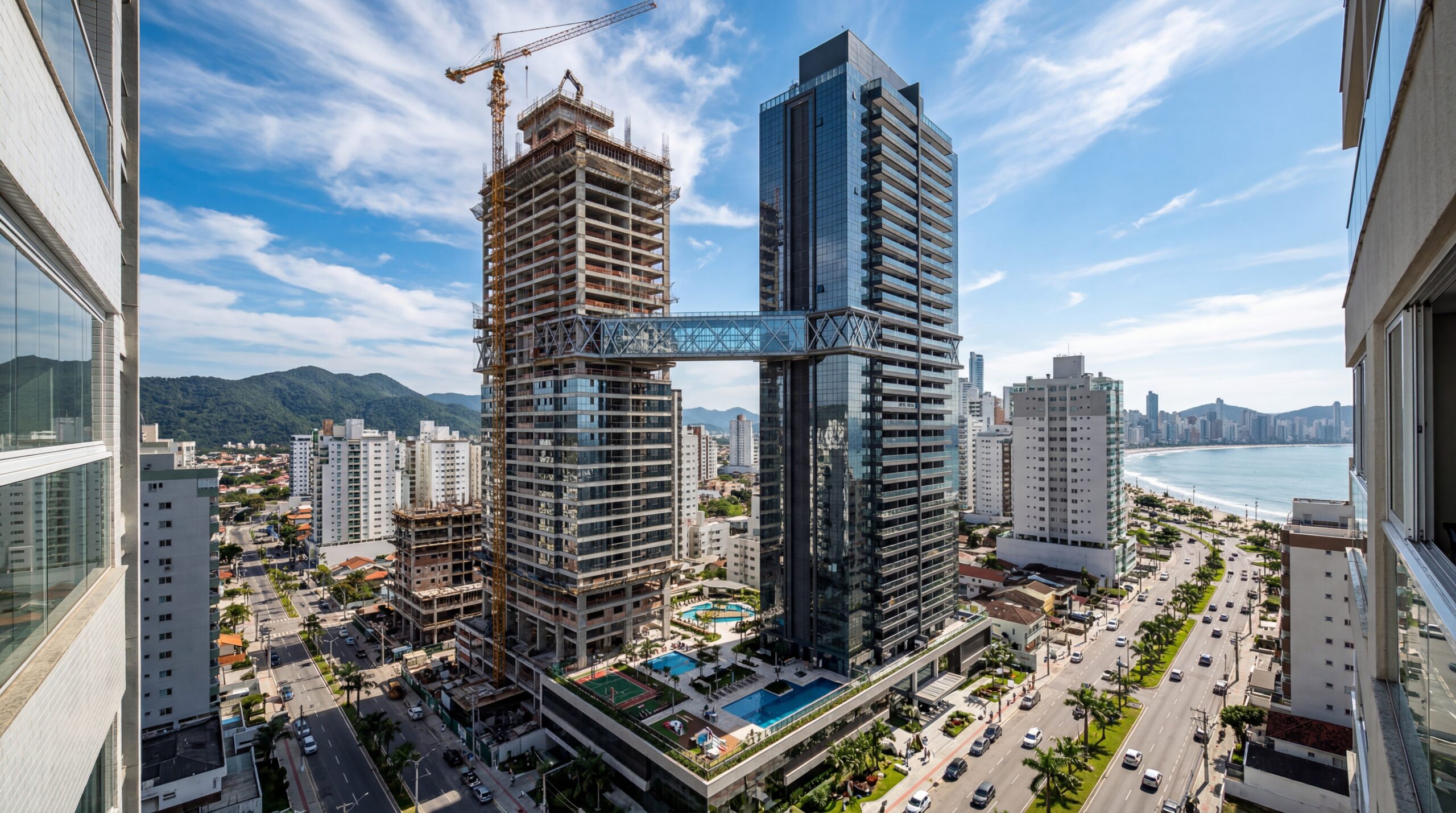
With 55 floors, 177 meters in height, a 15-meter walkway between the twin towers, ventilated facade, and 6,300 m² of leisure space, Ápice Towers already has one tower completed and another nearly at the top.

This represents a significant difference compared to the already installed gypsum ceiling, which can range from R$ 100 to R$ 150 per m² with complete finishing.
What is OSB and Why Does It Work as a Ceiling
OSB is a structural panel made of oriented and pressed wood strips with resins under high pressure and temperature. It was developed for structural applications in construction and is widely used in:
- Structural Walls
- Roofs
- Subfloors
- Closure Systems
Its mechanical strength allows it to be fixed directly to a wooden structure, forming a continuous surface.
When used as an exposed ceiling, the panel maintains its original texture, characterized by the irregular pattern of wood fibers, which has become an aesthetic reference in industrial and contemporary styles.
Elimination of Finishing Stages
One of the main differences compared to gypsum is the finishing step. In the traditional drywall system, it is necessary to:
- Apply tape on the joints
- Apply finishing compound
- Sand
- Apply sealer
- Paint
In the case of exposed OSB:
- The panels are simply screwed to the structure
- The joints can remain visible or receive metal profiles
- Painting is optional
In many projects, only matte varnish or clear sealer is applied for superficial protection, without the need for finishing compound.
High Demand for Rustic-Industrial Aesthetics
The exposed finish of OSB fits into architectural proposals that value:
- Visible Structural Elements
- Natural Wood Texture
- Industrial Style
- Contemporary Commercial and Residential Spaces
Its application is common in:
- Stores
- Cafés
- Studios
- Creative Offices
- Modern Proposal Residences
Technical Advantages of OSB Ceiling
In addition to initial savings, OSB presents some relevant characteristics:
✔ Good Mechanical Resistance
✔ Relatively Simple Installation
✔ Ease of Spot Maintenance
✔ Possibility of Partial Removal
✔ Compatible with Recessed Lighting
The material supports drilling for the installation of lights, light tracks, and electrical boxes with ease. Despite the advantages, using OSB as a ceiling requires some technical care:
- Not recommended for areas with constant high humidity, such as bathrooms without adequate ventilation
- Should receive sealer or varnish if exposed to climatic variations
- Requires a leveled structure to avoid warping
Moreover, the acoustic performance is not equivalent to ceilings with incorporated mineral wool, as in the case of acoustic drywall systems.
Direct Cost Comparison
Estimated example for 30 m² of ceiling:
Installed Drywall:
30 m² x R$ 120 = R$ 3,600
Exposed OSB (material + basic fixing):
30 m² x R$ 55 = R$ 1,650
Approximate difference: R$ 1,950
Prices vary by region, but the percentage difference can exceed 40% in many cases.
Durability and Maintenance
When protected with varnish or sealer, OSB can have a long durability in dry indoor environments. Minor damages can be resolved by replacing just one panel, which facilitates maintenance.
Unlike gypsum, which can crack with structural movement, OSB exhibits greater mechanical tolerance.
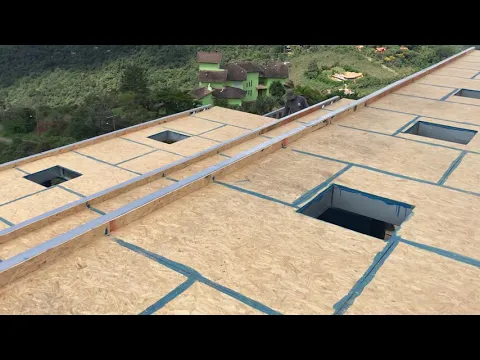

The use of exposed OSB panels as ceilings emerges as a technical and economic alternative to the traditional drywall system. With an estimated cost starting from about R$ 45 per m² in material, the solution eliminates stages of finishing compound and painting, reducing construction time and delivering a finish aligned with contemporary industrial style.
Although it does not replace specific systems with acoustic insulation or more complex technical requirements, OSB proves to be a viable option for those seeking cost reduction and differentiated aesthetics.









-

-

-

-

-

-

37 pessoas reagiram a isso.