





 Portuguese
  English
  Spanish
  5 min of reading
  0 comments


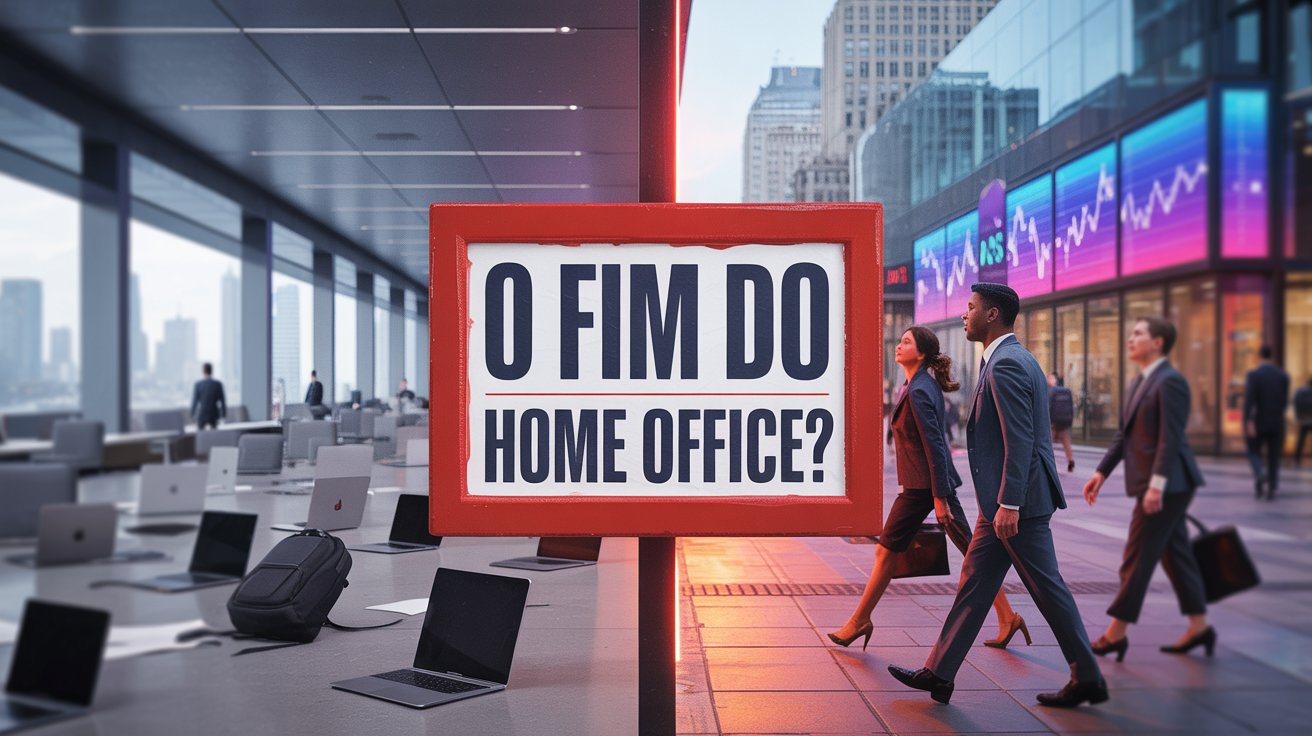
U.S. Companies Accelerate Employees’ Return to Offices and Redefine the Corporate Real Estate Market After Years of Hybrid Model Driven by the Pandemic. Change Impacts Routine, Business, and Major American Cities.
The corporate landscape in the United States is undergoing a significant transformation in 2025, with most large companies requiring a full return of employees to the in-person environment.
This movement marks a historic reversal of the work practices that prevailed during and after the Covid-19 pandemic, which began in 2020.
According to a recent report by Jones Lang LaSalle (JLL), more than half of the country’s top one hundred corporations have abolished remote work, consolidating the resumption of routines in offices and having a strong impact on the commercial real estate sector.
-
He started running at 66 years old, broke records at 82, and is now a subject of study for having a metabolic age comparable to that of a 20-year-old, in a case that is intriguing scientists and inspiring the world.

-
Oldest tree on the planet reappears after 130 years of searches: Wattieza, 385 million years old, was 10 meters tall and had no leaves or seeds; Gilboa fossils in New York solved the mystery in 2007.

-
A 48-square-meter house assembled in hours with 4,000 bricks made of recycled plastic that does not absorb moisture, has natural thermal insulation, and costs less than 90,000 reais in a complete kit.

-
Luciano Hang revealed that Havan’s air fleet has already accumulated more than 20,000 landings, 10,000 flight hours, and 6 million kilometers traveled, and he says that without the planes, the company would never have grown so quickly.


Return to In-Person Work Dominates Large Companies
The physical presence of professionals, which had become an exception in recent years, is once again the rule.
While in 2023 about 78% of the largest companies offered hybrid work models, currently only 41% still maintain this option.
At the same time, the percentage of companies requiring employees to be in the office full-time jumped from 5% to a remarkable 54%, indicating a new phase in the organizational culture of the United States.
This movement directly influences the commercial real estate market, which is showing signs of recovery in several major cities across the country.


JLL data indicates that, between April and May 2025, attendance in offices grew by 1.3% compared to the same period the previous year.
Premium buildings have reached record rental values, with new constructions in locations such as Miami, New York, and San Francisco being leased at US$ 92.38 per square meter, the highest value ever recorded in the segment.
Despite the increase in demand for high-quality spaces, the sector still faces challenges.
The vacancy rate, above 22%, has led developers to withdraw old buildings from the market, many of which have been demolished or converted for other uses, such as residential, industrial, or mixed-use.
In the last quarter, the national office stock shrunk by 65,000 square meters, as demolitions and transformations exceeded the number of new constructions.
Commercial Real Estate Market in Transformation
In the largest American companies, the requirement for office attendance has driven negotiations for high-end spaces.
Among the ten largest companies on the Fortune 100 list, seven have begun to require at least four days of in-person work per week, while the remaining three now demand full-time presence from employees.
According to JLL’s survey, the average number of days attending the office has increased to 3.8 per week in the second quarter of 2025, up from 2.6 days recorded in the same period of 2023.
Stricter Policies and Adjustments by Large Corporations
Large corporations have been making adjustments to their policies to ensure the return of employees to the offices.
Amazon, for example, began in 2024 to prepare its team for a full return to the in-person model, implemented in January this year.
In the same vein, JPMorgan Chase announced, still in January 2025, the definitive end of hybrid work for its administrative team.
The Starbucks chain has defined that, starting September 29, its corporate employees will be required to work four days a week in the office, while managers working remotely will have up to a year to relocate to Seattle or Toronto.
Those who choose not to accept the move may receive a financial compensation.
This large-scale return has brought unexpected challenges for companies that had reduced physical space due to remote work over the past few years.
Many employers needed to reorganize environments and even adjust their headquarters to accommodate all employees in person, showcasing a new challenge in managing spaces and resources in the corporate world.
Reasons for the End of Remote Work in Companies
The decision of companies to abandon remote work and resume in-person work on a large scale has multiple reasons.
Among the main factors pointed out by executives are the need to strengthen organizational culture, facilitate collaboration among teams, and increase productivity.
Additionally, there is an interest in justifying the high investments in commercial real estate, especially in valued areas where high-end buildings represent strategic assets for companies.
The influence of this movement reflects not only on office occupancy but also on urban economy.
With the return of thousands of professionals to financial centers, there are positive impacts on commerce, public transport, and various services that depend on the daily flow of workers.
Impacts and Adaptations in Cities and the Labor Market
The rapid transition from remote work to the in-person model has caused profound changes in the dynamics of major urban centers.
Many cities, which until recently were seeking to adapt spaces to meet the new reality of remote work, now face a reconfiguration of urban flows and demands for infrastructure and mobility.
The increase in traffic, the return of activity in commercial neighborhoods, and the need to adapt old buildings make up the new landscape of challenges and opportunities.
On the other hand, the high vacancy rate in corporate buildings and the conversion of properties for other uses also reveal a process of transformation in the real estate sector, which needs to respond quickly to the new demands of companies and professionals.
The Future of In-Person Work in Large Companies
The expectation is that the in-person model will continue to predominate in large American corporations over the next few years, although industry experts caution that flexible policies may resurface if significant economic or social changes occur.
However, until July 2025, the established trend is that remote work will cease to be a majority option, giving way to the definitive return of professionals to the offices.
Given this scenario, many are asking: does the mass return to in-person work represent a new permanent cycle, or will we still see changes in the near future?







Seja o primeiro a reagir!