





 Portuguese
  English
  Spanish
  4 min of reading
  1 comment


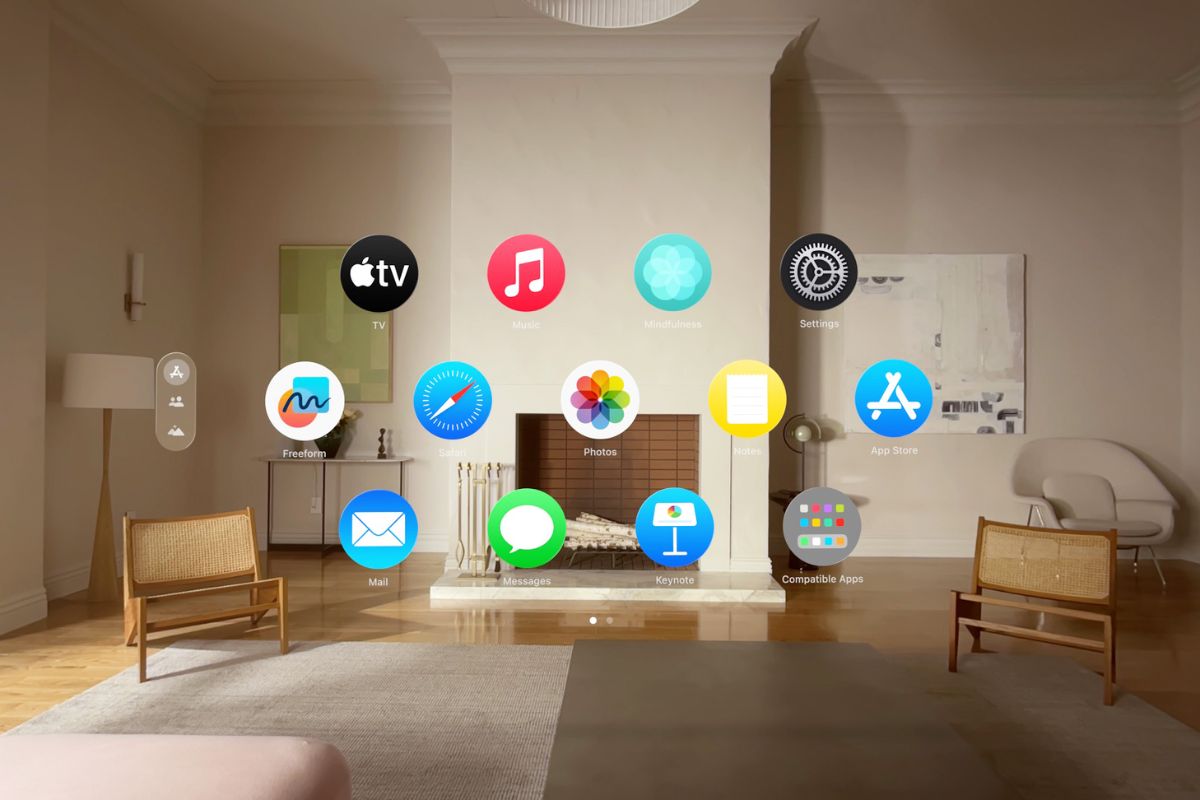


We Explain The Concept, The Technologies Involved (Eye Tracking, Environment Mapping) And The Impact Of The Next Great Revolution Of Computing.
For decades, our interaction with the digital world has been mediated by luminous rectangles. First, the desktop computer monitor. Then, the laptop and TV screens. And finally, the smartphone screen, which has become the center of our lives. Now, the biggest technology companies in the world, such as Apple, Meta, and Samsung, are betting billions of dollars on the idea that this era is coming to an end.
With the launch of devices like the Apple Vision Pro, a term has begun to dominate the industry: Spatial Computing. But after all, what is spatial computing? It is not just another virtual reality headset for gaming. It is a radical proposal: to dissolve screens and make digital information inhabit the same physical space as us.
The Crucial Difference: VR, AR, And Spatial Computing
To understand the revolution, we need to define the terms.
-
China creates hypersonic engine that can make planes and missiles fly more than 6 times the speed of sound with less weight, more range, and without system change.

-
Mysterious object on Mars divides NASA and Harvard after Curiosity image reignites suspicions about what was really found on the planet.
-
Giant structures 14 meters beneath Egypt are revealed by satellites and expose a millennia-old secret buried in Buto.
-
Children have been making clay pieces for 15,000 years in Southwest Asia, and fingerprints preserved on 142 ornaments helped archaeologists prove this.

Virtual Reality (VR): creates a completely digital environment that replaces the real world. You are transported to another place. It is immersive, but it isolates the user.
Augmented Reality (AR): projects digital information overlaid onto the real world, like an Instagram filter or information on a car’s windshield. You still see the real world, with a digital layer on top.
Spatial Computing (Mixed Reality – MR): this is the big leap. It not only overlays but integrates digital objects into your physical environment. A spreadsheet can be “pinned” to your wall, a movie can float in your living room, and these virtual objects interact with the real world – they can, for example, cast a shadow on your table or hide behind your sofa.
The Engineering Behind The Magic: How Does The Technology Work?
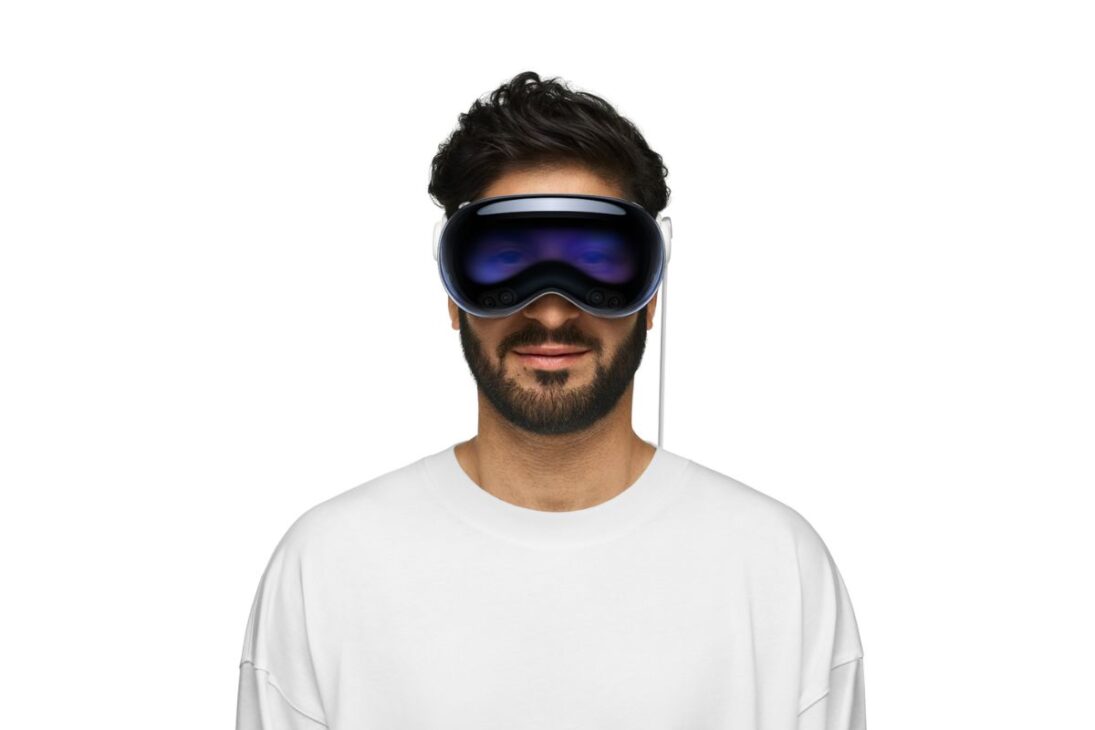
For this fusion between the real and the virtual to happen convincingly, a series of cutting-edge technologies need to work in perfect harmony.
3D Environment Mapping: using cameras and LiDAR sensors (which emit laser beams to measure distances), the device scans your room and creates a detailed three-dimensional map in real time. This is how it knows where the walls, furniture, and objects are.
Eye Tracking: high-speed infrared cameras monitor where your eyes are looking. Instead of a mouse, your gaze becomes the cursor. To “click” on an icon, simply look at it and make a gesture with your fingers.
Hand Tracking: external cameras constantly monitor the position of your hands. No controllers or joysticks are needed. Your natural “pinch,” “drag,” and “click” gestures are the commands.
Low Latency Video Passthrough: so you don’t feel isolated, external cameras capture the real world and relay it to high-resolution screens within the glasses. The “magic” is that this happens with such ridiculously low latency (delay) (measured in milliseconds) that your brain perceives it as if you were looking through a transparent glass.
The Future Of Work: Are We Really Going To Work Without Monitors?
The promise is exactly that. With spatial computing, your workspace is no longer defined by the size of your screen, but by the physical space around you. You can have multiple giant virtual screens floating in the air, one with your email, another with a video call, and a third with a 3D model of an engineering project. For industries like architecture, product design, and medicine, the potential to visualize and manipulate digital objects at real scale is revolutionary.
The Challenges: Motion Sickness And The Cost Of The Revolution
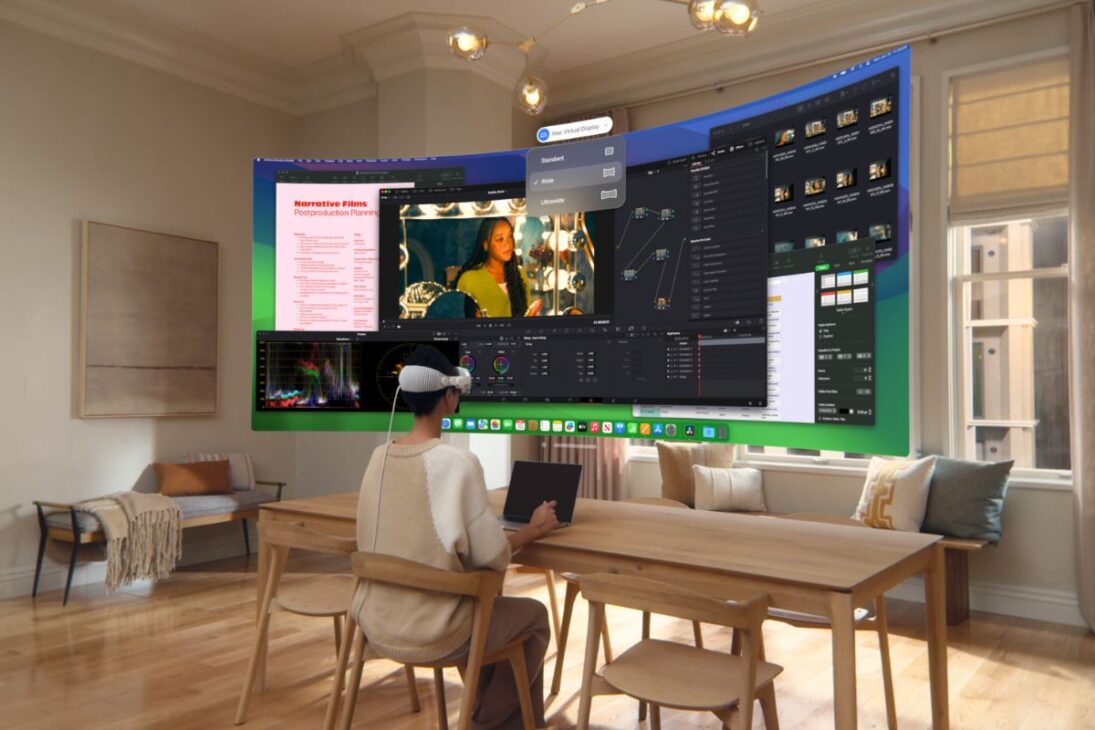
Two major obstacles need to be overcome. The first is motion sickness. It occurs when your eyes see movement that your body does not feel. The low latency and high refresh rate technologies of the Apple Vision Pro are specifically designed to minimize this problem, but adaptation is still individual.
The second is the cost. With a launch price of US$ 3,499 in the U.S., spatial computing starts as a niche technology for professionals and enthusiasts. However, just like the first computers and cell phones, the expectation is that over the decade, the technology will become cheaper and more accessible, defining what will be the smartphone replacement for the next generation.
Are you excited to work and have fun with virtual screens floating in your room, or do you find this idea frightening and dystopian? Comment!







Eu acho que há mais um desafio a superar. Com a tecnologia atual, quando a imagem é projetada em uma tela de TV a imagem é compartilhada por todos os ocupantes do local ao passo que quando se usa um celular, ela é privativa do usuário, sendo compartilhada apenas quando esse permitir. Como a tecnologia de imagem espacial conciliaria essas duas realidades ou seja, permitiria que uma midia espacial possa ser privativa de um usuário ou que cada usuário tenha acesso ao seu conteúdo particular?