





 Portuguese
  English
  Spanish
  6 min of reading
  1 comment


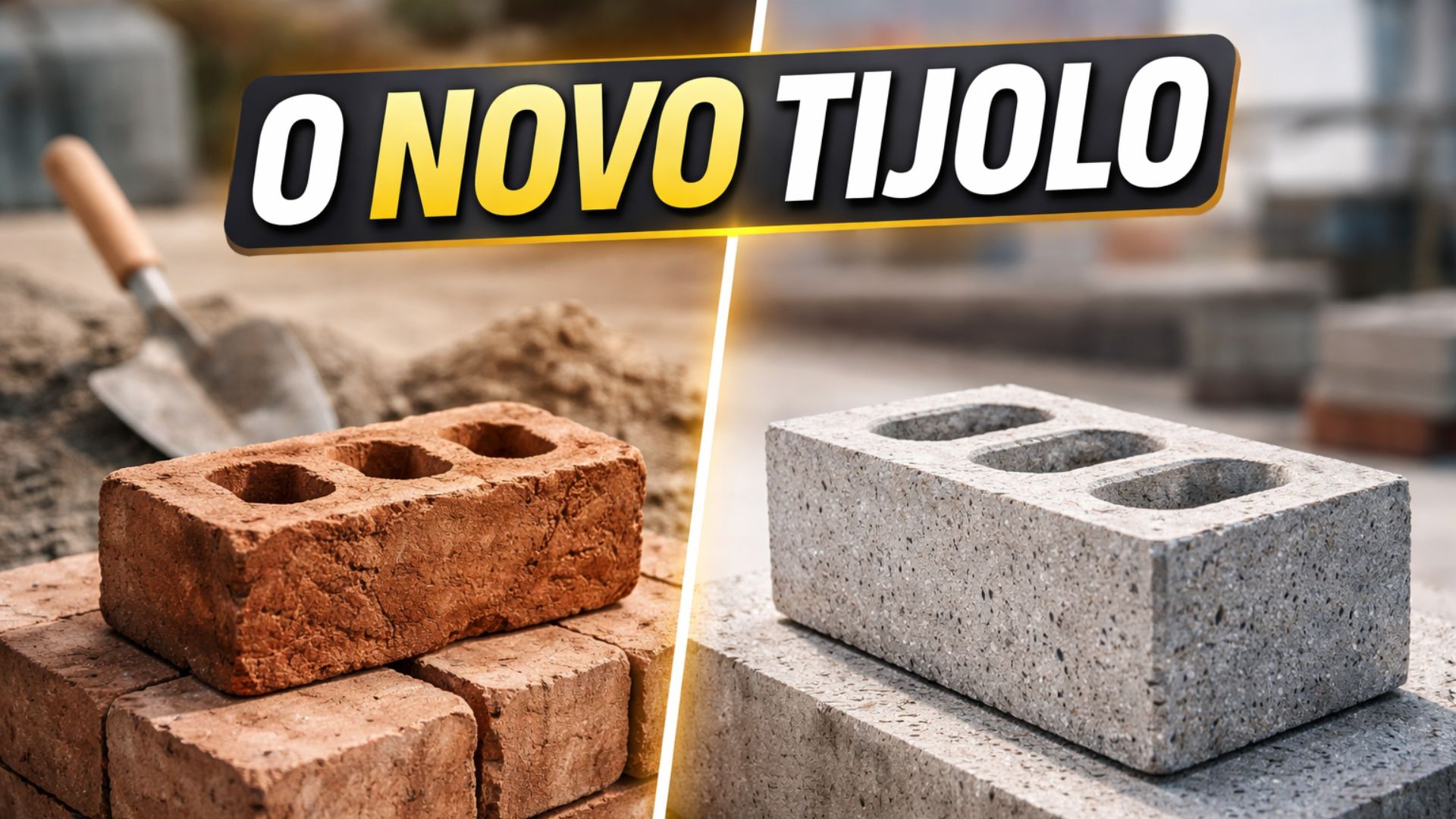


British Block Bets on Waste Mineralization to Capture CO₂ and Promises to Become a Reference in Low-Carbon Masonry, Combining Recycled Aggregates, Industrial Technology, and Declared Negative Environmental Balance by Construction Sector Manufacturers.
The construction industry, historically associated with energy-intensive materials and emissions, has gained an example of a product that attempts to invert this logic within the masonry component itself.
The Carbon Buster block, developed in the UK, was introduced as a “carbon negative” concrete block, a term used when the material, according to its developers, incorporates more carbon dioxide than is emitted during the product’s manufacturing stage.
Accelerated Carbonation Technology Transforms Waste into Aggregates
The Carbon Buster is attributed to the British manufacturer Lignacite and arose from a partnership with Carbon8, a company linked to the development of a technique called accelerated carbonation technology, known by the acronym ACT.
-
With 55 km over the sea, a cost of US$ 20 billion, and enough steel to build 60 Eiffel Towers, China’s largest project has connected Hong Kong, Zhuhai, and Macau in a colossal bridge that defies the logic of engineering.

-
A trick with joint compound transforms a Styrofoam ceiling into a plaster-like ceiling: leveled panels, wires and mesh at the joints, sand, paint, and change the environment while spending little today.

-
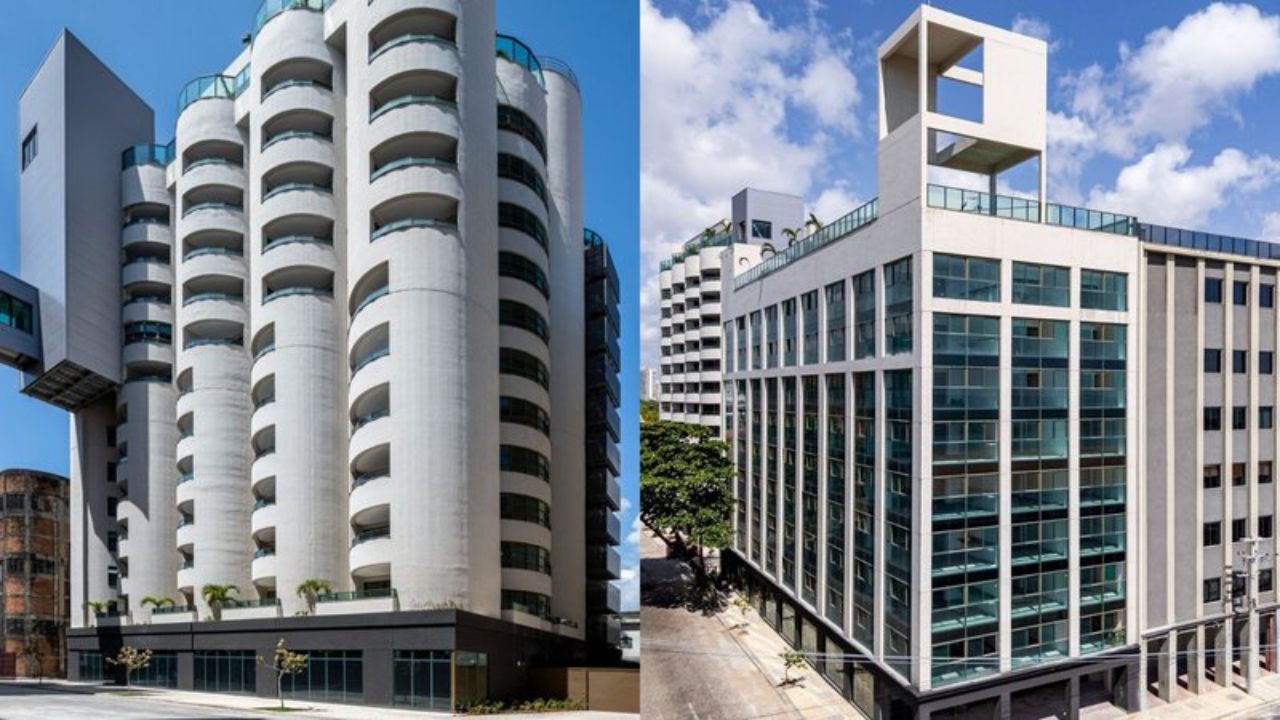
Abandoned for over a decade, century-old silos in the state of Recife have been transformed into 251 apartments with curved walls in one of the most complex retrofits ever done in Brazil.
-
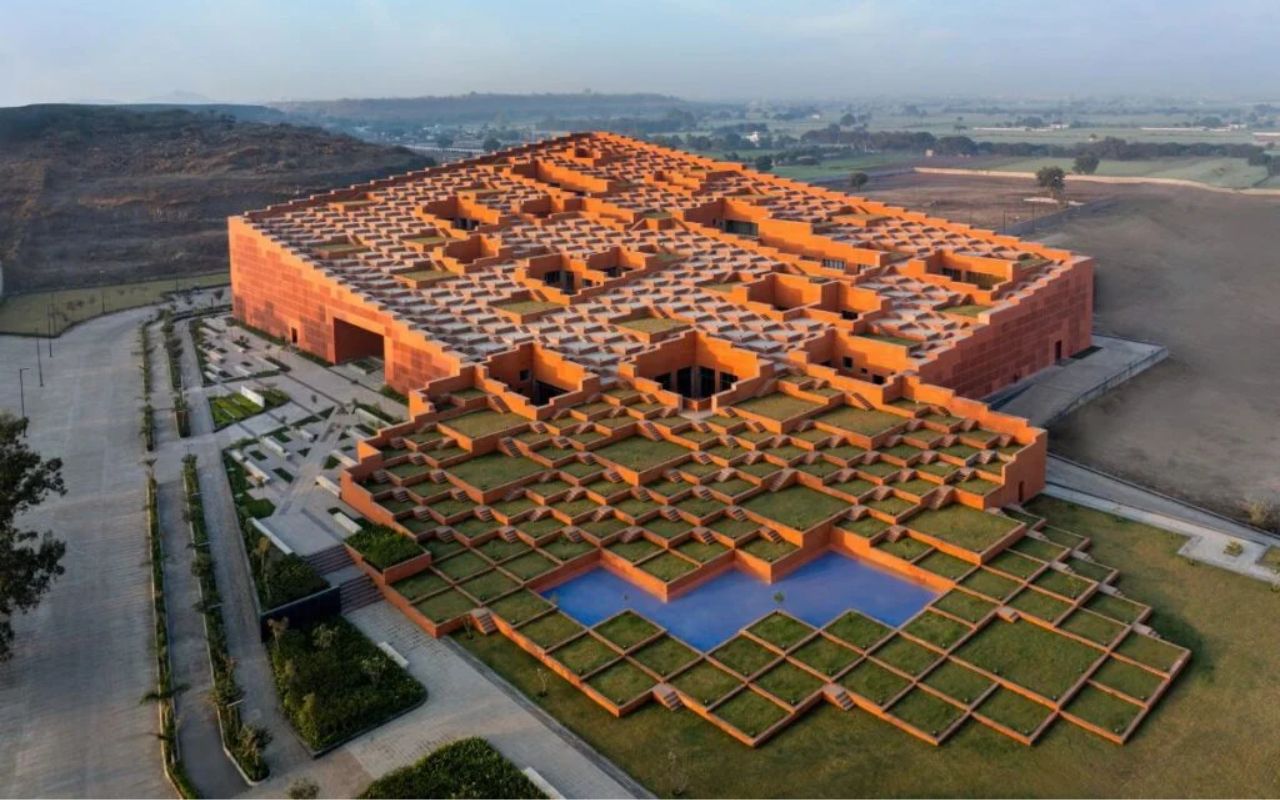
Inspired by millennia-old structures, a “differentiated” roof with 463 levels and a capacity for 9,000 people was built on top of a building in India; the tiered roof is almost a kind of giant garden of 9,000 m², reducing energy consumption and promoting interaction among students of Prestige University.

Rather than treating CO₂ solely as a gas to be avoided, the process is based on capturing and fixing this carbon in mineral form, transforming industrial waste into aggregates that are incorporated into the block’s composition.
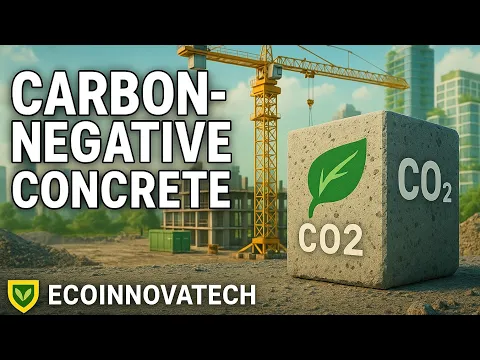
The central point supporting the appeal of the Carbon Buster is the claim that the block “captures more than it emits” during manufacturing, with a figure that is often reproduced in technical publications in the sector: 14 kg of CO₂ per ton in favor of the product, meaning a negative carbon balance per ton of material produced.
This metric is associated with the combination of recycled aggregates with carbonated aggregates produced by Carbon8 from by-products and industrial waste.

Negative Carbon Block and Circular Economy in Construction
The proposal fits into a larger field of innovation in building materials that seeks to give destinations to hard-to-reuse fractions while simultaneously reducing the carbon footprint of inputs.
In the case of the Carbon Buster, part of the material’s origin is linked to waste generated by “waste-to-energy” plants, facilities that convert waste into energy and also produce solid by-products.
What was treated as an environmental liability and disposal cost is now seen as raw material, as long as it is stabilized and transformed into aggregate with behavior compatible with use in cementitious products.
The accelerated carbonation technology is described as a controlled and intensified version of a natural phenomenon: carbonation, a reaction in which calcium-rich compounds react with CO₂ to form carbonates, retaining the carbon in a stable form.
The difference with the industrial method is that it aims to accelerate and control this transformation, with defined operational parameters to enable scalability and repeatability.
In the end, the result is an artificial carbonated aggregate that can be incorporated into construction products, including concrete blocks.
Technical Performance and Application in Masonry
In practice, the block comes to the attention of builders because it preserves the logic of masonry, with a component that can be laid, modulating walls and closures with productivity known in the sector.
The interest expands for an additional reason: decarbonization initiatives often require deep process changes, while a block with the same role as a conventional element tends to be more easily tested in construction and specifications, as long as it meets technical requirements and applicable standards for masonry units.
Manufacturers and industry sources describe the Carbon Buster as a concrete masonry product that uses over 50% recycled aggregates, combined with carbonated aggregates from by-products of waste conversion plants.

This combination is presented as a way to reduce the extraction of virgin raw material while simultaneously fixing CO₂ in the material through mineralization associated with the carbonated aggregate.
For engineering, the discussion about a “negative carbon” block is not limited to the slogan.
It depends on what is measured and how the emissions balance is calculated, including what enters as process emissions, energy consumed, material transportation, and how much CO₂ was effectively mineralized and accounted for in the product inventory.
In this context, the figure of 14 kg of CO₂ per ton, attributed to the material’s promoters in industry publications, serves as a communication shortcut but also as a number that sparks interest for assessments of environmental performance and comparisons with traditional alternatives.
Safety, Standards, and Market Acceptance
The use of industrial waste in construction products often raises questions about safety and performance because different waste sources can vary chemically and physically.
The narrative associated with Carbon8’s process emphasizes that accelerated carbonation acts as a stabilizing agent, transforming the waste matrix and reducing its reactivity while creating a usable aggregate.
In market terms, this step is essential for the material to be accepted by specifiers, regulatory bodies, and clients who require technical evidence before adopting components originating from waste.
Another aspect that stands out is the fit of this solution into public policies and corporate goals of circular economy.
The logic of treating waste through CO₂ and returning it to the construction sector appears in impact studies and promotional materials linked to industrial innovation in the UK, citing the transformation of waste into aggregates and their application in products like masonry blocks.
The same reasoning connects to the growing pressure for emission reductions in supply chains, where “conventional” materials are being re-evaluated through the lens of embedded carbon.

Although the innovation lies in the chemistry and the carbonated aggregate, the final product still needs to fulfill the basic functions of a concrete block: strength, dimensional stability, workability, and compatibility with mortars, coatings, and building systems.
Block manufacturers in the UK often reference applicable European standards for concrete masonry units when describing their products and manufacturing processes, highlighting technical requirements for the material to be used in above-ground and below-ground applications, depending on the type of block and project specifications.
The Carbon Buster also exemplifies a shift in focus in the environmental discussion of construction.
Instead of concentrating decarbonization solely on cement, the approach extends to aggregates and final components, valuing combinations of materials and industrial routes that reintroduce waste into the production chain with declared environmental gains.
The fact that the block is being presented as a “first” in its category, repeated in industry publications, reinforces the appeal of curiosity and broadens the interest of the general public, who often associates innovation in construction with more visible technologies, such as 3D printing, prefabricated modules, or steel structures.
Adoption in projects, in turn, depends on what specifications allow and what buyers and designers consider acceptable.
Materials with strong environmental claims typically enter construction projects through pilot programs, validations, and transition phases, especially when involving unconventional inputs.
Still, the existence of a publicly described industrial chain, with block manufacturers, technology companies, and industry sources explaining the production route, provides the topic with concrete groundwork for those seeking alternatives to traditional bricks without abandoning the logic of masonry.
If a masonry block can function as a “carbon battery” by mineralizing CO₂ and reusing waste, what other common materials on site can still change role and transition from a source of emissions to part of the solution?





Confesso que não entendi nada