





 Portuguese
  English
  Spanish
  7 min of reading
  0 comments


Admiral Nakhimov: 252-Meter Nuclear Cruiser Returns to the Sea After 28 Years and Becomes the Most Armed Surface Ship in Russia
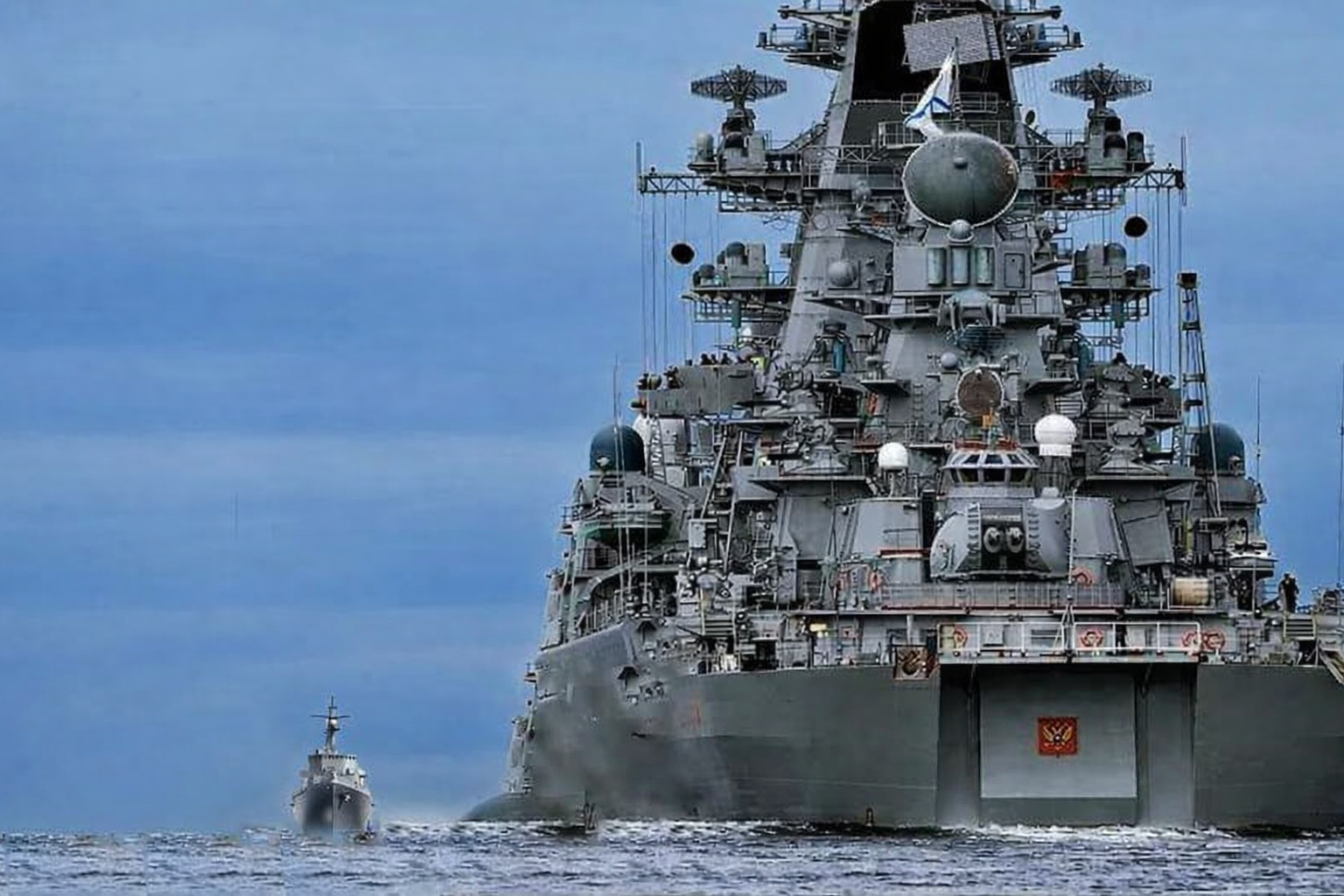
The nuclear cruiser Admiral Nakhimov, one of the largest warships ever built, left the Severodvinsk shipyard in the White Sea on August 18, 2025. Those who witnessed its departure saw a giant gray ship slowly gliding out of the drydock: 252 meters long, superstructures covered with antennas and radars, and two nuclear reactors that had been idle since the late 1990s. It was the Admiral Nakhimov, of the powerful Kirov class, returning to the sea after nearly three decades of modernization, once again becoming one of the most powerful surface ships ever put into operation.
Kirov Class: The Largest Nuclear Battlecruisers Ever Built
The Kirov class, official Russian designation Project 1144 Orlan — a word that can be translated as “sea eagle” — represents a virtually unique type of ship in modern naval history.
Weighing around 28,000 tons at full load and 252 meters long, these ships surpass any cruiser or destroyer currently in operation worldwide. They are only smaller than aircraft carriers but larger than any other type of surface combat ship.
-
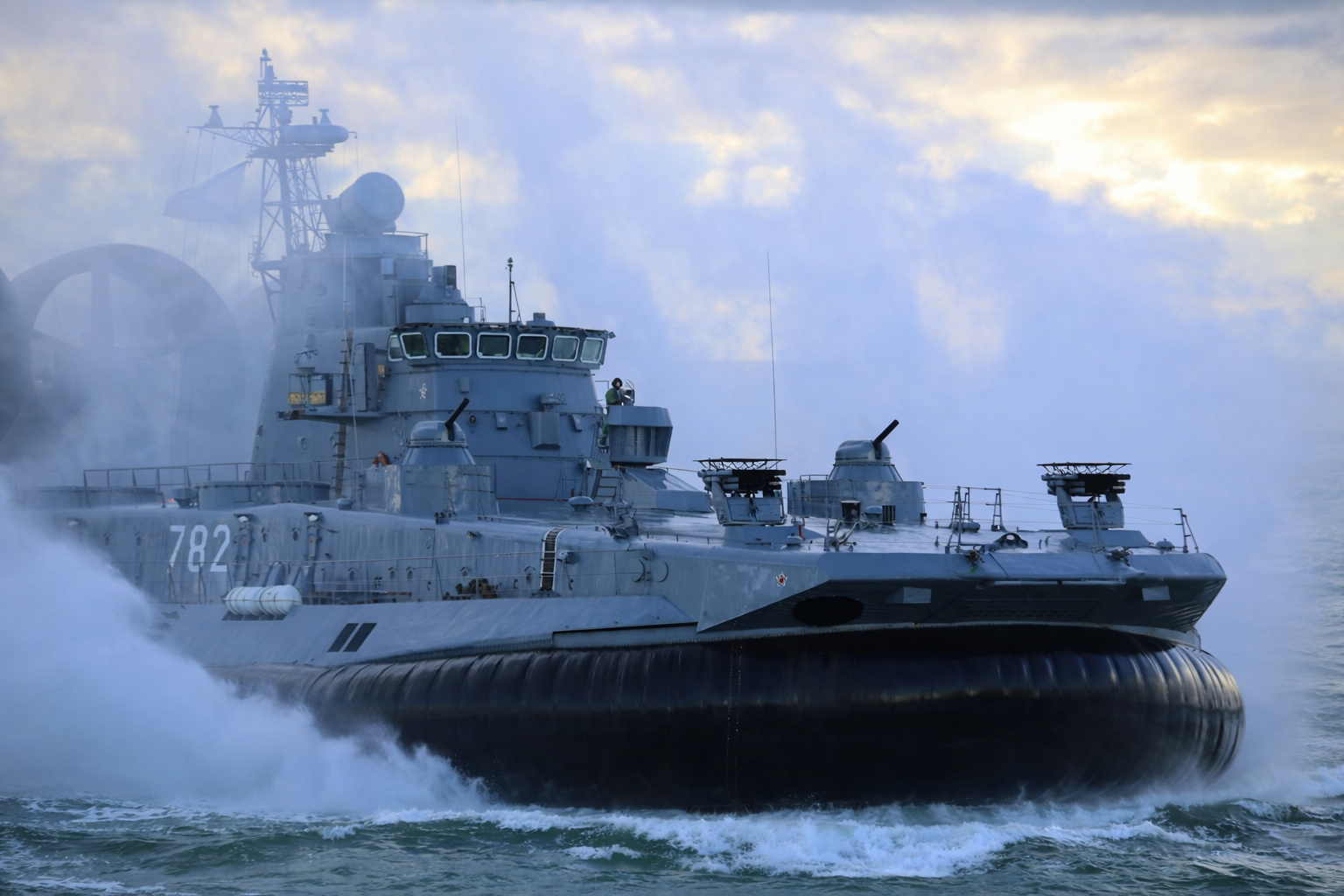
Classified as a “amphibious monster” weighing 555 tons, 57 meters long, and featuring three propellers with a diameter of 5.5 meters, the Zubr is the largest military hovercraft ever built, capable of transporting 3 tanks or 500 soldiers at speeds exceeding 100 km/h over water, ice, and sand, and China has resumed production of it to project power in the South China Sea.
-
The U.S. Army receives the first Black Hawk helicopter that can fly without pilots, be controlled by a tablet, and even land on its own during high-risk missions.

-
With 11,000 tons and sensors capable of hunting submarines at long distances, the Type 055 has become one of the most feared floating arsenals of the Chinese navy.

-
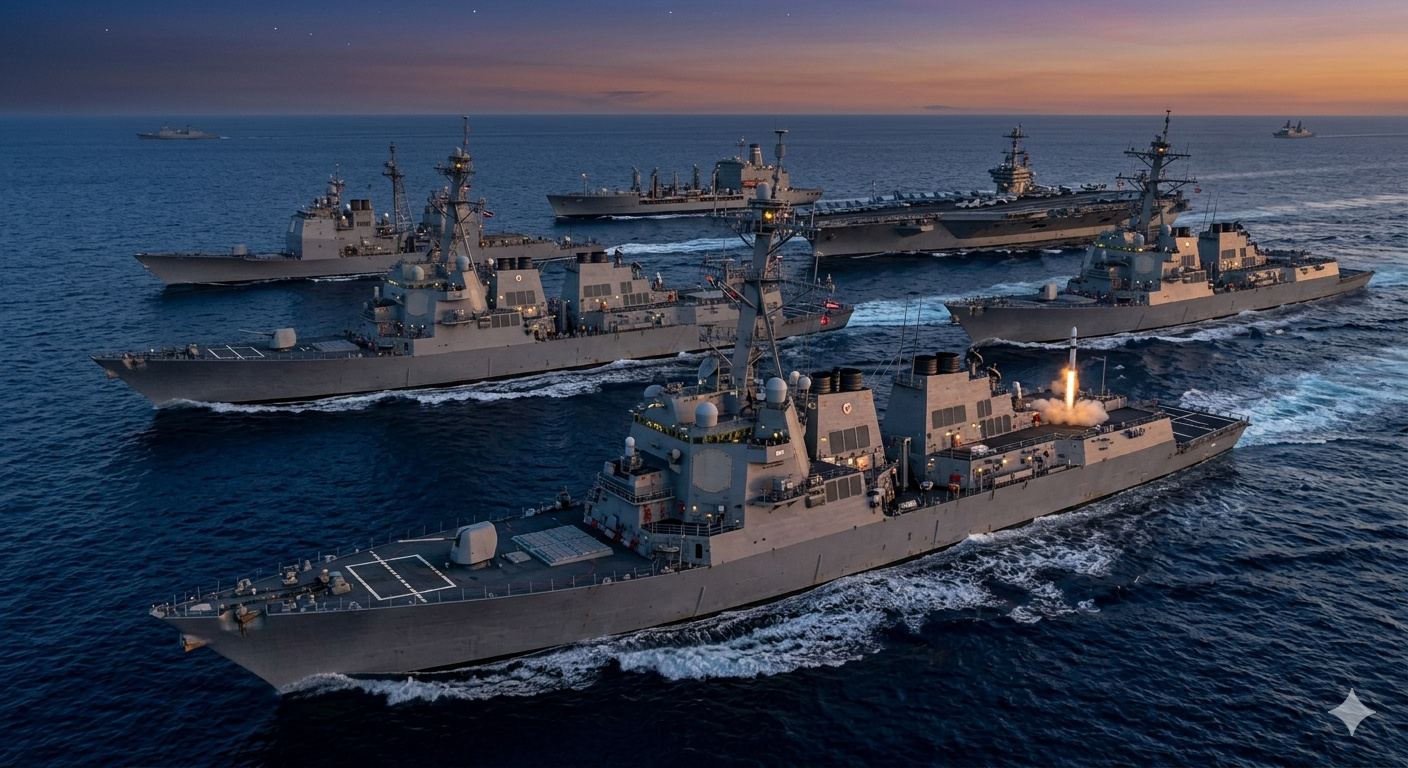
With over 15,000 tons, radars capable of tracking hundreds of targets simultaneously, and more than 120 missiles ready for launch in seconds, modern destroyers cease to be escorts and begin to dominate the naval battlefield.

Western military analysts began classifying them as “battlecruisers”, since the traditional categories of cruisers and destroyers do not adequately describe the size and capability of these vessels.
By comparison, the Arleigh Burke, the most numerous destroyer in the United States Navy, displaces about 9,700 tons. The Admiral Nakhimov is nearly three times that weight.
Nuclear Propulsion Allows Almost Unlimited Operation at Sea
One of the most impressive features of the Admiral Nakhimov is its nuclear propulsion system. The ship uses two nuclear reactors of approximately 150 megawatts each, capable of generating power equivalent to the electricity consumption of a city with about 150,000 inhabitants.
Thanks to this propulsion, the cruiser can remain at sea for extremely long periods without needing to refuel. In practice, the operational limit is no longer energy autonomy but instead depends solely on logistical factors such as crew provisions and maintenance cycles.
This characteristic makes the ships of the Kirov class some of the surface vessels with the highest strategic autonomy ever built.
The Soviet Origin of the Admiral Nakhimov
The Admiral Nakhimov was built at the historic Baltic Shipyard in Leningrad — now St. Petersburg. The ship was launched in 1986 and officially joined the Soviet Navy in 1988, initially named Kalinin, in honor of an important political leader of the Soviet Union.
With the fall of the Soviet Union in 1991, the vessel was renamed Admiral Nakhimov, in honor of Admiral Pavel Nakhimov, a naval hero of the Crimean War in the 19th century.
During the final years of the Soviet era, the cruiser operated on missions in the Arctic and the Mediterranean, representing one of the main symbols of Soviet naval power.
The Russian Economic Crisis in the 1990s and the Abandonment of the Ship
After the collapse of the Soviet Union, Russia entered a deep economic crisis during the 1990s. Maintaining a fleet of large nuclear-powered ships became extremely expensive for the new Russian government. As a result, many military projects were suspended or drastically reduced.
In July 1997, the Admiral Nakhimov conducted its last independent cruise.
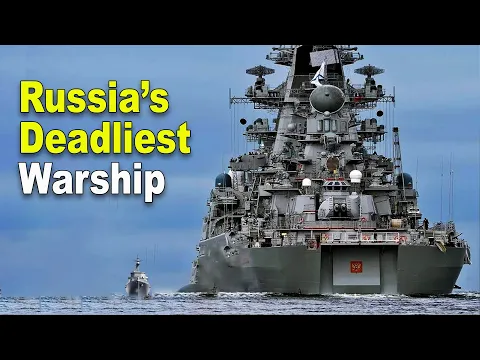
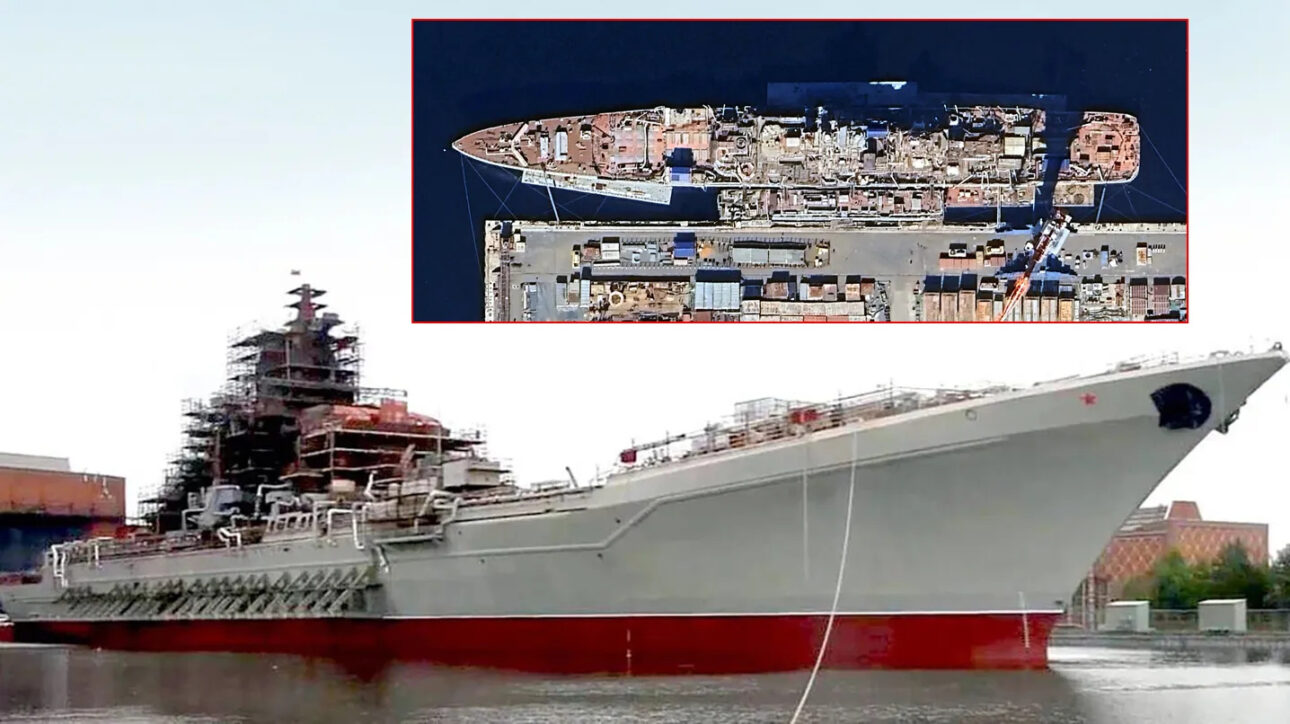
Two years later, in 1999, the ship was towed to the Sevmash shipyard in Severodvinsk for a planned modernization. The renovation was expected to last a few years. However, the ship would remain there for over two decades.
The Nuclear Cruiser Lay Idle in the Shipyard for More Than 25 Years
While the Admiral Nakhimov remained idle in the shipyard, Russia debated what to do with the vessel.
Scrapping the ship was politically sensitive since it represented one of the symbols of Soviet naval capability. At the same time, modernizing a nuclear cruiser of that scale required gigantic investments.
In 2006, the Russian government made the official decision to modernize the ship. However, financial resources began to arrive consistently only in 2013, when Sevmash signed a formal contract with the Russian Ministry of Defense.
Since then, delivery forecasts were successively delayed. The original schedule aimed for completion in 2018. Then it was pushed to 2021, later to 2023, then 2024, and finally 2025.
During this period, Ukrainian analysts began referring to the project as “floating scrap worth 200 billion rubles”, criticizing the cost of modernization amid military tensions with Ukraine. Despite the criticism, the Russian Navy decided to continue the program.
The Modernized Admiral Nakhimov That Returned to the Sea in 2025
The ship that left the shipyard in 2025 is very different from the cruiser that went in for renovation at the end of the 1990s. Much of the original armament was replaced with more modern systems.
The old 20 P-700 Granit anti-ship missiles, developed in the 1980s, were removed. In their place, 80 vertical launch cells of the universal UKSK 3S14 system were installed, the same used in the modern Russian frigates of the Admiral Gorshkov class.
These cells can launch different types of missiles, including the Kalibr, used for long-range attacks against land targets, the Oniks, a supersonic anti-ship missile, and the Zircon, considered a next-generation hypersonic missile.
Hypersonic Zircon Missiles Increase the Cruiser’s Offensive Power
Among the armaments installed on the Admiral Nakhimov, the strong>Zircon missile is considered the most strategically relevant. This hypersonic missile can reach speeds close to Mach 8 and has an estimated range of about 1,000 kilometers.
American military analysts claim that, due to its speed and flight profile, intercepting this type of missile with conventional air defense systems continues to pose a significant technological challenge.
The presence of this armament transforms the cruiser into a long-range strike platform capable of hitting naval or land targets at great distances.
Air Defense System Based on the S-400 and Pantsir-M
In addition to offensive armaments, the Admiral Nakhimov has received a modern set of defense systems. Among them is a naval version of the S-400, the Russian air defense system used on land to protect strategic areas such as Moscow.
The ship also received the Pantsir-M system, designed to intercept cruise missiles, drones, and aircraft in the final approach. For anti-submarine combat, the cruiser is equipped with the Paket-NK complex, while the old double cannon AK-130 has been replaced with the AK-192M, a more modern version of the same 130mm caliber.
The Number That Defines the Firepower of the Admiral Nakhimov
The most impressive detail of the ship’s modernization is the total number of vertical launch cells installed. Combining attack and air defense systems, the cruiser features around 174 vertical launch cells.
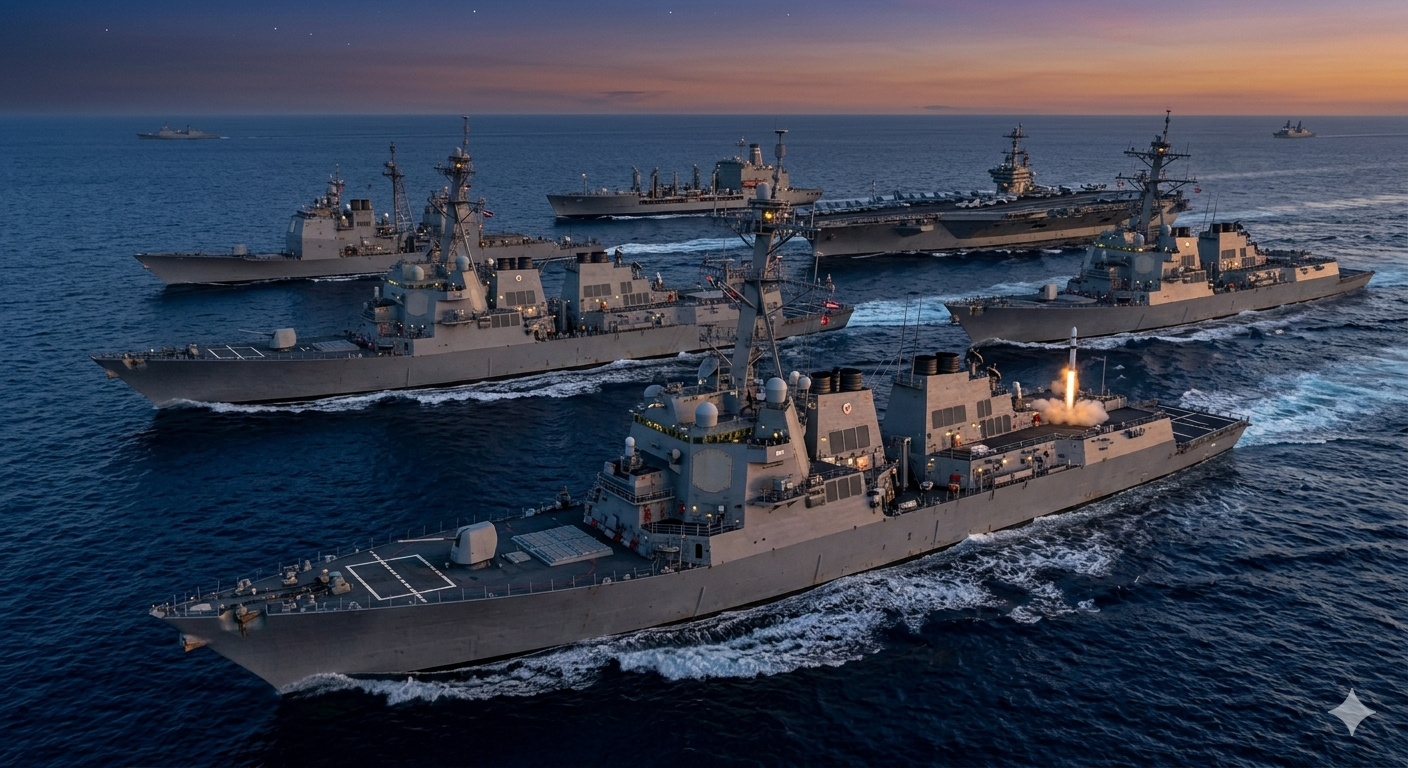
By comparison, the Chinese destroyer Type 055, considered one of the most advanced ships in the world in its class, has 112 cells. The American destroyer Arleigh Burke has between 90 and 96 cells, while the American cruiser Ticonderoga, which is being gradually retired, has about 122 cells. In this aspect, the Admiral Nakhimov exceeds all of them in missile-launching capacity.
The Cost of Modernizing the Nuclear Cruiser
Estimates from Western analysts suggest that the total cost of modernizing the Admiral Nakhimov may have ranged between 4 and 5 billion dollars. This amount exceeds the original cost of building the ship when adjusted for inflation.
A significant portion of this cost was due to the sanctions imposed on Russia following the annexation of Crimea in 2014, which limited the country’s access to Western electronic components and forced the Russian industry to develop domestic substitutes.
The project ultimately took about 11 years of actual work in the shipyard, with delays caused by contract renegotiations, changes in the scope of modernization, and budget constraints related to the conflict in Ukraine.
The Future of the Pyotr Velikiy Cruiser
With the return of the Admiral Nakhimov, the future of the other large cruiser of the Kirov class, the Pyotr Velikiy (“Peter the Great”), has become uncertain.

Of the four ships originally built in this class, two have already been dismantled: the Admiral Ushakov and the Admiral Lazarev. The Pyotr Velikiy still operates as the flagship of the Northern Fleet, but it uses military systems based on 1990s Soviet technology.
With the modernized Nakhimov, analysts believe that the Pyotr Velikiy may be decommissioned, as Russia may unlikely have the budget to maintain two nuclear cruisers of this size simultaneously.
The Strategic Role of Admiral Nakhimov in the 21st Century
The return of the Admiral Nakhimov reignited a debate among military analysts regarding the role of giant ships in the 21st century. On one hand, the cruiser possesses enormous firepower, nearly unlimited autonomy, and the capability to launch long-range missiles over great distances.
On the other hand, recent conflicts have demonstrated that large surface ships can be vulnerable to modern attacks. A frequently cited example is the cruiser Moskva, sunk in April 2022 by Ukrainian Neptune missiles during the war in the Black Sea.
In light of this scenario, many analysts believe that the Admiral Nakhimov will primarily be used as a long-range missile launch platform, operating well away from direct combat zones.
The Return of a Cold War Giant
Admiral Pavel Nakhimov, after whom the ship is named, became famous for destroying the Ottoman fleet in the Battle of Sinope in 1853, using artillery with a longer range than his adversaries expected. The nuclear cruiser bearing his name follows the same strategic principle: strike the enemy at long range before they can respond.
Whether this naval logic, inherited from the 19th century, will remain valid in the technological and military environment of the 21st century is something that only the upcoming years of the Admiral Nakhimov‘s operation can answer.








-

-

-

-

-

-

136 pessoas reagiram a isso.