Portuguese
  Spanish


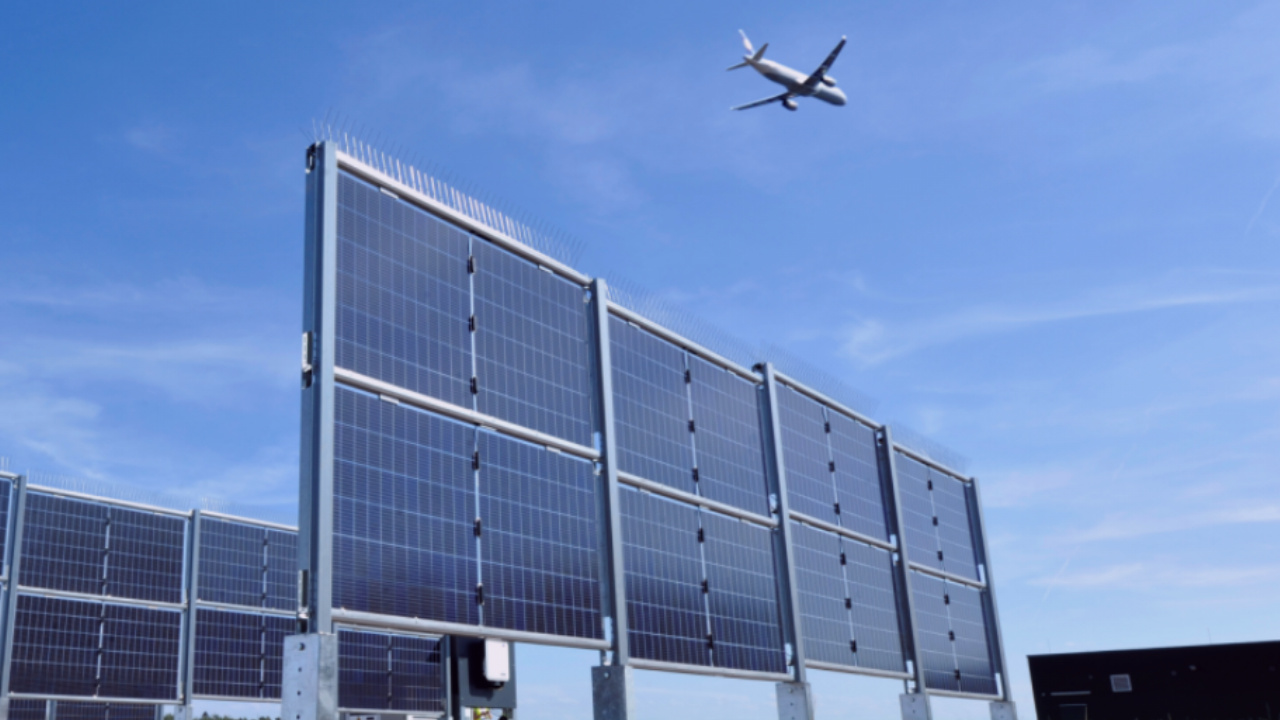

The Frankfurt Airport Inaugurated a Vertical Solar Plant with 37 Thousand Modules and Capacity to Generate 17.4 Million kWh Per Year. The Pioneering Project in Germany Strengthens the Goal of Operating with Zero Greenhouse Gas Emissions by 2045.
The Frankfurt Airport, one of the busiest in Europe, has just inaugurated an innovative vertical solar plant in its structure. The installation, with 37 thousand modules and 2,800 meters in length, marks a decisive step towards climate neutrality. The expectation is that the system will generate up to 17.4 million kilowatt-hours of electricity per year, all intended for the internal consumption of the airport complex.
The generated energy will supply not only the airport’s operations but also the fleet of electric vehicles and the air conditioning systems of the terminals. This way, the project reinforces the energy transition and the commitment of the Fraport group to the sustainable future of air transport.
Vertical Solar Plant Stands Out for Efficiency and Environmental Respect
According to Fraport, the vertical solar plant utilizes an innovative design: modules installed in a vertical position, facing east and west. This design ensures continuous solar capture throughout the day, taking advantage of both morning and afternoon sunlight, which reduces fluctuations in energy supply.
-
World’s Largest Engie Solar Plant in Brazil Highlights Billion-Dollar Energy Waste Issue: Company Considers Batteries and Bitcoin Mining to Avoid Wasting Production

-
Over 60 Tractors Take to the Streets in Lopera as Solar Parks Compete with Olive Groves, Affecting 13,000 to 100,000 Trees According to Conflicting Reports

-
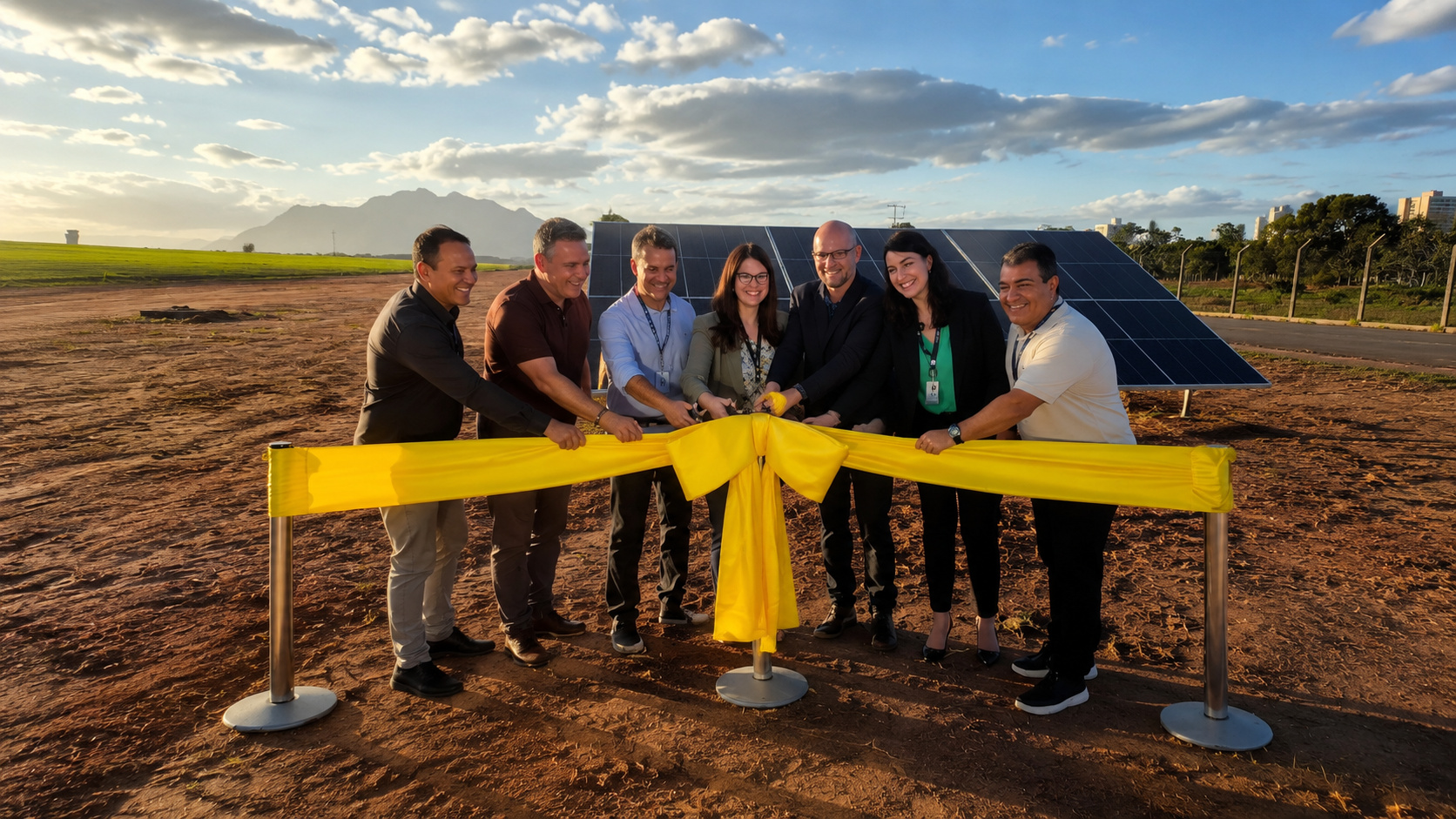
Brazil’s Vitória Airport to Launch Solar Plant Covering Area of 10 Soccer Fields, Boosting Clean Energy and Cutting Costs
-
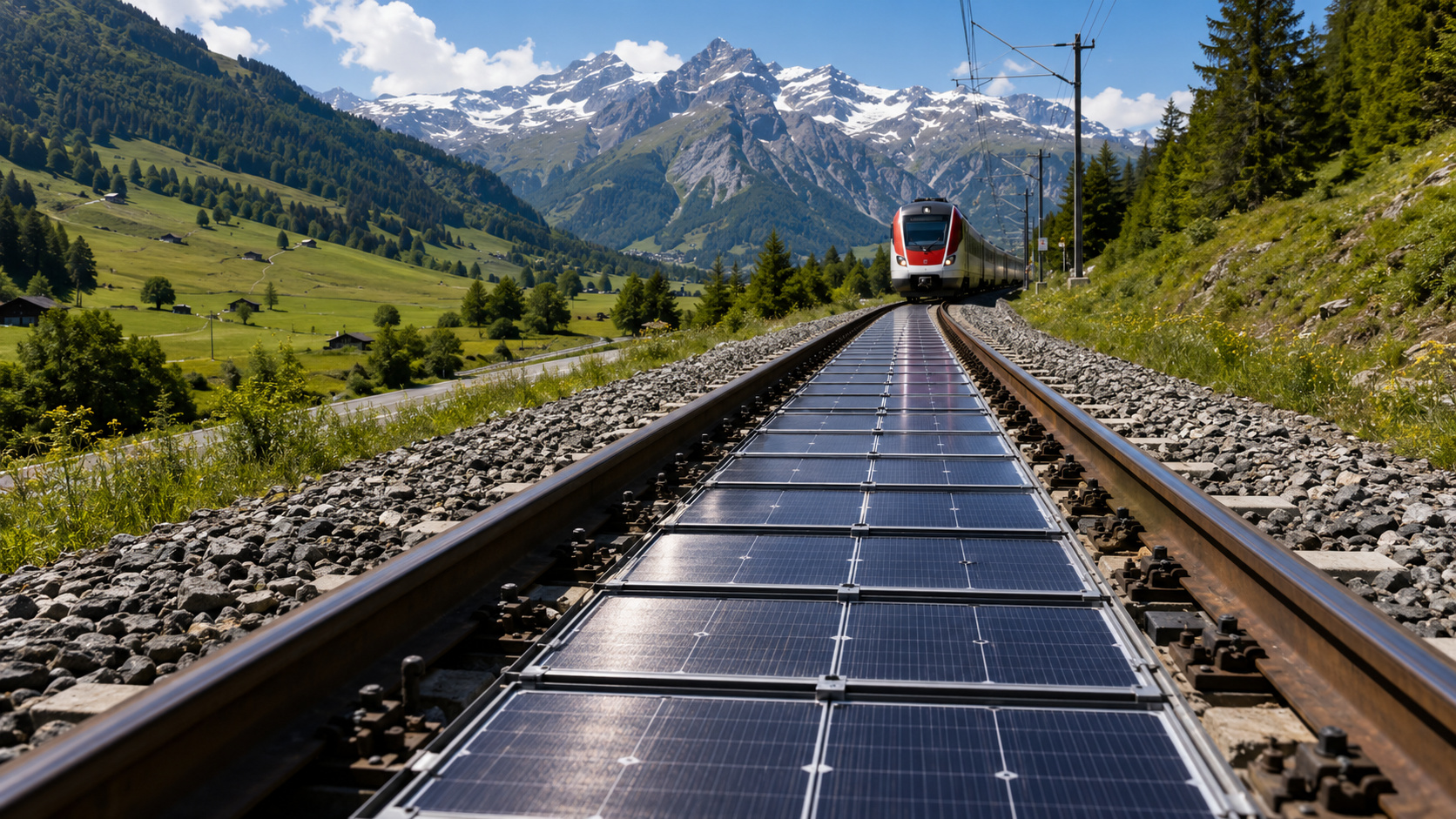
Switzerland Converts Train Tracks into Solar Power Plants with Removable Panels to Generate Energy Without Using Additional Land


Moreover, the vertical layout allows the local vegetation to grow freely under the panels, as sunlight and rain are not blocked. “These advantages make photovoltaic fences attractive not only for our airport but also for public space,” explained Fraport’s president, Dr. Stefan Schulte.
Planned Expansion and Integration with Other Solar Plants at the Airport
The new solar plant adds to the existing photovoltaic installations on the airport roofs and in the parking lots. Other units will still be installed in the new Terminal 3, strengthening the renewable energy matrix of the complex.
According to the operator, the vertical model complements traditional plants, which reach peak generation at noon. Combined, the two technologies provide more stable and efficient solar supply throughout the day.
During the inauguration ceremony, the Minister of Economy, Energy, and Transport of the state of Hessen, Kaweh Mansoori, highlighted the positive impact of the project: “Frankfurt Airport is Hessen’s gateway to the world and an important employer in the region. Today’s inauguration is a milestone for sustainable energy supply and a commitment to innovation and progress.”
Ambitious Goal: Neutralize Emissions by 2045
Fraport’s goal is to operate Frankfurt Airport with Net Zero status by 2045, meaning completely eliminating greenhouse gas emissions, not just CO₂.
“By, at the latest, 2045, Fraport will operate Frankfurt Airport with Net Zero status, meaning neutral in greenhouse gases and free of CO₂. The central factor for this is clear: our power matrix will be largely composed of renewable energies,” Schulte stated.
He also noted that the group has already been utilizing wind energy quotas since 2021, achieving about 90% renewable energy overall. Starting in 2026, the power purchase agreement (PPA) with EnBW will come into effect, guaranteeing 85 megawatts of green electricity — enough to cover 100% of the airport’s demand.
Project Reinforces Germany’s Leadership in Energy Transition
The development of the vertical solar plant began in 2022, following successful tests, and its expansion will start in the spring of 2024. During the process, strict environmental criteria were considered, respecting the breeding periods of wildlife and preserving the green areas near the runways.
The installation is seen as a showcase of energy innovation. “In recent months, many representatives of the regional government, urban planners, and colleagues from international airports have been able to see this up close. Within the Frankfurt runway system, there are still several possibilities for expansion that we are already studying,” revealed Schulte.
The broad international attention received by the technology confirms Germany’s leadership in utilizing sustainable solutions for large infrastructures. “Today’s operational launch is a milestone towards our Net Zero climate goal,” emphasized Fraport’s president.
Meanwhile, Mansoori reinforced the support of the local government: “As the main shareholder of Fraport AG, the government of Hessen fully supports the group’s sustainability strategy,” he stated.