





 Portuguese
  English
  Spanish
  5 min of reading
  0 comments


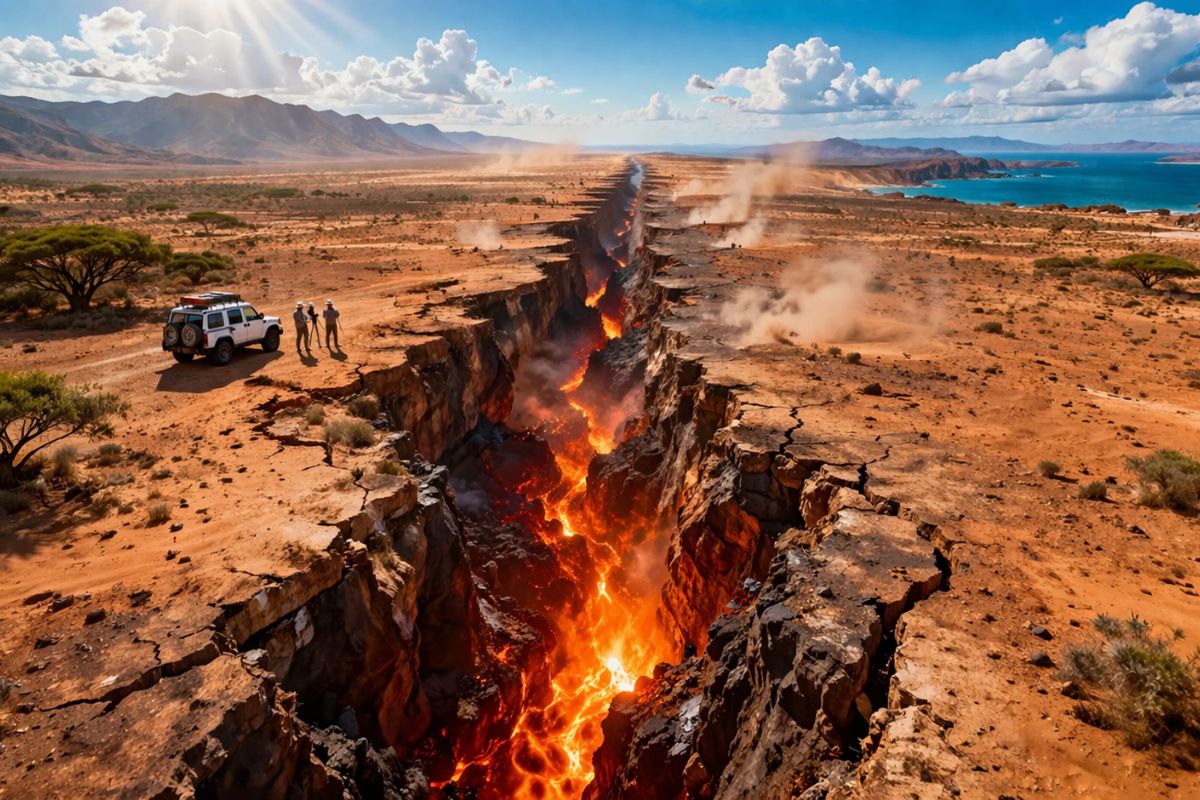
The crack in Ethiopia reveals rising magma, changing crust, and signs of a new ocean in an extreme region of Africa.
The crack that cuts through northeastern Ethiopia is not just an impressive fissure in the ground. It reveals an ongoing geological process, with magma rising from below, the crust changing in composition, and signs that a new ocean may be born in one of the planet’s most hostile regions.
The scene seems fictional, but it occurs in a real, extreme area monitored by scientists. In the Afar Triangle, where the heat is brutal, rainfall is scarce, and parts of the land lie below sea level, the African continent already shows visible effects of a tectonic separation that could forever change the map of the region.
The crack gained special attention after a 60 km segment of crust opened up at once, with up to 6 meters of opening at the surface. The ground sank, fissures multiplied, and geologists found evidence that the process is not restricted to the surface, as magma has also advanced beneath the crust.
-
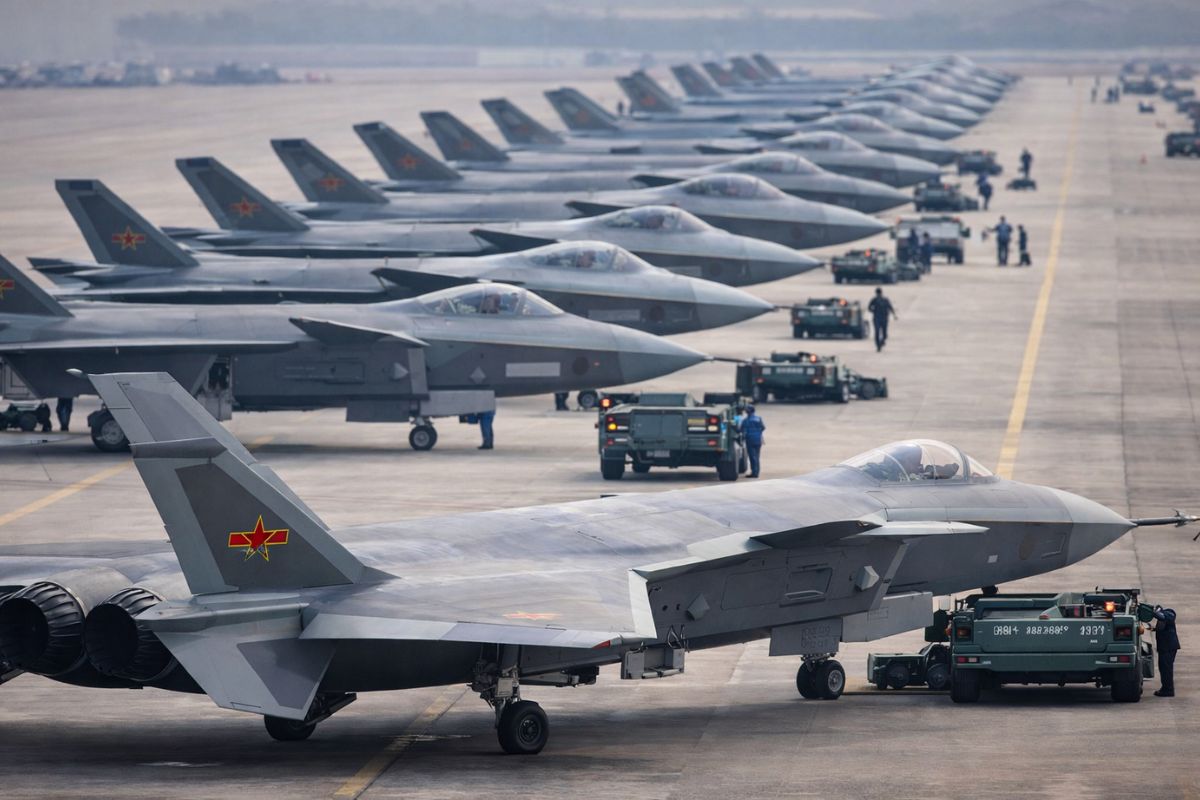
The United States has a serious problem with its F-35s: China is already producing fighters at a pace that exceeds American capacity and could manufacture up to 300 aircraft per year before the end of the decade, shifting the global military balance.
-
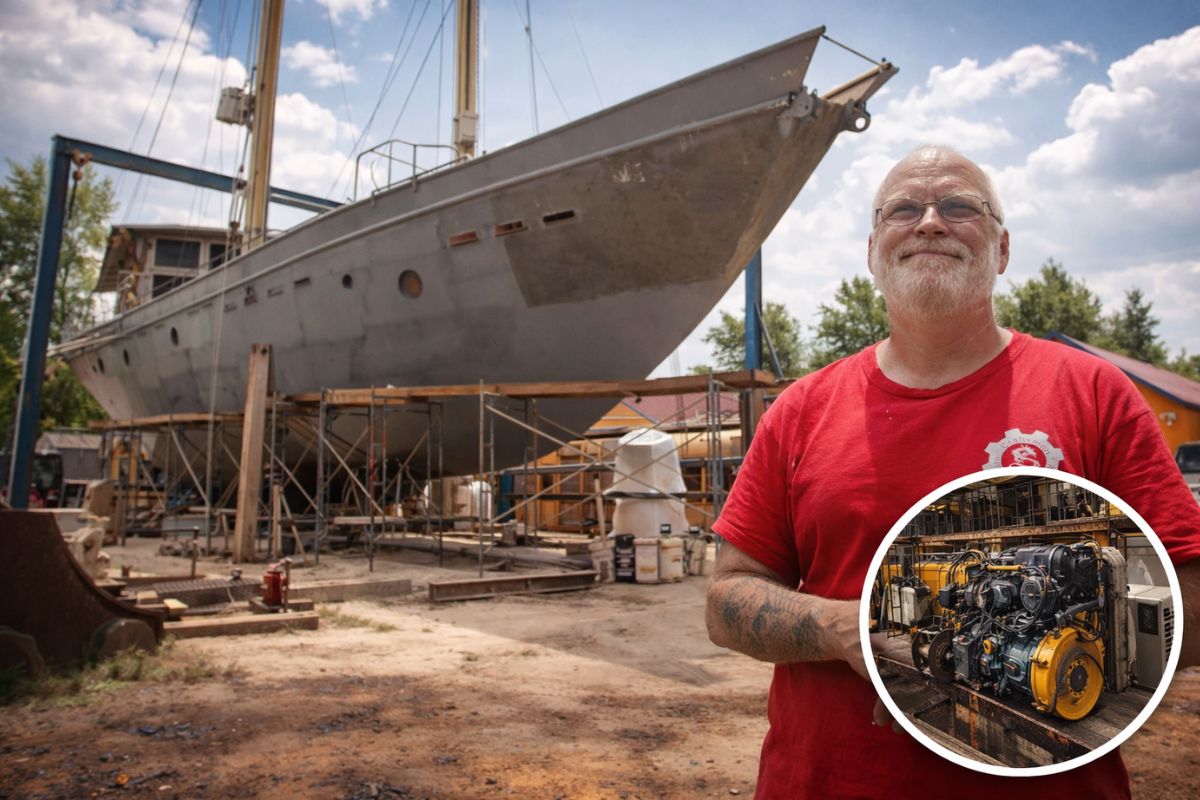
A retired IT professional built a 22-meter boat in his backyard in Oklahoma with a school bus engine, light pole masts, and handmade watertight doors to become the redneck version of Jacques Cousteau.
-
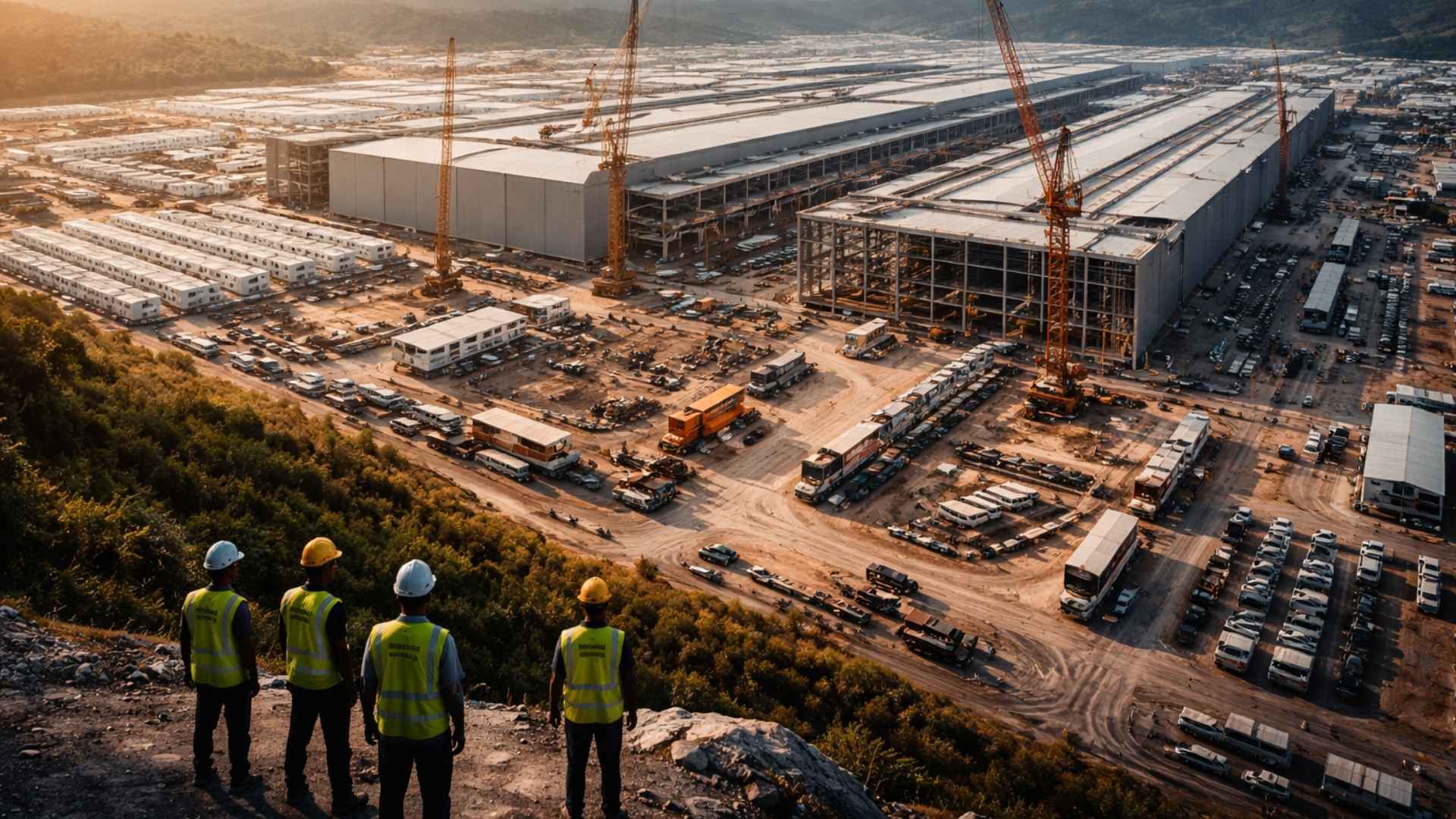
China is building a city in Brazil: a complex with an investment of R$ 5.5 billion comes to light, but allegations involving workers draw attention.
-
While Argentina buys old war equipment, Brazil is keeping an eye open and joins the select group of nations with advanced military technology by investing $5.2 billion, producing 36 Gripen fighters in the country, and reducing operational costs.

What makes this story so impactful is the context. This is not a distant hypothesis or a theoretical simulation, but a phenomenon that is already altering the terrain in real time in a desert area of Ethiopia.
Where the crack is opening Africa
The crack is located in the Afar Triangle, a region compressed between Ethiopia, Eritrea, and Djibouti, in the so-called Horn of Africa. There, three tectonic plates are moving apart simultaneously: the Arabian, Somali, and Nubian plates.
This configuration creates a triple junction, a point where the crust is stretched in different directions. It is precisely this simultaneous pressure that makes Afar one of the most unstable and fascinating places on the planet. According to the base, this separation is stable and tends to continue.
The event that changed scientists’ perceptions
The advance of the crack gained dramatic acceleration in September 2005, when the Dabbahu volcano erupted. What came next impressed even experts accustomed to studying continental rifts.
From the magma chamber beneath the volcano, a basaltic magma dike spread southward and opened the crust as if someone were pulling a zipper in the desert floor.
In less than 10 days, the region recorded a rupture of rare scale, visible, measurable, and documented, something that contradicted the idea that this type of opening would only occur in small, slow episodes.
Magma rises and transforms the crust from below
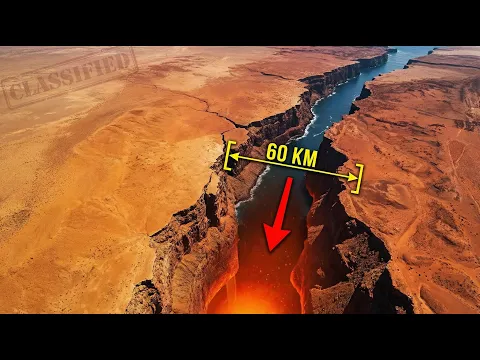

The crack is impressive on the surface, but the most decisive point is underground. Between about 2 and 9 kilometers below the surface, the magma dike has reached great width and pushed huge volumes of molten rock into the crust.
This detail completely changes the interpretation of the phenomenon. It is not just the ground splitting, but a deep system reshaping the very geological composition of the region.
Where continental crust once predominated, the process is already beginning to produce features closer to a future ocean floor.
Why a new ocean may be born there
The idea of a new sea emerging in East Africa seems exaggerated, but the base shows that this mechanism has happened before in the planet’s history. This is how other major continental separations helped form oceans.
In the Afar region, the crack is seen as part of this same mechanism. With each intrusion of magma, the crust thins further. With each eruptive episode, more basaltic material replaces typical continental structures.
If this process continues over millions of years, water could invade the depression and consolidate a new ocean.
An extreme desert at the center of transformation
The force of history increases because everything happens in a brutal environment. The Danakil depression, in northern Afar, combines extreme heat, water scarcity, and landscapes that seem from another planet. In some places, the ground exceeds 60 degrees.
In this scenario, the crack does not cut through just any region, but one of the most hostile environments on Earth. The Afar people, who have lived in this territory for generations, coexist with extreme salinity, volcanic activity, and a transforming terrain. It is the meeting between raw geology and human survival at the limit.
Erta Ale and Dallol show that the system remains active
The activity in the region is not limited to the main crack. In Afar, there is also Erta Ale, a volcano with a permanent lava lake, and Dallol, an area marked by superheated springs, high acidity, and extreme mineral landscapes.
These elements reinforce that the underground remains active and energized. The magma is not a secondary detail in this story, but a central part of the engine that stretches, weakens, and reorganizes the crust. This is what makes Ethiopia a natural laboratory to observe the birth of a new geological configuration.
The process is slow on a human scale, but real on a planetary scale
The crack will not create an ocean overnight. The transformation occurs on a geological scale, over millions of years. Still, the data gathered at the base indicates that the region is already undergoing concrete and cumulative changes.
This contrast is what impresses the most. To a person, everything seems almost motionless. To the Earth, however, the continent is already being redrawn before the eyes of science.
The ground continues to open, the magma continues to rise, and the natural barrier that currently prevents the sea from entering is not likely to hold forever.
The Africa of the future may not have the same shape
The crack in Ethiopia summarizes an uncomfortable and fascinating truth: continents are not permanent. They break apart, drift apart, and change shape, even if this escapes the time of human life.
Today, what exists there is an extreme desert, crossed by fissures, volcanoes, and salt. In geological tomorrow, this same space may be occupied by saltwater, ocean currents, and a new arm of the sea. The Africa we know still seems whole, but in Afar the planet has already begun to write another version of the map.
Do you believe that seeing a crack like this emerging in the middle of the desert changes the way we perceive the real force of the planet?





Seja o primeiro a reagir!