





 Portuguese
  English
  Spanish
  3 min of reading
  0 comments


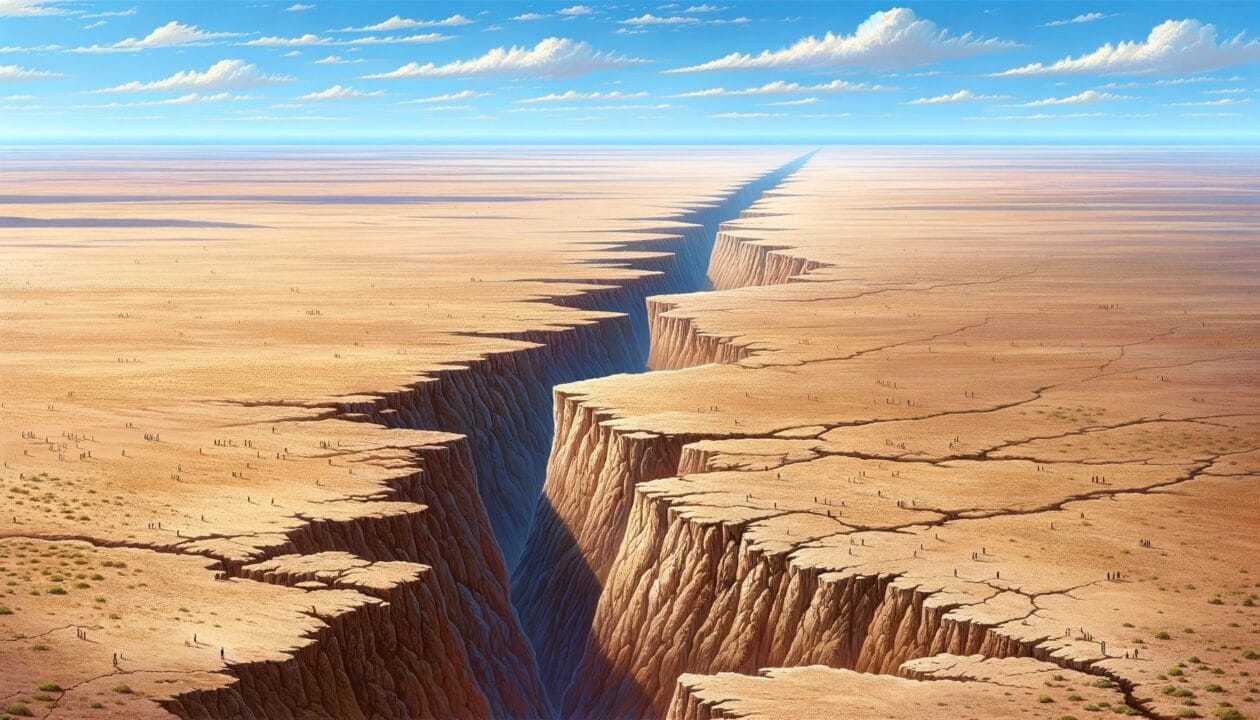
A Rift Is Opening in Africa and a New Ocean May Form in Millions of Years. A Crack Can Already Be Seen With the Naked Eye as Geologists Have Been Studying It Since the 1980s.
A large rift is slowly dividing the African continent, and scientists predict that this will form a new ocean, but only many years from now. In 2018, the lands of Kenya were shaken by a Homeric geological event. An enormous rift of 56 km formed, encompassing a highway that connects Nairobi to Narok.
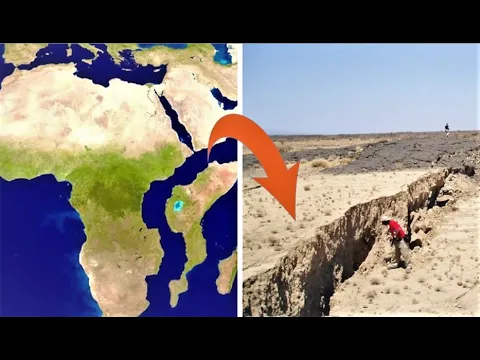

The rift in Africa that may form a new ocean continues to widen every day, and scientists believe it will not stop anytime soon. This phenomenon, known as the East Africa Rift, has opened the door for scientists to make incredible discoveries: a potential new ocean and the division of the continent into two.
Such phenomena, despite being super slow and gradual compared to human life, are essential for the development of the planet, and it is through such fissures that the Earth has been shaped over time. This influences climate, topography, and even the evolution on planet Earth.
-
Researchers in the U.S. have created a flying robot that transforms into a land vehicle while still in the air. The technology, based on aerodynamic transition, converts landing into a scene worthy of Transformers and redefines mobility between sky and ground.

-
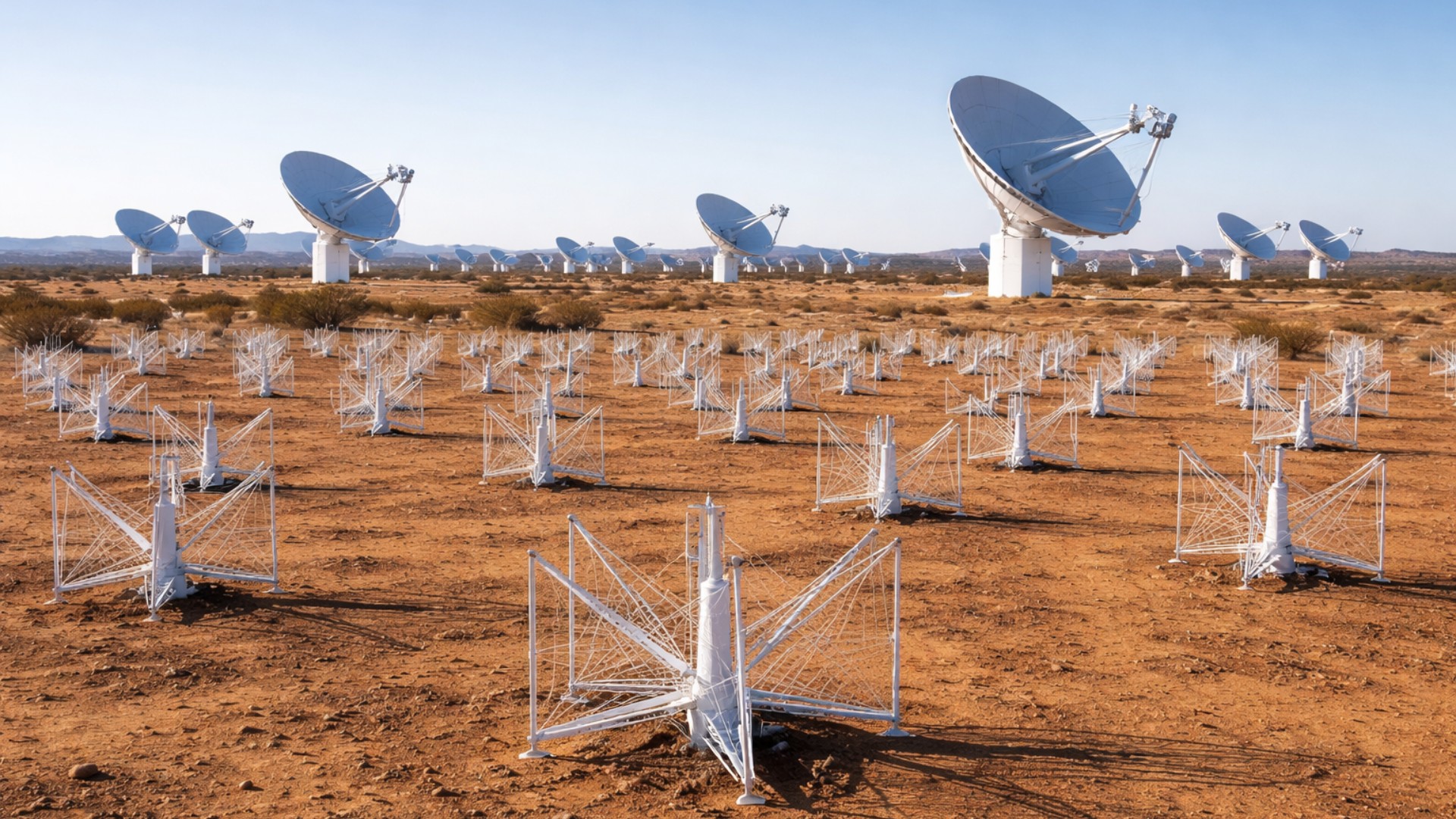
Spread across two continents, with 197 parabolic antennas in South Africa, 131,000 2-meter antennas in Australia, and a range of up to 150 km, the SKA begins to “listen” to the Universe on an unprecedented scale and accelerates the search for black holes, primitive galaxies, and nearly invisible radio signals.
-
Goodbye batteries: a new sensor created by Japanese scientists uses sweat as an energy source and points to a promising path for more sustainable devices, with greater autonomy and less need for frequent recharging.

-
The Brazilian Army inaugurated the assembly line for the Guaicurus armored vehicle with a contract for 420 units by 2033, and the same vehicle has already been tested in combat in Afghanistan and Lebanon by European armies.


Rift in Africa Already Extends About 3,000 km
The rift that could generate a new ocean already extends about 3,000 km from the Gulf of Aden to Zimbabwe, currently. Since 2018, an article from the Geological Society warned about the division of the continent into two, which would create a new ocean on Earth. There are other researchers who agree, as seen in a study published in the Daily Mail.
In this publication, in HAL Open Science, the team responsible analyzes the evolution of the rift and also calculates potential consequences. Furthermore, they relate the role of magma and plate movement to the rift’s expansion in Africa. However, this process could take tens of millions of years. The fact is that humanity may not even be on the planet when the new ocean emerges.
Displacement in Africa Can Now Be Seen With the Naked Eye
According to Dr. Edwin Dindi, a geologist and professor in the geology department at the University of Nairobi, the separation is generated by movements caused by the friction of tectonic plates, a movement that marks the region known as the Great Rift Valley or rift valley.
According to the professor, in an interview with the African newspaper The New Times in February of last year, the plates are in a flow of movement, some moving against each other along the fault zones, and there is also movement that causes more faults to form.
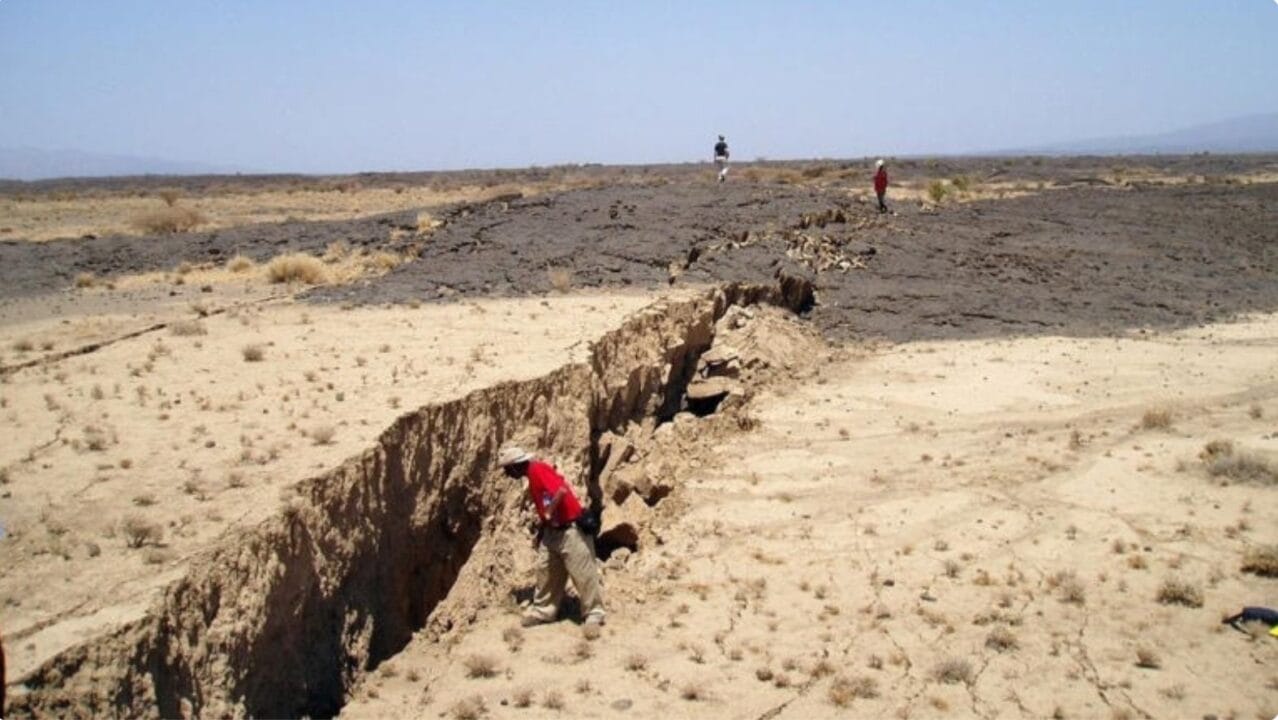
The process of separation is observed in greater detail in what geographers call East Africa, a region formed by the countries of Ethiopia, Uganda, Kenya, and Tanzania. With the naked eye, it is already possible to observe the displacement of a small part of Africa, referred to by experts as the Somali Plate, from the part that corresponds to a larger expanse.
The visible opening in the ground and the separation of the continent itself are caused by a rise of magma jets from the Earth’s interior, which create a thinning of the crust until it ruptures and forms a new ocean.
Geologist Warns of New Ocean Since the Late 1980s
Geoscientist Cynthia Ebinger has been attentive to the subject since the late 1980s. In 1998, she published her most impactful article in the scientific community in Nature, cited over 900 times by her peers: Cenozoic Magmatism Throughout East Africa Resulting from Impact of a Single Plume.
In the study, she analyzed the action of magma on the Ethiopian plateau with a model that can be expanded to the volcanic action across East Africa, which has been occurring for 45 million years.
https://www.nature.com/articles/27417







Seja o primeiro a reagir!