





 Portuguese
  English
  Spanish
  6 min of reading
  0 comments


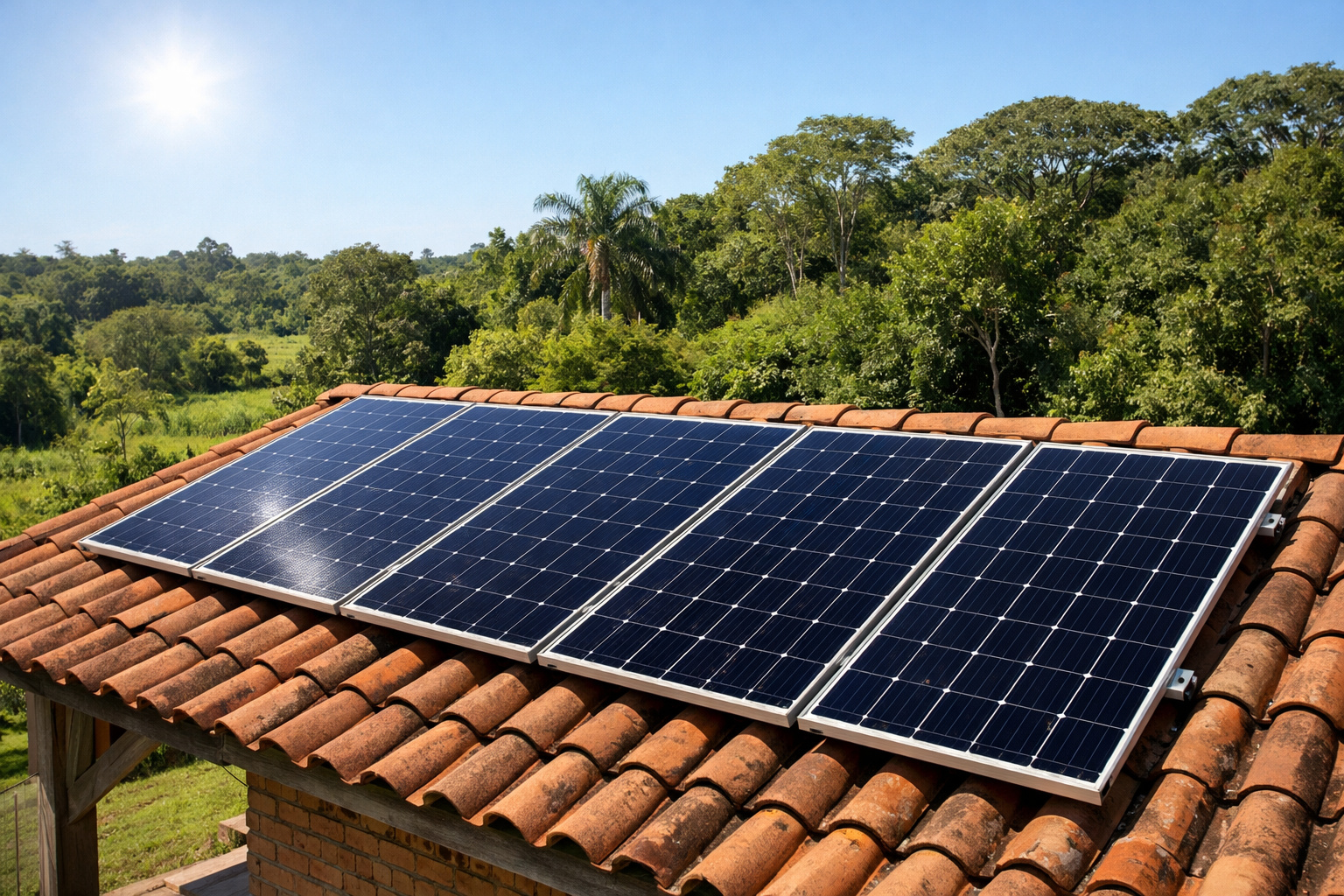
A journey that began with the search for meaning and led to energy autonomy in the field, showing that it is possible to reduce costs, generate your own electricity, and rethink consumption
First of all, it is important to understand that this story goes far beyond a simple solar energy system on the property. It is, in fact, a complete life change. After all, it all started when two young men, Luciano and Gustavo, decided to leave behind a promising career in environmental engineering and embark on a journey across Brazil by bicycle.
The information was shared by “Expanding Worlds”, a project that shares agroecological experiences and sustainable practices in rural areas, demonstrating, in practice, how to live more consciously on a planet increasingly pressured by consumption.
Throughout this journey, they encountered various ways to live with more autonomy. Thus, when they finally arrived at the property, they already had a clear goal: to test real solutions for a simpler and more sustainable life — and solar energy became a key piece in this process.
-
A 10-year-old girl is attending both elementary school and college at the same time in the United States, and the school principal says she never imagined something like this was possible.

-
According to specialists, after the age of 60, elderly individuals can indeed take creatine every day, but the decision depends on little-known factors that can completely change the effects.

-
A 63-year icon of Brazilian sports TV showcases a R$ 70 million mansion in Alphaville, featuring 5,000 m², seven floors, a squash court, a soccer field, a swimming pool, two wine cellars, and a leisure area that resembles a private resort.
-
Cradle of the Empire and the first beer in Brazil, a city from 1822 located at 800 meters above sea level with a mild climate, European-style streets, historic palaces, and walks that can be done entirely on foot.
How the solar energy system on the property works and why it was chosen

First and foremost, it is essential to highlight that the solar energy system on the property was not installed just to “check off a sustainable checklist.” On the contrary, the decision arose from the real need to test, in practice, new ways to generate energy and reduce dependence on utility companies.
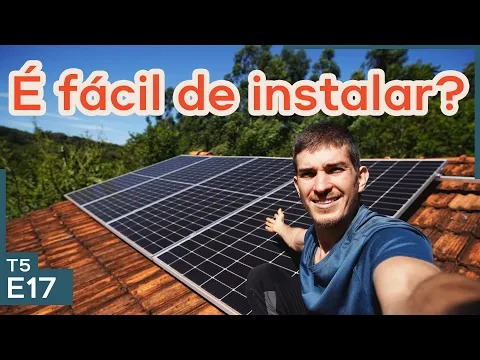
In this sense, the project was designed to be efficient, accessible within their reality, and, above all, functional for daily life in the field. The system consists of 4 solar panels approximately 2 meters by 1 meter, each with a power of 550 watts, which already represents a high level of generation compared to older models of 150W or 300W.
In other words, even with few panels, the system can deliver a significant energy output. This happens precisely because the panels used are more modern and efficient, allowing for optimized space and investment.
Additionally, another fundamental point is the use of the so-called micro inverter — a device installed just below the solar panels. In practice, this device serves to convert the energy generated by the panels, which comes in direct current, into alternating current, which is used in the house’s outlets.
Consequently, all the energy produced is ready to power the property’s equipment, such as the refrigerator, lighting, and other household appliances.
Another important differentiator is that each panel has an individual connection to the micro inverter. This way, it is possible to monitor the performance of each unit separately through a mobile app. This makes it easier, for example, to quickly identify any problems or drops in performance in a specific panel.
Meanwhile, the installation also took advantage of a strategic factor: the position of the roof. Since the property is in the Southern Hemisphere, the panels were directed to the north, with an inclination close to 20 degrees, which favors the capture of solar energy throughout the day.
On-grid system: how the connection to the electrical grid and energy accumulation works

In addition to the physical structure of the panels, another essential point to understand the functioning of the solar energy system on the property is the chosen model: the so-called on-grid.
In practice, this means that the system is connected to the utility company’s electrical grid. This detail makes all the difference, especially when we talk about cost and operation.
During the day, for example, the energy generated by the panels is used instantly within the house. In other words, if the refrigerator is on, it directly consumes the energy being produced at that moment.
On the other hand, when there is excess — that is, when production is greater than consumption — this energy is automatically sent to the electrical grid. And this is precisely where one of the most interesting points of the system comes in.
This excess is not wasted. On the contrary, it is accounted for by a bidirectional meter, installed by the utility company after the technical project approval. This equipment records both the energy that goes out and the energy that comes into the residence.
In practice, it works like a kind of “energy savings account.” During the day, the system generates credits. At night, when there is no solar generation, these credits are used to supply the house.
Additionally, these credits can be accumulated for a period of up to 5 years, which offers interesting flexibility for consumption over time.
Another relevant point is the system’s capacity. Currently, it has an installed average of 265 kWh per month, although, in practice, generation has varied between 230 and 240 kWh, due to factors such as tree shadows and weather conditions.
Even so, this number already exceeds the average consumption of the property, which ranges between 160 and 170 kWh monthly, occasionally reaching 200 kWh. In other words, there is an excess that opens up space for new uses — such as, for example, the installation of an electric food dehydrator.

Advantages, limitations, and the debate on the sustainability of solar energy
Despite all the benefits, it is important to highlight that the solar energy system on the property also raises important reflections. After all, although it is a cleaner alternative, it is not free from environmental impacts.
For example, the production of solar panels involves resource extraction, industrial processes, and transportation — often international. Additionally, there is the issue of disposal: the average lifespan of the panels is 25 years, and there are still few broad discussions about large-scale recycling.
Therefore, although solar energy is a promising solution, it also requires planning and long-term responsibility.
On the other hand, when compared to the traditional model of electricity generation, the system presents clear advantages. Among them, the following stand out:
- Significant reduction in the electricity bill
- Greater energy autonomy
- Low maintenance requirements
- Real-time monitoring via app
- Possibility of system expansion
However, there are also limitations. One of the main points is that, as it is an on-grid system, it depends on the electrical grid. In other words, in the event of a power outage, the system is automatically turned off for safety.
This means that, even producing energy, the house can be without electricity in certain situations — something that does not happen in off-grid systems with batteries, although these are significantly more expensive.
Another relevant factor is the initial cost. To make the installation feasible, it took approximately one year of savings, which highlights an important barrier for a large part of the population.
In this sense, an inevitable question arises: why is such an abundant technology in a country with high solar incidence still not widely accessible?
Solar energy as a possible path — but still challenging

Finally, the experience on the property shows that solar energy can indeed transform routines, reduce costs, and increase autonomy. However, it also makes it clear that there are still significant challenges, mainly related to access and the democratization of this technology.
Meanwhile, the system continues to operate and is monitored daily through an app, which shows in real time the energy generation, daily graphs, and even variations caused by clouds.
Thus, more than a financial investment, solar energy becomes a tool for learning and reflection on consumption, sustainability, and the future of energy production in Brazil.






Seja o primeiro a reagir!