





 Portuguese
  English
  Spanish
  5 min of reading
  0 comments



Billion-dollar auction repositions Galeão in the infrastructure market and puts the airport back in the center of Brazilian aviation, with contract changes, a new operator, and direct impact on the airline network of Rio de Janeiro.
The Spanish Aena won on March 30, 2026, the assisted sale auction of Rio de Janeiro International Airport, Galeão, with a bid of R$ 2.9 billion.
The amount was 210.88% above the minimum initial contribution set in the bidding notice, fixed at R$ 932 million, and guaranteed the company the right to take over the terminal’s concession until May 2039, within a renegotiation process designed to replace the relicitation that had been discussed for the asset.
Held at B3 in São Paulo, the auction brought together three competitors.
-
The Federal Revenue Service now automatically cross-references everything you declare with data from banks, credit cards, brokerage firms, and insurance companies, and any discrepancy between your income and your expenses triggers an alert in seconds.

-
Amid global tensions, Brazil blocks the United States’ proposal at the WTO and paves the way for a trade crisis and possible retaliations.

-
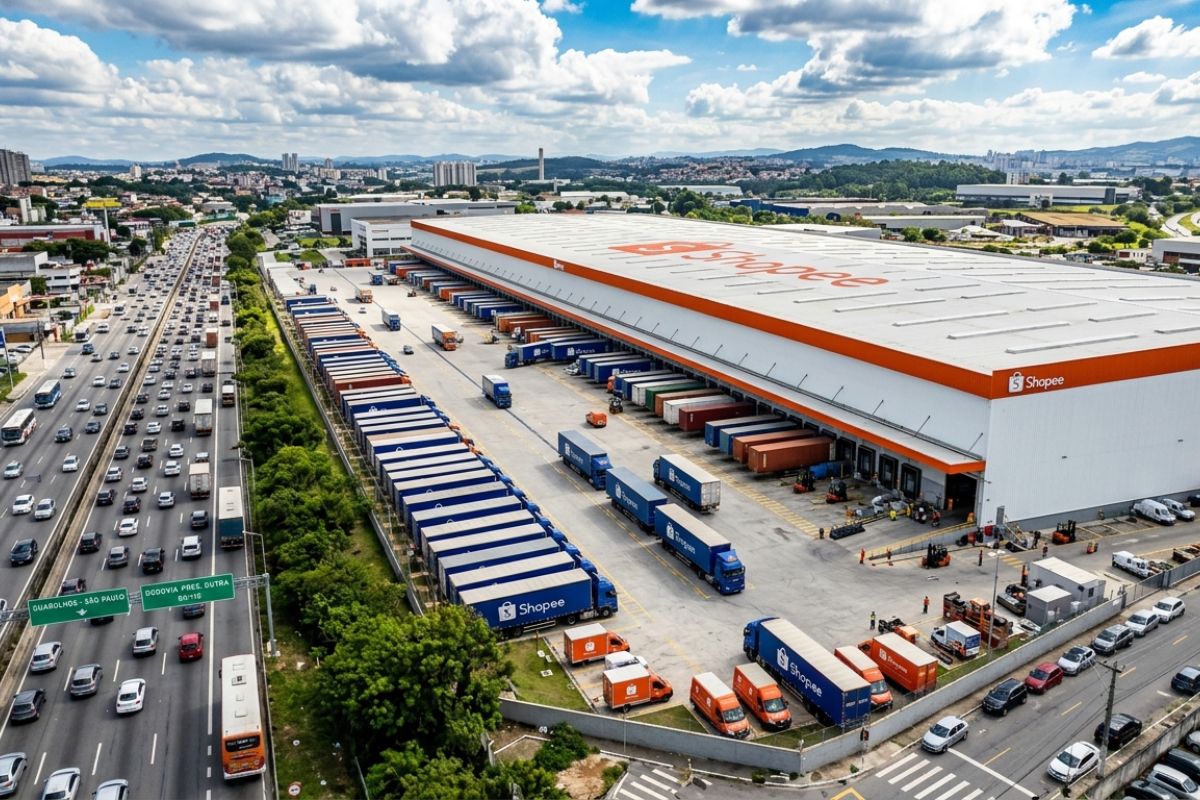
Shopee opens the largest logistics warehouse in Brazil in Guarulhos: 220,000 m² on Dutra, contract signed before construction, pays R$ 45/m² and accelerates deliveries at scale, putting pressure on Mercado Livre and Amazon.
-
After mistakenly transferring R$ 50,000 via Pix, a man will receive the amount back along with R$ 10,000 for moral damages from the recipient.


In addition to Aena, the contenders included Zurich Airport International and the current airport concessionaire, RIOgaleão, formed by the Brazilian group Vinci Compass and the Singapore operator Changi.
The session had dozens of live bids, reflecting the interest of the groups in the terminal.
The auction was structured by the Ministry of Ports and Airports and the National Civil Aviation Agency, with approval from the Federal Court of Accounts, within a model classified as assisted sale.
In this format, the contract is adjusted to allow the transfer of control of the concession to a new operator, without interruption of the airport’s management.
New concession of Galeão changes contract rules
Under the rules approved for the new contractual arrangement, the future concessionaire will have to pay the Union a variable contribution of 20% on gross annual revenue until the end of the contract.
The model replaces the previous logic of fixed payments and integrates the renegotiation negotiated to try to restore the economic balance of the concession.
The exit of Infraero from the airport’s corporate structure is also planned, ending the state’s 49% participation in the business.
This change is part of the contractual redesign approved for Galeão.
Among the changes included in the new modeling are the revision of commitments made by the concessionaire, the removal of the requirement to build a third runway, and the creation of mechanisms aimed at economic-financial rebalancing.
The contract also provides for compensations in case of operational restrictions at Santos Dumont Airport, a topic highlighted by the government as relevant for the predictability of demand in the airport system of Rio de Janeiro.
Although the auction result has already defined the winner, the effective transfer of the operation still depends on the formalization of the purchase of the concessionaire’s shares, obtaining regulatory approvals, and meeting the other conditions set forth in the process.
The expectation disclosed by Aena itself is that this stage will be completed in the second half of 2026.
Recovery of Galeão and redistribution of flights in Rio
Galeão enters this new phase after years of lost movement.
The terminal was affected by the reduction in traffic following major events held in the country, such as the 2014 World Cup and the 2016 Olympic Games, and then suffered the effects of the pandemic on demand for domestic and international flights.
This history helps explain the crisis of the original concession and the need to revisit the foundations of the contract.
Throughout this period, the airport lost market share in the domestic market and saw its traffic decline compared to the volume projected at the beginning of the concession.
In recent years, however, the scenario began to change.
The reorganization of the Rio de Janeiro airport system, with limits on the volume of operations at Santos Dumont, helped to return part of the lost traffic to Galeão and altered the distribution of flights among the city’s main terminals.
Official data presented by the government indicate that Santos Dumont and Galeão together handled 18.9 million passengers in 2023.
In 2025, this total reached 23.5 million, signaling a recovery in demand and redistribution of air traffic in Rio de Janeiro.
In the specific case of Galeão, Aena reported that the airport received 17.8 million passengers in 2025, of which 5.7 million were on international flights.
According to the company, the terminal was the third busiest in the country in total passenger volume and one of Brazil’s main air gateways to the outside world.
Aena expands operations in Brazil with Rio airport
With the victory in the auction, the Spanish company expands its presence in the country.
Before this operation, Aena already managed 17 airports in Brazil, including Congonhas, Recife, Maceió, João Pessoa, and Aracaju.
With Galeão, the company now totals 18 assets in the Brazilian market.
The operation also carries weight for the company’s strategy in the country.
A survey released by Reuters indicated that the deal places Aena in the position of the largest airport operator in Brazil in terms of passenger flow, with a share close to 28% of the market.
The same survey indicated that Galeão recorded Ebitda of nearly R$ 500 million in 2024, with a margin of 48%, and entered the process without outstanding debt.
These data help to gauge the interest shown by competitors in the auction.
Government sees new cycle for airport infrastructure
In the federal government, the result was presented as an indication of continued private interest in infrastructure projects.
The Ministry of Ports and Airports stated that the auction inaugurates a new stage of the Galeão concession and reinforces investors’ confidence in renegotiation models for assets considered relevant.
In the ministry’s assessment, the airport can regain space as an international hub as the air market advances and the Rio de Janeiro network is reorganized.
This interpretation was presented by the government when commenting on the outcome of the auction.
At the center of the dispute is an asset relevant to logistics and tourism.
Today, Galeão is the main airport of the capital of Rio de Janeiro, the second in the country in international traffic, and a terminal with installed capacity exceeding the movement recorded in the most critical years of the concession.
The new concession redefines the contractual bases of the airport and transfers the operation to a group that already operates in other Brazilian terminals.
The official expectation is that the new arrangement will allow for operational continuity, regulatory predictability, and gradual recovery of Galeão’s movement in the coming years.








Seja o primeiro a reagir!