





 Portuguese
  English
  Spanish
  3 min of reading
  0 comments


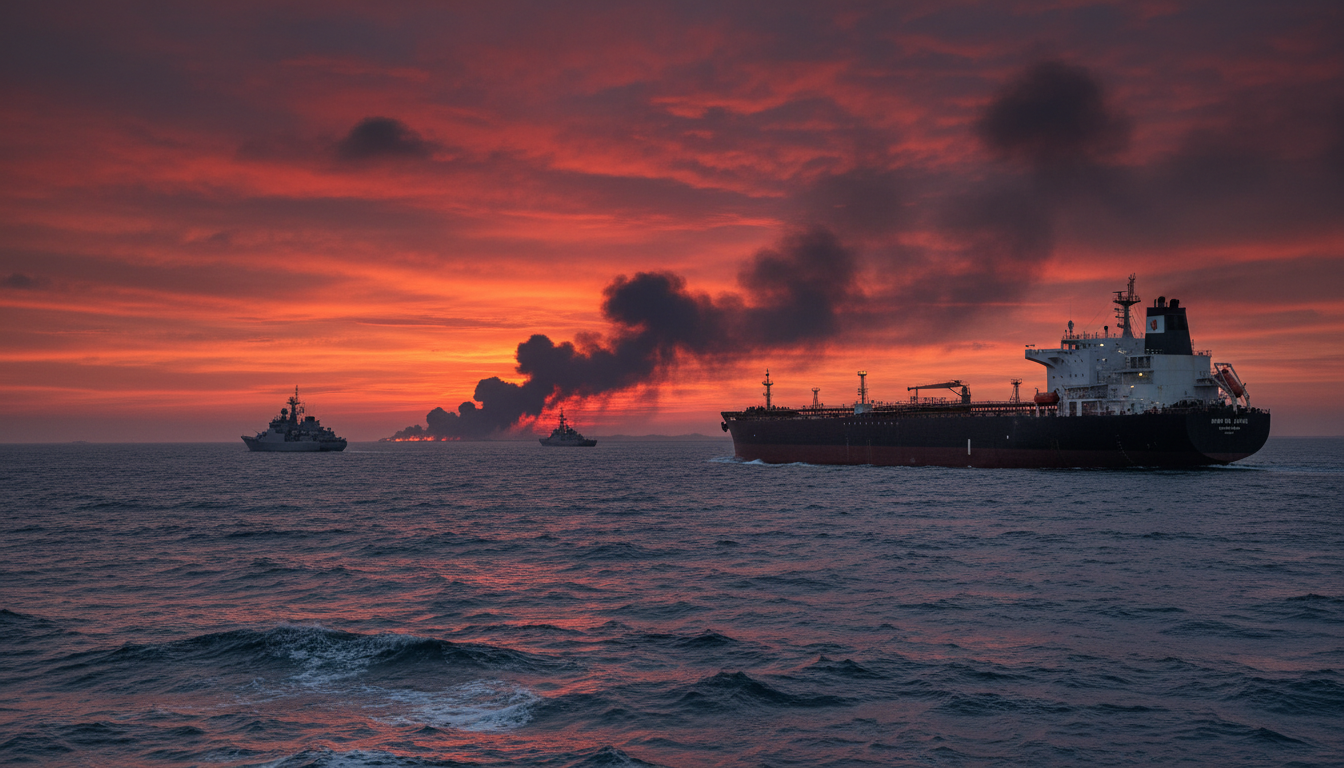
Trump’s 48-hour ultimatum to Iran to reopen the Strait of Hormuz caused oil prices to soar from $70 to $117 a barrel in weeks, a 5-day truce dropped Brent by 13% in a single day, and the Brazilian Central Bank had to inject $2 billion in currency swaps and expand contracts to 60,000 while Petrobras cut fuel quotas.
The President of the United States, Donald Trump, issued a 48-hour ultimatum to Iran on April 7, 2026, to reopen the Strait of Hormuz. Therefore, geopolitical tension skyrocketed oil prices in Brazil and worldwide.
On the same day, Israel attacked a petrochemical complex in Shiraz, Iran. Thus, WTI oil reached $113.85 (up 1.28%) and Brent hit $111.80 at its intraday peak.
The barrel had risen from $70 before the conflict in February to peaks above $117 — a 61% increase in just a few weeks.
-
A law that no one knows requires oil companies to invest billions in technology in Brazil, and the result is autonomous robots, AI that predicts failures, and cameras that see danger before humans do on offshore platforms.

-
The government creates a package of R$ 14 billion to secure the price of diesel after the war in Iran closes off 20% of the world’s oil route, while Petrobras plans to never depend on imports again and promises to supply Brazil on its own by 2031.
-
Created in silence in the middle of the ocean, a Brazilian startup developed technology that predicts failures in oil platforms before they occur, and now ExxonMobil and Equinor are competing for its contracts.
-
Big techs plan US$ 635 billion in AI data centers by 2026, but the crisis in the Middle East threatens investments, and Brazil is betting on natural gas to attract megacomplexes of up to 1,500 MW in Rio de Janeiro, Rio Grande do Sul, and Paraná.


Oil fell 13% in one day after a 5-day truce between the US and Iran
After the ultimatum, Trump announced via Truth Social a 5-day suspension of attacks on Iranian infrastructure. He cited “very good and productive talks” in the two days prior.
The market reaction was immediate. Brent fell 13% to $94.80 (R$ 488.48) and WTI plummeted more than 15% to $95.75 (R$ 493.40).
However, even after the drop, prices remained 35% above the pre-war level of $70 per barrel. Therefore, the relief was partial.
The President of Iran, Masoud Pezeshkian, declared that “millions are ready to sacrifice” for the country in response to Trump’s ultimatum.

Central Bank injected $2 billion and expanded swaps to 60,000 contracts
In Brazil, the impact was direct on the exchange rate. Thus, the Central Bank offered up to $2 billion in rollover lines and expanded currency swaps to 60,000 contracts.
Additionally, Asian markets fell more than 3% and Brazilian futures interest rates rose with the dollar under pressure.
As a consequence, bets on cuts to the Selic rate were reduced to about 1 percentage point until the end of the cycle. Therefore, the cost of credit in Brazil also felt the impact of the crisis.

Petrobras cut quotas and Vibra will import to avoid shortages
Petrobras reduced the monthly fuel quota for April 2026. Thus, Vibra Energia (VBBR3) announced plans to import additional volumes to ensure supply.
Moreover, the federal government issued a package of R$ 1 billion with support measures for airlines and penalties for abusive prices of biodiesel and aviation kerosene.
Genial Investimentos assessed that “the news is marginally negative for the short-term thesis of oil companies exposed to Brent, as it reduces part of the geopolitical risk premium.”
To understand how the government has already created a R$ 14 billion package to secure diesel, see the full report.

20% of the world’s oil passes through the Strait that Iran closed
The Strait of Hormuz is the route through which about 20% of all the world’s oil passes. Therefore, its closure by Iran created severe uncertainties about global supply.
Before the conflict, the barrel was around $70. With the escalation, it reached peaks of $117 (WTI) and $111 (Brent). After the truce, it retreated to $94–95 — still 35% above pre-war levels.
However, volatility persists. The Strait remains under tension and new rounds of negotiation could alter prices at any moment.
Still, the crisis is comparable to the largest in history: Gulf War (1990, Brent doubled) and the Russian invasion of Ukraine (2022, Brent above $120). Brazil, despite self-sufficiency in crude oil, depends on the import of derivatives.
Also check how Petrobras invests in underwater technology to maintain production.





Seja o primeiro a reagir!