





 Portuguese
  English
  Spanish
  5 min of reading
  0 comments



ATMs And Branches Disappear In Brazil; The Advancement Of PIX And Digital Banks Marks The End Of The Physical Cash Era.
Brazil is undergoing one of the largest financial transformations in its history — and it is happening quietly, little by little, on street corners, in agencies, and terminals where millions of people withdrew cash every day. From north to south of the country, ATMs are being deactivated, removed, or simply left unused, while traditional bank branches are shrinking.
The phenomenon, which seemed unthinkable just a decade ago, has been accelerated by two main factors: the meteoric rise of PIX, which revolutionized instant transactions, and the popularization of digital banks, which eliminated the need to go to a physical branch.
According to the Central Bank of Brazil, the number of ATMs in operation has dropped by more than 25% since 2016, and more than 3,000 bank branches have closed their doors in the past five years. It is the end of an era — the silent disappearance of a symbol of Brazilian urban life.
-
The largest food company on the planet, JBS, has just opened a 4,000 square meter laboratory in Florianópolis to develop customized proteins that modulate muscle mass gain, immune response, and metabolic performance.

-
After nearly 30 bids and competition among industry giants, a Spanish company purchases one of the largest airports in Brazil for almost R$ 3 billion and takes over the management of Galeão in a concession that will last until 2039.

-
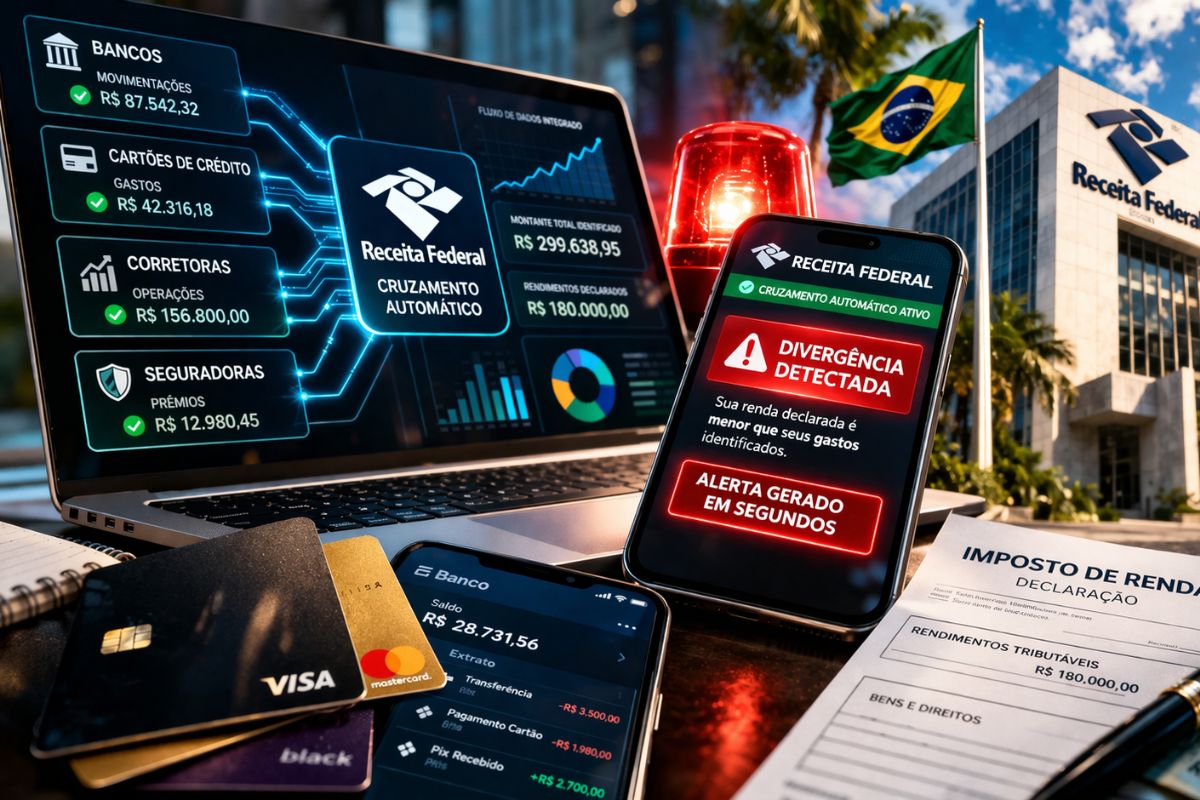
The Federal Revenue Service now automatically cross-references everything you declare with data from banks, credit cards, brokerage firms, and insurance companies, and any discrepancy between your income and your expenses triggers an alert in seconds.
-
Amid global tensions, Brazil blocks the United States’ proposal at the WTO and paves the way for a trade crisis and possible retaliations.


The Impact Of PIX And Digital Wallets
Since its launch in November 2020, PIX has grown at a speed that surprised even the Central Bank. In less than four years, the system has registered over 175 million active users and 26 billion annual transactions — a number that surpasses the total operations performed by credit and debit cards combined.


This convenience — instant transfers at no cost and available 24 hours a day — has made the population simply stop using physical cash for most transactions.
In 2024, the use of banknotes dropped by almost 40% in circulation, according to data from the Central Bank itself, and the average value of cash withdrawals from ATMs has also decreased sharply.
In addition, the growth of platforms such as Nubank, Inter, C6 Bank, and PicPay has consolidated banking digitalization. These banks offer fee-free accounts, virtual cards, and app-based customer service, replacing basic functions previously restricted to a physical branch.
The result is visible: fewer lines, less paper, fewer banknotes, and more screens.
The Closure Of Physical Branches
Between 2012 and 2024, the number of bank branches fell from 23,000 to around 17,000, according to a survey by the Central Bank and the Brazilian Federation of Banks (Febraban).
This process did not occur abruptly, but continuously, accompanied by restructuring and mass layoffs in the traditional banking sector.
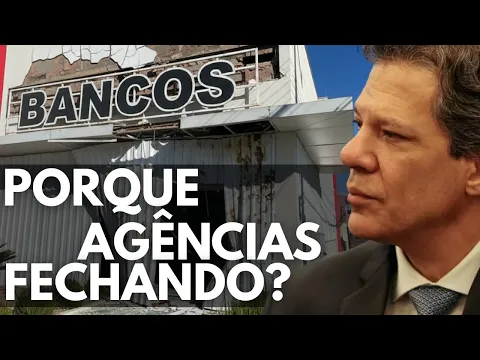
In large cities, historic addresses of Banco do Brasil, Bradesco, Itaú, and Santander have been replaced by pharmacies, cafes, and convenience stores. In rural areas, many branches have turned into shared service points or have simply closed down, leaving entire towns without physical bank presence.
According to Febraban, the main reason is the low flow of in-person customers: today, 90% of banking transactions in Brazil are done digitally, and only 4% of operations require in-branch assistance.
Brazil Moves Towards Invisible Money
The Brazilian phenomenon draws attention worldwide. According to the World Payments Report 2024 published by Capgemini, Brazil is the global leader in per capita instant transactions, surpassing countries like India, the UK, and South Korea.
The change is so profound that physical cash is becoming an exception. From 2019 to 2024, the number of cash withdrawal operations at ATMs dropped by 42%, and the total amount moved in banknotes decreased from R$ 1.2 trillion to R$ 670 billion.
In addition to PIX, new systems like Drex (Digital Real) and Open Finance promise to further accelerate this transition. The Central Bank predicts that by 2030, the use of banknotes will represent less than 10% of the country’s total financial transactions.
Digital Banks And The New Credit Paradigm
The success of digital banks is another engine of this transformation. According to a report by Finder and Statista, more than 76% of Brazilians have an account at a digital bank, the highest rate in the world.
Nubank alone surpassed 100 million active customers in 2024, a number larger than the populations of entire countries like Germany or the United Kingdom.
These platforms not only eliminated bureaucracy but also reinvented the relationship of Brazilians with money. Opening an account takes minutes, transfers are free, and credit is granted based on data analysis and behavior, not just banking history.
The major banks noticed the trend and began to close physical branches to invest in technology. Itaú and Bradesco, for example, redirected billions of reais to artificial intelligence, cybersecurity, and remote customer service.
The Cities And The Void Left By The ATMs
But technological advancement also brings urban and social side effects. ATMs were points of movement and safety in many neighborhoods.
With their removal, many areas lost constant lighting and presence of people at night, which increased the risk of abandonment and the feeling of insecurity, especially in medium-sized cities.
In addition, thousands of indirect jobs — security guards, technicians, cash transporters — have also been impacted by the reduction of physical terminals. Companies like Prosegur and Brinks needed to redirect operations to logistics and asset security services.
In urban centers, the phenomenon is repeating itself: former bank branches are transforming into convenience stores, gyms, or coworking spaces, but the pace of adaptation is still uneven.
The Paperless Economy And The New Challenges
Financial digitization also imposes new challenges: inclusion and digital security.
According to the IBGE and CGI.br, around 19% of Brazilians still do not have regular access to the internet, which means that millions of people, especially the elderly and residents of rural areas — depend on physical service.
For this audience, the closure of branches represents financial exclusion. The Central Bank and Febraban are studying programs for digital education and expansion of banking correspondents in remote areas as an alternative to traditional physical presence.
Another sensitive point is cybersecurity. With the elimination of physical barriers, the risks of digital fraud, social engineering scams, and phishing increase. In 2024, according to Serasa Experian, the number of digital fraud attempts rose 36% compared to the previous year, focusing on payment apps and PIX.
Farewell To ATMs, The Arrival Of The Invisible Era
What was once a symbol of the technological status of the ATM, the magnetic card and the numeric password, is becoming part of the recent past. Brazil is moving towards a “cashless” model, where transactions occur in seconds, without notes, without coins, and without borders.
Soon, the new generations may never know the act of withdrawing cash. And the characteristic sound of ATM keys, which for decades accompanied urban life, will be just a memory of a time when money was still something tangible.







-

-

-

-

33 pessoas reagiram a isso.