





 Portuguese
  English
  Spanish
  4 min of reading
  0 comments


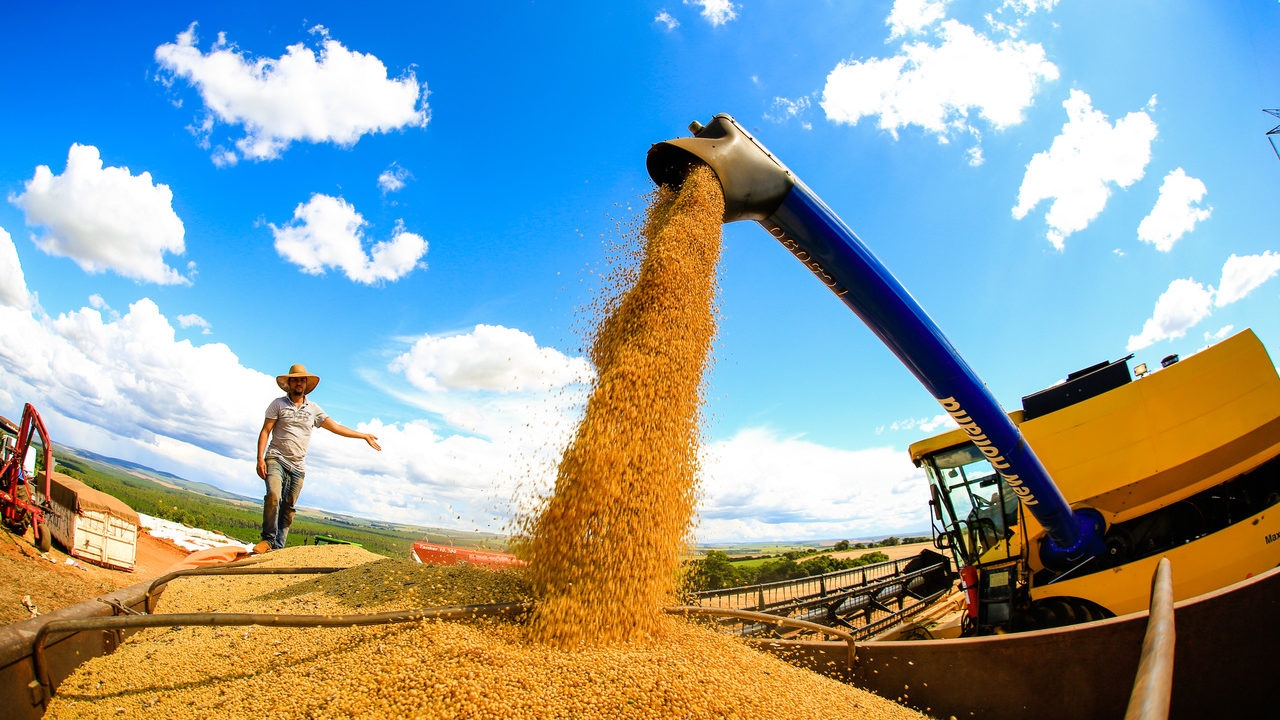
Brazilian Agribusiness Is a Global Power, but Still a Hostage to Diesel: This Fossil Fuel Is Essential for Heavy Machinery to Ensure Large-Scale Production and Accounts for 73% of Energy Consumed in the Field
Although Brazil stands out on the international stage for its high renewable energy rate, national agriculture remains heavily anchored in fossil sources. Diesel accounts for nearly three-quarters of all energy used directly in field activities, revealing a dependency that is incompatible with energy transition and climate neutrality commitments. Even with efficiency gains and leadership in biofuel production, the agricultural sector still reproduces a model intensive in emissions, which amplifies its exposure to geopolitical crises and instabilities in the oil market.
In 2022, Brazilian agriculture used about 1.4 GJ of fossil fuels for every US$1,000 produced, above the global average of 1.2 GJ. Diesel represents 73% of this consumption, exceeding the world average of 70%.
The sector maintains an extensive model, characterized by large cultivated areas and intense use of heavy machinery, especially tractors and harvesters. This dependence on diesel makes production vulnerable to external shocks, such as fluctuations in oil prices and geopolitical tensions, which directly impact agribusiness costs.
-
Historic bankruptcy of Centauro shocks the market, and the century-old company puts more than 500,000 products, machines, and complete infrastructure up for online auction.

-
New shoe factory in Ceará is expected to create 400 jobs and strengthen the local economy.

-
No one imagined it, but a mixture of sawdust with a mineral that fights fires surprises scientists with a result that changes the course of fire-resistant construction.

-
From empty land to a high-end house, wooden construction uses a lightweight system, metal structure for the foundation, ventilated ceramic cladding, and special windows to create an efficient and comfortable living space throughout the year.


Despite Dependency on Diesel, Brazil Maintains Overall Energy Efficiency Above the Global Average
Despite its strong dependence on fossil fuels, Brazil maintains an overall energy efficiency above the global average. In 2022, the national agribusiness consumed 1.2 GJ of energy for every US$1,000 produced, while the global average was 1.5 GJ. This means that, even using diesel on a large scale, the sector can convert energy into value more effectively than much of the world. This differential is explained by factors such as high productivity per hectare, the ability to have more than one harvest per year, and the use of technologies and management adapted to Brazilian climate and soil. The contrast becomes even more evident when compared to highly mechanized systems, such as that of the Netherlands, where energy consumption reaches 5.9 GJ/US$1,000.
Field That Generates Energy: Strength of Bioenergy
Brazilian agriculture plays a decisive role not only as a consumer but also as a provider of energy. In 2023, the sector was responsible for nearly 29% of all energy produced in the country and about 60% of available renewable sources. The advancement of bioenergy, primarily driven by sugarcane, has transformed the Brazilian energy matrix: its participation jumped from less than 10% in the 1970s to around 30% between 2020 and 2023.
Only the biomass of sugarcane accounted for 16.87% of the total energy supply in the country, even surpassing hydropower, which was at 12.01% during the same period. Together, renewable sources represented 49.1% of the national energy matrix. Without the contribution of agribusiness, which includes biofuels and energy generated from agricultural raw materials, this number would drop drastically to around 20%, approaching the global average of 15%.
Ethanol Blend in Gasoline and Biodiesel in Diesel Gains Strength
Starting August 1, the government will increase the ethanol blend in gasoline from 27% to 30% and biodiesel in diesel from 14% to 15%. This could cut 1.33 million m³ in gasoline consumption, eliminating the import deficit. According to Abiove director Daniel Amaral, this is a “strategic advance for energy security and the environment.” This decision reinforces Brazil’s leadership in global decarbonization.
The country combines a warm climate, extensive production, multiple harvests per year, and adapted management, making it ideal for bioenergy. The diversity of sources; sugarcane, corn, soybeans, firewood, waste, biogas, brings resilience to climate or harvest variation.
Challenges Ahead
“This advantage coexists with a vulnerability: dependence on diesel,” warns Luciano Rodrigues, coordinator of FGV.
Agribusiness still needs to:
- Reduce the burning of fossil fuels;
- Expand bioenergy and clean sources in the field;
- Invest in technology and infrastructure, such as biodigesters and bioelectricity.
Brazil’s goal, according to the IEA, is to increase biodiesel to 15% by 2026, and there are already policies for SAF (sustainable aviation fuel). Brazilian agribusiness is at a decisive moment: tradition continues to rely on diesel, but the shift to bioenergy is real and urgent. With planned adjustments — blending, SAF, management — it is possible to consolidate a greener and more resilient matrix.
What do you think about this energy transition in our field? Leave your comment and share this article with those interested in agribusiness, energy, and a sustainable future!









Seja o primeiro a reagir!