





 Portuguese
  English
  Spanish
  6 min of reading
  0 comments


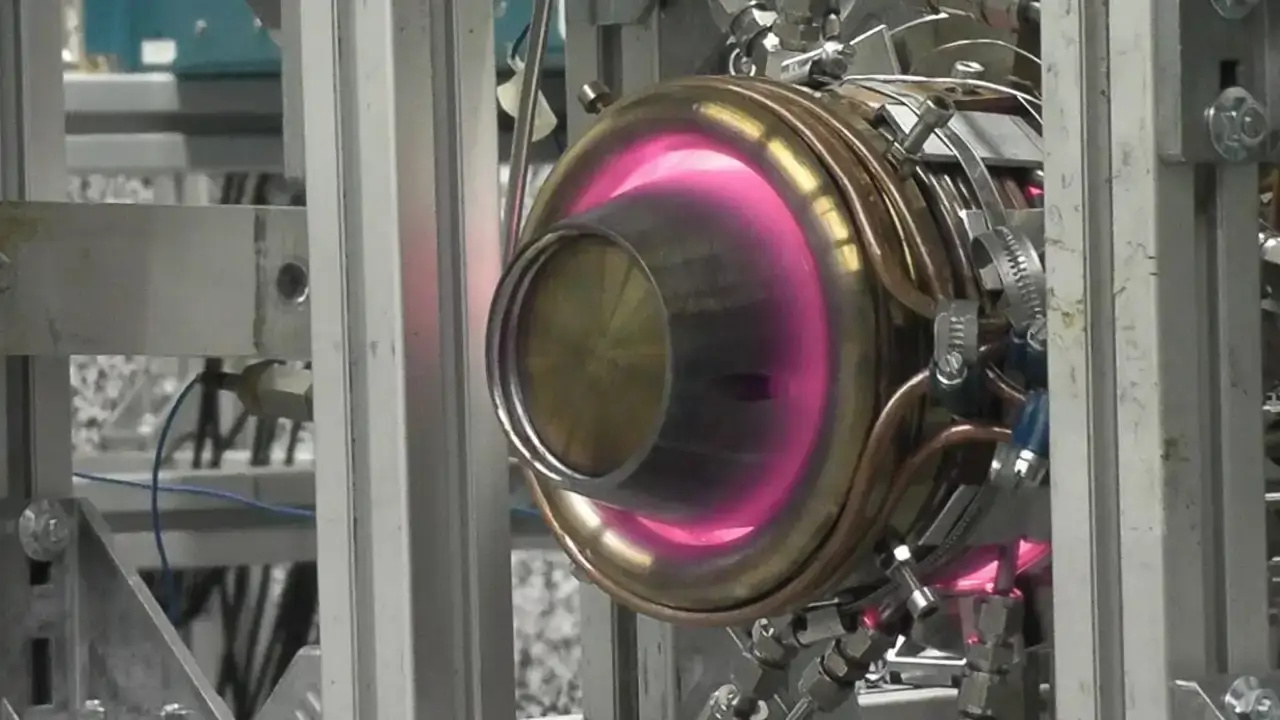
Scientists at Karlsruhe Institute of Technology Create Hydrogen Turbine Without Compressor That Runs for 303 Continuous Seconds, Eliminating One of the Most Complex Parts of Gas Turbines and Can Accelerate the Transition to Carbon-Free Energy
The world is undergoing a profound energy transformation. The search for decarbonization of the global economy is accelerating structural changes in sectors such as transportation, electricity generation, and heavy industry. In recent years, electric vehicles have started to capture an increasingly larger share of the automotive market, while the installation of solar panels and wind farms is growing at a record pace in various countries. Despite these advances, the complete replacement of fossil fuels like oil, coal, and natural gas is still distant. Various industrial segments — including steelmaking, shipping, aviation, and fertilizer production — remain dependent on high-density energy sources that conventional batteries are still unable to provide.
It is in this context that hydrogen emerges as one of the leading candidates for future fuel. Considered a clean and highly versatile energy vector, it has been pointed out by scientists and energy policymakers as a key piece for reducing global carbon emissions. A new technology developed in Germany may represent a significant step in this direction.
Researchers at the Karlsruhe Institute of Technology (KIT) have managed to operate a new hydrogen turbine without a compressor for 303 continuous seconds, establishing a new experimental benchmark for this type of energy system.
-
With a cost per shot close to zero, the DragonFire laser could change naval warfare in 2027 and provide British ships with nearly unlimited defense against drones.

-
A British startup creates tires that generate electricity in electric vehicles when passing over potholes, speed bumps, and cracks.

-
Scientists have created robots made with living cells that have their own nervous system, swim on their own, explore the environment, and self-organize without any genetic engineering, and now they want to do the same with human cells.

-
Students create a solar-powered ambulance that operates without a plug, without fuel, and still keeps medical equipment running in remote areas.


Hydrogen: The Fuel of the Future for Heavy Transportation and Power Generation
Hydrogen has physical and chemical properties that make it particularly interesting for large-scale energy applications.
When used in fuel cells, hydrogen reacts with oxygen, producing only water as a byproduct, eliminating direct carbon dioxide emissions. This characteristic makes it a fundamental intermediary for energy systems based on renewable sources.
Another important factor is the high energy density per mass. Hydrogen can provide up to three times more energy per kilogram than gasoline, making it especially suitable for applications where the weight of the energy source is critical.
This includes:
- freight ships
- commercial airplanes
- long-haul trucks
- large industrial equipment
In many of these cases, lithium batteries become impractical due to the high weight needed to store enough energy for long distances. Hydrogen, on the other hand, can provide large amounts of energy with relatively low mass.
For this reason, governments and energy companies have invested billions of dollars in the development of what is known as the hydrogen economy.
Challenges Still Impeding the Widespread Use of Hydrogen as Fuel
Despite its enormous potential, hydrogen still faces significant obstacles before becoming a dominant fuel in the global energy system. Among the main challenges are:
- high production costs
- need for storage and transportation infrastructure
- energy efficiency of industrial processes
- technological challenges in engines and turbines
A large portion of the hydrogen currently produced in the world still comes from natural gas reforming, a process that releases carbon dioxide. For hydrogen to become truly sustainable, the so-called green hydrogen, produced by electrolysis of water using renewable energy, must be expanded.
Moreover, new technologies need to make hydrogen use more efficient. It is precisely at this point that the KIT scientists focused their efforts.
Hydrogen Turbine Without Compressor Breaks Operational Record
Researchers at the Karlsruhe Institute of Technology, one of the most prestigious scientific institutions in Germany, have developed a prototype of an innovative gas turbine that eliminates one of the most complex components of conventional turbines: the compressor.

During experimental tests, the system successfully operated for 303 continuous seconds, surpassing the previous record of 250 seconds set by NASA in similar experiments. This result represents a significant advancement because the initial tests with this type of technology lasted only fractions of a second.
The KIT team managed to increase the operating time to over five minutes, demonstrating the stability of the system and paving the way for future industrial applications.
According to Professor Daniel Banuti, director of the Institute of Thermal Energy Technology and Safety (ITES), this result marks a relevant step in the development of hydrogen-based energy systems.
He stated that the advancement represents “an important step towards highly efficient and flexible hydrogen energy for a fossil fuel-free energy system”.
How a Conventional Gas Turbine Works and Why the Compressor Consumes So Much Energy
To understand the impact of this innovation, it is necessary to comprehend the basic functioning of a traditional gas turbine. These systems are widely used in:
- thermal power plants
- aircraft engines
- industrial facilities
The traditional process involves three main stages:
- air compression
- combustion of fuel
- expansion of gases in the turbine
The first stage — air compression — requires a large amount of energy. In many modern turbines, about 50% of the energy generated by the system is consumed just to compress the air before combustion.
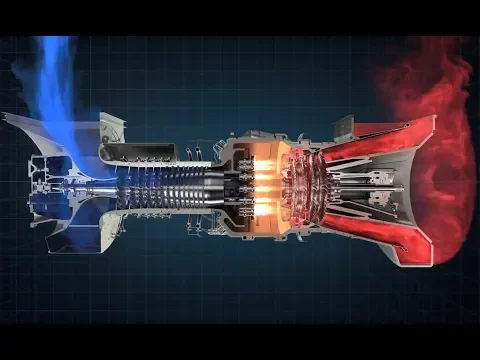

This means that half of the turbine’s energy potential is used just to allow the process to function. Eliminating or reducing this stage can significantly increase the overall efficiency of the system.
Combustion Technology with Pressure Gain Eliminates the Need for Compressors
The experimental turbine developed by the German researchers uses a principle known as pressure gain combustion. In this type of system, the pressure needed for operation is not generated by mechanical compressors. Instead, it arises within the combustion chamber itself through controlled detonation waves.
These waves result from fluid-mechanical instabilities that produce complex patterns of waves and vortices in the gas flow. The effect of these waves is to create pressure increase directly within the combustion chamber, allowing the turbine to operate without compressors.
This approach offers several technical advantages:
- reduction of internal energy consumption
- fewer moving parts
- lower mechanical complexity
- greater thermodynamic efficiency
These factors can make turbines lighter, more efficient, and potentially cheaper to operate.
Hydrogen is Particularly Suitable for Detonation Turbines
Although the new technology can work with different fuels, hydrogen exhibits ideal characteristics for this type of system. The gas reacts extremely quickly during combustion and can generate stable pressure increases within the chamber.

This property facilitates the formation of the detonation waves needed for the system to function.
As a result, hydrogen-powered turbines can become more efficient than turbines powered by natural gas or kerosene. Additionally, when hydrogen is produced from renewable sources, the system can operate practically without carbon emissions.
Potential Applications of the New Hydrogen Turbine
Although still in the experimental phase, this technology has the potential for significant applications in various energy sectors. Among the possibilities being studied by the researchers are:
- electricity generation in clean energy plants
- engines for next-generation aircraft
- propulsion systems for heavy transport
- industrial production with low carbon emissions
If engineering challenges are overcome, pressure gain combustion turbines may allow for more compact and efficient engines. In the aviation sector, for example, weight and complexity reduction could be a decisive factor in enabling hydrogen-powered aircraft.
Hydrogen Can Transform the Global Energy System in the Coming Decades
The technological race surrounding hydrogen reflects the global urgency to reduce carbon emissions without compromising energy security. According to various international energy agencies, hydrogen can play a central role in the decarbonization of hard-to-electrify industrial sectors, including maritime transport, steel production, and aviation.
However, the transition will depend on technological advancements capable of making hydrogen use more efficient and economically viable. Experiments like those conducted by researchers at the Karlsruhe Institute of Technology demonstrate that significant opportunities for innovation still exist in this field.
The hydrogen turbine without compressor that operated for 303 continuous seconds represents only an initial step but illustrates how new ideas can redefine energy engineering.
If technologies like this achieve industrial scale, they could help transform hydrogen from technological promise into a real foundation for a global energy system free of fossil fuels.








-

-

-

-

4 pessoas reagiram a isso.