





 Portuguese
  English
  Spanish
  3 min of reading
  6 comments


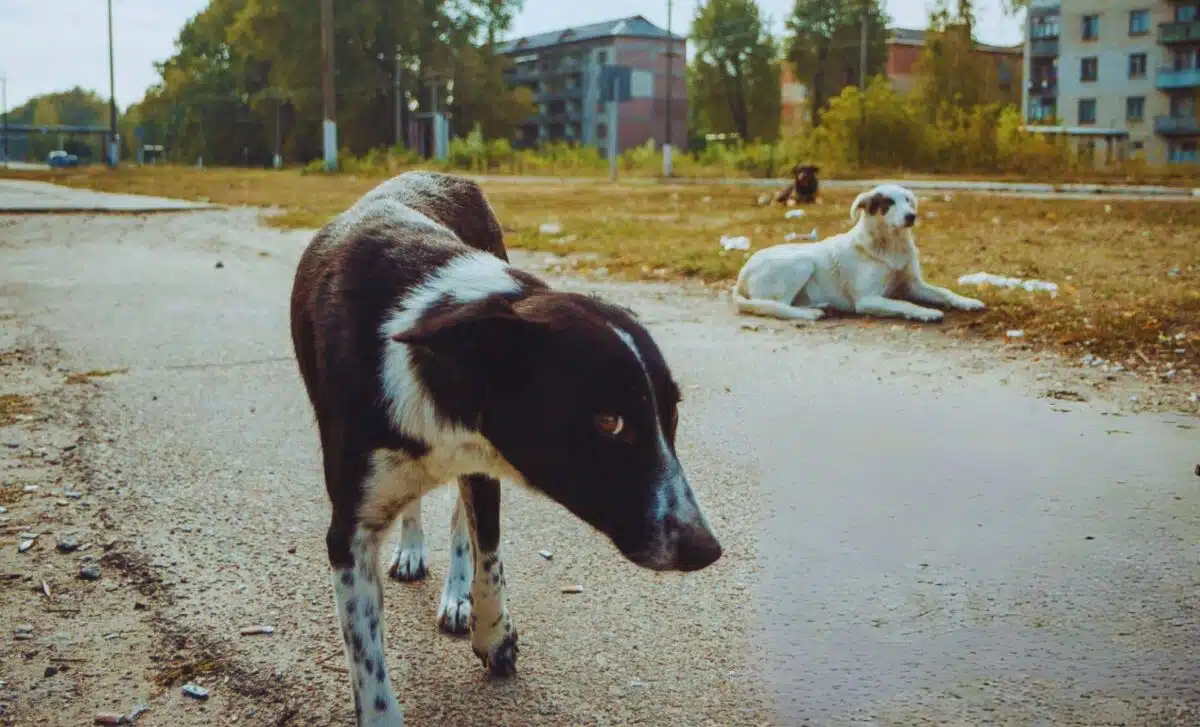


Scientists Are Studying The Dogs That Live In The Chernobyl Exclusion Zone And Observing Intriguing Changes That May Be Related To Continuous Exposure To Radiation.
In an unexpected twist, the dogs that inhabit the Chernobyl Exclusion Zone are becoming the focus of an intriguing phenomenon. Following the nuclear disaster of 1986, it was thought that the area would become uninhabitable for any form of life.
However, the descendants of the pets abandoned during evacuation are defying expectations, reproducing and evolving at an unprecedented rate.
The Exclusion Zone
The explosion of the Chernobyl Nuclear Reactor released tons of radioactive material into the atmosphere, turning northern Ukraine into a scene of destruction.
-
In Mexico, a 3,000-year-old Maya site with the dimensions of an entire city may have been built as a colossal map of the cosmos, created to represent the order of the universe and reveal how this people organized space, time, and rituals.

-
Japan wants to build a solar ring of 10,900 kilometers on the Moon to continuously send energy to Earth.

-
Weighing almost 1 ton, with temperatures of up to 3,000°C, the ability to launch 10,000 fragments within a radius of 1 km, capable of penetrating concrete and melting steel, Turkey’s terrifying bomb emerges as one of the most destructive non-nuclear weapons ever presented.

-
After a submarine disappeared beneath the “Doomsday Glacier,” scientists announce a new monstrous machine capable of operating at 3,000 meters depth to return to the heart of the ice and investigate a threat that could raise sea levels worldwide.


Decades later, the area, known as Chernobyl Exclusion Zone (CEZ), hosts a surprisingly rich fauna, including a large population of wild dogs.
These animals, isolated and subjected to high levels of radiation, are exhibiting genetic changes that intrigue scientists.
What Happened To The Chernobyl Dogs
A recent study found that the dogs in the CEZ have a genetic makeup significantly different from dogs living outside the area.
According to Elaine Ostrander, a canine genomics expert at the National Human Genome Research Institute, the mutations observed in these dogs may be crucial for their survival in such a hostile environment. “What challenges do they face and how have they coped genetically?” Ostrander questions.

DNA In Transformation
Researchers are analyzing the DNA of 302 dogs that live within or around the CEZ.
The genetic differences observed indicate that radiation is playing an important role in their evolution.
The dogs inhabiting areas near the nuclear power plant exhibit genetic markers distinct from those found in dogs living just 16 kilometers away.
These mutations may be driving the development of adaptive traits that allow survival and reproduction in one of the most toxic environments on the planet. “We are just beginning to understand the impact of radiation on the evolution of these animals,” a report from Popular Mechanics states.
Radiation
Radiation, typically associated with destruction, can also be a driving force for evolution. It alters DNA, generating mutations that, in some cases, result in adaptive advantages.
This concept has already been explored in controlled experiments, but the Chernobyl dogs offer a real and striking example of this process.
These animals are not just surviving; they are thriving. Continuous exposure to radiation seems to be accelerating evolutionary changes, which could culminate in the emergence of new genetic traits or even a new breed of dogs.
As Ostrander observes, these mutations are a testament to the adaptability of life in extreme conditions.
The Evolutionary Revolution Of Chernobyl
Although the dogs are the main focus, they are not alone in this process. Species such as frogs and birds are also showing signs of accelerated adaptation.
A striking example is the tree frogs, which have developed darker pigmentation, likely due to mutations in melanin, helping them cope better with radiation.
This pattern suggests that radiation is triggering a genetic transformation across various species. With the absence of human interference, the CEZ has become a natural laboratory for observing rapid evolutionary changes.
Scientists believe that future studies may reveal whether other species are undergoing similar transformations.
The Future Of The Chernobyl Dogs
As we approach the 40th anniversary of the Chernobyl disaster, the dogs of the CEZ continue to surprise.
They are a living example of how life can adapt and even thrive in conditions that once seemed unbearable. But what does the future hold for them?
Some experts speculate that these dogs could eventually evolve into a completely new species, while others believe that the genetic changes are merely temporary adaptations to adverse conditions.
Regardless, these dogs are helping to rewrite the scientific understanding of evolution in extreme environments.
The study was originally published in the journal Science Advances.








Pensei que só eu tinha achado essa matéria extremamente i d i o t a e redundante. Um claro exemplo de como uma página consegue te prender para vender anúncios por causa de um título interessante e uma foto intrigante… mas nem tanto.
Cometimento redundante, citando a mesma coisa em títulos diferentes, sem realmente ter um aprofundamento do tema.
**** selvagens na Zona de Exclusão de Chernobyl estão exibindo mudanças genéticas influenciadas pela radiação contínua. A exposição à radiação provavelmente está acelerando suas adaptações e pode levar a uma nova evolução, educando os científicos sobre como formas de vida suportam mudanças thisroticas, fato considerado único na história da biologia:
Falou, falou e não disse nada. Texto grande, com quase nenhuma informação concreta.