





 Portuguese
  English
  Spanish
  6 min of reading
  0 comments


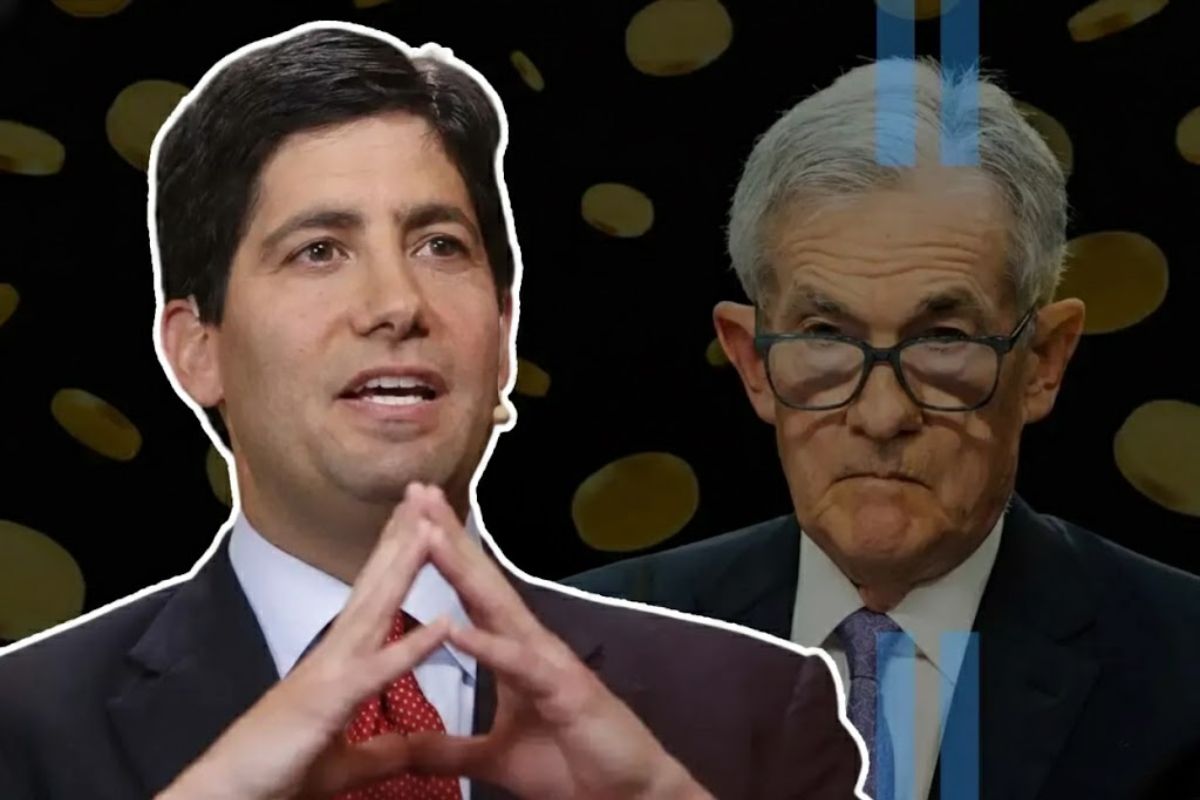
In The Fed, The President’s Power Appears Less In The Formal Vote Counting And More In The Control Of The Agenda, In The Communication That Moves Prices And In The Internal Management Kevin Warsh’s Entry Repositions Independence, Loyalty And Politics At The Center, With Signs Of Friction In Washington On Interest Rates And Credibility
The Fed seems like a committee where no one commands alone, but the practice described by former leaders and researchers points to something else: whoever presides sets the pace, gauges the consensus before the meeting, and almost never leaves defeated. When the name in the chair changes, the market tends to react less to the vote and more to the signal about the agenda, speech, and behind-the-scenes.
The Trigger Is Now Political And Institutional At The Same Time. With Donald Trump appointing Kevin Warsh to chair the Board of Governors, the question shifts from “who has 1 of 12 votes” to “who controls what goes on the agenda, what becomes official messaging, and what the committee considers acceptable.”
The Vote Is 1 Of 12, But Defeat Rarely Exists
In The Federal Open Market Committee, the FOMC, the president of the Fed has only one vote out of 12.
-
“No one will make us change the Pix,” says Lula after the US report.

-
Lula responds directly to Trump and says that Pix is from Brazil and will not change under pressure from anyone, after a report from the United States pointed out the Brazilian payment system as an American trade barrier.

-
Amazon has just announced a new fee on all deliveries, and your online purchases will become more expensive starting April 17, including for those buying from the United States here in Brazil.

-
He sold his share for R$ 4 thousand, saw the company become a giant worth R$ 19 trillion, and missed the opportunity of a lifetime.


Still, the historical experience cited by Alan Blinder, former vice president of the Fed in the 1990s, is straightforward: in practice, the president has “much” power, even if that is not evident in the Federal Reserve Act.
The fact that organizes the debate is simple and uncomfortable for those who look only at the rule: the president of the Fed has never been on the losing side in the FOMC.
In the Board of Governors, it is also very rare to lose. David Wessel from the Hutchins Center at the Brookings Institution points to the last remembered case of a Fed president’s defeat on the Board in 1986, under Paul Volcker.
Agenda, Proposal And The Control Of What Will Be Decided
The central mechanism is not the vote; it is the agenda. Blinder summarizes the logic: meetings are not an open space where any issue appears out of nowhere; there is an agenda, and whoever defines the agenda defines the real choices.
This includes which monetary policy alternatives come “ready” for deliberation.
The classic example, within the Fed itself, came after the financial crisis of 2008. With interest rates near zero and the traditional tool weakened, Ben Bernanke put a non-conventional tool on the table, quantitative easing, the large-scale purchase of assets to influence longer-term rates.
The practical message is that, in critical moments, power appears in the ability to put a new instrument on the agenda and lead the committee to a majority.
The Power Of Public Voice And The Risk Of A Phrase Moving Markets
There is a power that does not depend on a pen or a vote: communication. The president of the Fed is the one who holds press conferences, testifies before Congress, and becomes the visible face of the institution.
David Wessel describes this as the most visible figure of the Fed, and the reasoning is operational: a poorly calibrated phrase can reprice the entire economy.
For this reason, even when there are internal divergences, the pressure for unity increases.
Lael Brainard, who served on the Board between 2014 and 2023 under Janet Yellen and Jerome Powell, describes an internal norm: speaking with one voice strengthens credibility, and credibility is part of the monetary policy transmission mechanism.
Behind The Scenes And Management: Tealbook, Team And Internal Incentives
The president of the Fed also acts as the chief executive officer. Gary Richardson, official historian of the Federal Reserve System and economist at UC Irvine, reminds us that the law defines the president as the “active executive director” of the Fed.
This translates into influence over daily management, team structure, and who participates in which internal spaces.
In preparation for the FOMC meetings, members receive the Tealbook, a report with data, graphs, and economic analysis produced by Fed economists.
Brainard argues that the quality is high and the data are real, but points out a crucial detail: data allows for different interpretations, and the way of presentation can push the committee one way or another in times of uncertainty.
Consensus, Sanctions And The Calculation Before The Meeting
The impression of unanimity does not arise from nowhere. A study cited in the discussion, by Cooper Howes and co-authors, analyzing meeting transcripts, concludes that the final monetary policy decision tends to almost “one to one” coincide with the change preferred by the president, even with widespread disagreement during the debate.
At the same time, Richardson offers an alternative reading: part of this “power” may be advance negotiation, with the president adjusting his position to reach consensus before the formal vote.
Blinder describes the psychological dilemma at the moment of voting: if the president makes clear what he wants beforehand, the reputational cost of challenging him increases, especially when the institution fears that public conflict may be read as weakness.
The Consensus Discipline Becomes A Tool and, for many members, it also turns into institutional protection.
When Politics Enters The Picture And The Position Becomes A Target
The recent backdrop adds tension. The report mentions public pressure from Trump on Jerome Powell for interest rate cuts and an unprecedented context: federal criminal investigation into excess costs in a Fed building renovation during Powell’s tenure.
Powell, according to the same description, responded with a central idea of independence: interest rate decisions should reflect the Fed’s technical assessment, not presidential preferences.
In this environment, institutional details gain tactical weight. The FOMC, by tradition, chooses the Fed president himself as its chair, but is not required to do so by law. This point appears as a possible mechanism for institutional defense in a scenario of open dispute.
At the same time, Kevin Warsh’s own appointment is described as a factor that reduces rumors of internal “civil war,” as he is known, experienced on the Board and in the FOMC, and seen as concerned about inflation.
What Really Changes When Kevin Warsh Enters The Scene
The leadership change does not only alter a name; it alters the axis of power: agenda, voice, and behind-the-scenes.
If Warsh is confirmed by the Senate, he will chair the Board of Governors for a four-year term, in a Board with staggered 14-year terms for governors, and will traditionally hold the presidency of the FOMC, where interest rate decisions are consolidated.
The market tends to price not only the opinion of the new president but also his ability to build a majority, maintain unity, and withstand or accommodate political pressures.
In a Fed that operates based on internal norms of loyalty and credibility, the practical question shifts from “who votes” to “who defines what will be voted on, how it will be communicated, and at what cost to those who diverge.”
On your radar, what weighs more when the Fed changes leadership: the interest rate agenda, independence in the face of political pressure, or the ability to “speak with one voice” without hiding real divergences? And if you had to choose, would you prefer a Fed that is more transparent about dissents or more rigid in consensus discipline?








Seja o primeiro a reagir!