





 Portuguese
  English
  Spanish
  5 min of reading
  0 comments


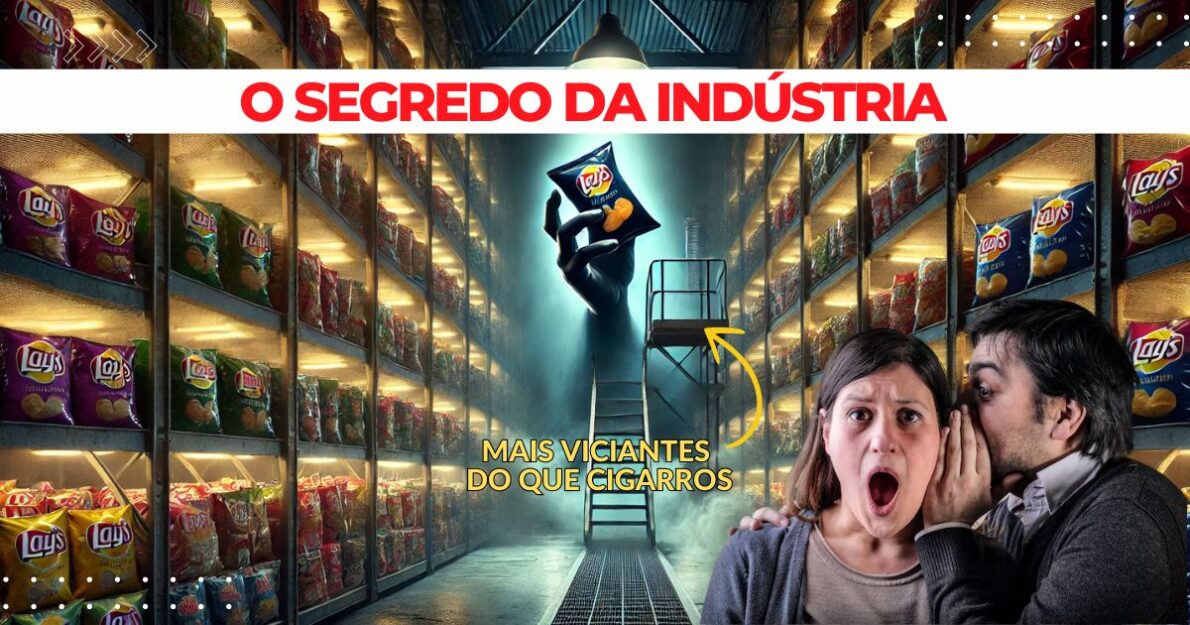
Processed Foods Inherited Strategies From The Tobacco Industry To Stimulate Addiction. Combining Salt, Sugar, And Fats Creates A Compulsion Similar To Cigarettes, Leading Consumers To Prefer These Hyper-Palatable Products.
The processed food industry and the tobacco industry share more than they appear to.
For decades, tobacco built an empire of loyal consumers, and today, strategies from that sector have migrated to the food industry, where products are developed to trigger similar compulsions.
The YouTube channel Elementar explores what is behind this transformation, showing how these industries have shaped our habits and fueled addiction.
-
The largest fortress on the planet is located in a city with 10 km star-shaped walls, 300 hectares protected, an aqueduct with 843 arches and 7 km long, strategic forts, and a UNESCO title that intrigues specialists.

-
USS Gerald R. Ford: the floating city of $13 billion where 5,000 sailors serve 17,000 meals a day, sleep in stacked bunks, take 10-liter showers, and keep 75 fighter jets ready.

-
Spain surprises the world by erecting 62 artificial dunes, mixing sand with natural remains of posidonia, and causing the structure to lose only 1.4% of its volume in 1 year.

-
Meta and YouTube condemned for addiction to social media: ruling links the operation of the platforms to the worsening of anxiety and depression.


The “Chocolate Cigarette” and the Imitation of Adults
Launched in the 1940s, the famous “chocolate cigarette” allowed children to imitate the adult habit of smoking, considered “chic” at the time.
According to the channel, the product was a way to normalize cigarettes among children, encouraging a behavior that today would be considered inappropriate.
On the packaging, kids simulated the act of smoking, something unacceptable nowadays.
In recent years, a modernized version emerged: the “milk chocolate vape.”
This time, however, the goal was social criticism, a reflection on how products and services influence people’s lives from an early age.
The criticism is well-founded, as while cigarettes are regulated, other equally addictive products remain prevalent, disguised as harmless foods.

The Reinvention Of Addiction: From Smoking To Compulsive Eating
If smoking was once a craze, today we live with a new compulsion: ultra-processed foods.
According to Elementar, the same industry that excelled in creating nicotine dependency now invests in foods full of fats, salt, and sugar, designed to hit the “happiness point” — that perfect flavor combination that provides immediate pleasure and makes moderation difficult.
As mentioned in the report, in the 1980s, major tobacco companies, such as Philip Morris and R.J. Reynolds, acquired food industry giants, including well-known brands like Kraft, Nabisco, and General Foods.
According to the channel, this is how addiction adapted to new times, moving from cigarette shelves to supermarket aisles.
Hyper-Palatable: The Combination That Deceives The Palate
The influence of tobacco companies is not superficial.
According to the magazine Addiction, foods “hyper-palatable” combine fat, salt, and sugar in specific proportions to provoke an intense pleasure response in the brain.
In other words, foods designed to be irresistible. This explains the obsession with items like potato chips, stuffed cookies, and breaded chicken.
A study conducted by psychologist Ashley Gearhardt, an expert in food addiction, indicates that these foods did not arise by chance.
During the time when tobacco companies had control over food brands, their products were more likely to be hyper-palatable compared to similar foods from other companies.
In other words, food dependence became meticulously planned.
Marketing Tactics For Children
The tactics to attract consumers did not stop at ingredients.
According to Elementar, documents revealed that Philip Morris adapted advertising strategies to attract children.
One example is the famous Kool-Aid powdered drink, which began focusing its marketing on kids after being acquired by the tobacco company.
The brand directed its investment towards campaigns aimed at children, using the iconic mascot Kool-Aid Man to win over a generation of new consumers.
Additionally, a children’s loyalty program, similar to “Marlboro Miles,” was introduced for Kool-Aid, aimed at making children loyal fans of the brand.
This practice was followed by other acquisitions, like Hawaiian Punch, which also introduced a captivating mascot, “Punchy,” to connect with the child audience.
According to the channel, these marketing strategies are still employed in supermarkets, where candy and snacks are positioned at children’s eye level, stimulating the desire to consume.
From Tobacco To Food: The Strategy Of “Hyper-Palatable Chemicals”
In the 1980s, scientists from the R.J. Reynolds lab, one of the tobacco giants, developed a specific formula of ingredients that promised to attract consumers based on flavor and aroma.
This concept, now known as “hyper-palatable chemicals,” aimed to increase the sensation of pleasure and thus, consumer loyalty.
According to Elementar, this strategy ensured the monopoly of taste in a variety of foods and beverages, which began to attract consumers similarly to cigarettes.
This “monopoly of taste,” as explored by the channel, is still present in today’s food industry.
Katie Bayne, an executive at Coca-Cola, stated to USA TODAY in 2012 that there is no scientific evidence that sugar is addictive.
However, studies show that excessive sugar consumption diminishes interest in healthier foods, creating a barrier to balanced eating habits.


Why Are Processed Foods So Addictive?
Recent research reveals that more than half of the calories consumed in the United States come from ultra-processed foods, defined as industrial combinations of sugar, salt, oils, and other additives.
This scenario, according to Elementar, is particularly problematic because the consumption of ultra-processed foods has long-lasting impacts on health.
As stated in the magazine Addiction, the difference in the definition of ultra-processed foods between the FDA (U.S. agency) and NOVA (Brazilian organization) is crucial.
While the FDA focuses on chemical composition, NOVA evaluates the quantity of ingredients without necessarily considering quality.
In other words, products with a large number of ingredients are automatically classified as ultra-processed, which can mask the true nature of the product.
Effects Of Hyper-Palatable Food On The Brain And Body
According to the channel, the impact of hyper-palatable food is similar to that of nicotine, acting on the brain’s reward system and creating an intense emotional response.
This continuous activation ends up forming a cycle of dependency, which induces the consumer to seek out processed foods more and resist these stimuli less.
The effects go beyond immediate pleasure.
According to the publication Psychology from the University of Michigan, individuals accustomed to consuming these foods end up losing interest in simpler, healthier foods, like home-cooked meals.
The palate adapts to strong, artificial flavors, rendering traditional dishes bland.
Market Strategies To Boost The Consumption Of These Foods
Beyond ingredients, the channel mentions that shelf positioning strategies in supermarkets are a fundamental part of encouraging consumption.
Candy, cookies, and snacks are strategically placed near cash registers or on lower shelves, easily accessible to children, increasing the chances of impulse buying.
These tactics create a subtle trap for parents who, unwittingly, end up encouraging the consumption of high-sugar and high-fat foods.
Over time, this early exposure shapes children’s palates, creating adults prone to food compulsions.
The Future Of Food And The Challenge Of Addiction
With the information revealed by the channel Elementar, it is evident that food addiction is a complex challenge and that the marketing tactics of the tobacco industry have migrated to food.
Products that seem harmless may contain meticulously crafted strategies to create dependency and boost consumption.
Food addiction carries profound consequences for the health and lifestyle of new generations. In addition to cigarette restrictions, the food industry will need to deal with increasing pressure to be more transparent about its loyalty tactics.
Consumer awareness is a crucial step, but the responsibility also falls on public health policies.
And you, do you think that processed foods are as addictive as cigarettes? In your view, should there be stricter regulations?







Seja o primeiro a reagir!