





 Portuguese
  English
  Spanish
  6 min of reading
  0 comments


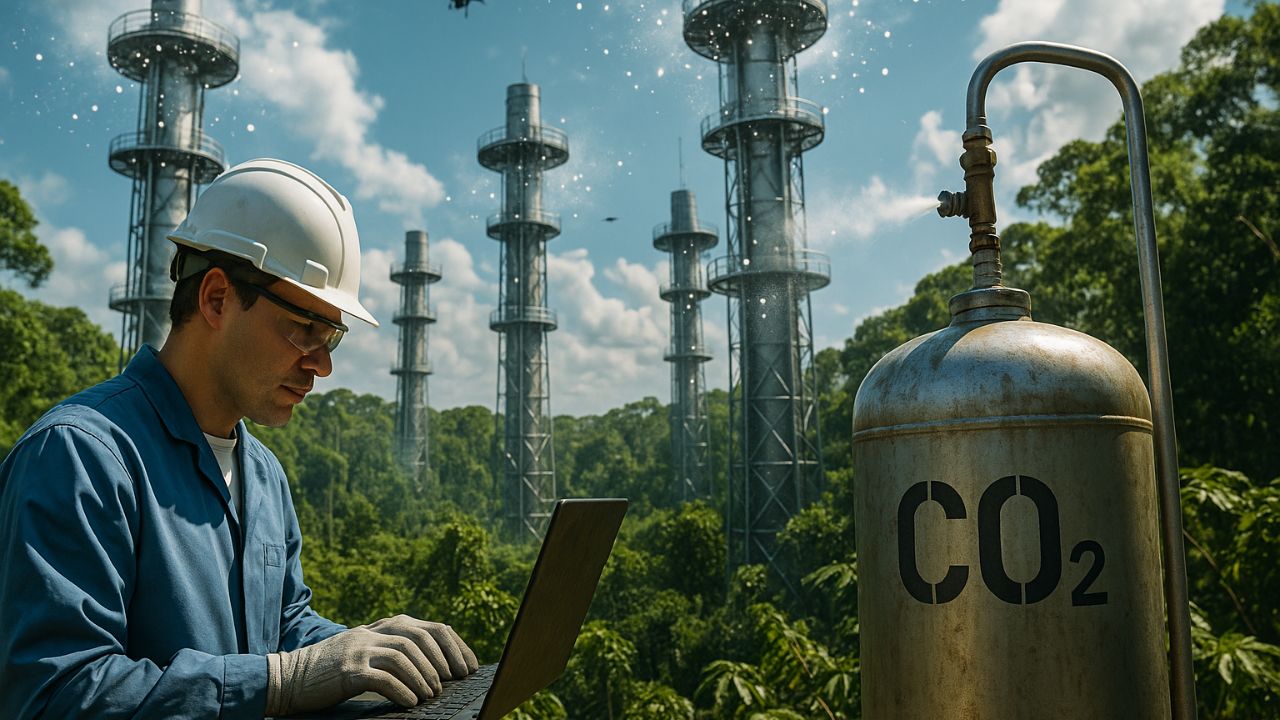
AmazonFACE Project Transforms the Amazon into the Largest Open-Air Climate Experiment in the World to Understand How the Forest Will React to the Future of the Planet
The Amazon is no longer just the great green symbol of Brazil; it is becoming the largest open-air climate laboratory in the world. In the heart of the forest, the AmazonFACE project injects CO₂ directly into the forest to discover how trees, roots, and the entire ecosystem will react to a warmer planet with higher carbon dioxide levels in the atmosphere. The central question is direct and urgent: Will the Amazon resist or collapse in the face of the climate changes that are already underway?
Scientists believe that AmazonFACE could be one of the most important projects on the global climate agenda in science, because the results will be of interest not only to Brazil but to the entire planet. By transforming a piece of the Amazon into a controlled experiment, they are trying to reduce one of the greatest uncertainties in climate models: what exactly is the role of increased CO₂ in the future of the world’s largest tropical forest.
How the Amazon Became the Largest Climate Experiment in the World
AmazonFACE was born from an idea discussed about 15 years ago at a meeting of researchers at INPA. The proposal was bold: to apply, for the first time, a technology already used in other parts of the world in the Amazon, but never in such a complex ecosystem. This technology is FACE, which stands for Free Air CO₂ Enrichment.
-
How the terraforming of Mars can transform the planet: artificial aerosols can increase the temperature by up to 35°C in 15 years, creating conditions for liquid water.
-
Scientists drilled nearly 8,000 meters into the ocean floor above the fault that caused the 2011 tsunami in Japan and discovered that a layer of clay 130 million years old was responsible for making the wave much worse than any model had predicted.
-
Thousands of years after causing the largest eruption of the Holocene, one of the world’s largest supervolcanoes is rebuilding itself beneath the sea south of Japan, receiving new magma and alarming scientists with its transformation.
-
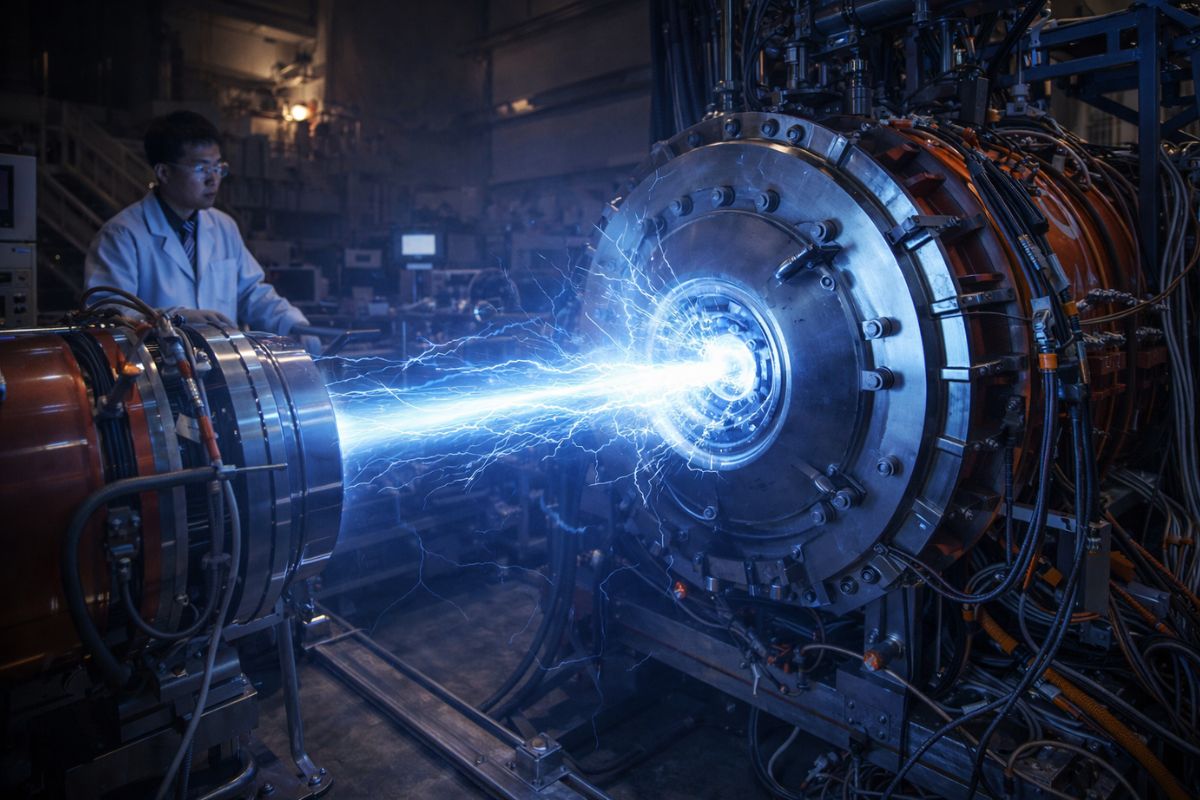
China has activated a magnet 700,000 times more powerful than the Earth’s magnetic field that operates for over 200 consecutive hours while consuming little energy, and now the world wants to know what Beijing plans to do with this technology in 2026.

In practice, what can be seen today in the Amazon is a set of structures that look like they came out of a futuristic movie. Rings formed by 16 towers, each 35 meters high, surround circular areas of 30 meters in diameter, surpassing the treetops, which are on average 28 to 30 meters tall. Through pipes attached to these towers, enriched air with approximately 50% more CO₂ than is normally found in the local atmosphere is released.
What is AmazonFACE and How Does It Work Within the Forest
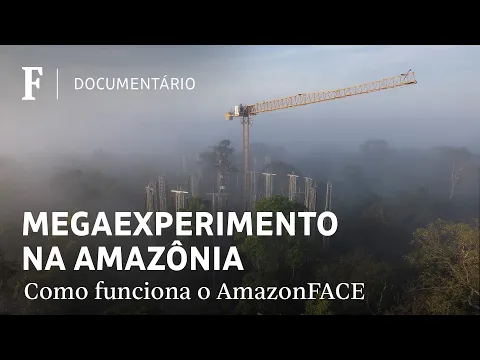

Each ring of the experiment is designed to simulate, right in the Amazon, the atmosphere of the future. The goal is to elevate the concentration of CO₂ inside to around 600 ppm and observe, over many years, how the forest reacts. This is not a laboratory experiment in pots or greenhouses. It is the Amazon itself, intact, being subjected to a carbon-enriched atmosphere, exactly as projected by scientists for the coming decades.
The complexity of the project required international cooperation and heavy investment. For the infrastructure, about half of the resources came from the Ministry of Science, Technology and Innovation (MCTI) and half from the United Kingdom, totaling around 100 million reais. In addition to constructing the rings, it was necessary to install cranes, monitoring systems, and a whole network of high-precision equipment in the middle of the Amazon.
CO₂, Photosynthesis, and the Future of the Amazon at Stake
For more than 20 years, climate models have raised a concerning scenario: part of the Amazon could succumb to a hotter and drier climate, with intense temperature increases and reduced rainfall. In such extreme conditions, the forest could lose the characteristics that keep it as the lush biome we know today.
On the other hand, these same models also suggest another possibility. If there is a strong fertilization effect from CO₂, plants could increase their productivity, thanks to the role of carbon dioxide in photosynthesis. In theory, more CO₂ would mean more photosynthesis, more growth, and an Amazon capable of standing tall, compensating for some of the negative effects of a hotter and drier climate. The problem is that until now, no one knows for sure if this effect actually happens on the scale of an entire forest, how strong it is, and how long it lasts. AmazonFACE is precisely designed to address these questions.
Cranes, Sensors, and Roots: Measuring the Amazon from Top to Bottom
To understand the Amazon’s response to extra CO₂, researchers need to look in all directions. From above, a cage suspended by cranes takes scientists to the top of the canopy, about 37 to 40 meters high. Up there, specialized equipment measures gas exchanges between the leaves and the atmosphere, primarily carbon and water, which are the heart of photosynthesis and plant transpiration.
One of the most impressive features of AmazonFACE is the diversity within each ring. In a single experimental area, there are about 50 trees with trunks over 10 centimeters in diameter, and of these, approximately 49 different species. In other words, each ring is a mosaic of Amazonian biodiversity, something that did not exist in FACE experiments conducted in countries like the United States, Europe, and Australia. This opens a unique opportunity to understand how the enormous diversity of species influences the collective response of the forest to an environment with more CO₂.
The Amazon Viewed from Below: Roots, Soil, and the Carbon Cycle
It’s not just what happens in the canopy that matters. The effect of CO₂ fertilization can appear in roots, soil, and processes invisible to the naked eye. Therefore, transparent tubes up to 2 meters long have been installed in the soil within the rings, allowing scanners to be regularly inserted to generate detailed images of root production around these cylinders.
With monthly collections, scientists track, season after season, how root dynamics change over time. In parallel, they analyze the carbon stored in the trunks, soil respiration, and other flows that compose the functioning of the Amazon as a major climate regulator. The expectation is that with data accumulated over many years, climate models will be fed with more precise information, reducing uncertainties about the future of the forest.
A Long-Term Experiment in the Heart of the Amazon
AmazonFACE is not a short-term project. The expectation is that the experiment will run for at least 10 years, with the possibility of extending it for another 5 or 10, reaching up to 15 or 20 years, if it makes sense from a scientific standpoint. Throughout this period, the Amazon will be observed like a patient under continuous monitoring, while breathing air richer in CO₂.
There are still uncertainties even about the total volume of carbon dioxide that will be used. This is because the consumption of CO₂ directly depends on how this gas disperses within each ring. If the dispersion is slow, the necessary volume will be smaller. If it is fast, more CO₂ will need to be injected to maintain the concentration stable around the target. It is a mystery that can only be clarified with the experiment fully operational, right there in the Amazon.
How the Amazon May Change in the Coming Decades
Even with all the technology and monitoring, one thing is already considered likely by scientists: the Amazon of a few decades from now will not be exactly the same as today. Studies in other regions, especially in the southern part of the forest, show that species more adapted to heat and drought are slowly replacing species that prefer a wetter and cooler climate.
AmazonFACE will help to understand whether this species reorganization will be smooth or dramatic, and whether CO₂ fertilization can give the forest a sort of extra breath in the face of climate change. Ultimately, what is at stake is not just the future of the Amazon, but the climatic balance of the entire planet.
And you, do you think experiments like AmazonFACE are key to ensuring a safer future for the Amazon, or do you still have doubts about this type of intervention in the forest?









Seja o primeiro a reagir!